
Every new hire comes with a learning curve, and the hidden cost of onboarding often lies in unanswered questions about software quirks, workflows, or team dynamics. Assigning a senior colleague outside the reporting line gives companies a direct way to reduce early ramp-up time without pulling managers away from strategic priorities.
Protecting that training investment past the first thirty days requires active organizational oversight. Maintaining long-term mentorship program engagement relies on light monthly check-ins, suggested discussion prompts, and clear milestones so valuable knowledge transfer does not stall out.
When businesses build structured support systems from day one, early turnover drops significantly and cross-departmental productivity rises.
Why mentorship programs drive engagement
According to Gallup data from 2023, only 40% of employees report having a mentor in the workplace.
Employees engage more when they feel supported at work. Mentorship programs give them support through a trusted relationship outside their manager. A mentor gives employees someone they can talk to, ask questions, and learn from as they grow at work.
This connection can help employees feel that they belong. Mentees get help from someone who understands their daily work and can share useful advice. They also learn more about the company and the people around them. This support can help employees feel less alone, especially when they start a new role or join a new team.
Mentorship also gives employees a clearer path for growth. They can talk about career goals, learn new skills, and understand what they need to do next. When employees can see how they can grow, they often feel more ready to do their best work. This link between growth and engagement makes mentorship programs useful for employee development.
Strong mentorship can support both sides. When companies build these relationships well, mentorship becomes more than a training activity. It becomes a steady way to build connection, learning, growth, and engagement.
How to design a mentorship program that builds engagement?
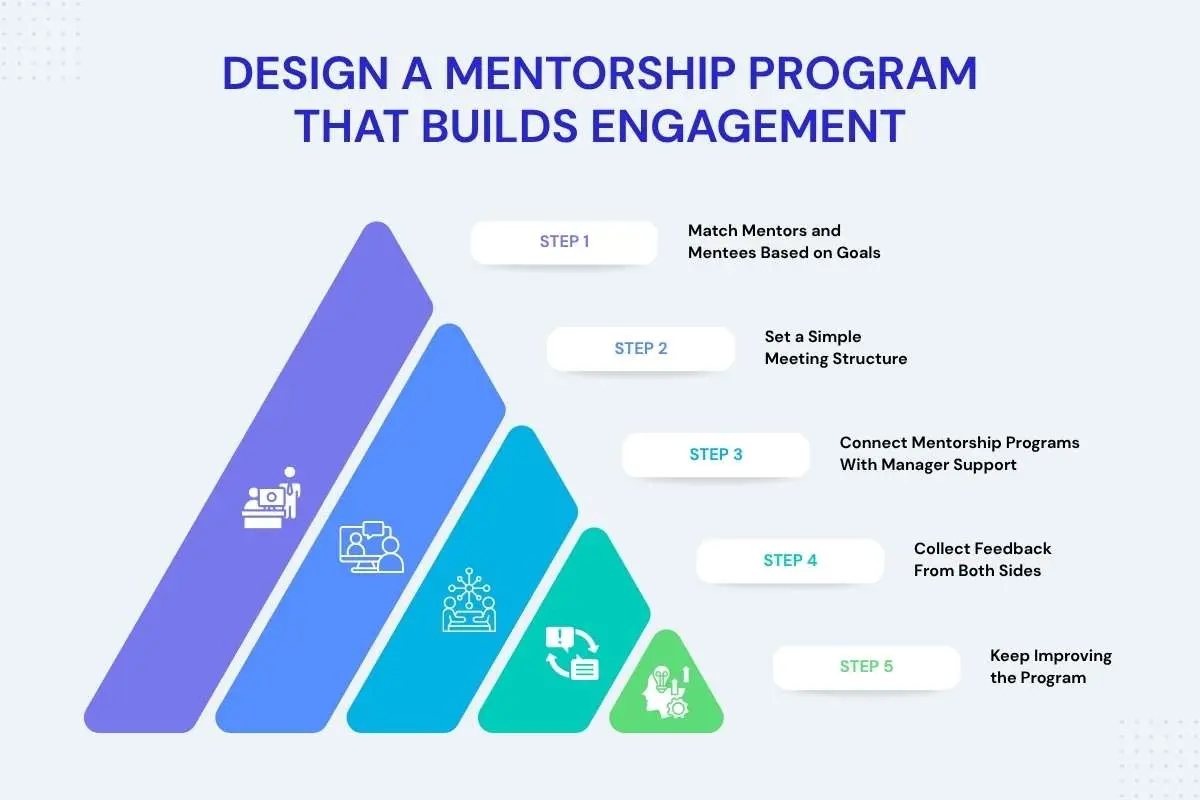
A well-planned mentorship program can help employees feel supported and connected. Follow these steps to create a program that supports growth while keeping the experience simple.
Step 1: Match mentors and mentees based on goals
Start by learning what employees want to achieve. Ask about their career goals, skills they want to build, and areas where they need support. Use this information to create better mentor matches.
Do not match people only by seniority or department. A mentor with the right skills and experience may offer more value than someone with a higher title. Goal-based matches can make each conversation more useful.
Step 2: Set a simple meeting structure
Give each pair a basic structure to follow. Set a regular meeting schedule, such as twice a month. Share simple guidelines for setting goals, preparing for meetings, and tracking progress.
Keep the process flexible. Avoid giving mentors a strict script for every meeting. Both people should have room to discuss current needs, questions, and challenges.
Step 3: Connect mentorship programs with manager support
Tell managers how the program supports employee growth. Managers should not control the mentor relationship. Instead, they can connect mentorship goals with regular employee development programs and work plans.
This helps employees get support from both sides. Managers can focus on day-to-day work, while mentors can offer wider career advice and guidance.
Step 4: Collect feedback from both sides
Ask mentors and mentees about their experience. Find out if the match works well and if meetings happen often enough. Also ask whether the program helps them reach their goals.
Use short surveys or quick check-ins. Look for common concerns and useful suggestions. Then make changes based on what employees share.
Step 5: Keep improving the program
Review the program at set times during the year. Check participation, feedback, and progress toward goals. Use these findings to improve mentor matching, meeting plans, and support.
The mentorship program engagement should grow with employee needs. Keep what works and change what does not. This keeps the program useful and helps maintain strong engagement over time.
Types of employee mentorship programs

Mentorship programs can take different forms. Each type gives employees a different kind of support, guidance, or learning experience. Companies can choose a format based on employee needs, career goals, and team structure. Here are four common types of employee mentorship programs.
1. One-on-One mentorship programs
One-on-one mentorship pairs an employee with one mentor. The mentor provides personal guidance based on the mentee’s goals and needs. They may discuss career plans, work challenges, new skills, or future opportunities.
These regular conversations can help employees build trust and confidence. Mentees also get advice that fits their own work and career path. This format gives both people enough time to build a strong working relationship and improve mentorship program engagement.
Best For: Employees who want personal career guidance, regular support, and focused learning.
2. Group mentorship programs
Group mentorship brings one mentor together with several employees. The group can meet regularly to discuss shared goals, work challenges, and career topics. Each member can learn from the mentor and hear ideas from other employees.
This format also helps employees build wider work connections. They can share their own experiences while learning from others. Companies can reach more employees without needing one mentor for every person.
Best For: Employees who want shared learning, wider connections, and guidance from one experienced mentor.
3. Peer mentorship programs
Peer mentorship connects employees who have similar levels of experience or work in related roles. Instead of one person acting as the expert, both employees can share knowledge and support each other.
This approach can make mentorship feel more open and relaxed. Employees can discuss common work problems and share ways to handle them. Peer mentorship can also build stronger connections between team members.
Best For: Employees who want shared support, practical advice, and stronger connections with their peers.
4. Reverse mentorship programs
Reverse mentorship turns the usual mentor relationship around. A junior employee mentors a more senior employee on areas where they may have more knowledge or experience. These areas can include new technology, social trends, or changing employee needs.
The relationship benefits both people. Senior employees gain new ideas, while junior employees build confidence and communication skills. It can also help different generations and levels of employees understand each other better.
Best For: Companies that want to support knowledge sharing, fresh ideas, and stronger connections across different levels.
Each type of mentorship program engagement offers a different kind of support. One-on-one programs offer personal guidance, while group and peer programs encourage shared learning. Reverse mentorship helps employees exchange knowledge across roles and levels. Companies can use one format or combine several to support different employee needs.
How to measure mentorship’s impact on engagement?

Measuring the mentorship program engagement helps companies see if it makes a real difference. The right metrics can show whether employees feel more connected, supported, and motivated at work. Use a mix of engagement, employee retention strategies, and program data for a clearer view.
1. Compare engagement scores
Start by comparing engagement survey scores for program participants and non-participants. Look at areas such as belonging, growth, manager support, and job satisfaction. A higher score among participants may show that mentorship programs support stronger engagement.
Run these surveys more than once. Comparing results over time can show whether engagement changes after employees join the program.
2. Track employee retention
Check how long mentees and mentors stay with the company. Compare their retention rates with employees who do not take part in the program. This can help show whether mentorship connects with stronger employee retention.
Track these numbers over several months or years. Look for patterns instead of judging the program from one set of results.
3. Monitor participation and completion
Participation gives an early view of program health. Track how many employees join, attend meetings, and complete the program. Low participation may point to poor matches, unclear goals, or a process that feels too hard.
Review these numbers regularly. Use the results to fix problems and keep the program useful for employees.
Good measurement helps companies see whether mentorship delivers real value. Employee engagement scores, retention rates, and participation data can show what works and where changes may help. Companies can then make smarter decisions about their mentorship programs.
Conclusion:
Informal coffee chats rarely survive busy workweeks when daily tasks take priority over long-term career planning. Which is why 100% of Fortune 50 companies have mentoring programs
Tracking participation rates, gathering regular feedback, and celebrating shared milestones helps maintain mentorship program engagement across remote and hybrid teams.
Treating peer guidance as a core operational initiative gives leadership a repeatable method for growing talent from within, establishing a scalable talent pipeline that supports long-term business expansion.
FAQs
1. Why do workplace mentorship programs lose momentum over time?
Most programs stall because pairs lack structured goals, clear agendas, or ongoing organizational support, causing busy work schedules to take priority over routine catch-ups.
2. How can leadership keep mentorship participants actively involved?
Coordinators can maintain interest by providing monthly discussion prompts, hosting optional group check-ins, and celebrating specific milestones achieved by participating pairs.
3. How long should a formal company mentorship pairing last?
Setting a defined period of six to twelve months works best, allowing participants to achieve specific development goals while offering a natural endpoint before refreshing pairings.
4. What metrics track whether a mentorship initiative is successful?
Businesses can measure success through meeting completion rates, quarterly participant feedback surveys, internal promotion frequencies, and long-term retention data among participants.