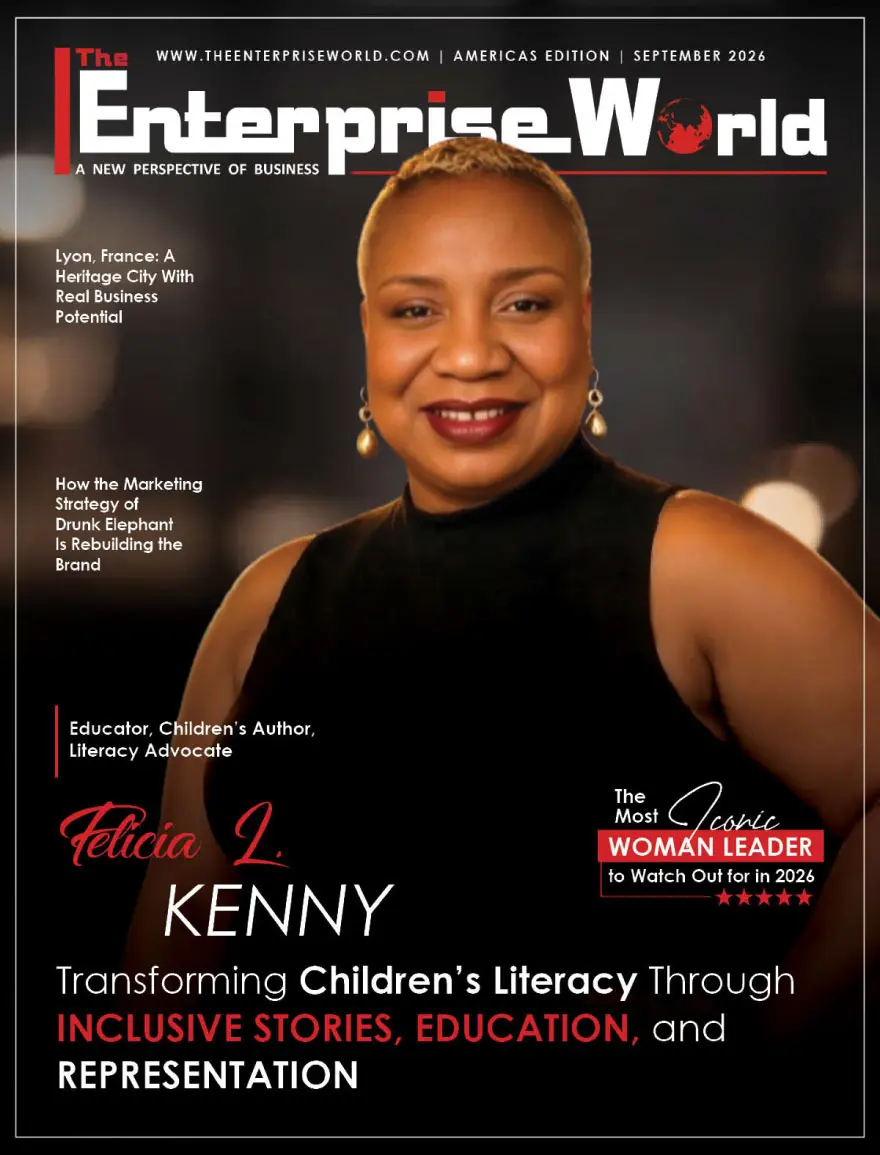
For many children, struggling with reading is about more than finding the right words. It can also mean not seeing themselves in the stories they read. When books do not reflect a child’s family, identity, abilities, or experiences, reading can feel distant and discouraging. Without inclusive and accessible stories, children may lose confidence, feel disconnected from reading, and miss the chance to build empathy, imagination, and a stronger sense of belonging.
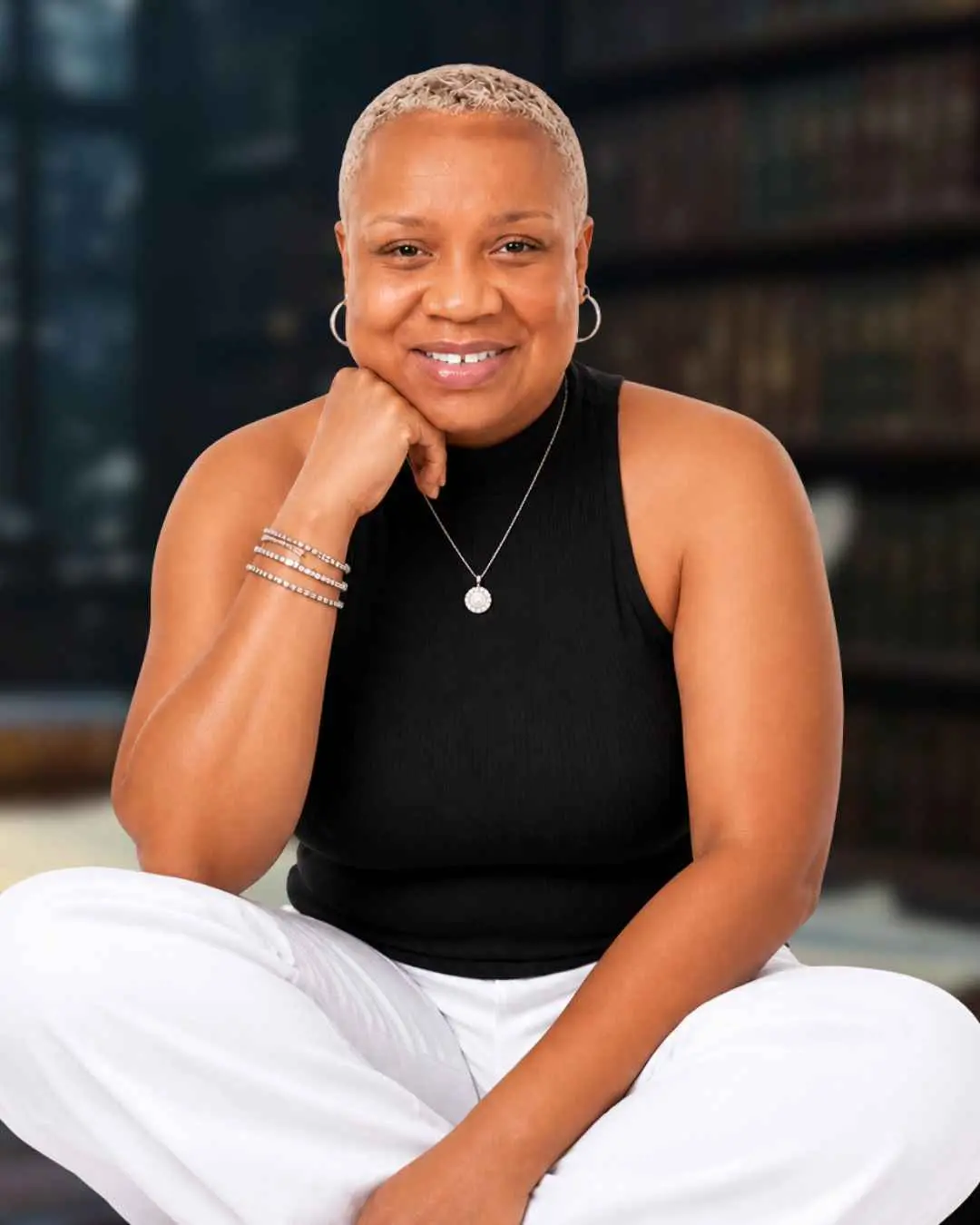
Felicia L. Kenny, Special Education Teacher, Children’s Author, and Literacy Advocate, is helping reshape how children experience literacy by creating learning and reading experiences that are more inclusive, accessible, and meaningful. Through her work, she recognizes that every child learns differently and deserves stories that reflect their identity, abilities, family, and experiences while helping them build confidence, empathy, and a lasting connection with reading.
Her books, Two Worlds, One Family and I AM ME, bring these values to life by exploring identity, belonging, autism, individuality, and acceptance in ways children can understand and enjoy. Through these stories, Felicia allows young readers to see themselves on the page while also discovering and appreciating experiences different from their own.
From Aspiring Attorney to Educator and Children’s Author
Felicia’s journey as an educator began unexpectedly. She initially planned to attend law school and pursue family law, but after graduating with a BA in History/Political Science, becoming a mother led her toward education. Felicia entered New Jersey’s alternate route teaching program, passed the National Teacher’s Exam on her first attempt, and began building her career as an educator.
Her journey as a children’s author developed much later and grew from her experiences as a mother, teacher, lifelong reader, and writer. She had always enjoyed creating stories and imagining characters, but her children gave those ideas a deeper purpose.
One moment became the inspiration for her first book when her young daughter described their biracial family by saying, “Daddy is white, Mommy is brown, and I’m beige.” Years later, Felicia realized the comment could become a story. This led to Two Worlds, One Family, created to give children a positive reflection of diverse families.
Her son’s experience with autism later inspired I AM ME, a rhyming story about being autistic and biracial. Over time, her purpose expanded from telling personal stories to creating books that help children feel seen, explore identity, embrace differences, build empathy, and discover the joy of reading.
Creating Stories Where Every Child Feels Seen
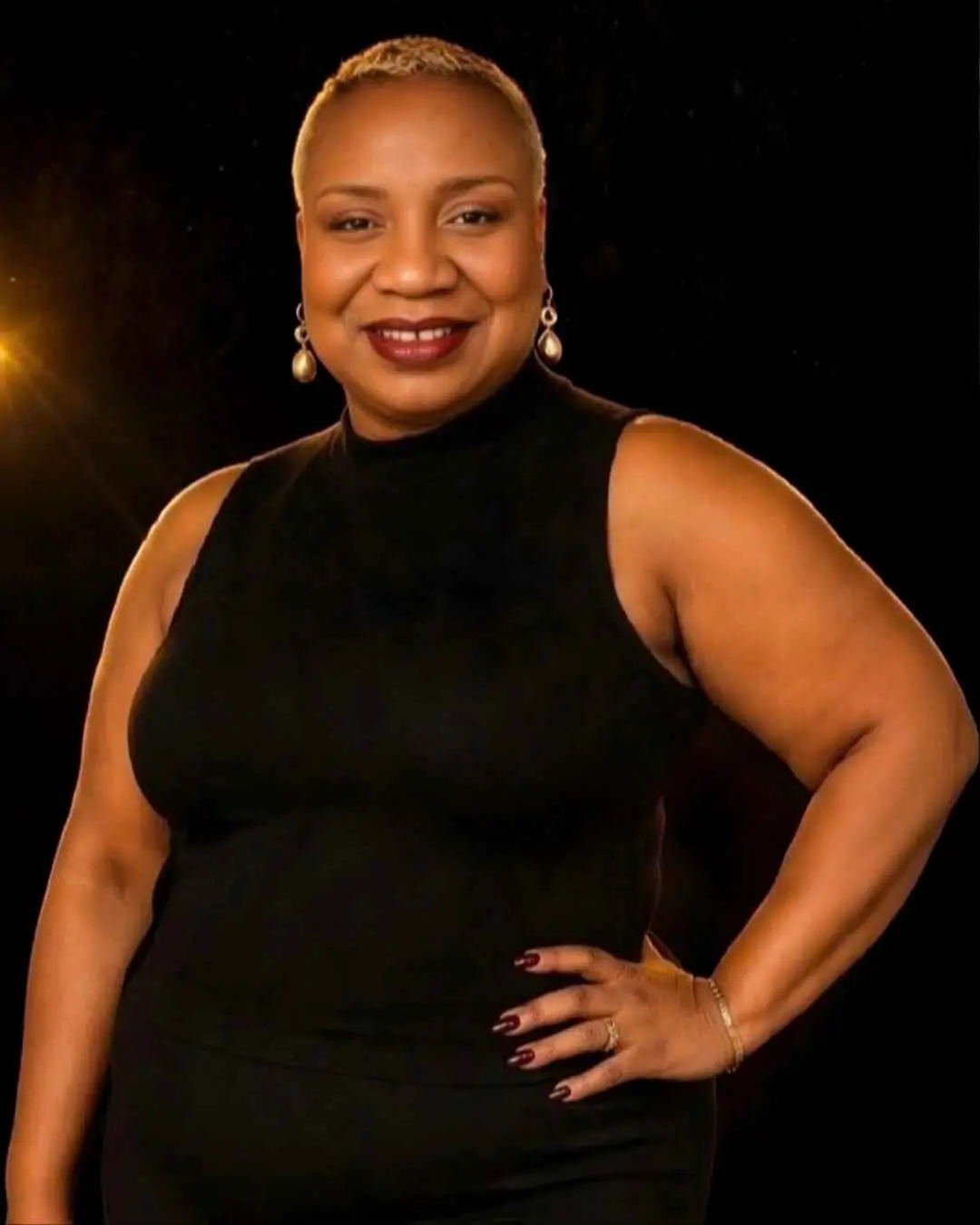
Working as a special education and literacy teacher has taught Felicia that every child has a story worth telling, even when they may not yet have the words or traditional skills to express it. This understanding has shaped her approach to writing, encouraging her to create stories where children can see themselves, recognize their strengths, and understand that being different does not mean something needs to be fixed.
Her classroom experience has also shown her that children connect with stories in different ways. Some respond to words, while others connect more deeply through pictures, rhythm, movement, or the simple feeling of being represented. She brings this understanding into her writing through accessible language, musical phrasing, and comforting repetition.
One student who struggled with reading became more engaged when Felicia introduced pictures, conversation, and opportunities to influence the story instead of focusing only on reading difficulties. The experience reinforced her belief that a reading challenge does not define a child’s imagination, intelligence, or ability to connect.
For Felicia, inclusion means creating different pathways into the same story and ensuring every child feels seen, heard, and valued.
Creative Process for Writing Meaningful Children’s Stories
Felicia approaches children’s writing by balancing engagement with deeper meaning. She aims to create stories that children can enjoy while giving parents and educators themes they can explore together.
Her stories often touch on self-understanding, differences, relationships, emotions, and empathy. She uses simple, age-appropriate, rhythmic language without speaking down to young readers. She also reads every sentence aloud, knowing that anything difficult for her to say may also be difficult for a child to follow.
Her process begins with an idea rooted in something children experience, feel, or wonder about. She identifies one central human idea and builds relatable characters around emotions, challenges, and situations children can recognize.
For Felicia, representation comes before the message. She believes children connect more deeply when they see their experiences reflected in characters and stories. She also considers the role of parents, teachers, and librarians, who often bring books to life through reading aloud.
Ultimately, she wants her stories to create space for questions and conversations long after the final page, giving children and adults something meaningful to carry with them.
Connecting Authentic Culture, Joy, and Shared Human Emotion
Felicia highlights that one of the biggest gaps in children’s literacy and inclusive storytelling is a lack of belonging. True representation, in her view, goes beyond including diverse characters. It should reflect authentic families, cultures, emotions, challenges, joys, and possibilities that children can genuinely connect with.
She believes books should allow children to recognize themselves while also introducing them to experiences different from their own. Literacy is not only about learning words; stories can build confidence, empathy, curiosity, and self-understanding.
For Felicia, inclusion should be part of everyday reading rather than limited to heritage or awareness months. Schools should offer collections that reflect the children they serve and create meaningful conversations around those stories throughout the year. Children should be able to see themselves as heroes, adventurers, and fully developed characters, not simply as subjects of a lesson.
She also believes publishers have a responsibility to support authentic voices and authors with diverse experiences. When children see themselves represented, they feel valued, while stories about others can help every child develop greater empathy, understanding, and appreciation for different perspectives.
What have been some of the most difficult moments you have faced while building your identity as an author, educator, and literacy advocate?
Challenges That Strengthened Felicia’s Purpose
One of Felicia’s biggest challenges has been learning to trust the value of her voice and work, particularly when progress has felt slow. As an educator, she has seen that children may struggle not because they lack ability, but because they lack access to resources, representation, encouragement, or supportive learning environments. These experiences deepened her commitment to creating literacy experiences where children feel seen, valued, and empowered.
Her journey as an author brought its own challenges, including uncertainty, rejection, and self-doubt. Over time, she realized that she did not need permission to claim her identity as an author. Instead, she learned to trust the unique perspective her experience as an educator brings to her writing.
She also learned that impact is not always immediate or measurable. A story can help one child feel represented or give an educator a new way to connect with a student, even if she never sees the result.
These challenges taught her that resilience means staying committed to purpose during difficult moments. They strengthened her confidence, encouraged continuous learning, and shifted her focus from immediate validation to long-term impact and meaningful purpose.
Space for Complexity and Open Questions
Felicia approaches complex emotional themes by first honoring a child’s feelings rather than trying to solve them. She believes children can understand difficult emotions when stories present them through familiar situations and language that reflects their world.
Her storytelling begins with the character and the emotion, not the lesson. She creates characters and experiences that help children recognize their own feelings while also understanding what others may be going through. Through different perspectives, children are encouraged to develop empathy and see what may exist beneath another person’s actions.
Authenticity is equally important to her. She avoids talking down to children or forcing obvious moral lessons. Instead, she allows meaning to emerge naturally through the characters’ experiences, leaving space for questions, uncertainty, and feelings that may not have a neat resolution.
At the heart of her work is the belief that every child deserves to feel seen, accepted, and understood. She hopes her books become both a mirror for children to recognize themselves and a window into experiences different from their own. For Felicia, a story succeeds when a child feels less alone, more confident in being themselves, and more compassionate toward others.
Turning a Reading Challenge into a Learning Breakthrough
One meaningful experience came about three years ago when Felicia worked with a sixth-grade social studies and history teacher whose student experienced severe reading anxiety. Dense textbook passages often caused the student to shut down.
While the class was learning about the Boston Tea Party, Felicia recognized that the amount of text was overwhelming. She simplified the event into four steps and presented it as a story: Britain taxed tea, the colonists viewed the tax as unfair, they protested, and some colonists eventually dumped tea into Boston Harbor.
She then asked the student one simple question: “Why do you think they dumped the tea?” The student answered correctly, showing that she understood the same historical event and cause-and-effect relationship as her classmates without struggling through lengthy text.
The following week, the teacher shared that the student had gone home excited and explained the Boston Tea Party to her parent. The experience reinforced Felicia’s belief in patient, adaptive approaches to learning.
She also values constructive feedback from parents, educators, children, and literacy professionals. Their perspectives help her improve educational resources, strengthen her storytelling, approach representation thoughtfully, and create age-appropriate learning experiences.
Expanding Literacy Through Schools, Media, and Community
Felicia’s contribution to literacy and thought leadership extends beyond writing through school engagements, author visits, media appearances, mentoring, community initiatives, and literacy advocacy. At the school where she teaches, educators have purchased Two Worlds, One Family, invited her into their classrooms, and used the book to encourage conversations about family, identity, and belonging. Similar opportunities have grown through community connections, including invitations to read to elementary students.
Through media appearances on KOMO News, WISH-TV, WTVM, News 12, Ozarks First, and Unscripted, Felicia has discussed representation, biracial identity, autism awareness, inclusion, literacy outcomes, and self-esteem. She also promotes reading as a daily practice and shares montages of families holding Two Worlds, One Family to help normalize biracial stories in home libraries.
Her work also includes mentoring aspiring authors, particularly mothers and women of color, helping them develop and share stories drawn from lived experiences. She is developing Blakefield Academy for the Incredibly Stupid and another middle-grade book.
Through the Two Worlds, One Family initiative and Jory doll, she continues taking literacy beyond books. Her goal is to help children feel represented, encourage families to embrace reading, and support educators in using literature to build connection and understanding.
Interactive Media and Digital Reading Tools
Technology, digital media, and inclusive practices are likely to shape the future of children’s literacy and publishing. Interactive e-books, audiobooks, educational apps, and other digital resources will give children more flexible ways to engage with stories and develop reading skills according to their individual learning needs.
Publishing is also expected to become more representative, with greater focus on stories that reflect different cultures, abilities, family structures, and life experiences. As a special education teacher, Felicia has seen firsthand how important accessibility is and encourages children to experience reading through books, technology, visuals, audio, and hands-on activities.
She also views listening to stories as an important part of literacy because it strengthens vocabulary while encouraging imagination and active thinking. Ultimately, she believes the future of children’s literacy should focus on access, representation, and engagement, helping every child feel capable of becoming a reader and confident that their voice and experiences belong in literature.
Felicia’s Typical Day
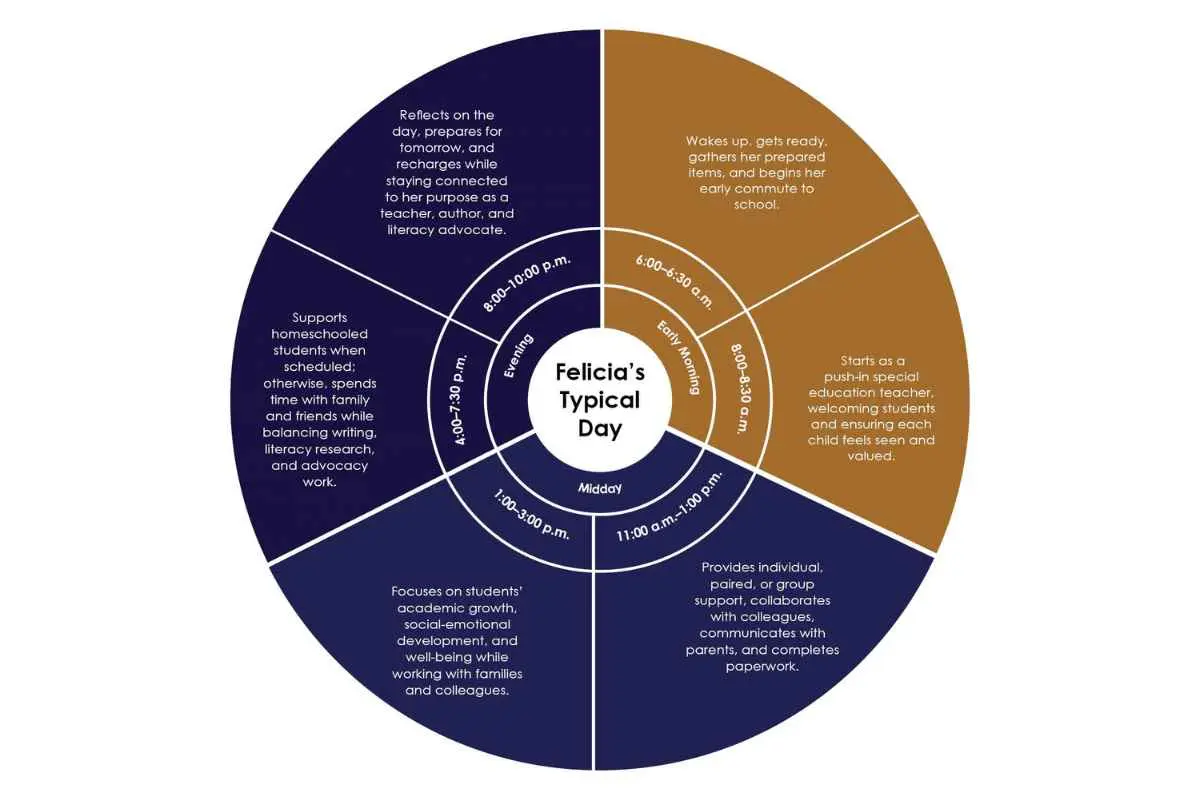
- 6:00–6:30 a.m. | Morning: Wakes up, gets ready, gathers her prepared items, and begins her early commute to school.
- 8:00–8:30 a.m. | Workday Begins: Starts as a push-in special education teacher, welcoming students and ensuring each child feels seen and valued.
- 11:00 a.m.–1:00 p.m. | Student Support: Provides individual, paired, or group support, collaborates with colleagues, communicates with parents, and completes paperwork.
- 1:00–3:00 p.m. | Key Priorities: Focuses on students’ academic growth, social-emotional development, and well-being while working with families and colleagues.
- 4:00–7:30 p.m. | Evening: Supports homeschooled students when scheduled; otherwise, spends time with family and friends while balancing writing, literacy research, and advocacy work.
- 8:00–10:00 p.m. | Wind-Down: Reflects on the day, prepares for tomorrow, and recharges while staying connected to her purpose as a teacher, author, and literacy advocate.
At heart, Felicia is a full-time special education teacher, part-time children’s author, and literacy advocate committed to helping every child feel encouraged, supported, and capable of reaching their potential.
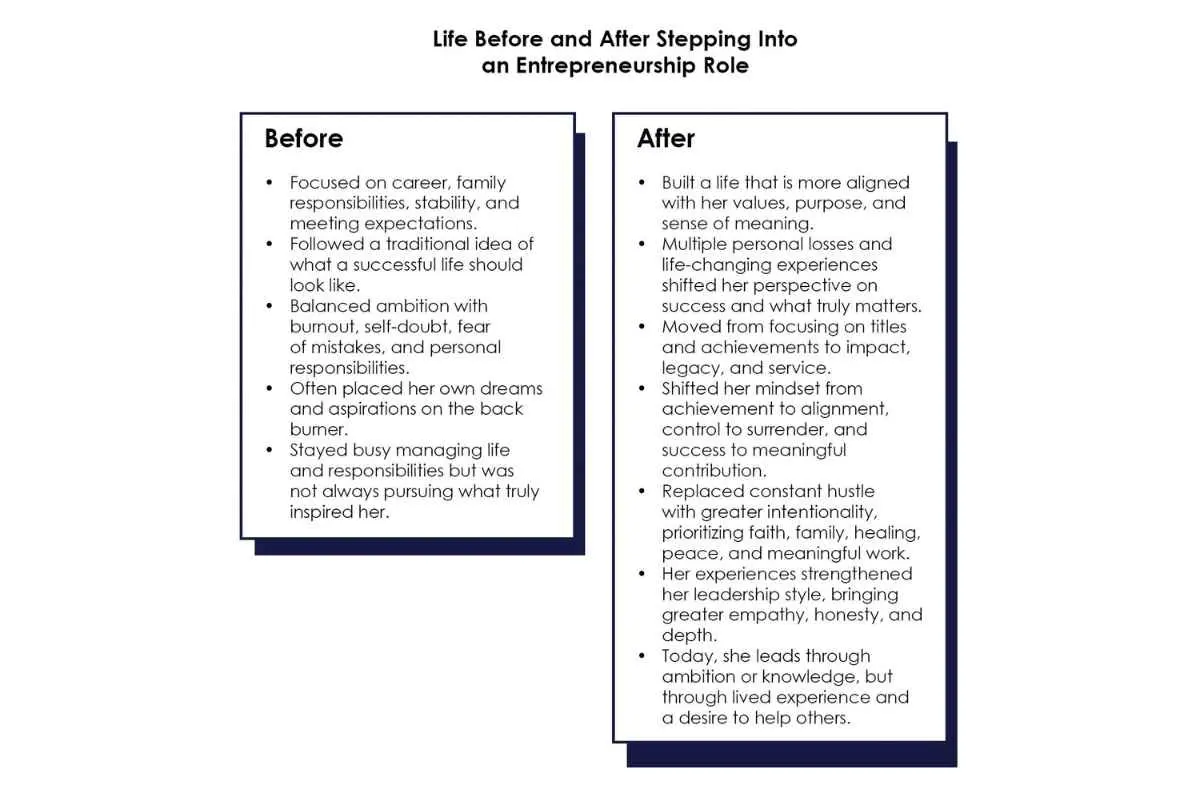
Life Before and After Stepping Into an Entrepreneurship Role
Before
- Focused on career, family responsibilities, stability, and meeting expectations.
- Followed a traditional idea of what a successful life should look like.
- Balanced ambition with burnout, self-doubt, fear of mistakes, and personal responsibilities.
- Often placed her own dreams and aspirations on the back burner.
- Stayed busy managing life and responsibilities but was not always pursuing what truly inspired her.
After
- Built a life that is more aligned with her values, purpose, and sense of meaning.
- Multiple personal losses and life-changing experiences shifted her perspective on success and what truly matters.
- Moved from focusing on titles and achievements to impact, legacy, and service.
- Shifted her mindset from achievement to alignment, control to surrender, and success to meaningful contribution.
- Replaced constant hustle with greater intentionality, prioritizing faith, family, healing, peace, and meaningful work.
- Her experiences strengthened her leadership style, bringing greater empathy, honesty, and depth.
- Today, she leads through ambition or knowledge, but through lived experience and a desire to help others.
Looking Ahead to 2026 and Beyond
As Felicia looks toward 2026 and beyond, her vision is to use the power of stories, education, and literacy to help children discover their voices, build confidence, and believe that their dreams are possible.
She wants children to see themselves and their families reflected in the books they read. Her goal is for her work to extend beyond the pages of a book and serve as a bridge to imagination, learning, and a lifelong love of reading.
The legacy she hopes to create is centered on meaningful impact. She wants children to remember that her stories made them feel seen, encouraged them to dream bigger, and helped them believe in themselves. She also hopes to give parents and educators practical tools and stories that make literacy more engaging, meaningful, and accessible.

Ultimately, she wants to be remembered as someone who opened doors for children through literacy, encouraged educators to nurture the whole child, and showed families that reading can lead to greater confidence, connection, imagination, and opportunity.
She also hopes her journey will encourage other women to pursue their purpose, simply because they saw someone else take that step and realized they could do it too.
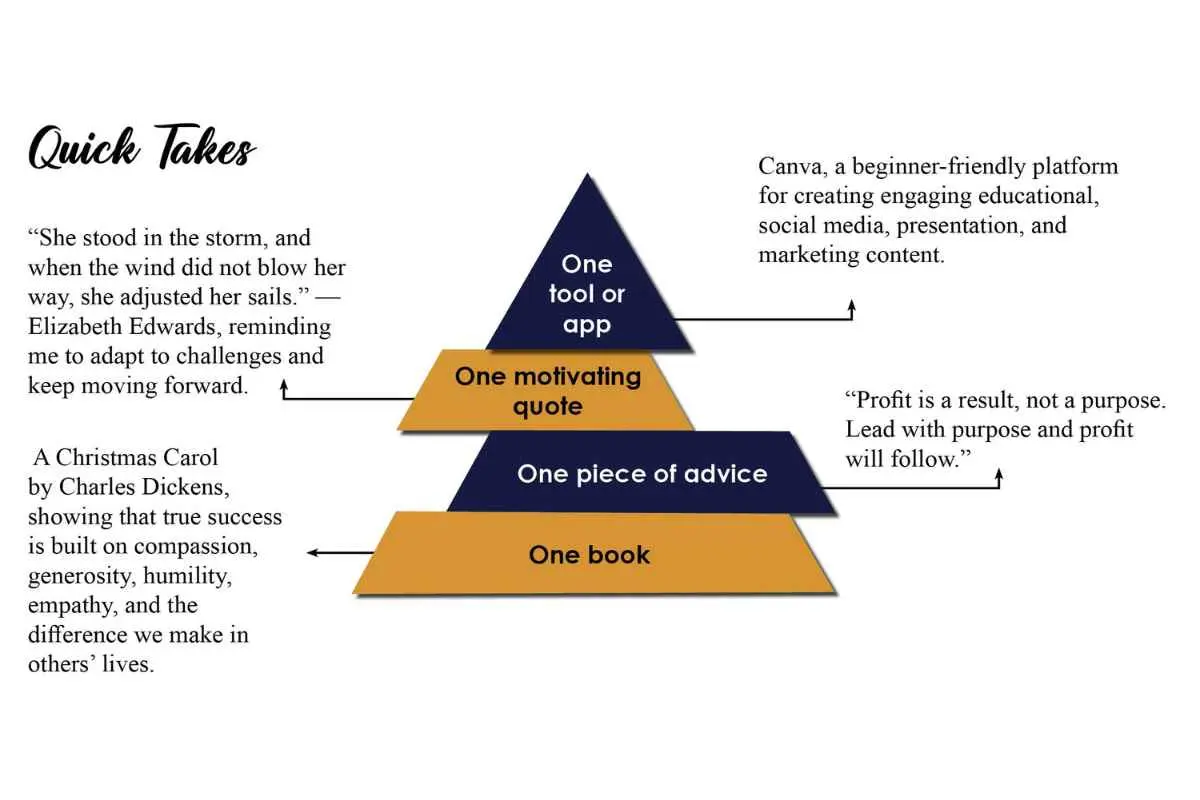
Quick Takes
- One tool or app: Canva, a beginner-friendly platform for creating engaging educational, social media, presentation, and marketing content.
- One motivating quote: “She stood in the storm, and when the wind did not blow her way, she adjusted her sails.” — Elizabeth Edwards, reminding me to adapt to challenges and keep moving forward.
- One piece of advice: “Profit is a result, not a purpose. Lead with purpose and profit will follow.”
- One book: A Christmas Carol by Charles Dickens, showing that true success is built on compassion, generosity, humility, empathy, and the difference we make in others’ lives.
Felicia L. Kenny’s 5 Impactful Business Mantras
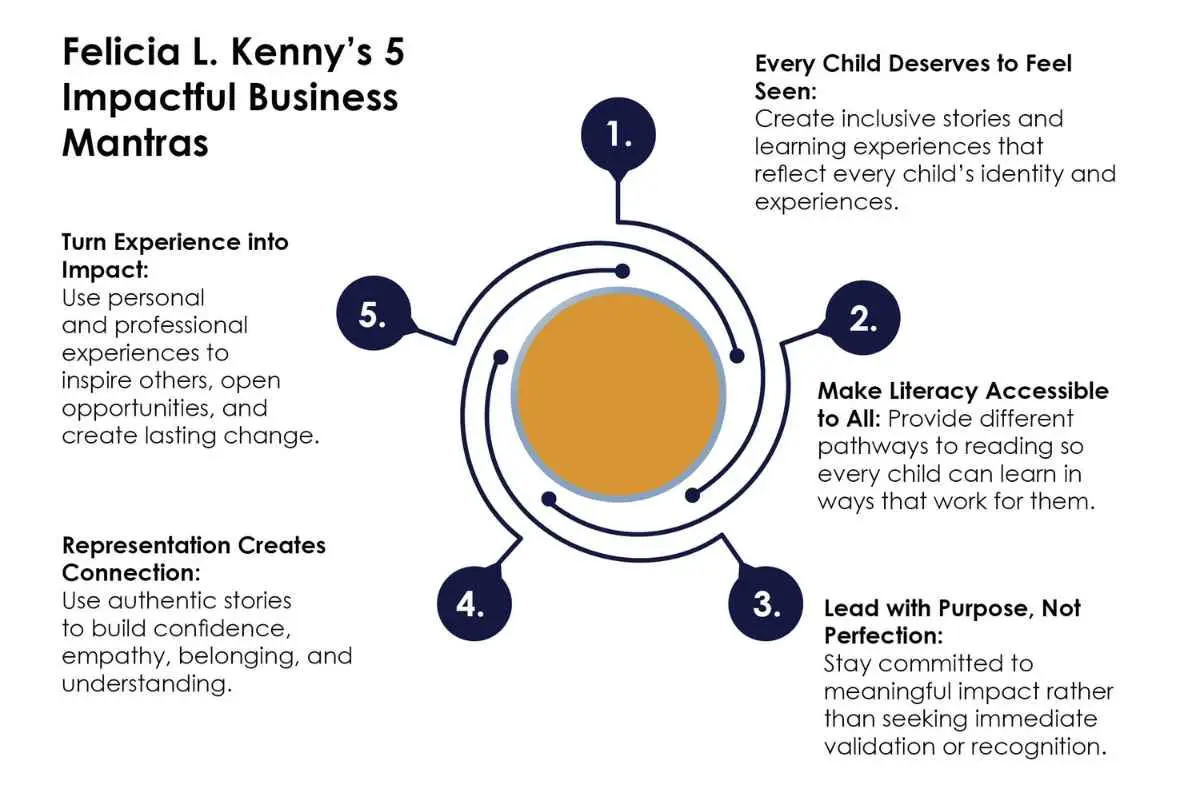
- Every Child Deserves to Feel Seen: Create inclusive stories and learning experiences that reflect every child’s identity and experiences.
- Make Literacy Accessible to All: Provide different pathways to reading so every child can learn in ways that work for them.
- Lead with Purpose, Not Perfection: Stay committed to meaningful impact rather than seeking immediate validation or recognition.
- Representation Creates Connection: Use authentic stories to build confidence, empathy, belonging, and understanding.
- Turn Experience into Impact: Use personal and professional experiences to inspire others, open opportunities, and create lasting change.