Key takeaways
- Shell will double LNG Canada capacity to 28 million tonnes annually.
- The project includes partners from Malaysia, China, Japan, and South Korea.
- Phase 2 targets Asian LNG demand with operations planned for the early 2030s.
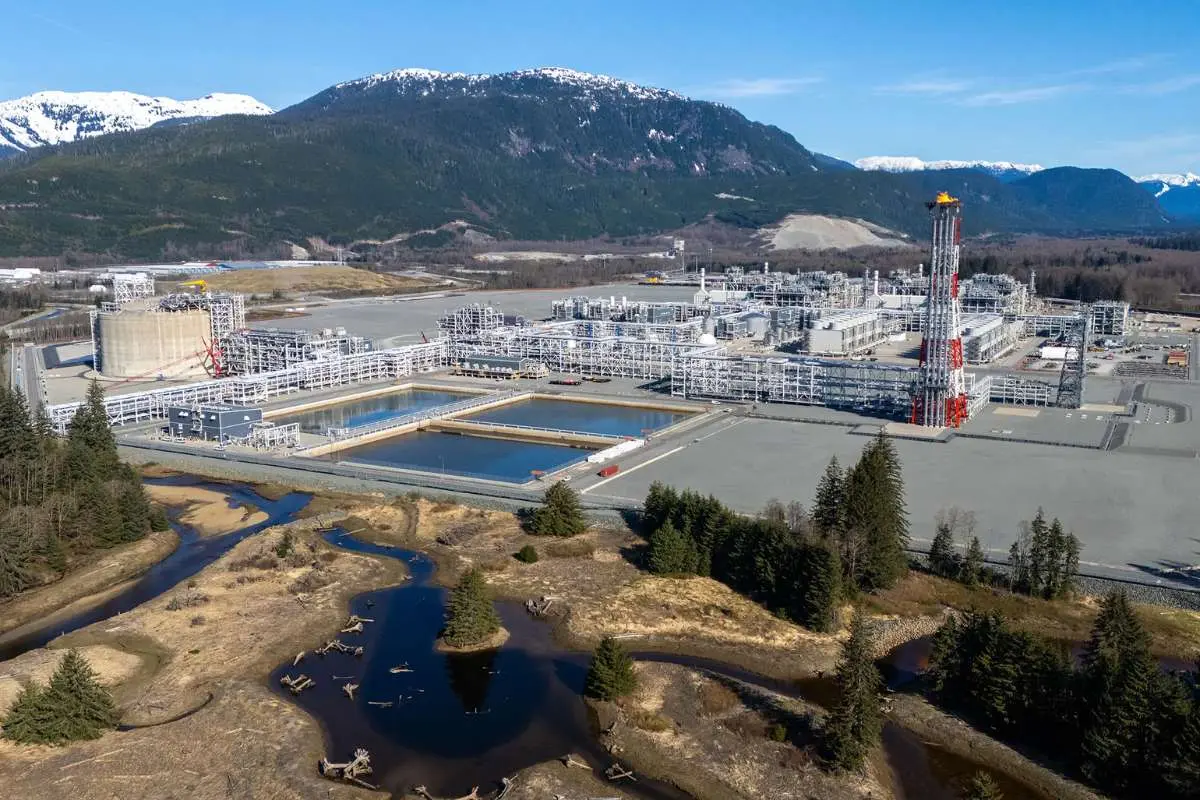
Shell has taken a final investment decision to expand the LNG Canada project in Kitimat, British Columbia, doubling its planned production capacity to about 28 million metric tons per year from 14 million metric tons. The LNG Canada expansion strengthens Canada’s position in the global LNG supply chain, with commercial operations expected to begin in the early 2030s.
Shell and partners back LNG Canada expansion
Shell holds a 40% stake in LNG Canada and leads the consortium developing the project. The other partners are Malaysia’s Petronas, China’s PetroChina, Japan’s Mitsubishi Corp, and South Korea’s Korea Gas Corp.
The Phase 2 LNG Canada expansion will add about 14 million metric tons of annual LNG capacity, bringing the project’s total planned capacity to roughly 28 million metric tons per year. The facility is located on Canada’s Pacific coast, providing access to Asian markets through Pacific shipping routes.
Shell said the additional capacity will connect Canadian natural gas resources with its global LNG portfolio, trading operations, and customer network. The company expects the expansion to support LNG supplies to customers in Asia as demand for diversified energy sources increases.
The decision comes as LNG markets face changes in global supply and trade patterns. Disruptions to energy supplies have increased attention on alternative sources, while some countries are seeking to reduce their dependence on Russian gas.
For the companies involved, the project provides additional LNG production capacity and expands access to Asian markets. For Canada, it adds export infrastructure outside its traditional pipeline links to the United States.
Investment and global LNG market impact
The Canadian government has estimated that LNG Canada will create thousands of jobs and attract C$33 billion, or about $23.2 billion, in private sector capital. The Phase 2 investment will increase the project’s overall production capacity and extend Canada’s role in the international LNG trade.
The project’s Pacific location is particularly relevant to its commercial strategy. LNG can be shipped directly to customers in Asian markets, including major energy-consuming economies in Japan, South Korea, China, and other parts of the region.
LNG Canada began as a consortium involving major international energy and industrial companies, with each partner holding an ownership interest. Shell’s 40% stake makes it the largest shareholder in the project.
The expansion also adds production capacity at a time when LNG remains an important component of global energy trade. New export projects can influence regional supply availability, shipping requirements, and long-term contracting activity across the LNG market.
Shell’s London-listed shares were trading 1.4% lower on Tuesday and had gained more than 31% year to date. The company’s decision to proceed with Phase 2 adds a major capital project to its integrated gas portfolio.
With construction and development extending into the coming years, the LNG Canada expansion is expected to become operational in the early 2030s. The project will then provide additional Canadian LNG volumes for international customers, particularly across Asia.