The diamond industry has been changing as lab-grown diamonds become more widely available and consumers gain more ways to research and purchase engagement rings online. Market research has projected the global lab-grown diamond market could approach $50 billion by 2030, reflecting the expansion of laboratory production and demand across jewelry and other applications.
At the same time, direct-to-consumer (D2C) models are changing how buyers interact with diamond brands. Instead of relying entirely on traditional retail channels, D2C businesses can connect consumers with diamonds and jewelry through their own websites, online design tools, consultations, and direct customer-service channels.
This article provides an informational overview of five brands and retailers participating in this consumer-direct shift: Loose Grown Diamond, Brilliant Earth, Zales, MiaDonna, and Grown Brilliance. They differ in manufacturing relationships, retail models, product selection, customization, and shopping experiences. The list focuses on their publicly available offerings rather than treating every company as having the same vertically integrated manufacturing structure.
Overview of the five D2C diamond brands
| Brand | Consumer-Direct Focus | Lab-Grown Offering | Notable Feature |
| Loose Grown Diamond | Manufacturer-direct and online-first | Loose diamonds, engagement rings, fine jewelry | Direct-from-manufacturer pricing and custom jewelry |
| Brilliant Earth | Online and showroom-based retail | Lab-grown diamonds and engagement rings | Broad design selection and online customization |
| Zales | Direct online and physical retail | Lab-grown diamond engagement rings | Large retail selection and established store network |
| MiaDonna | Online-focused lab-grown jewelry | Lab-grown engagement rings and fine jewelry | Custom design services and lab-grown specialization |
| Grown Brilliance | Online direct-to-consumer shopping | Lab-grown diamonds and engagement rings | Design studio and custom ring options |
Note: Product availability, pricing, policies, and services can change over time. Buyers should review current information directly with each brand before making a purchase.
What is changing in the direct-to-consumer diamond model?
Traditional diamond jewelry can pass through several stages before reaching a consumer, including manufacturers, wholesalers, distributors, retailers, and other intermediaries. A consumer-direct model can shorten parts of that process by allowing a brand to sell through its own online platform or retail operation.
The effect is not identical for all D2C diamond brands. Some companies manufacture diamonds themselves, while others source diamonds from manufacturing partners and focus primarily on design, retail, technology, or customer experience.
For buyers, the differences can appear in areas such as:
- Pricing: Fewer intermediaries can reduce some distribution and retail costs.
- Product selection: Online inventory can give shoppers access to a broader range of diamond specifications.
- Customization: Digital design tools can allow customers to combine diamonds, settings, metals, and other details.
- Information: Online listings can make diamond specifications, grading information, and product details easier to compare.
- Customer support: Virtual consultations and online assistance can complement traditional showroom experiences.
These factors help explain why the D2C model has become increasingly relevant to shoppers researching lab grown diamond engagement rings.
1. Loose Grown Diamond
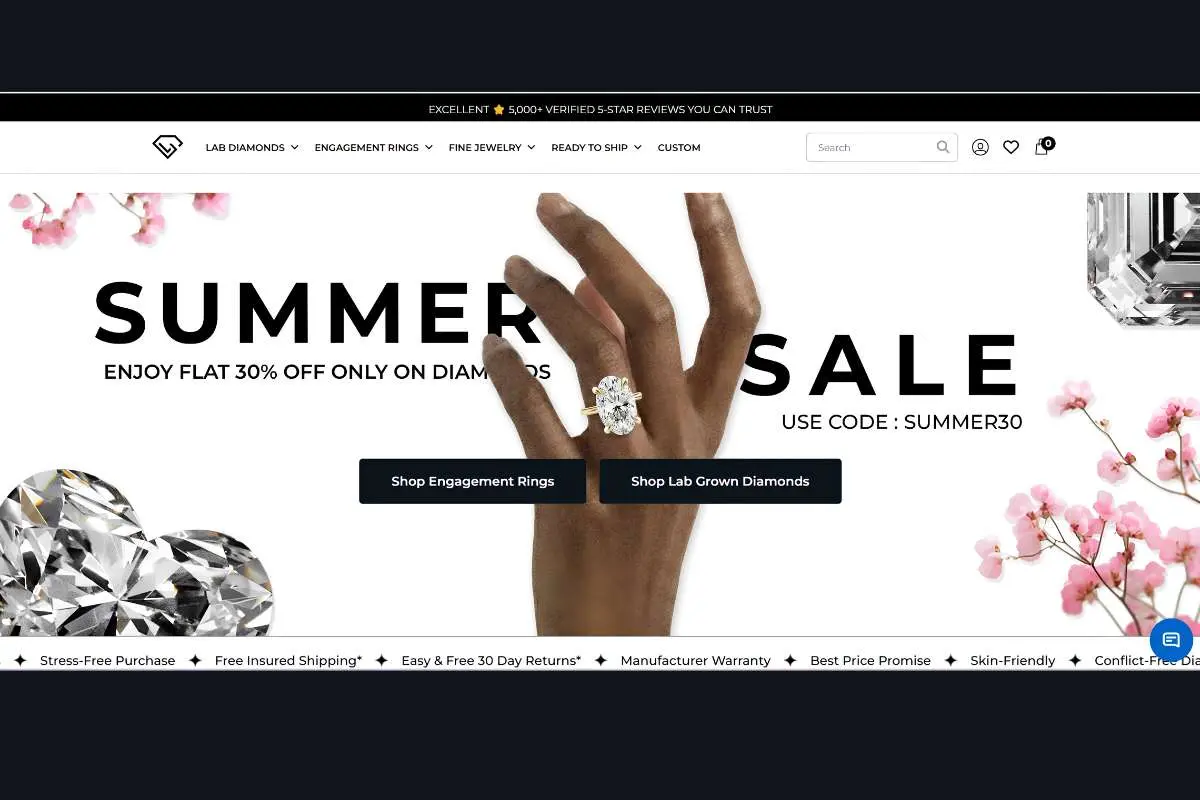
Loose Grown Diamond represents the manufacturer-direct side of the D2C model. The company describes itself as a manufacturer and retailer of lab-grown diamonds and fine jewelry, with its own manufacturing facility in India supplying wholesale and retail customers worldwide.
Its model focuses on connecting customers more directly with manufacturing and reducing unnecessary middlemen. The company states that its online-first approach and direct sourcing help it offer manufacturer-direct pricing.
Key Features
- Manufacturing: Loose Grown Diamond operates its own diamond manufacturing facility and also works with manufacturing sources.
- Certification: The company offers lab-grown diamonds certified by major gemological laboratories including GIA, IGI, and GCAL.
- Product selection: Buyers can browse loose diamonds, fancy shapes, melee diamonds, engagement rings, wedding bands, and fine jewelry.
- Customization: Custom jewelry services include design assistance and CAD/3D development.
- Shopping support: Customers can access consultations and support from gemology professionals.
Why its D2C model matters
The manufacturer-direct structure makes Loose Grown Diamond particularly relevant to the D2C discussion. Rather than positioning the website only as a traditional jewelry storefront, the company connects manufacturing, diamond selection, customization, and retail within the same consumer-facing model.
For shoppers comparing lab grown diamond engagement rings, this approach can make the relationship between manufacturing and retail pricing easier to understand.
A recent customer experience
Customer reviews can provide additional context for how a direct-to-consumer diamond company handles customization and service after purchase. On Trustpilot, a verified review dated September 21, 2026, from Amandeep Singh describes being very happy with the ring design and notes that the Loose Grown Diamond team accommodated customization requests without problems.
“I’m very happy with my ring! The design turned out beautiful. The customer service was great, and they were able to accommodate my customization requests without any problems.”
This type of feedback is relevant to the D2C model because online purchasing places greater importance on communication, customization support, and the ability to manage the buying process remotely. Customer reviews should not replace independent research, but they can give prospective buyers additional insight into the shopping experience.
Read the full review on Trustpilot.
2. Brilliant Earth
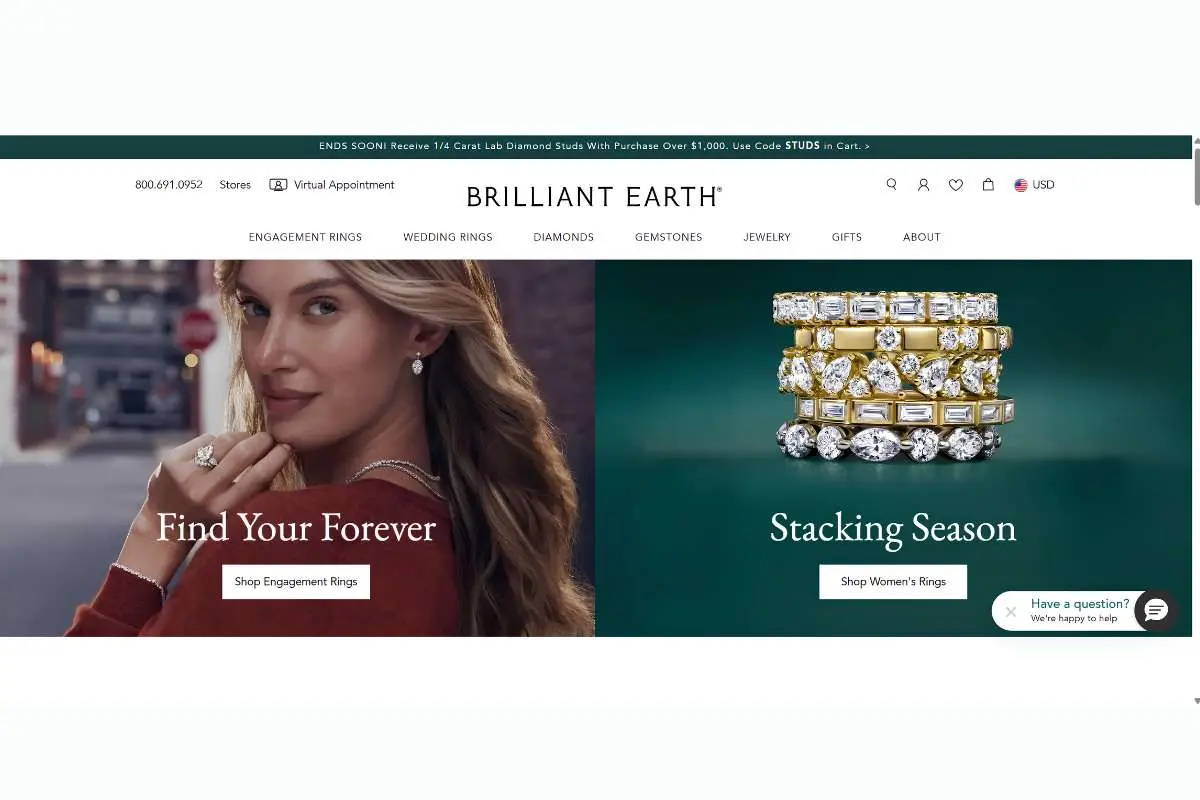
Brilliant Earth combines online shopping with a showroom-based jewelry experience. Its collection includes lab grown diamond engagement rings in a wide range of shapes, carat weights, metals, and design styles.
The company’s website allows shoppers to browse lab grown diamond rings and filter products based on characteristics such as shape, carat weight, metal, and price.
Key features
- Lab-grown selection: The collection includes certified lab grown diamond engagement rings.
- Design variety: Options include solitaire, halo, three-stone, bezel, vintage-inspired, and other styles.
- Online shopping: Buyers can research designs and diamond specifications through the company’s website.
- Customization: Shoppers can combine settings and lab grown diamonds to create a personalized ring.
- Physical experience: Brilliant Earth also maintains showroom options for consumers who want an in-person component.
Why its D2C model matters
Brilliant Earth illustrates how D2C diamond brands can combine digital discovery with physical retail. Consumers can begin researching online and use additional services when they want assistance with design or purchasing.
3. Zales

Zales represents a different form of consumer-direct retail. Rather than operating primarily as a specialized lab-grown manufacturer, it provides consumers with a large jewelry catalog through both online and physical retail channels.
Its lab-grown diamond engagement-ring collection includes a broad selection of shapes, carat weights, metals, settings, and price points.
Key features
- Large selection: Zales lists hundreds of lab-grown diamond engagement-ring products.
- Product variety: The collection includes solitaire, halo, hidden-halo, frame, bridal-set, and other designs.
- Certified options: Its listings include certified lab-grown diamond engagement rings.
- Online and physical retail: Consumers can shop through the website as well as Zales’ established retail network.
- Multiple price points: Product listings span a wide range of diamond sizes, settings, and prices.
Why its D2C model matters
Zales demonstrates how established jewelry retailers can participate in the direct consumer shift while maintaining both digital and physical shopping channels. Its model gives consumers the option to research products online while retaining access to traditional retail infrastructure.
4. MiaDonna
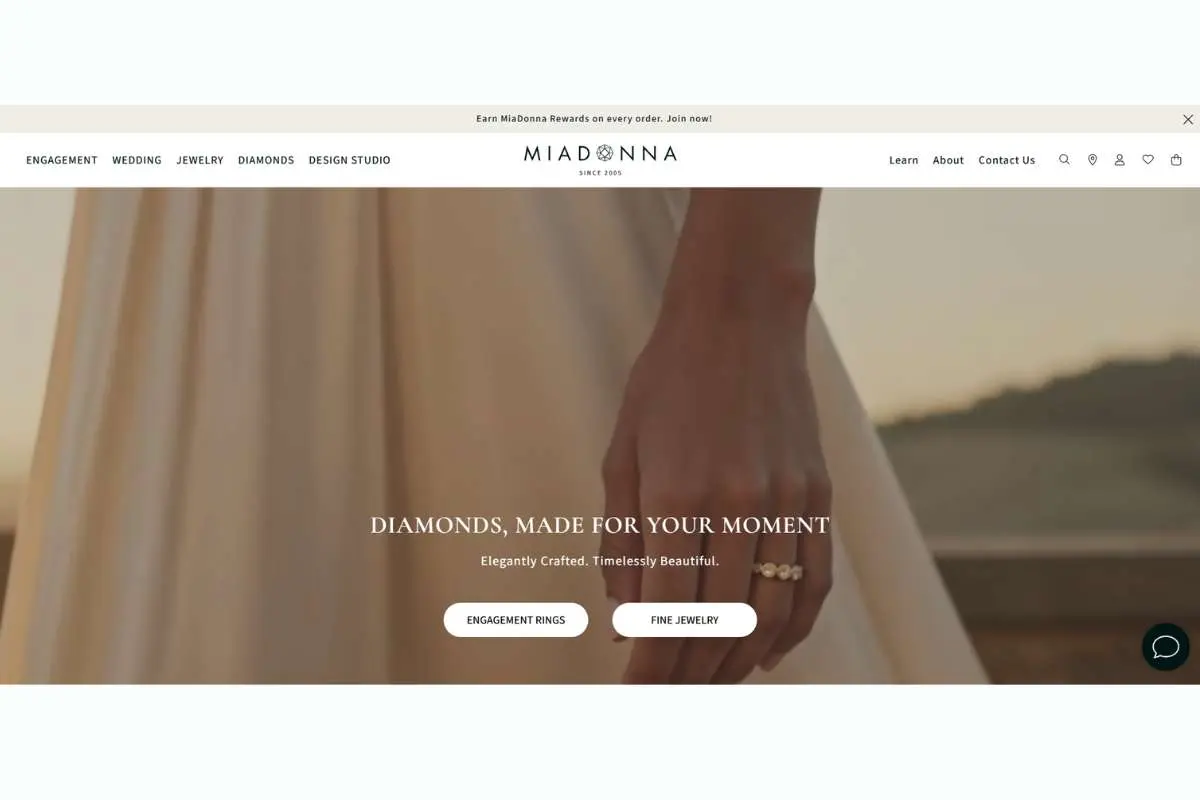
MiaDonna has specialized in lab-grown diamond jewelry since 2005 and has built its product offering around laboratory-grown diamonds and jewelry.
Its engagement-ring collection includes different diamond shapes, carat weights, precious metals, and setting styles. The company also offers custom design services for consumers looking for a more personalized ring.
Key features
- Lab-grown specialization: MiaDonna focuses its jewelry offering on lab-grown diamonds.
- Customization: Buyers can select diamond characteristics, metals, settings, and other available design elements.
- Custom design: The company provides custom engagement-ring services based on customer ideas or inspiration.
- Customer support: Non-commissioned jewelry specialists assist customers during the design process.
- Product options: Its collection includes engagement rings, wedding sets, and other lab-grown jewelry.
Why its D2C model matters
MiaDonna shows how a direct consumer model can extend beyond simply selling a finished ring. Its online shopping experience incorporates customization and consultation, allowing buyers to participate more actively in the design process.
5. Grown Brilliance
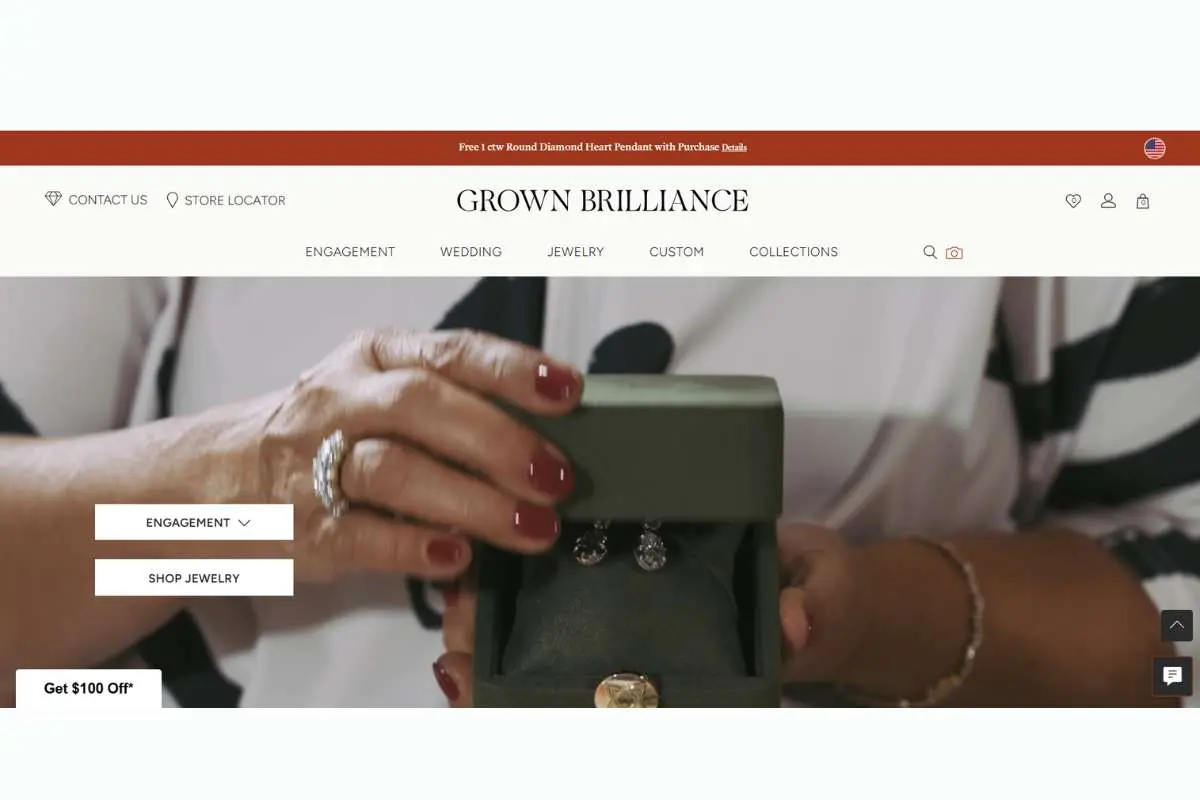
Grown Brilliance focuses heavily on lab-grown diamond jewelry and provides consumers with online tools for exploring and designing engagement rings.
Its engagement-ring collection includes pre-designed options as well as tools that allow shoppers to create a ring step by step. The company also offers custom design services for consumers with a specific concept or reference design.
Key features
- Lab-grown engagement rings: The company offers a dedicated collection of lab grown diamond engagement rings.
- Design studio: Buyers can use online tools to build a ring based on their preferred specifications.
- Custom designs: Customers can submit sketches or reference ideas for custom jewelry.
- Product variety: Options cover different diamond shapes, settings, and styles.
- Online shopping: The consumer journey is centered around digital product discovery and customization.
Why its D2C model matters
Grown Brilliance demonstrates how digital design technology can become part of the jewelry-buying process. Instead of simply selecting a finished product, consumers can interact with design tools and personalize important elements of the ring.
CVD vs. HPHT: The technology behind lab-grown diamonds
| Factor | CVD (Chemical Vapor Deposition) | HPHT (High Pressure High Temperature) |
| Production method | Grows diamond material in a controlled chamber by depositing carbon onto a diamond seed. | Uses high pressure and high temperature to create conditions under which diamond can form. |
| Basic process | Carbon-containing gases are introduced into a chamber, where carbon deposits onto a diamond seed. | A diamond seed is exposed to high pressure and high temperature with a carbon source. |
| Diamond composition | Produces diamond with the same fundamental carbon composition and crystal structure as diamond produced through HPHT. | Produces diamond with the same fundamental carbon composition and crystal structure as CVD-grown diamond. |
| Production environment | Controlled laboratory environment using specialized deposition equipment. | Controlled laboratory environment designed to reproduce high-pressure and high-temperature conditions. |
| Potential treatments | Some CVD-grown diamonds may undergo post-growth treatment depending on the production process. | Some HPHT-grown diamonds may also undergo additional treatment depending on the individual stone. |
| Pricing relevance | Production efficiency can contribute to the overall economics of lab-grown diamond manufacturing. | Production costs and manufacturing conditions also contribute to the economics of lab-grown diamond production. |
| What buyers should check | Review the diamond’s grading report, specifications, and any disclosed treatments. | Review the diamond’s grading report, specifications, and any disclosed treatments. |
Why the D2C model matters for engagement rings?
The growth of direct-to-consumer diamond businesses is changing more than the price displayed on a product page. It is also changing how consumers research diamonds, compare specifications, customize jewelry, and communicate with sellers.
The five brands in this overview demonstrate different approaches. Loose Grown Diamond emphasizes manufacturer-direct pricing and its connection to manufacturing. Brilliant Earth combines digital shopping with showroom experiences. Zales brings lab-grown products into a large established retail network. MiaDonna focuses heavily on lab-grown jewelry and custom design, while Grown Brilliance places greater emphasis on digital design and online customization.
For consumers researching lab grown diamond engagement rings, the useful comparison is therefore broader than price alone. Manufacturing relationships, certification, customization, return policies, customer support, design tools, and shopping options can all influence the overall purchasing experience.
As laboratory production continues to expand and more jewelry companies adopt consumer-direct models, these differences are likely to remain an important part of how engagement-ring buyers evaluate the modern diamond market.