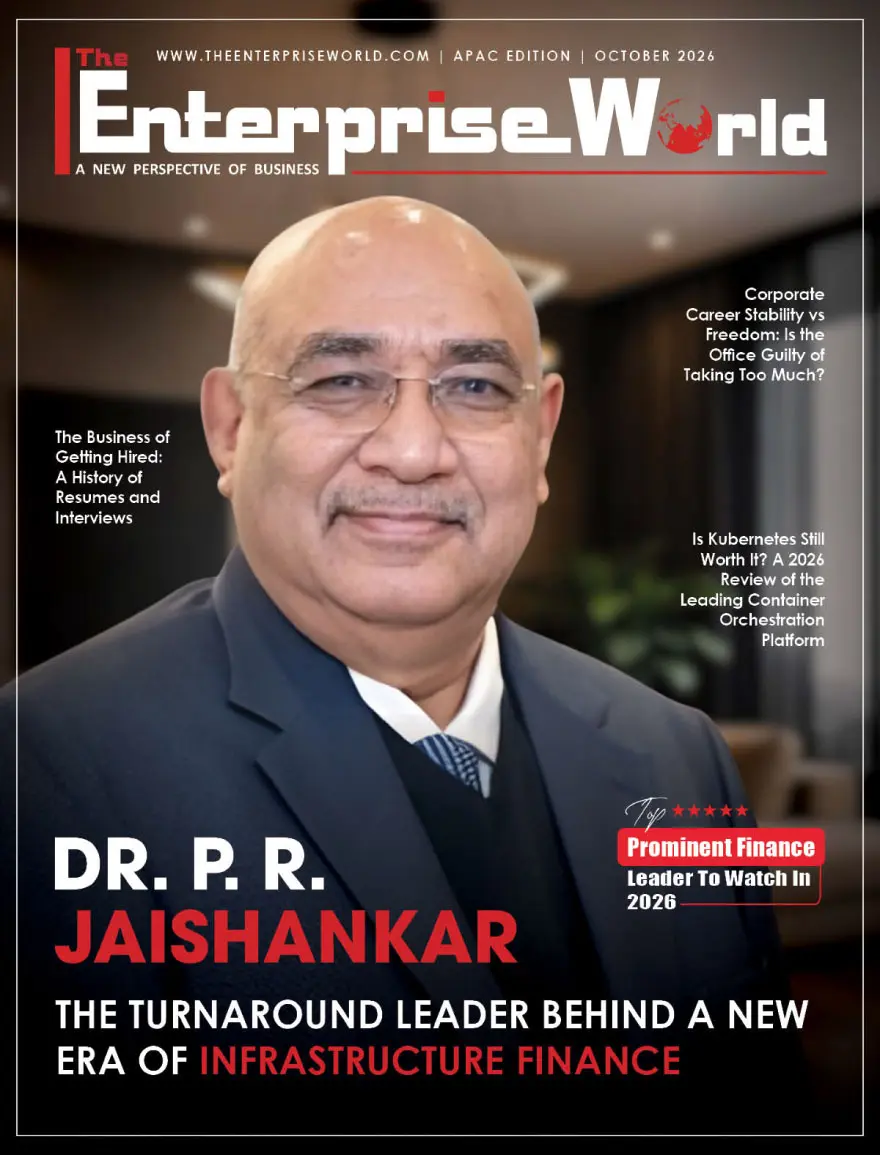
Infrastructure is built in concrete and steel, but the real test of whether it succeeds often begins somewhere far less visible: in the architecture of finance behind it.
Executive Summary & Turnaround Snapshot
A highway, power project, port, or digital network may take years to build and decades to deliver value. The financing must therefore survive the journey – not merely fund the beginning. This understanding has been central to Dr. P. R. Jaishankar’s professional journey and, above all, to his reputation as one of India’s most accomplished turnaround leaders in the field of infrastructure finance.
Nowhere was this institutional transformation more evident than during his defining tenure as the Chairman and Managing Director of India Infrastructure Finance Company Limited (IIFCL), the premier Infrastructure Finance Institution in the country. Taking the helm when the institution faced huge losses, severe asset quality pressures and downside risks, Dr. Jaishankar engineered one of the most prominent operational and financial revamps in India’s public financial sector. His strategy combined rigorous due diligence, enhanced post-disbursement monitoring, portfolio diversification into renewables and digital infrastructure, and capital market innovations like focused investments in Infrastructure Investment Trusts (InvITs) and high-rated bonds. The cumulative impact of these measures brought unprecedented financial results between FY20 and FY25:
- Profitability Expansion: Profit After Tax (PAT) surged over 42-fold, rising from ₹51 Crore to ₹2,165 Crore;
- Business Growth: Cumulative Sanctions rose to Rs. 3.52 Lakh Crores (FY25) from 1.38 Lakh Crores (FY20);
- Operational Scale: Annual Sanctions expanded over 5-fold from ₹9,337 Crore to ₹51,124 Crore, while Annual Disbursements climbed from ₹6,015 Crore to ₹28,501 Crore;
- Asset Quality Overhaul: Gross NPAs plummeted from 19.70% to 1.11%, with Net NPAs dropping to a record 0.35%;
- Portfolio Health: High-grade assets rated ‘A’ and above jumped from 43% to 93%, backed by a Capital Adequacy Ratio (CRAR) of 23.44% and a Net Worth reaching ₹16,395 Crore;
- Returns on Assets and Capital: RoA increased to 2.91 (FY25) as against 0.11 (FY20); RoC increased to 21.61% (FY25) from 0.68% (FY20);
- IIFC (United Kingdom), IIFCL’s London based Subsidiary – Hailed as 7th Fasted Growing Indian Company in UK (CII-Grant Thorton)
At a time when the systemic confidence about the foray of Non Banking Finance Companies (NBFCs) in infrastructure financing was coming under question, this landmark turnaround has proved that institutional recovery can be much more than a return to profitability: it can be a complete reset of strategy, risk discipline, financing innovation, and institutional confidence. Today, as an Director-cum-Advisor across globally leading infrastructure finance companies, Dr. Jaishankar brings a simple yet consequential perspective “India does not merely need more capital – it needs the right capital, structured in the right way, with risk allocated intelligently and institutions strong enough to deliver”.
The Executive Interview
Q1. How does purpose define a successful career in infrastructure finance?
Dr. P. R. Jaishankar:
“For me, infrastructure finance is never simply a question of arranging money or moving funds from point A to point B. It is about understanding what is holding an institution or project back, identifying where the real risk sits, and then building a financial structure that can actually work in the real world. That practical instinct became especially visible during my stint at IIFCL, where my purpose and challenge was not merely to improve short-term financial performance, but to strengthen the institution’s long-term ability to serve India’s infrastructure needs. Turning an organization around requires more than financial math it demands a cultural shift. We had to sharpen risk management, rethink conventional approaches, and reposition the institution for long-term impact.
That perspective takes you beyond capital flows. I pay close attention to how institutions behave, how decisions are made, and whether systems are strong enough to deliver sustainable outcomes. At the end of the day, leadership is not about the title on the door. It is about accepting accountability, making responsible choices with incomplete information, and understanding the consequences those choices may have far beyond the immediate decision.”
Q2. What experiences shape responsible leadership in finance?
Dr. Jaishankar:
“I believe that my professional journey has been shaped by a recurring theme: finance works best when it actively advances development rather than simply recording it. Over decades in development banking and financial services, I have worked in situations demanding sharp financial judgement, institutional responsibility, and the ability to navigate complex ecosystems. Navigating complex institutional turnarounds teaches you that lasting transformation is rarely the result of a single cinematic decision. At IIFCL, our turnaround was defined by the cumulative effect of many disciplined, daily choices until stability and growth became the baseline.
Academic inquiry has also remained an important companion to my professional life. Experience should never be a substitute for learning; it is a reason to keep learning. Conditions change, markets evolve, and assumptions that once seemed sound can easily become outdated. In my view, strong leaders must stay humble enough to continually examine evidence, absorb new ideas, and throw out established playbooks when reality demands a new strategy.”
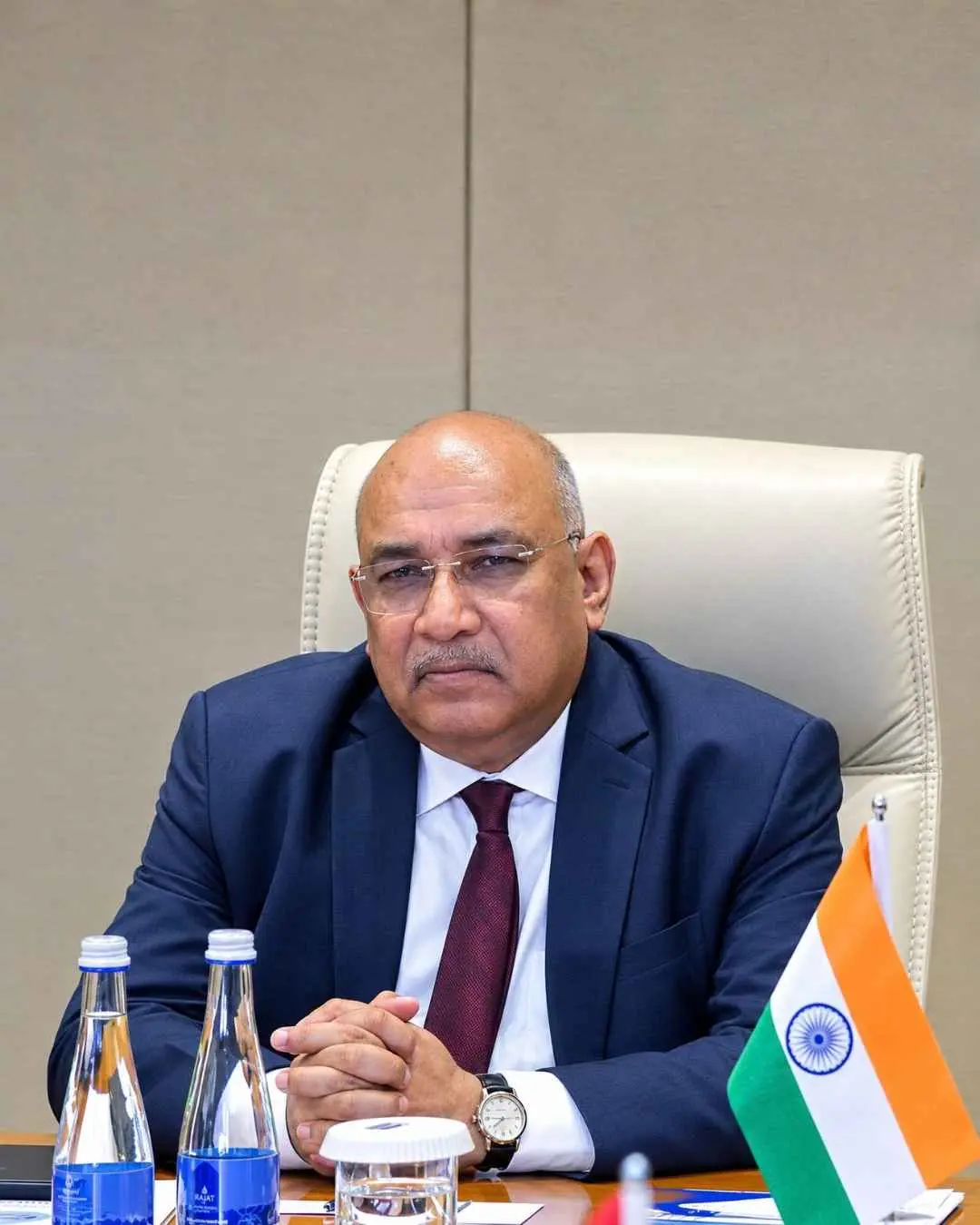
Q3. How can financial innovation drive infrastructure development?
Dr. Jaishankar:
“Infrastructure projects rarely fail for one simple reason. The most difficult moments often occur in the gaps – between construction and commissioning, between projected cash flows and actual performance, or between the interests of different stakeholders. My approach has been to confront those structural gaps directly rather than work around them. My focus has included stronger Post-disbursement Monitoring, betterment of Tripartite Concession frameworks, Credit Enhancement, and tailored Refinancing and Asset Recycling mechanisms designed to make capital more responsive to operational realities. Credit enhancement, for instance, allows projects with solid fundamentals to improve their credit profiles, thereby gaining access to bond markets at more competitive funding costs.
I also recognise that the role of Infrastructure Investment Trusts (InvITs), Infrastructure Debt Funds, Alternate Investment Vehicles and Refinancing mechanisms in making better use of available capital, is significantly important. These structures release funds tied up in mature, operational assets and recycle them back into new projects. The future potential also includes newer innovations such as ‘Project Completion Risk Insurance’, which we conceptualized in IIFCL. However, financial innovation must always remain responsible. Sound regulation, transparent disclosures, clear governance, and prudent risk management must underpin every new financial structure.”
“India does not suffer from a shortage of capital alone; it also faces a shortage of appropriately structured capital.“
Dr. P. R. Jaishankar
Q4. Why is Boardroom Governance essential for long-term trust?
Dr. Jaishankar:
“Governance begins with something every institution takes years to build and but may only take few moments to lose – trust. Strong balance sheets cannot compensate indefinitely for weak internal controls, poor judgement, or short-term thinking. My Board and committee experience has reinforced the importance of independent thinking, informed challenge, transparency, and accountability not as formalities, but as the operating system of a credible institution. Further, I always respected open and free communication during the meetings, which brings the insights and collective wisdom.
Effective oversight begins long before a proposal reaches the Board table. Risk management must be integrated into strategy from the start. Ambitious growth targets are meaningful only when an institution has the people, systems, controls, capital strength, and monitoring capability to carry them through. The real test of governance is not whether an institution can announce a strategy, but whether it can execute that strategy responsibly.
Ethical leadership is equally practical. Reputation compounds slowly over time, like interest, but it can disappear quickly. Leaders have to own their decisions, understand their impact on stakeholders, and maintain radical transparency when circumstances become difficult. Integrity is not simply a personal virtue; it is an institutional asset that strengthens confidence when pressure is greatest.”
“Ethics is not separate from strategy; ethics is strategy for the long term.“
Dr. P. R. Jaishankar
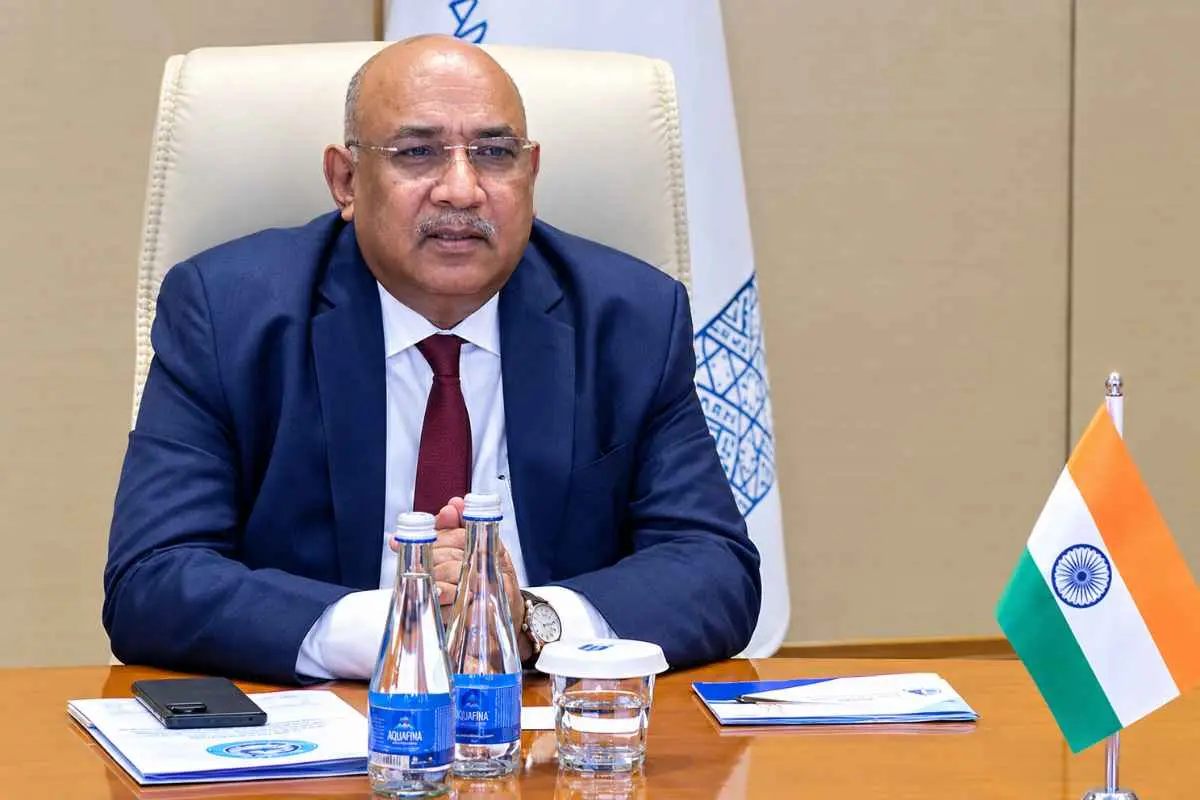
Q5. What role do institutions play in driving national progress?
Dr. Jaishankar:
“I see finance, public policy, and national development as three parts of the same story. Engagement with policymakers, regulators, and industry institutions shows how much depends on the quality of interaction between them. Infrastructure is ultimately a team effort.
Governments set policy direction and regulatory frameworks. Private enterprises bring speed, execution capability, and operational expertise. Financial institutions mobilize and allocate capital, while regulators build the ecosystem of confidence within which everyone operates. When these pieces move in sync, difficult development challenges become manageable; when they do not, even well-funded projects can lose momentum.
That is why I place such emphasis on the quality of institutions, policies, and contracts. I advocate for a continuous dialogue among policymakers, regulators, financiers, developers, and investors. The objective is not simply more conversation, but better understanding: a financier needs to understand execution realities on the ground; a developer needs to understand investor expectations; and policymakers need to see how rules work in practice. Practical solutions emerge when those perspectives meet.”
Q6. How does international cooperation advance global financial growth?
Dr. Jaishankar:
“My work in multilateral financial cooperation added another dimension to this perspective. Serving as Chair of the Shanghai Cooperation Organisation (SCO) Interbank Consortium during India’s presidency in 2022-23 brought together organisations operating under different regulations, priorities, and institutional cultures. It offered a powerful reminder that today’s development challenges—connectivity, trade, energy transition, technology, and finance—do not stop at national borders.
It strengthened my belief that cross-border partnerships are built on trust, patience, and a clear understanding of shared interests. Countries may have very different systems and priorities, yet they often confront remarkably similar questions. Successful cooperation comes from identifying common ground without ignoring national circumstances.
There is an interesting parallel between diplomacy and high-stakes finance. Both depend on listening deeply before deciding, respecting different perspectives, and building confidence one step at a time. High-level summits create real value only when dialogue eventually turns into action—into projects, investments, and measurable outcomes on the ground.”
“International collaboration becomes meaningful when it moves from dialogue to implementable projects.“
Dr. P. R. Jaishankar

Q7. Why is credibility the foundation of capital mobilisation?
Dr. Jaishankar:
“Capital follows confidence—and confidence is especially valuable when an institution is being rebuilt. Institutional credibility is therefore the true starting point of capital mobilisation. Investors and lenders look beyond immediate financial spreadsheets to evaluate execution capability, governance standards, leadership quality, and strategic clarity.
A turnaround becomes durable only when stakeholders begin to believe that improved numbers reflect stronger underlying systems, better judgement, and a credible strategy for the future. While being the Concurrent Chairman of IIFCL’s London based subsidiary company, the turnaround effects resulted in the Company being recognised as the 7th fastest growing Indian Company in the United Kingdom.
I feel that building this credibility comes down to daily operational discipline: thorough preparation, clear communication, and an unwavering commitment to keeping promises. In difficult moments, organisations earn confidence by answering hard questions head-on before they become crises.
Strategy ultimately has to travel from the Boardroom to the ground. That requires capable teams, realistic planning, disciplined execution, and strong stakeholder relationships. Lasting trust is not manufactured through public relations; it is built inside the organisation through consistent, principled behavior.”
Q8. How can financial systems transition toward sustainable development?
Dr. Jaishankar:
“Sustainability is not an additional chapter to tag onto the end of an annual report; it is part of the core financial decision itself. Because infrastructure assets remain active for decades, choices made during initial planning and financing shape environmental, social, and economic outcomes long after the original decision-makers have moved on.
The question is not simply whether a project generates an acceptable financial return today. It is whether it remains economically viable, environmentally responsible, socially inclusive, and climate-resilient over time. That means evaluating natural resource use, emissions, community impact, public health, employment, and climate preparedness alongside conventional metrics.
Financial institutions hold immense power to shape the future. ESG considerations can be embedded directly into appraisal and monitoring models, reporting can become more transparent, and capital can increasingly favor projects that deliver cleaner outcomes. This is ultimately about making sure that the urgency of today does not create the vulnerabilities of tomorrow.”
“Sustainability is not a constraint on development; it is the discipline that makes development durable.“
Dr. P. R. Jaishankar
Q9. How will research and continuous learning shape the future of finance?
Dr. Jaishankar:
“The connection between research and practice has remained central to my thinking. My doctoral work in financial intermediation for infrastructure finance deepened my interest in evidence-based analysis, institutional design, and the testing of established assumptions. Research is most valuable when it helps professionals see a problem differently—and then find a practical way forward.
Continuous learning becomes even more non-negotiable as the sector evolves. India’s infrastructure-finance system must respond to shifting economic conditions, changing investor expectations, technology, and emerging risks. I see particular scope for stronger project preparation, better risk assessment, post-disbursement monitoring, faster dispute resolution, digital tools, early-warning systems, and sophisticated approaches to climate-related financial risks.
Looking ahead, the strongest institutions will combine professional experience with better data analytics. More timely information sharpens monitoring and reveals warning signs earlier. Yet technology can only improve the quality of data—it can never replace human wisdom. Future financial leaders will still need the critical thinking, moral courage, and nuanced judgement that no algorithm can provide.”
“Learning should not merely add to one’s knowledge; it should improve the quality of one’s judgement.“
Dr. P. R. Jaishankar
Q10. What lessons emerge from navigating complex industry challenges?
Dr. Jaishankar:
“Much of my career has involved decisions where there is no perfect answer – only competing priorities, incomplete information, and consequences that must be weighed carefully. My IIFCL turnaround experience brought that reality into sharp focus. Leaders must act decisively while the full picture is still emerging, protect the balance sheet while preparing for growth, and distinguish temporary setbacks from structural weaknesses.
One paramount lesson stands out: question the underlying assumption before committing to the decision. A proposal may look compelling on paper, yet leaders must ask what the numbers are really saying, what could go wrong, and what subtle signals might be easy to miss. Structural problems are almost always cheaper to address early than after they have become entrenched.
For me, leadership ultimately rests on three pillars: Capability, Credibility, and Character. Knowledge and experience matter, but they become meaningful only when matched by integrity and disciplined execution. Extraordinary turnaround leaders do not merely repair what is broken; they leave behind an institution that is more confident, more capable, and better prepared for the future.”
Q11. What is the vision for next-generation financial leaders?
Dr. Jaishankar:
“The next generation of leaders will operate in an environment of unprecedented complexity and will be judged increasingly by what they build for the long term. As financial systems evolve, leaders will need to combine technical knowledge with sound judgement, and adaptability with core principles. The central challenge will be responding to shifting market conditions without allowing short-term pressures to redefine long-term purpose.
My advice to young professionals and future leaders is simple: build capability before chasing position. Professional growth comes from learning continuously, executing every assignment with discipline, and accepting responsibility when situations are difficult. High-sounding titles may offer brief visibility, but character, capability, and credibility determine whether that visibility becomes lasting leadership.
Ultimately, progress belongs to leaders who can turn bold ideas into responsible, real-world action. Build the capability, credibility, and character required for greater responsibility—and remain true to the highest convictions that guide you.”
Quick Takes Callout Box
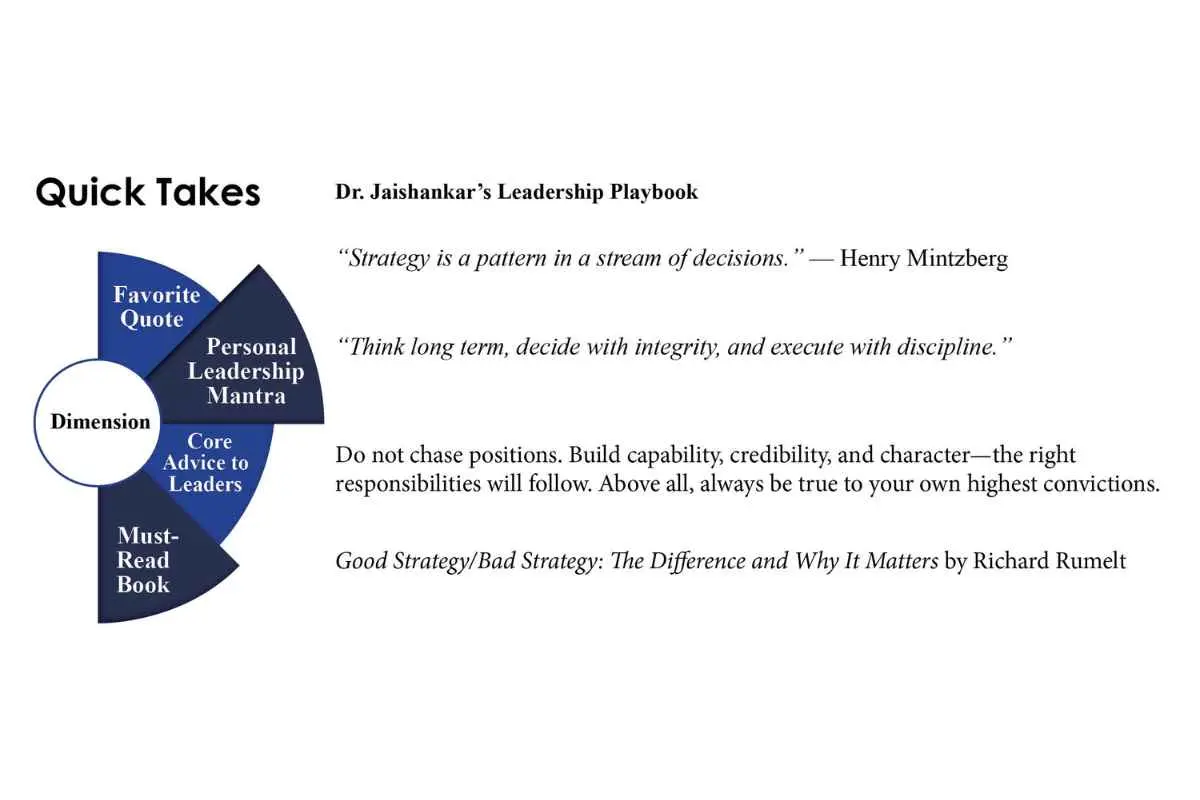
| Dimension | Dr. Jaishankar’s Leadership Playbook |
|---|---|
| Favorite Quote | “Strategy is a pattern in a stream of decisions.” — Henry Mintzberg |
| Personal Leadership Mantra | “Think long term, decide with integrity, and execute with discipline.” |
| Core Advice to Leaders | Do not chase positions. Build capability, credibility, and character—the right responsibilities will follow. Above all, always be true to your own highest convictions. |
| Must-Read Book | Good Strategy/Bad Strategy: The Difference and Why It Matters by Richard Rumelt |
Key Takeaways: The Architecture of Impact
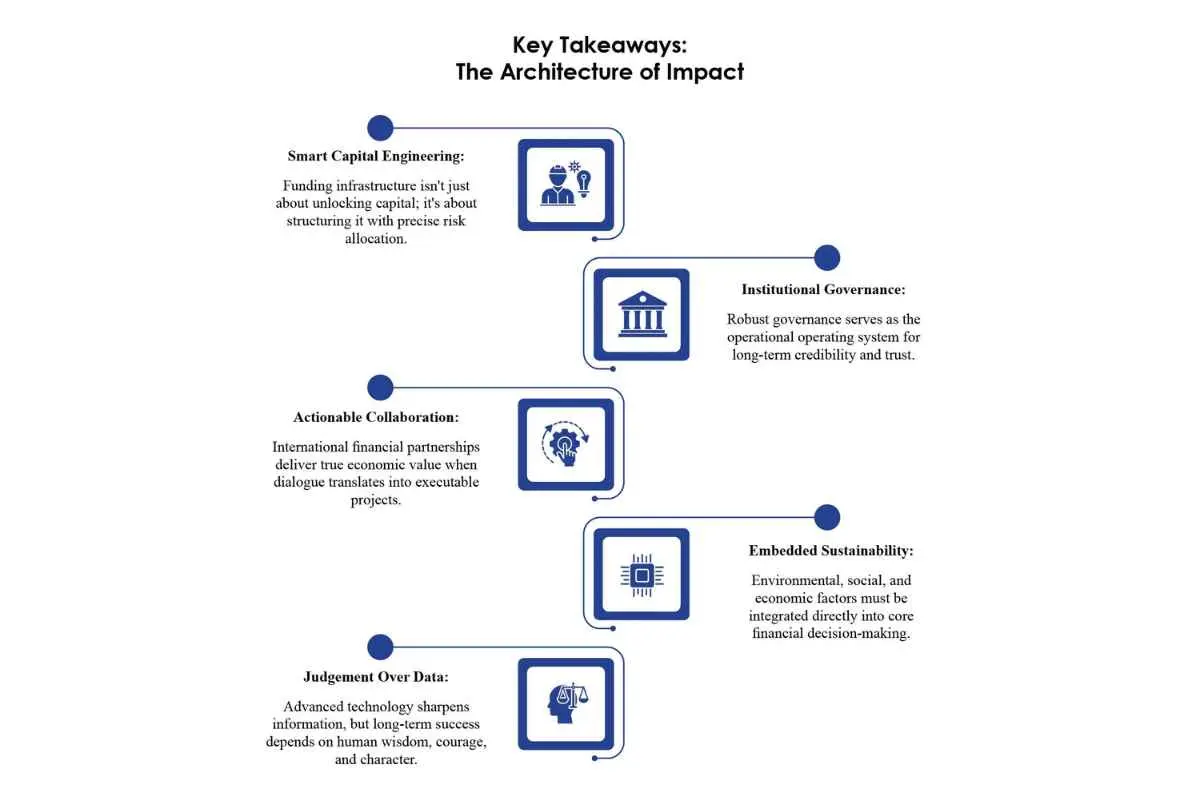
- Smart Capital Engineering: Funding infrastructure isn’t just about unlocking capital; it’s about structuring it with precise risk allocation.
- Institutional Governance: Robust governance serves as the operational operating system for long-term credibility and trust.
- Actionable Collaboration: International financial partnerships deliver true economic value when dialogue translates into executable projects.
- Embedded Sustainability: Environmental, social, and economic factors must be integrated directly into core financial decision-making.
- Judgement Over Data: Advanced technology sharpens information, but long-term success depends on human wisdom, courage, and character.