
“Skills gap” has become the explanation for almost everything:
- The project that slipped
- The role that stayed open
- The team that can’t adopt the new system.
Some of those really are skills gaps, and some are something else. Closing the skills gap starts with knowing which one you have. This article breaks down the practical diagnostic steps to identify skill shortages and how to build upskilling paths through methods like build, buy, and borrow that solve the underlying operational bottleneck.
What is a skills gap?
A skills gap is the difference between the skills a business needs to meet its goals and the skills its employees have today. It helps employers see where workers need more training or support to do their jobs well. Businesses can close these gaps by training current staff, hiring skilled workers, or bringing in outside experts.
A skills gap means a business has employees who lack certain skills, while a labor shortage means there are not enough workers to fill available jobs.
The problem affects businesses across the world. The World Economic Forum’s Future of Jobs Report 2025 found that 63% of employers see skills gaps as a major barrier to business change.
How to identify and prioritize your skills gaps?
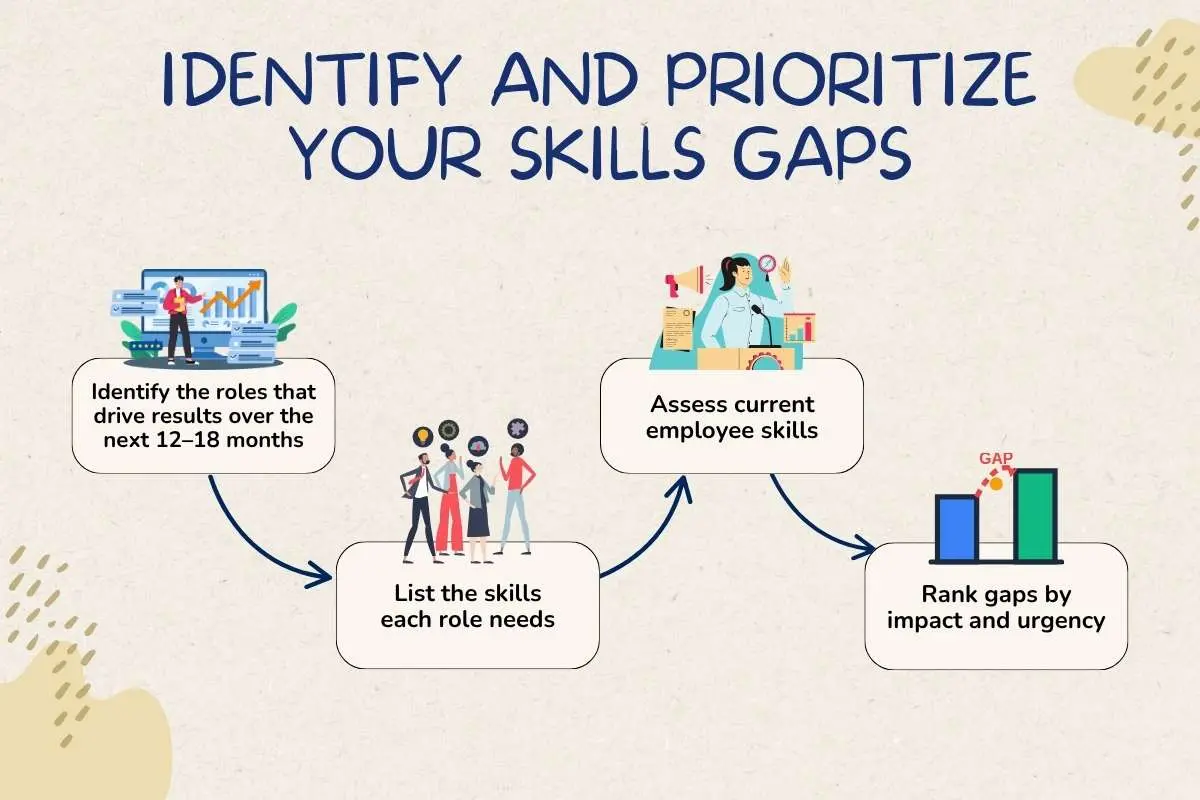
Businesses can identify skills gaps by checking the skills each role needs. They can also assess current employee skills and rank missing skills by their impact on business goals. Follow these four steps to find the most urgent gaps and decide where to focus your time and budget.
1. Identify the roles that drive results over the next 12–18 months
Start with roles where a vacant position or a missing skill could cause the most harm. Focus on teams that affect revenue, customer service, safety, or key business plans instead of reviewing every role at once.
2. List the skills each role needs
Separate the skills employees need today from those they may need as tools and work methods change. Mark the skills that employees must have to do their jobs well. This helps you separate urgent needs from skills that may matter later.
3. Assess current employee skills
Use skill tests, certifications, work results, and manager feedback to understand what employees can do. Self-ratings can help, but employees may overestimate their skills. Compare them with other checks to get a clearer view of each person’s strengths and training needs.
4. Rank gaps by impact and urgency
Prioritize gaps that affect revenue, delay key work, or put the business at risk of breaking rules. Closing the skills Gap linked to safety or legal duties should rank above those that slow less urgent projects. This helps leaders direct training budgets and time toward the most pressing needs.
Let us take an example:
A service team has 40 employees and needs 12 certified technicians, but only 7 hold the required certification. This leaves a gap of 5 certified technicians. Since the certification requirement takes effect in six months, the business should rank this gap first and plan training or hiring to meet the deadline.
What are the ways of closing the skills gap?
Closing the skills gap can be done in three ways: build skills in current employees, buy skills by hiring new people, or borrow skills from outside experts. Each option suits a different need. Many businesses combine these methods to fill urgent gaps while preparing their teams for future needs.
1. Build: train or upskill current employees
Build skills by training current employees through courses, mentoring, job rotations, or hands-on projects. This approach works well when employees already have related skills, and the business can give them time to learn.
- Time needed: Training can take several months because employees need time to learn new skills and apply them at work.
- Cost: Training often costs less per person than hiring. However, businesses must also account for employee wages during training hours. This is important, especially for small businesses working on workforce development, as workers spend less time on their regular tasks.
- Best for: Use this method when a skill will remain useful for years, and current employees have related skills. For example, a warehouse team leader with scheduling experience could train for a planner role.
- Watch out for: Training may stall if employees have no time to learn. Managers should set aside work hours for training and practice so employees can build skills without falling behind on daily tasks.
2. Buy: hire people who already have the skill
Hire people from outside the company who already have the skills needed for the role. This approach helps businesses fill gaps when current employees lack the skills or time needed to take on new work.
- Time needed: Hiring can take weeks or months, depending on how rare the skill is and how long the recruitment process takes.
- Cost: This option often costs more than training or short-term outside support. Costs include recruitment fees, salaries, competitive job offers, and the time new hires need to learn company systems.
- Best for: Use this method when the business needs a skill soon, and no current employee is ready to fill the gap. For example, a company may need to hire a data engineer if no employee has the skills required for the role.
- Watch out for: New hires still need time to learn how the company works. If they leave, the business may face the same skills gap again, so employers should also focus on keeping skilled workers.
3. Borrow: bring in outside expertise
Bring in contractors, consultants, vendors, or partner companies to access skills without hiring full-time staff. This approach gives businesses access to experts when they need help with a specific task or project.
- Time needed: This is often the fastest option, with some experts available within days or weeks, depending on the skill and the project.
- Cost: Businesses pay for the work or time they need without taking on a long-term salary. However, expert fees can be high, especially when the work requires rare skills or specialist knowledge.
- Best for: Use this method when the need is short-term, or the work must begin before employees can finish training. For example, a company could hire a contractor to support a six-month system migration.
- Watch out for: Outside experts may leave without passing on their knowledge. Closing the skills gap with this method requires a handover and involves current employees in the work. This is so they can use those skills after the contract ends.
How to choose the right approach
Start by asking three questions: How soon does the business need the skill? How long will the skill remain useful? Do current employees have related skills they can build on?
- Borrow when the need is urgent and short-term.
- Buy when the business needs the skill soon and has no suitable employees to train.
- Build when the skill will remain useful, and current employees have time and the right base skills to learn it.
Many skill gaps need a mix of these approaches. A business could hire a contractor to meet an urgent need while training current employees to handle the same work in the future.
Who is responsible for closing the skills gap?

Closing a skills gap is shared work across leadership, HR or L&D, managers, and employees. Each group has a different role, but every priority gap needs one named owner who is accountable for closing it.
- Leadership: Business priorities guide which skills gaps need attention first. Leaders approve budgets, set clear goals, and make sure teams have the resources to address the most urgent needs.
- HR or L&D: Training plans help employees gain the skills the business needs. HR and L&D teams assess learning needs, arrange suitable workforce development programs, and track progress to see whether employees have gained the required skills.
- Managers: Regular contact with employees helps managers spot skill gaps that affect daily work. They can explain where improvement is needed, make time for training, and give employees chances to practise new skills.
- Employees: Employees take part in learning, practise new skills, and use them in their roles. Their feedback helps the business understand what they have mastered and use metrics to see which areas they still need support in.
Each group helps move closing the skills gap forward, but shared effort alone does not guarantee results. Assigning a clear owner to each priority gap helps keep actions on track and makes the process of workforce development smooth.
Conclusion:
Closing the skills gap requires addressing the specific capability bottlenecks within your teams. Starting with targeted upskilling initiatives and measuring actual workplace application ensures your training efforts build a resilient internal pipeline while keeping external recruiting costs under control.
FAQs
1. How much time does it typically take in closing the skills gap within a team?
Most targeted upskilling initiatives take 3 to 6 months to show measurable performance improvements.
2. What is the difference between a skills gap and a capacity gap?
A skills gap occurs when current employees lack the knowledge to perform specific tasks. A capacity gap means the team has the skills but lacks the bandwidth to handle the workload.
3. How do you conduct a skills gap audit without disrupting daily operations?
Run short, 15-minute self-assessments paired with direct manager evaluations on core project deliverables rather than pulling employees into long evaluation sessions.
4. What should a company do if an internal skills gap is too wide for upskilling?
When immediate technical expertise is required, a hybrid approach works best while running an internal training track to build long-term capability.
5. How do you prevent skills gaps from reemerging as business tools and needs change?
Establish quarterly reviews between department heads and HR to evaluate upcoming project requirements against current team skill inventories before project bottlenecks occur.