Key Takeaways:
- Rate Decision Unclear: Fed delays signals on October rates.
- Global Inflation: Central banks tighten monetary policy.
- AI Growth: Warsh sees productivity gains but warns of disruption.
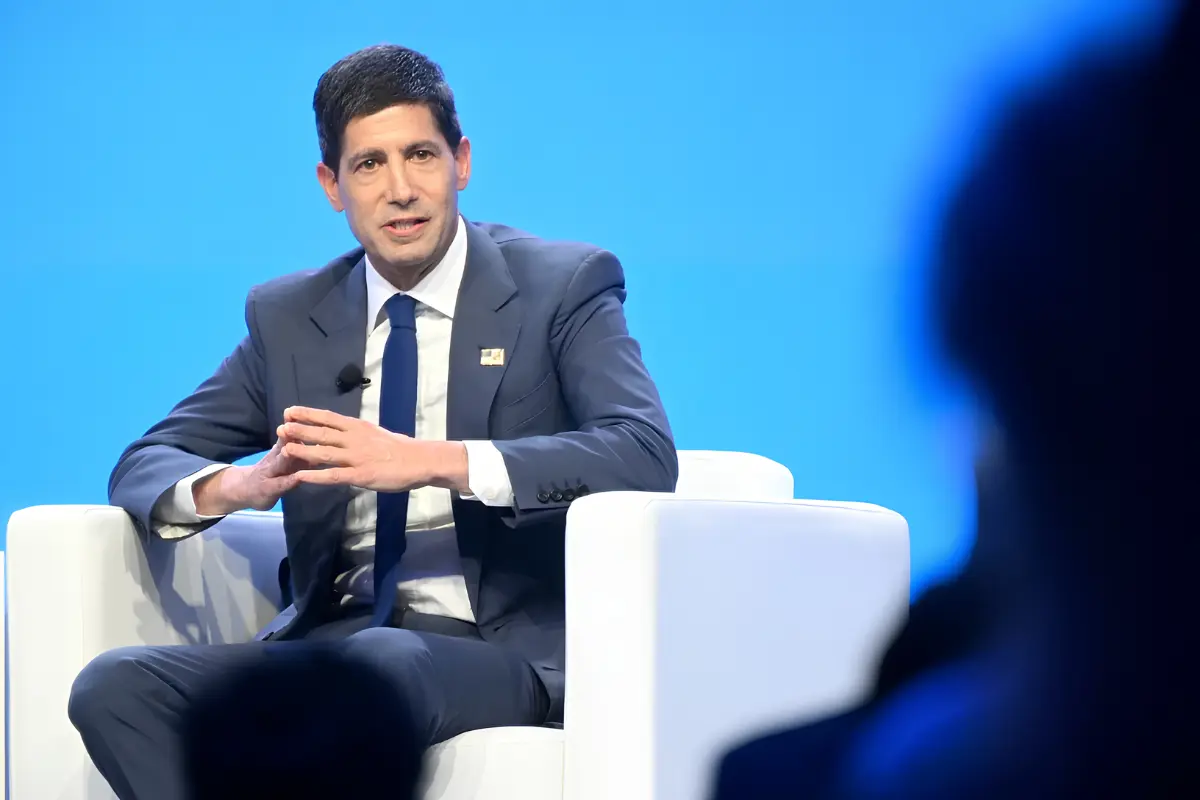
Federal Reserve Chair Kevin Warsh declined Friday to signal whether its Fed interest rate decision this month will be another rate increase, citing persistent inflation pressures while warning that artificial intelligence could transform economic growth through a turbulent transition.
Speaking at the International Monetary Fund and World Bank annual meetings in Bangkok, Warsh defended his approach of avoiding advance guidance on policy decisions. He also highlighted a global shift toward tighter monetary policy as rising energy costs and heavy AI investment complicate the economic outlook.
Warsh leaves October rate decision open
Warsh said he would not prejudge upcoming Federal Open Market Committee meetings, leaving investors without a clear indication of the next Fed interest rate decision. The central bank is scheduled to meet Oct. 27-28 after raising its benchmark interest rate to a range of 3.75% to 4% in September.
“I don’t prejudge meetings. I don’t believe in saying now what I might do at the meetings that we have in the balance of this year,” Warsh said during a discussion with IMF Managing Director Kristalina Georgieva.
He reiterated his opposition to forward guidance, the practice of signaling likely future policy decisions to financial markets. Warsh said the Fed had entered a new chapter in which investors should interpret economic data rather than rely on advance indications from policymakers.
Market expectations point toward a possible pause in October, followed by another increase in December. Goldman Sachs economists led by Jan Hatzius wrote in a research note that Warsh’s remarks, alongside comments from other Fed officials, suggested the Federal Open Market Committee was likely to hold rates steady this month.
Global central banks tighten policy as inflation persists
Warsh described monetary tightening across major economies as a coordinated response to inflation, although each central bank operates under its own mandate. He said policymakers in many countries were tightening monetary policy at the same time, adding that “there are no free riders.”
Rising energy costs and substantial investment in AI are adding to inflation concerns and borrowing costs worldwide. Governments also face mounting debt, with global public debt projected to exceed 100% of gross domestic product, according to the report.
The IMF has warned that relying on economic growth alone may not be sufficient to address the U.S. government’s debt burden. Higher interest rates can help restrain inflation but also increase borrowing costs for households, businesses and governments.
Financial markets showed a measured response to Warsh’s comments. S&P 500 and Nasdaq futures edged higher after his speech, while Asian stock indexes and U.S. Treasury yields remained largely stable.
Warsh sees AI driving productivity despite uncertainty
Warsh expressed optimism that economies adopting AI effectively could become more productive and wealthier over time. However, he cautioned that the transition could be difficult, particularly as businesses and workers adjust to the technology.
“I want you to hear from me optimism, but optimism leavened by the seriousness of purpose,” Warsh said.
He added that the long-term consequences of AI could prove substantial, while acknowledging uncertainty about its near-term effects on employment. The technology’s rapid expansion is also contributing to investment activity and complicating policymakers’ efforts to assess economic conditions.
For central banks, AI could create opportunities to improve economic analysis while introducing new challenges in forecasting productivity, inflation, and labor-market changes. Warsh’s remarks underscored the need to balance optimism about technological progress with caution over its immediate economic effects.
The Fed’s October meeting will provide the next indication of how policymakers assess inflation and economic growth. Its final scheduled policy meeting of the year is expected in December, when investors will watch for further signals on the Fed interest rate decision and borrowing costs.