


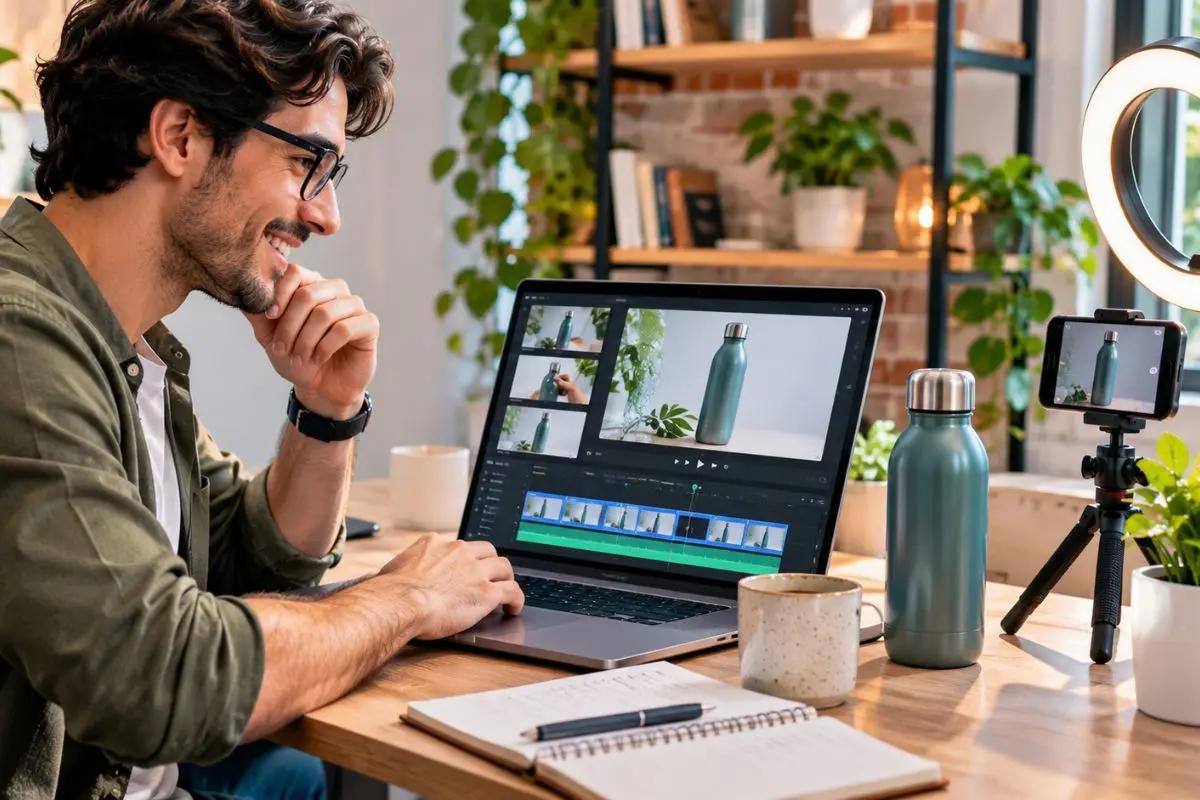
Starting a business involves creativity, sound financial management and successful marketing. For established businesses, much of the advertising is large and may be costly, but for startups, there is a need to find cost-friendly options through which their products can be introduced and customers can be pulled. Video marketing offers an engaging method of showcasing products, explaining features and communicating value. But a traditional video production can be very costly, require professional video crews and have lengthy video editing times.
AI product demo videos are changing how startups make marketing video. With AI tools, it is now possible to turn existing product images, descriptions and creative ideas into promotional videos without extensive production skills. It’s a great way for small businesses to produce business-related marketing materials without breaking the bank.
Why Product Demo Videos Matter for Startup Marketing
One of the first things that customers want to know about a product is how it functions. Both photographs and written description convey information, but videos can help show the product functionality, appearance and usefulness.
A brief product demonstration may illustrate how an item addresses a problem, fits in to daily life or simplifies a given task. This visual explanation makes it easier to determine potential customers if this product is suitable for their needs.
Demonstration videos are especially helpful for new businesses launching new or unknown products. They can share complex content with easy visual narratives, which minimize the need to expend lengthy explanations.
Video can also be repurposed for websites, social media, and digital ads & product pages, enabling your business to connect with customers across marketing platforms.
How to Make Making Product Video More Affordable with AI.
Conventional product videos are typically filmed with cameras, lighting gear, appropriate locations, video editing software and professional help. Such requirements can be challenging to keep up for smaller businesses when it comes to regular video production.
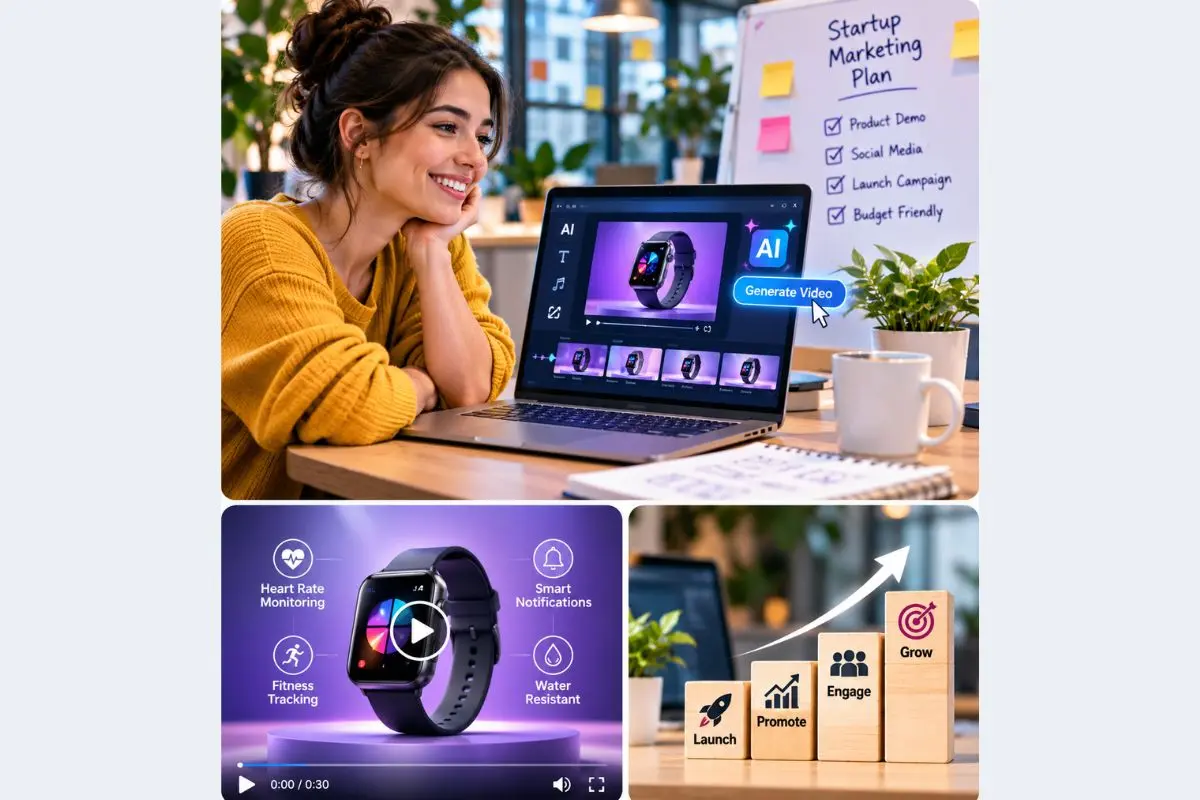
However, AI video generation is a viable option to help creators convert a product photo and written instructions into a video.
For instance, if a startup has a video of its product, they can use the CapCut ai product video generator to create a product demonstration, promotional ideas, or brief marketing videos.
These can be useful for structuring the scenes, testing out presentation methods and developing alternative marketing strategies, without starting a project from the beginning.
The opportunity for savings is through the elimination of repetitive production tasks, but costs, production limits and commercial conditions should be considered prior to platform selection.
Although AI can create video content, it still needs human oversight to ensure proper representation of the product and adherence to the business’s marketing goals.
How to make effective product demonstrations on limited resources
High production values and special effects are not the only things that make a good product demonstration. Sometimes, simple editing is less valuable than good communication and information.
The first step in starting up a business should be to determine what is the most crucial benefit of the product. A short video is a better way to explain a feature that is solving a customer problem, as opposed to trying to explain all the features.
A company that offers reusable drinkware, for instance, could exhibit the product on their commute to work, or another company that sells desk accessories could demonstrate the benefits of their products for workspace organisation during a daily work commute.
Simple storytelling can go through the following steps: Introduce the problem, explain the product, show how it works, and explain the benefit.
AI can help with visual ideas, scene cuts and other presentations. But where possible, businesses should be using real photographs of products and verified specifications.
Turning Existing Product Images Into Engaging Videos

For many of the startups, they already have photos made for their online stores, catalogues or promotional campaigns. These pictures are a good place to begin video development.
The AI-powered animation can add elements such as movement, transitions, and visual backgrounds to static product images. A photo of a skin care bottle might be part of a short promo clip that also includes a nice camera movement and the correct life shot.
Likewise, product images may be placed in demonstrations showcasing various colours, dimensions and/or characteristics.
The important consideration is maintaining product accuracy. The visual content must not include fictional elements, alter packaging information or suggest functions that the product is not capable of.
Startups can maximize the use of their creative assets by repurposing photos responsibly and avoid constant photo shoots.
Adapting Product Videos for Social Media Marketing
Social media has emerged as a key platform for start-ups to find new customers. Short videos can be used to give an introduction to products in a short time, and invite the audiences to dig deeper into the information.
The length, format and way a video is shown differ across platforms, so it’s important to play things safe and take into account video dimensions, length and presentation style.
For mobile-first content, vertical videos work well, and for web or presentation screens, horizontal videos might be more effective.
The opening sentences need to convey an interesting or useful message. Presenting the product first, followed by a working example, or solving the problem of a customer who is familiar to you can make the content more relevant.
Captions also enhance accessibility and convey information when viewed without sound.
Instead of pushing the same product to all markets, startups can tweak a basic prototype into multiple versions designed for various markets.
Ensuring Authenticity in AI-Driven Marketing Content

While AI can speed up video creation, it’s crucial to maintain authenticity to foster customer trust.
Those who are considering to buy should have a precise idea about the product they are buying. If the product demonstrations are misleading or the performance claims are exaggerated and the visual representation is not realistic, credibility can be compromised.
It is important to check generated content for unusual movements, incorrect colours, product dimensions and distorted logos to ensure businesses are not misled.
In instances where applicable, real footage can be used along with AI-generated graphics for a more reliable presentation.
It is also important for startups to make sure that they have the rights to use any photos, music, voice, and other creative content that may be incorporated into their videos.
AI should facilitate communication, not replace the information and responsible marketing decisions.
Testing Different Video Concepts Without Overspending
An AI-supported production offers the benefit of exploring various creative avenues and making rapid decisions on the potential direction without dedicating a significant amount of resources.
A start-up could try a video that shows its products are affordable, another that shows how convenient they are, and a third that shows product quality.
These differences can be useful for businesses to know what messages are effective for potential customers.
Evaluating performance with meaningful metrics (view duration, website visits, enquiries and conversions, not just views) is the important thing to do, not provide only view counts.
The results can then be used to shape the next video, helping businesses focus their scarce marketing resources on videos that get them the engagement they need.
For best results, each variation should alter an easily discerned component so that the results are meaningful.
Creating a Sustainable Video Marketing Strategy
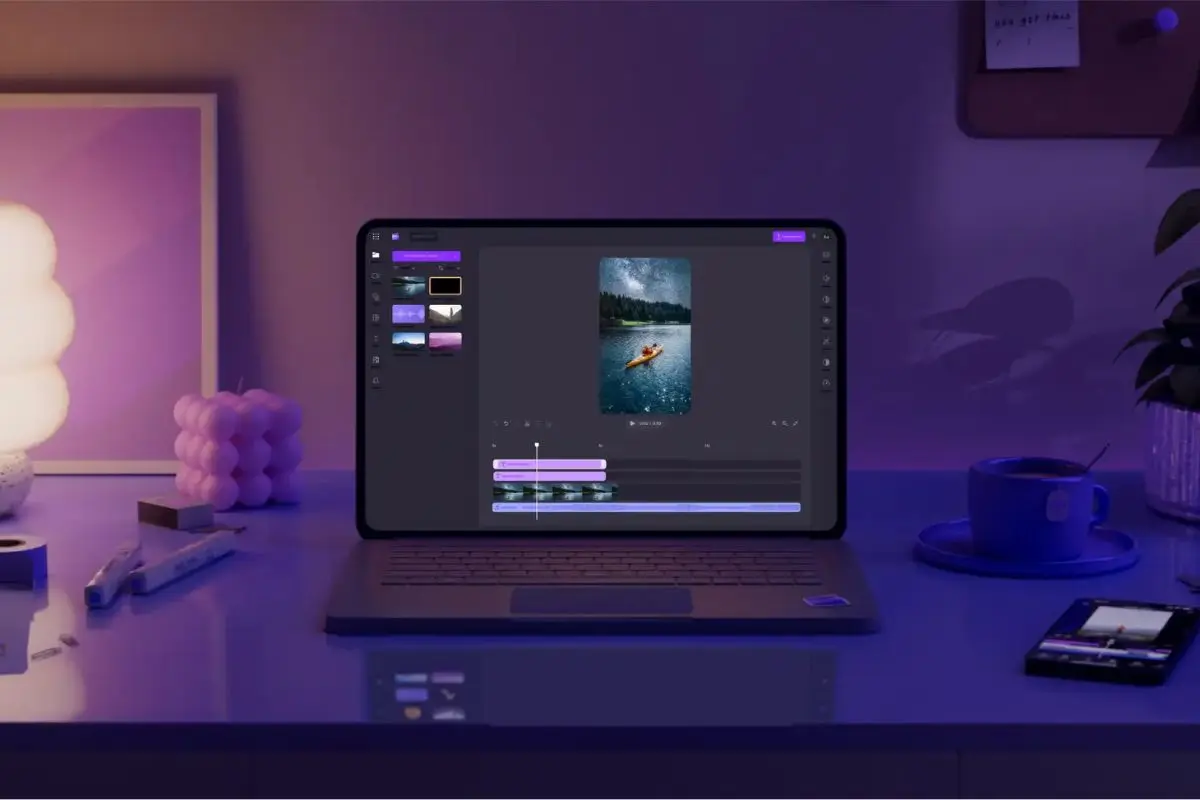
With startups, it is important to keep marketing in a consistent way, rather than create one big, costly marketing campaign.
Achievable approach may include the development of a series of small, demonstrative re-use kits of educational videos and customer friendly explanations.
These videos can be utilized for product launches, to answer standard questions, and to reinforce on-line product list.
The business workflow should have a simple process that includes planning, selection of assets, creation of videos, review and publishing. Consistency in branding and messaging also facilitates audience recognition across the platforms.
AI production can be a valuable addition to professional photography and original footage, especially as the business expands and evolves.
Making Every Marketing Dollar Count
Another useful tool for startups to use when communicating the benefits of their product without spending a ton of money on production is AI product demo videos.
They are effective if the messaging is clear, there is an accurate representation, and there is an understanding of customer needs. While AI can streamline some creative processes, careful planning and quality control are crucial.
With existing product assets, readily available video tools, and regular performance checks, startups can use AI product demo videos to engage their audience without overspending.
The objective isn’t just to increase the number of videos. To build useful demonstrations to educate customers about a product, to help them make informed choices and to give them the confidence to believe in new businesses.