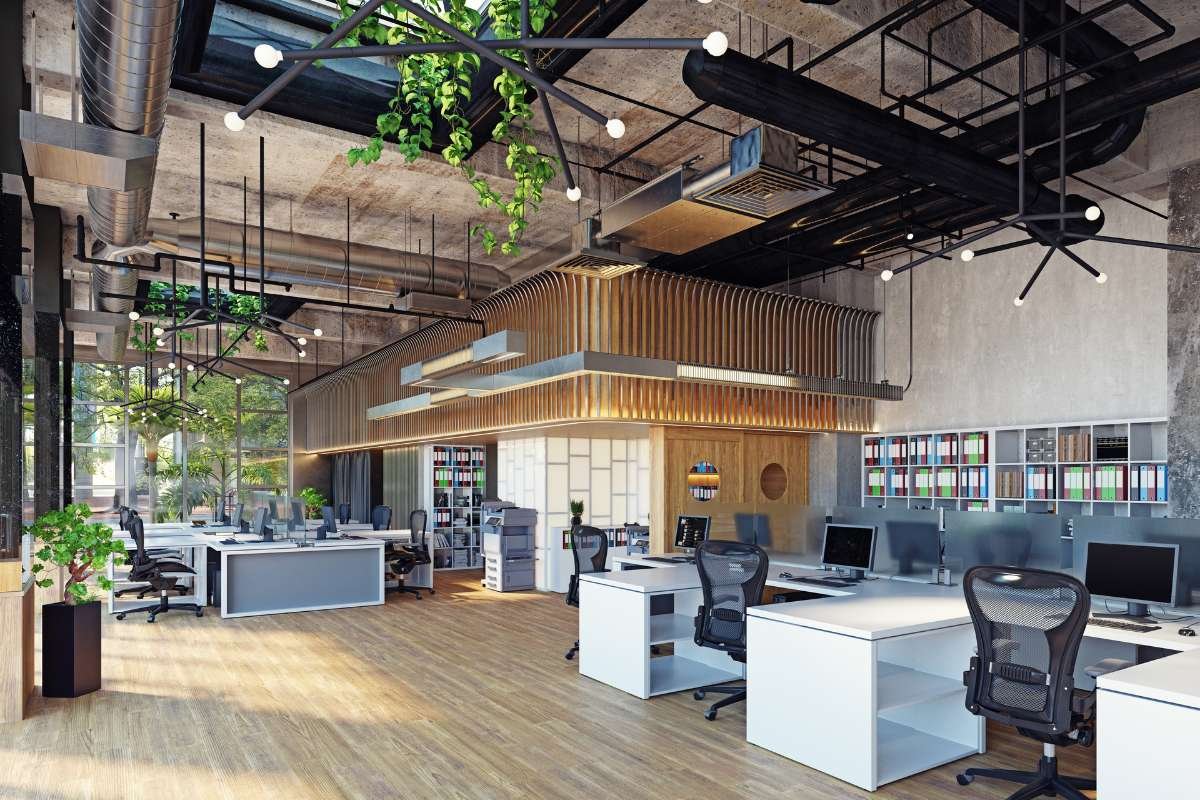
Enter an environment that feels more like a catalyst for human potential than a workstation. The days of boring cubicles and fluorescent hums have quietly vanished, to be replaced by settings that reflect our need for both social collaboration and intense concentration. We’ve started to understand that our workplace shapes our thought processes.
However, what exactly characterizes this change? It’s not just about glass walls and ergonomic chairs. It is about a purposeful fusion of practicality and intuition. It is necessary to look beyond aesthetics to see how architecture can truly inspire innovation in order to understand what a modern office should look like.
Why Does the Architecture of the Office Matter? How Is It Affecting Your Best Ideas?
Architecture is a silent cognitive tool, not just a background. The “flow” of your thoughts is determined by the physical arrangement of your workspace. It has been demonstrated that while lower ceilings and enclosed spaces encourage detail-oriented focus, high ceilings and open vistas stimulate abstract, creative processing.
When architecture creates “convergent points.” Such as shared cafes or central staircases, diverse minds are forced to collaborate. This results in the unanticipated connections that give rise to “best ideas.” On the other hand, mental friction brought on by stiff cubicles or poor acoustics forces your brain to expend energy “filtering noise.” Rather than “generating insight.” Architecture provides the psychological safety required for innovation to flourish by striking a balance between quiet “deep-work” havens and collaborative hubs.
If You Want to Spark Creativity, Here is How a Modern Office Should Look Like:
1. Flexible Co-Working Zones, Not Fixed Desks
The modern office is no longer about assigned seating. In 2026, flexibility is the foundation.
Hot-desking and shared workstations have evolved into activity-based work zones, quiet focus pods, collaboration tables, and tech-enabled meeting corners. Employees choose where to work based on the task at hand, encouraging natural communication and cross-team interaction.
This layout supports hybrid teams while reducing unused space, making offices more efficient and dynamic.
2. Comfort-First, Mixed Furniture Design
Break rooms have transformed into social recharge zones.
Instead of rigid chairs and sterile tables, modern offices now feature:
- Lounge seating
- Modular sofas
- Standing tables
- Café-style nooks
Research consistently shows that employees perform better when they feel valued and comfortable. In 2026, furniture isn’t just functional, it’s emotional. These spaces promote informal discussions, creativity, and genuine mental breaks.
3. Biophilic Design and Eco-Conscious Greenery
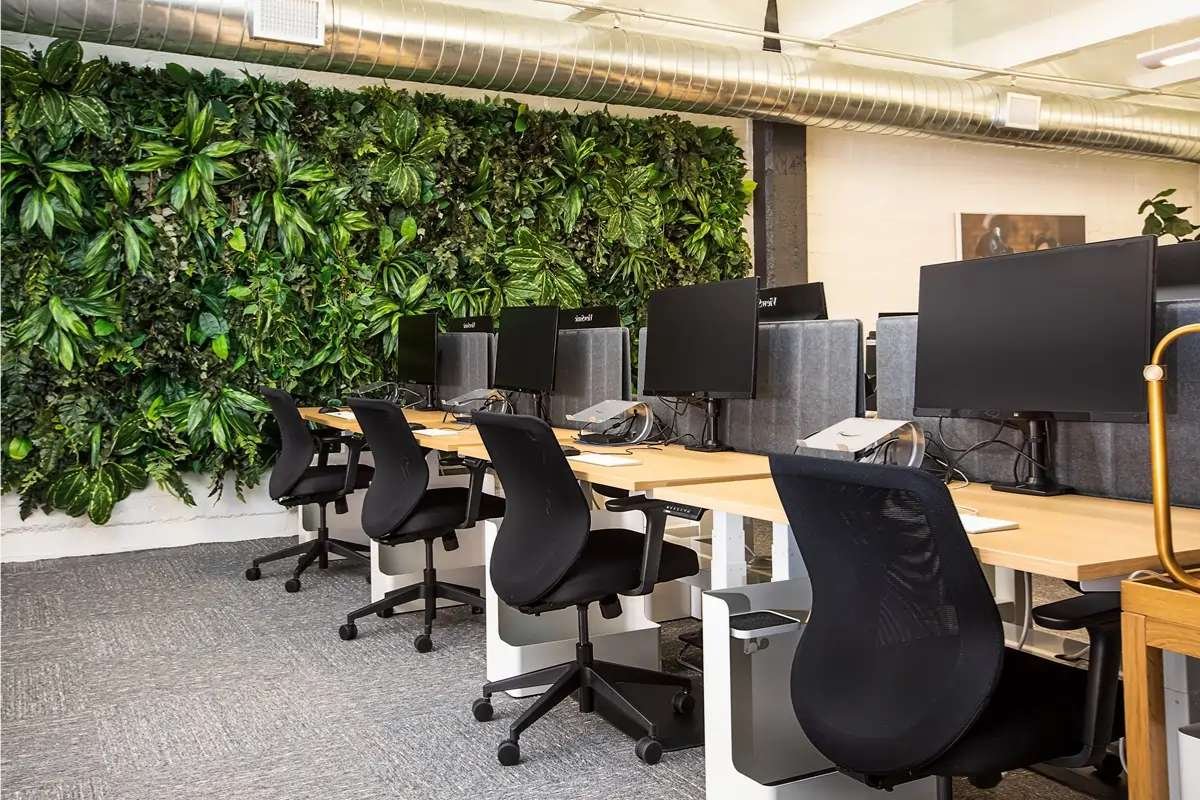
Sustainability is no longer optional; it’s expected.
A modern office should look like a space that coexists with nature, not one that shuts it out. Indoor plants, living walls, and natural materials serve both environmental and psychological purposes:
- Improve air quality
- Reduce stress
- Boost morale and focus
Biophilic design has become a symbol of responsible business practices while actively supporting employee mental health.
Don’t miss: 4 Things Every Modern Office Needs To Run Smoothly
4. Open, Light-Filled Layouts With Smart Zoning
Open-plan offices remain popular in 2026, but with smarter execution.
Large windows, natural light, and neutral color palettes help reduce anxiety and create a sense of openness. However, modern offices now balance openness with acoustic zoning, privacy panels, and soundproof pods to avoid distractions.
Thanks to compact, multi-functional technology, bulky machines are gone, allowing cleaner layouts with lighter tones, warm wood textures, and minimal clutter.
5. Purpose-Built Outdoor Work & Wellness Areas
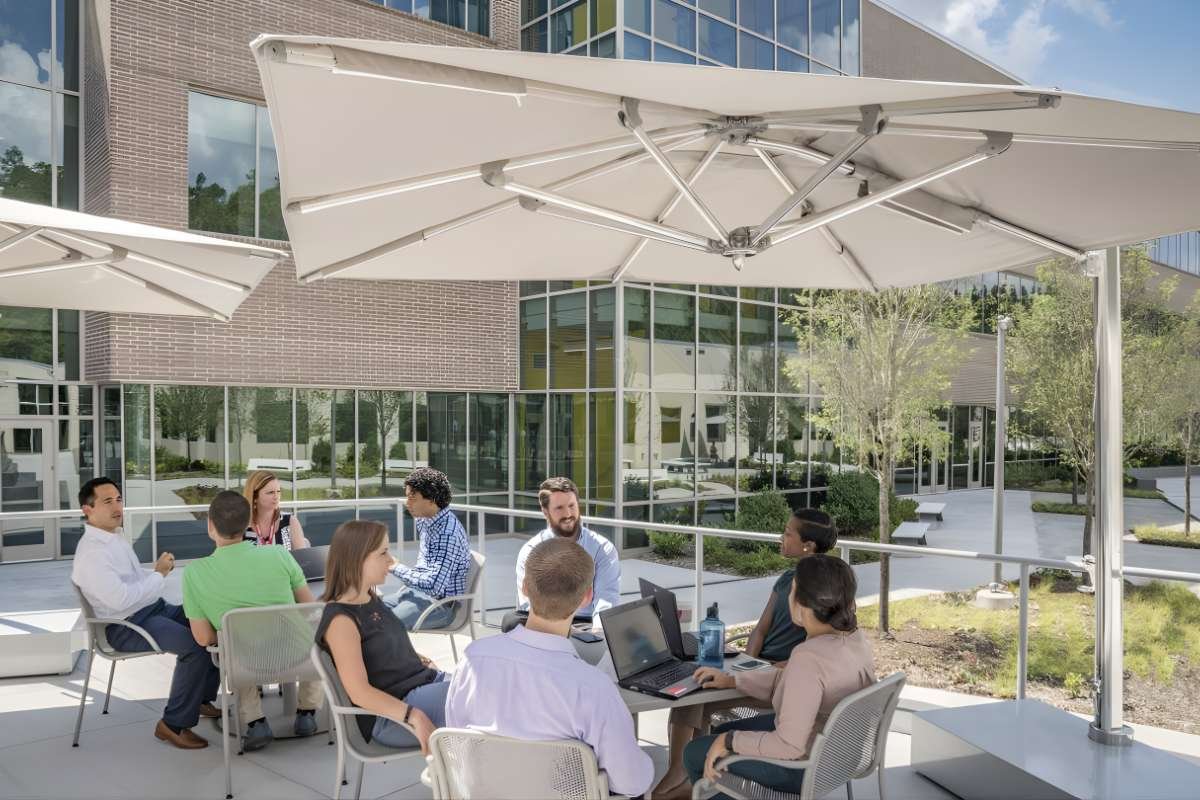
Fresh air is now part of the workday.
Forward-thinking companies invest in landscaped outdoor areas that go far beyond smoking zones. These spaces include:
- Garden seating
- Walking paths
- Outdoor meeting spots
Many employees think more clearly when they step away from screens. In 2026, problem-solving, brainstorming, and even one-on-one meetings often happen outdoors, proving that what a modern office should look like extends far beyond four walls.
6. Advanced Ergonomics and Wellness Seating
Employee health directly impacts productivity.
Modern offices now prioritize:
- Fully adjustable ergonomic chairs
- Sit-stand desks
- Monitor arms and posture-friendly layouts
With most work happening on screens, preventing back pain, eye strain, and repetitive stress injuries is essential. Investing in ergonomics reduces sick leave and signals that the company values long-term employee well-being.
7. Authentic Art Over Corporate Motivation
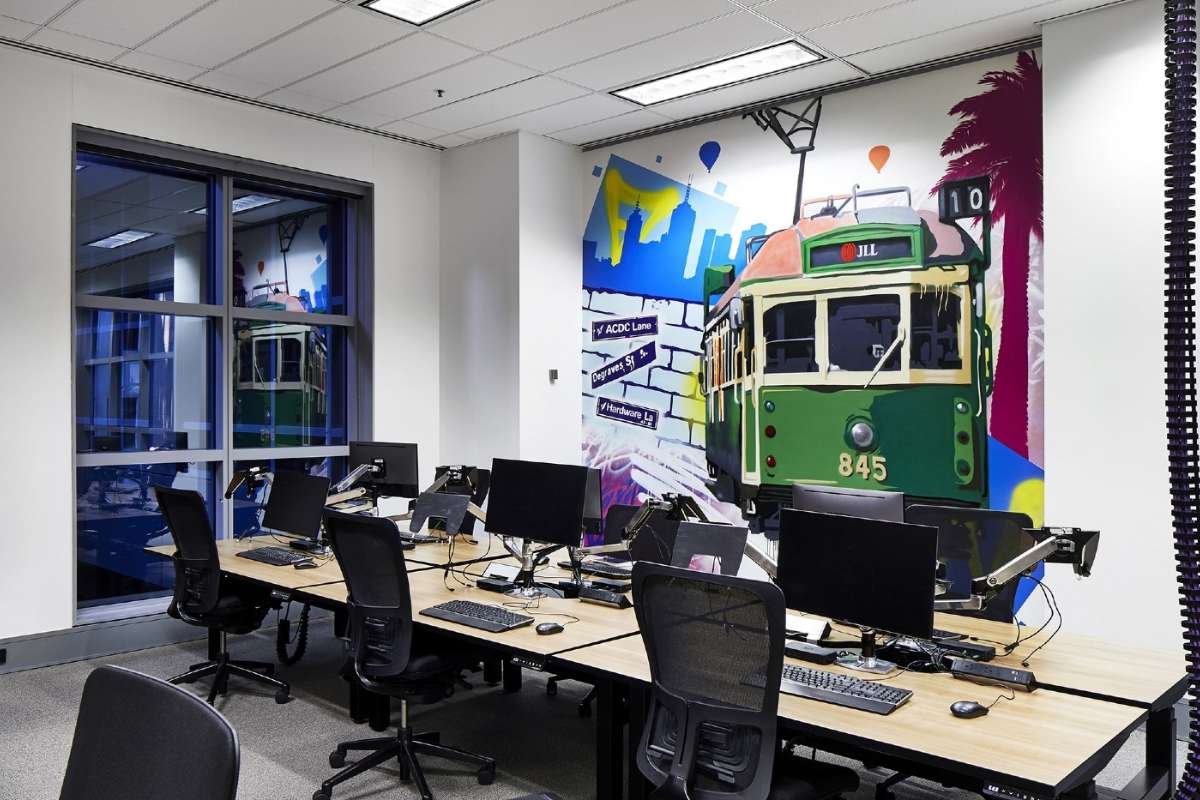
The era of generic motivational posters is over.
In 2026, office art is authentic, local, and expressive, redefining what a modern office should look like by favoring personality over forced messaging.
Many companies now collaborate with local artists to showcase abstract or cultural pieces that resonate with their team’s identity. The goal is to create an environment that feels human, creative, and inspiring, achieving a sophisticated aesthetic without trying too hard.
8. Clean, Minimal, and Digitally Organized Spaces
A modern office should look clear.
Paper-heavy workflows have been replaced by digital systems, resulting in:
- Cleaner desks
- Minimal storage
- Easier maintenance
Hardwood or easy-clean flooring, organized cable management, and smart recycling systems help maintain hygiene while reinforcing sustainability goals.
Case Study: How Office Aesthetics Impact Productivity!
Modern offices are no longer just utilitarian; they are strategic assets that drive productivity and employee well-being. According to Habit Action, what a modern office should look like is defined by “Design Delight,” the fusion of aesthetics, ergonomics, and psychology.
Key findings reveal that personalizing workspaces can boost productivity by 32%, while biophilic elements like natural light increase well-being by 15%. By transitioning from rigid cubicles to agile “activity-based” zones and incorporating sustainable, carbon-neutral materials, companies transform their headquarters into people-centric hubs that attract talent, reduce stress, and spark innovative “collision points” for better ideas.
Conclusion:
The workspace is now a strategic tool for development rather than just a place to keep employees. Businesses have shown that the architecture of work is just as important as the work itself by moving from inflexible structures to flexible, human-centered environments. Innovation feels less like a chore and more like a natural byproduct of the environment when we place a high priority on wellness, biophilia, and authentic expression.
It takes constant effort to strike a balance between intuition and practicality when reimagining what a modern office should look like. The objective is always the same, whether it is through areas with lots of sunlight or locally chosen artwork: creating a haven for big ideas. A workplace that finally breathes as deeply as you do is where the future of work lies, not in a cubicle.
FAQ:
1. What is the most important factor in modern office design?
While aesthetics matter, functionality and human-centricity are the priorities. In 2026, what a modern office should look like is defined by “Activity-Based Working” (ABW). This means providing diverse zones, such as soundproof pods for deep focus and open lounges for collaboration, allowing employees to choose the environment that best suits their current task.
2. Is an open-plan layout still relevant for a modern office?
Yes, but with a major caveat: it must include acoustic zoning. The “modern office” has moved away from the noisy, undivided open floor plans of the past. Today’s layouts use smart shelving, acoustic panels, and “library zones” to maintain the collaborative benefits of an open plan while eliminating the distractions that kill productivity.
3. How does biophilic design impact daily productivity?
Incorporating nature isn’t just a trend; it’s science. Biophilic elements, such as living walls, wooden textures, and maximized sunlight, reduce cortisol levels (stress) and can increase cognitive function by up to 15%. A space that coexists with nature helps prevent the “mental fatigue” common in sterile, windowless environments.
Source: