A quote can lose its meaning when it is taken out of its time. This is especially true for the words of Dr. B. R. Ambedkar. His ideas grew from his own experience of caste discrimination and from his work as a scholar, lawyer, and social reformer.
His words were shaped by major questions facing India. Who should have equal rights? How can caste be challenged? What makes a democracy work? This collection of Dr. Babasaheb Ambedkar quotes explores these questions through three themes: leadership, social justice, and institutional building. Each quote is paired with its historical setting and a brief look at what Ambedkar meant.
Who is Dr. B. R. Ambedkar? Why Do His Words Still Matter?
Dr. Bhimrao Ramji Ambedkar was born in 1891. He became an economist, lawyer, scholar, writer, and political leader. He fought caste-based discrimination and worked for equal rights for communities that had long faced exclusion.
Ambedkar also played a key role in the making of India’s Constitution. He served as chairman of the Drafting Committee. His work focused on rights, equality, political safeguards, and the role of the state.
His views were shaped by a time when India faced two major struggles. The first was the fight against British rule. The second was the fight against social inequality within Indian society. That’s why many Dr. Babasaheb Ambedkar quotes make more sense when read against those pressures.
What Can Ambedkar Teach Us About Leadership?
Ambedkar’s idea of leadership was not based only on authority. This is a useful lens for reading these quotes about education, courage, and public responsibility.
1. “Cultivation of mind should be the ultimate aim of human existence.”
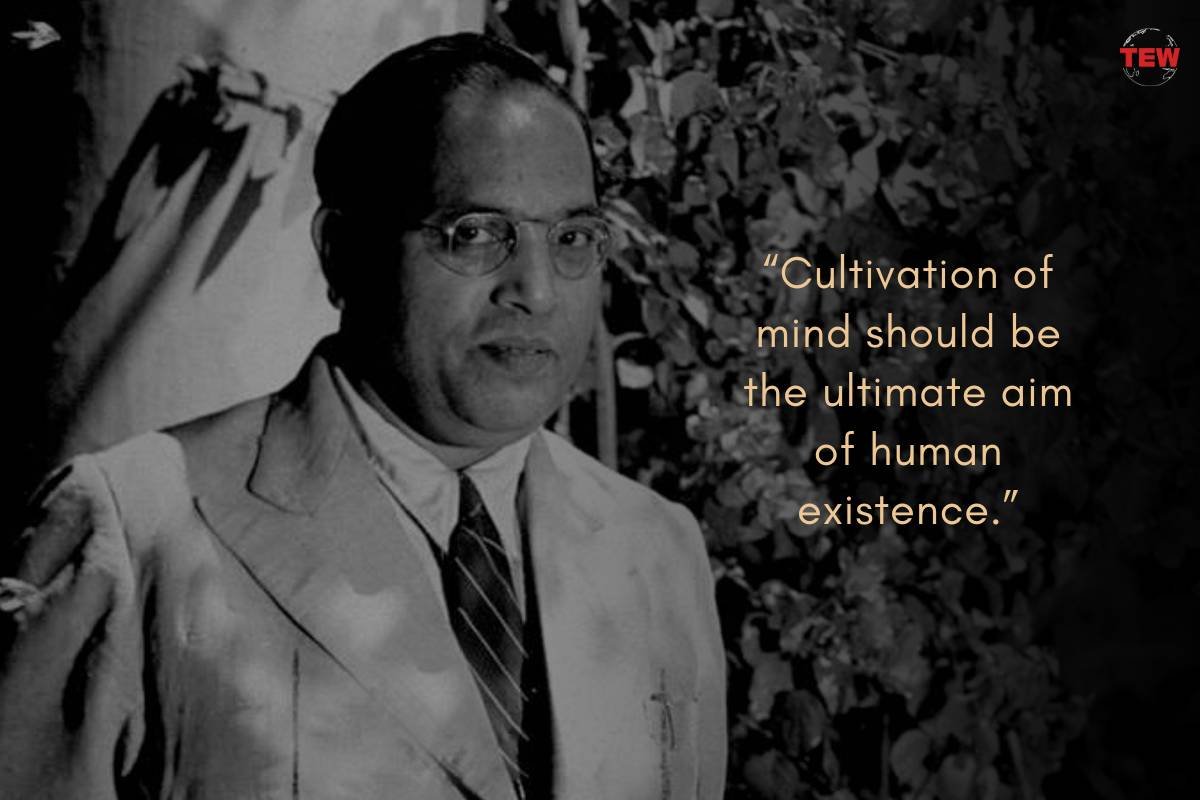
Many Dr. Babasaheb Ambedkar quotes place great value on education. For him, learning was not only a way to get a better job. It was a way to think freely and question unfair rules.
This idea came from his own life. He studied at Columbia University and the London School of Economics at a time when people from oppressed caste groups faced many barriers to education.
The quote also explains why Ambedkar urged people to “educate, agitate, organize.” He believed that knowledge could help people understand their rights and act on them.
2. “Indifferentism is the worst kind of disease that can affect people.”
Ambedkar was also critical of people who saw injustice but chose not to act. His point was that social problems can continue when those who are not directly harmed remain silent.
This idea is important when studying caste. Discrimination was not kept alive only by those who took part in it. It could also survive through social acceptance and silence.
For Ambedkar, good leadership meant facing difficult problems instead of ignoring them.
3. “I measure the progress of a community by the degree of progress which women havachieved.”
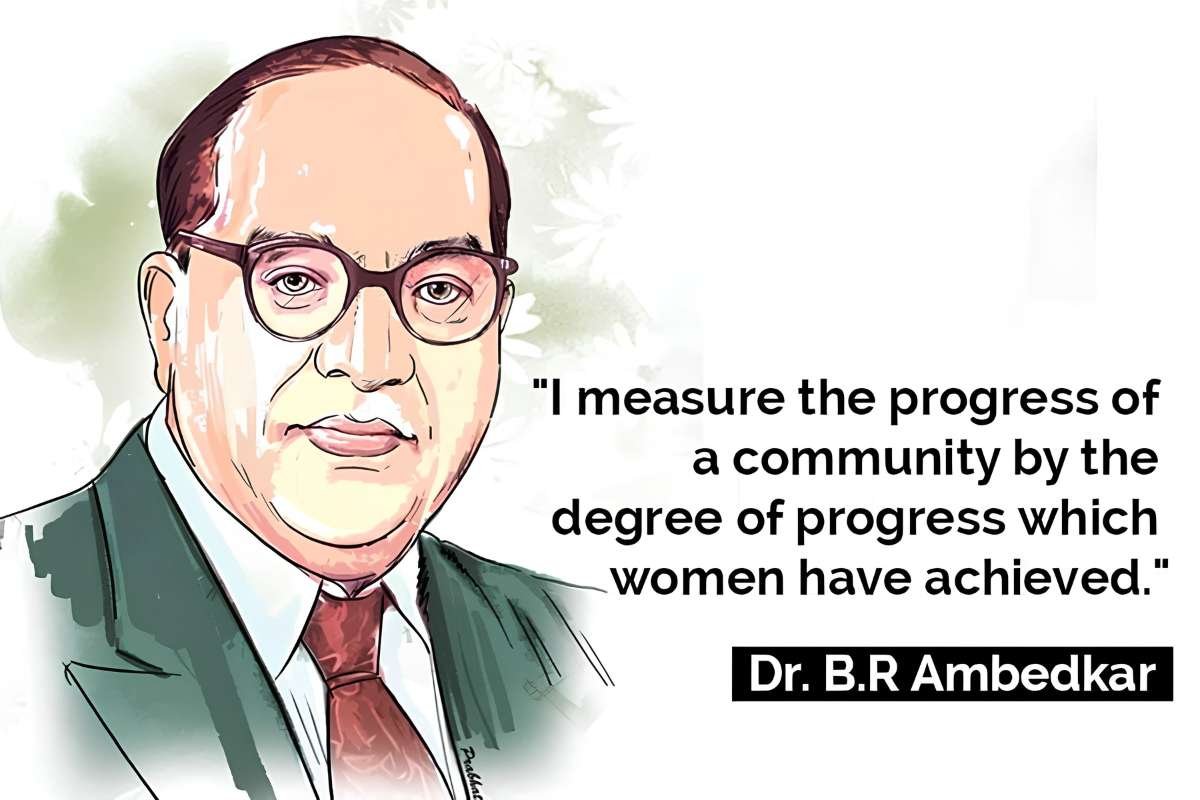
Ambedkar did not see social progress as a goal for men alone. He believed the status of women was a key test of how far a society had moved forward.
He supported women’s education and greater rights. As India’s first law minister, he also played a major role in efforts to reform Hindu personal law.
The quote shows that his idea of progress was broad. A society could not call itself modern if women still lacked equal rights and freedom.
What Do Dr. Babasaheb Ambedkar Quotes Say About Social Justice?
Ambedkar’s social justice arguments focused on caste as a system of graded inequality. Several quotes directly address the gap between legal freedom and lived equality.
4. “So long as you do not achieve social liberty, whatever freedom is provided by the law is of no avail to you.”
Ambedkar made this point in the context of the fight against caste. He believed political freedom alone could not create a free society.
India could gain independence from British rule, but people could still face exclusion in their own communities. A person might have legal rights and still be denied access to public spaces, education, jobs, or social respect.
Ambedkar’s work during the Mahad Satyagraha of 1927 showed this gap clearly. He led a campaign for the right of oppressed castes to use a public water tank. The event showed why legal rights and social change had to work together.
5. “Political tyranny is nothing compared to social tyranny.”
This quote draws a line between two forms of power.
Among all Dr. Babasaheb Ambedkar quotes, this one highlights why social reform must precede political freedom. Political tyranny comes from the state or rulers. Social tyranny can come from customs, caste rules, family pressure, and community control.
Ambedkar believed social tyranny could be harder to fight because it can become part of daily life. People may accept it as normal simply because it has existed for a long time.
His fight against caste was therefore not just a political campaign. It was a call to change social beliefs and behavior.
6. “Slavery does not merely mean a legalized form of subjection.”
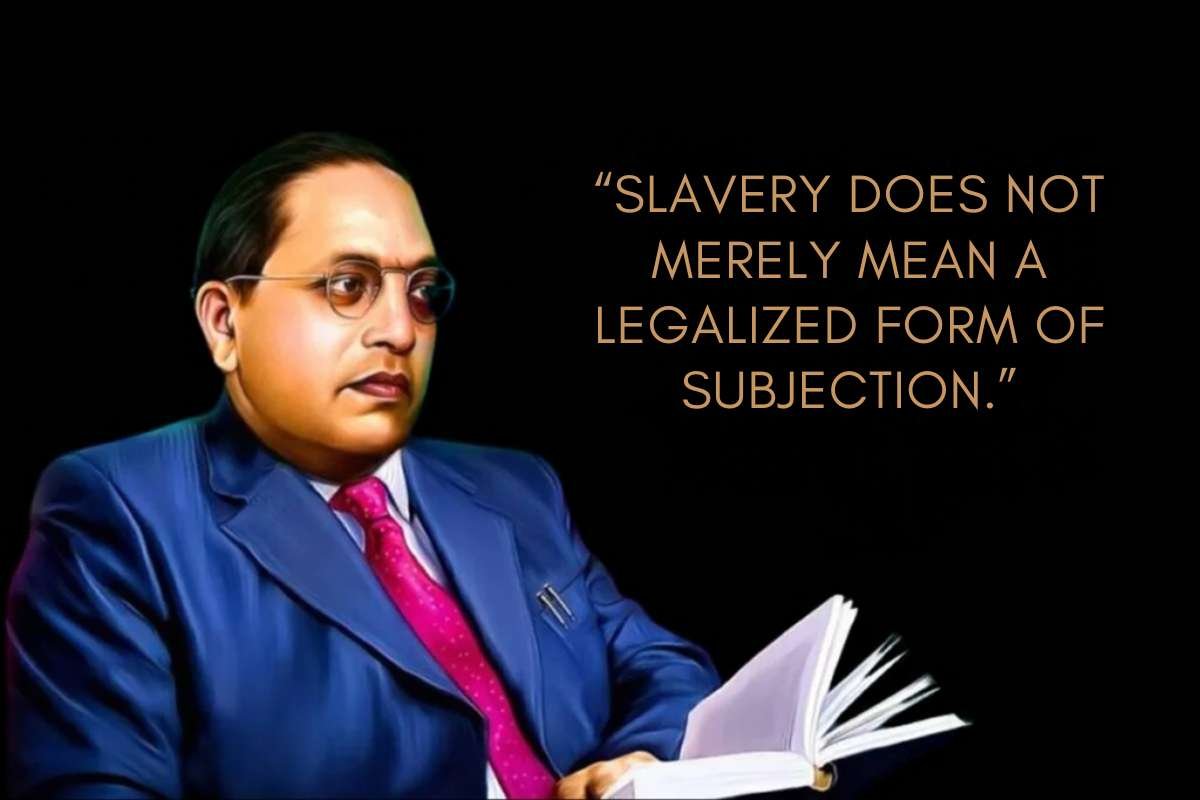
Ambedkar used a wider meaning of slavery. He argued that people could be trapped by social rules even when those rules were not written as law.
This was a key part of his criticism of caste. He argued that caste could limit a person’s choice of work and place in society.
For Ambedkar, freedom meant having real choices. It was not enough to remove a legal restriction if social pressure still kept people in fixed roles.
7. “Equality may be a fiction but nonetheless one must accept it as a governing principle.”
Ambedkar understood that people are different in wealth, background, ability, and social position. Yet he argued that equality must guide public life.
This view became important in his work on the Constitution. A democracy needs a shared rule: the state must treat citizens as equal before the law.
That principle was especially important in a society divided by caste, religion, language, and class.
How Did Ambedkar Connect Social Change with Strong Institutions?
Ambedkar did not believe that social reform could depend only on good intentions. Laws and public institutions also had to protect rights. Dr. Babasaheb Ambedkar quotes on democracy and law reflect this institutional focus.
8. “Democracy is not merely a form of Government. It is essentially an attitude of respect and reverence towards fellowmen.”
Ambedkar did not define democracy only through elections or government bodies.
For him, democracy also depended on how people treated one another. If citizens believed some groups were naturally better than others, equal laws would face a serious challenge.
This view helps explain why Ambedkar linked political democracy with social democracy. A country can have elections and still struggle to create true equality.
9. “Law and order are the medicine of the body politic and when the body politic gets sick, medicine must be administered.”
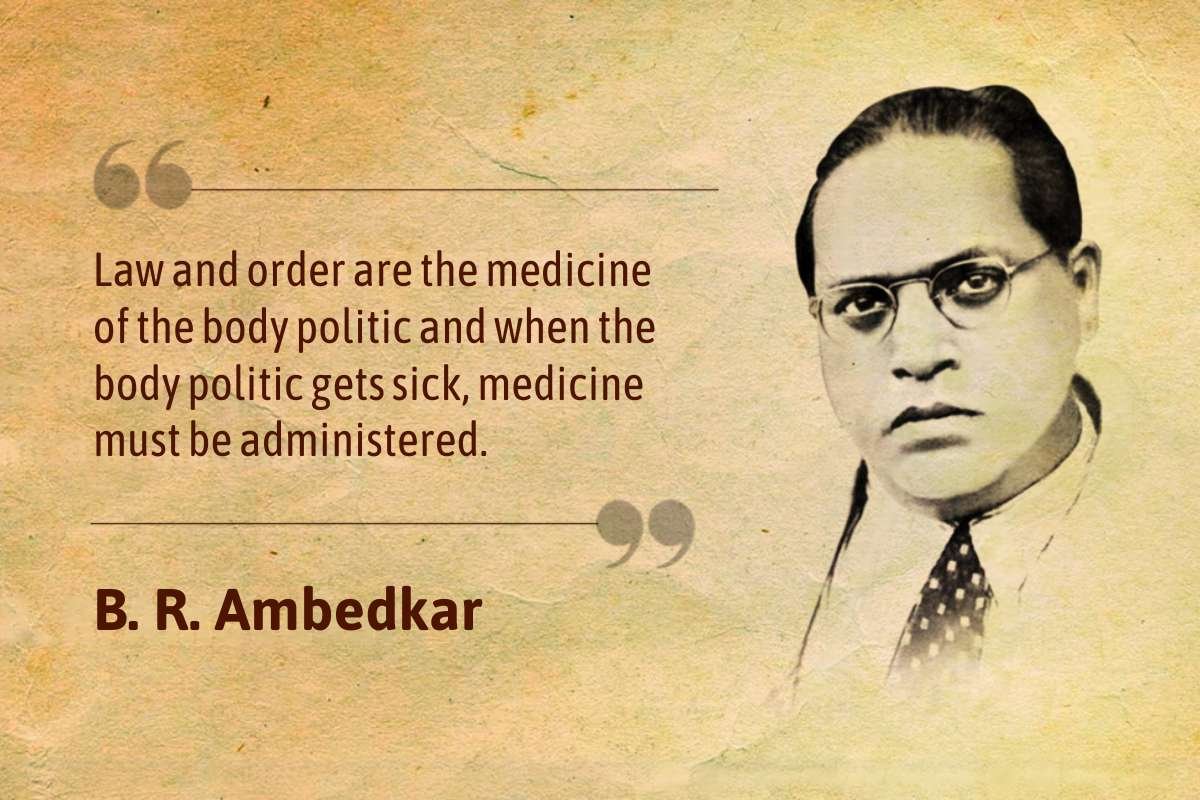
Ambedkar saw the state as a tool that must work when society faces serious problems.
The quote reflects his focus on law, public order, and good government. But his wider work shows that he did not see order as more important than rights.
A strong state, in his view, needed to protect citizens while respecting their freedoms.
10. “If I find the constitution being misused, I shall be the first to burn it.”
This is one of the most repeated Dr. Babasaheb Ambedkar quotes but is often shared without its wider meaning. It should not be read as a rejection of the Constitution.
Ambedkar spent years helping shape India’s constitutional system. His warning was about misuse. A constitution could not protect people if those in power used its rules against its basic goals.
The deeper lesson is that laws need to be used in the public interest. Respect for a constitution should not mean ignoring injustice.
What is the Larger Lesson from Dr. Babasaheb Ambedkar Quotes?
Taken together, these quotes show that he saw education, equality, social reform, and democracy as closely linked.
His ideas can be summed up in three parts:
- Leadership: Learn, think clearly, and act against injustice.
- Social justice: Legal rights have little value if social inequality remains.
- Institutional building: Strong laws and public institutions are needed to protect equal rights.
These themes still help explain why Ambedkar remains important. He did not ask people to accept society as it was. He asked them to question unfair systems and build better ones.
Conclusion
Dr. Ambedkar’s ideas were shaped by the social and political problems of his time. Yet many of those ideas still speak to questions of equality, education, freedom, and democracy.
The most useful way to read Dr. Babasaheb Ambedkar quotes is to look beyond the words themselves. Ask what problem he was addressing, who was affected, and what change he wanted to see.
That approach turns a list of quotes into a clearer picture of Ambedkar’s work and legacy.
FAQs
1. What is the most famous quote by Dr. B. R. Ambedkar?
“Cultivation of mind should be the ultimate aim of human existence” is one of Ambedkar’s best-known quotes and reflects his strong belief in education.
2. What did Ambedkar say about equality?
Ambedkar believed equality should guide public life and that democracy could not work well when social rank decided a person’s rights.
3. What did Ambedkar say about social freedom?
He argued that legal freedom has little value when people still face social barriers that limit their choices and rights.
4. Why are Dr. Babasaheb Ambedkar quotes important today?
His words address education, equality, caste, democracy, and rights, making them useful for understanding both Indian history and modern social issues.
5. What did Ambedkar say about democracy?
Ambedkar saw democracy as more than a form of government. He also viewed it as a way of living based on respect and equality.