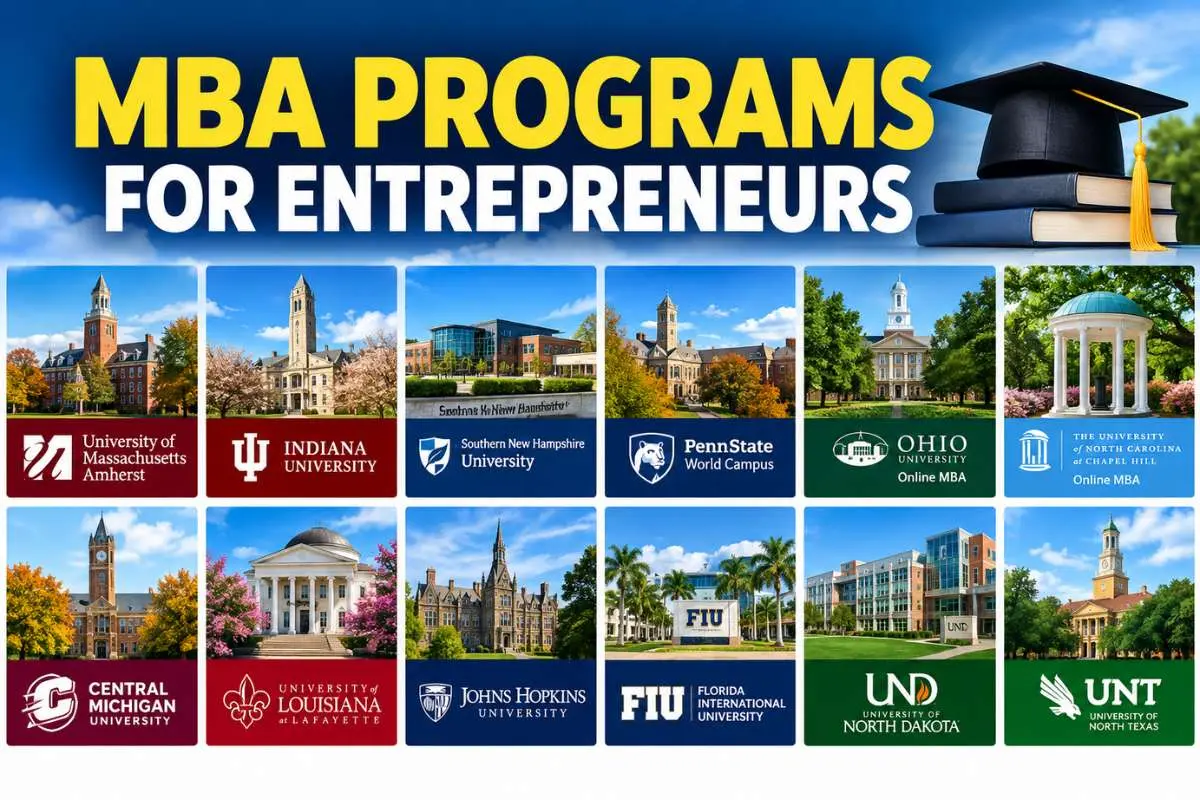
Building a venture requires far more than a compelling product idea; it demands rigorous financial modeling, risk management, and strategic market positioning. Selecting targeted MBA Programs for Entrepreneurs provides founders with the analytical tools needed to raise capital, manage burn rates, and protect equity during critical funding rounds.
Developing a business within a structured academic environment gives founders room to test strategies before making expensive market mistakes. Specialized coursework guides entrepreneurs through seed-stage valuation, cap table management, customer acquisition economics, and regulatory compliance. Mastering these metrics transforms pitch decks from idealistic forecasts into credible investment opportunities.
MBA Programs for Entrepreneurs also provide structured business education that can strengthen early-stage leadership skills. Completing a rigorous advanced degree signals operational discipline, resilience, and strategic competence to venture firms and angel networks. Founders leave these programs equipped to negotiate better terms, manage investor relations, and lead growing organizations through complex market cycles.
Top 12 MBA programs for entrepreneurs that give them the right skills
The right MBA Programs for Entrepreneurs should fit their budget, schedule, learning needs, and long-term business goals. The following list highlights 10 online MBA programs that offer different strengths, formats, costs, and specialization options, helping aspiring founders compare what each program is best suited for.
1. University of Massachusetts Amherst

UMass Amherst’s Isenberg Online MBA is among the MBA Programs for Entrepreneurs that offer a strong entrepreneurship-focused curriculum.
With a focus on practical application and real-world relevance, this Isenberg School of Management program offers a cost-effective alternative to traditional MBAs without compromising quality. Students also benefit from unique resources such as incubator programs and mentorship opportunities, providing invaluable support on their entrepreneurial journey.
Isenberg’s partnership program offers exclusive financial and academic advantages to individuals pursuing an MBA and other online degrees through Isenberg. Members and employees enjoy discounted tuition rates and contribute to shaping the curriculum to align with industry needs, resulting in specialized degrees tailored to their field.
Best For: Entrepreneurs looking for an online MBA with strong business fundamentals and flexible study options.
2. Indiana University
The IU Kelley Direct Online MBA can help you advance your career or explore new paths. The innovative curriculum offers seven majors, 50% electives, and a business fundamentals core, allowing for a customized and specialized learning experience. Immersive experiences further build your skills and broaden your perspective.
This online MBA can help business leaders grow in their careers, backed up by IU’s strong reputation for success. The Kelley School of Business faculty have been teaching online since the 1990s. Employers recognize the program as rigorous and high-quality, frequently expressing respect for the dedication and talent of its graduates. Approximately 64% of Kelley Direct Online MBA students are promoted while still in the program.
Total tuition is $94,944.42, based on 54 credits, and the tuition rate is locked for three years from the start of enrollment. Financial support options include federal financial aid, employer tuition assistance, Veterans Affairs (VA) benefits, and corporate tuition assistance programs.
Best For: Professionals who want to customize their MBA through multiple majors and a large elective component.
3. Southern New Hampshire University

SNHU’s online MBA program is a 30-credit (10-course) program designed for flexibility and accessibility, making it suitable for anyone, including those with busy schedules.
Among affordable MBA Programs for Entrepreneurs, Southern New Hampshire University (SNHU) offers a flexible option for budget-conscious students. Though you can go at your own pace, among the most affordable online MBA programs for 2024 the program costs just over $19,000 in total tuition and can be finished in roughly one year for full-time students.
An optional concentration allows you to tailor your MBA to your interests or career goals. Each concentration comprises three courses that offer in-depth coverage of specific subjects like finance or human resources. With over 15 career-focused concentrations available, there’s a specialization to suit everyone.
Best For: Budget-conscious entrepreneurs who want a flexible MBA with a lower overall tuition cost.
4. Pennsylvania State University World Campus MBA
Penn State’s World Campus MBA combines a focus on innovation and leadership with the flexibility of online learning, which is perfect for startup entrepreneurs. 100% online, this program consists of 48 credits costing $1,248 per credit.
The program’s affordability and adaptable format cater to the needs of busy professionals, allowing them to pursue their entrepreneurial ambitions without putting their career growth on hold.
Penn State provides flexibility for financing options, offering installment plans and accommodating third-party payments.
Best For: Working professionals who want a fully online MBA with a strong focus on leadership and innovation.
5. Ohio University Online MBA
Ohio University’s Online MBA program is noted for its emphasis on real-world application, providing students with practical experience directly applicable to launching and growing startups.
Among MBA Programs for Entrepreneurs, Ohio University offers tailored courses and concentrations in venture capital and new venture creation., this flexible program equips aspiring entrepreneurs with the tools they need to succeed in today’s competitive business landscape.
For out-of-state students, the cost per credit stands at $1,051. The Ohio College of Business extends financial aid opportunities to eligible students, including military personnel, alumni, and corporate affiliates.
Best For: Aspiring founders interested in entrepreneurship, venture creation, and specialized business study.
6. University of North Carolina at Chapel Hill Online MBA

UNC Kenan-Flagler Business School’s online MBA program combines the prestige of a top-ranked business school with the affordability and flexibility of online learning. Despite its esteemed reputation, this program remains cost-effective compared to traditional UNC MBAs, making it an attractive option for aspiring startup entrepreneurs.
UNC’s STEM-designated, AACSB-accredited online MBA program offers a customizable curriculum to develop integrity and data-driven expertise in leadership. Beyond traditional MBA competencies, Summits provide immersive experiences worldwide, fostering new perspectives and building relationships.
Tuition for the program totals $125,589.06. Professional organizations, including the Forté Fellowship Program, offer scholarships and partial-tuition fellowships.
Best For: Entrepreneurs seeking a flexible MBA with a strong focus on leadership, data, and global learning experiences.
7. Central Michigan University
Central Michigan University’s Online MBA offers a comprehensive curriculum focusing on practical skills and real-world relevance, making it an excellent choice for aspiring startup entrepreneurs. The program is designed with flexibility, featuring night and weekend classes that accommodate busy schedules. This flexibility supports a healthy work-life-school balance, ensuring that classes fit easily into students’ lives.
With affordable tuition rates and flexible online formats, this program provides accessibility without sacrificing quality. Students also have access to resources such as mentorship programs and networking opportunities, enriching their educational experience and preparing them for success in entrepreneurship.
Best For: Startup founders who want practical business skills, flexible learning, and access to entrepreneurship activities.
8. University of Louisiana at Lafayette
The UL Lafayette’s B.I. Moody III College of Business Administration’s Online MBA is notable for its affordability and practical approach to education, making it an ideal choice for budget-focused business founders. Earn your MBA at UL Lafayette, ranked among the country’s best, with flexible options including full-time or part-time, on-campus, online, or Executive MBA.
Benefit from nine concentration options and a GMAT waiver. This AACSB-accredited program offers a core curriculum covering key business areas. With a curriculum emphasizing innovation and leadership, students gain the skills and knowledge necessary to thrive in today’s dynamic business environment.
Best For: Budget-minded professionals who want an accelerated online MBA with several concentration options.
9. Johns Hopkins University

Johns Hopkins Carey Business School’s Online MBA offers a prestigious education focusing on innovation and entrepreneurship, making it an attractive option for aspiring startup founders. It is designed for busy professionals seeking an advanced degree without sacrificing work or personal life.
At an estimated cost of $97,200 (with various financing options available), the Flexible MBA offers a proven return on investment without requiring GMAT/GRE scores.
Best For: Entrepreneurs who want an MBA that combines flexible online learning with specialization in areas such as business analytics and digital marketing.
10. Florida International University
FIU’s Professional MBA Online (PMBA) is an excellent choice for cost-conscious startup founders, offering both affordability and a practical approach to education.
FIU’s College of Business, with over two decades of experience in online education, ensures a high-quality learning experience. The PMBA Online offers three pacing tracks, five term start options, and ten specializations.
The curriculum emphasizes innovation and leadership, equipping students with the skills and knowledge necessary to thrive in today’s competitive business landscape. Additionally, performance-based scholarships of up to $10,000 are available to qualified students.
Best For: Working entrepreneurs who want flexible pacing options and multiple specialization choices while completing their MBA online.
11. University of North Dakota
The University of North Dakota’s Online MBA offers a flexible format for professionals who want to build advanced business skills while continuing to work. The program covers areas such as strategic management, finance, marketing, and business analytics, giving entrepreneurs a broad foundation for managing a growing company.
The program is delivered online and can suit professionals who need to balance education with work or business responsibilities. Students can also choose coursework that supports their career and business interests.
Best For: Entrepreneurs who want a flexible online MBA with broad business training and a strong focus on practical management skills.
12. University of North Texas
The University of North Texas Online MBA provides a flexible path for professionals seeking advanced business knowledge without leaving their current careers. The program covers core areas such as accounting, finance, marketing, operations, and strategic management.
Its online format can work well for founders who need to balance business responsibilities with graduate study. The broad curriculum also allows entrepreneurs to strengthen the financial, operational, and strategic skills needed to manage a growing venture.
Best For: Startup founders who want a flexible MBA with broad coverage of core business and management skills.
Factors to consider when choosing an online MBA
While cost-effectiveness is essential when choosing MBA Programs for Entrepreneurs, aspiring founders should also evaluate other factors to ensure they find the best fit for their educational and entrepreneurial goals.
Program curriculum, faculty expertise, networking opportunities, and career services all play crucial roles in shaping the educational experience and preparing students for success in entrepreneurship.
Additionally, it’s essential to consider your specific entrepreneurial aspirations and career options when selecting a program, ensuring that it aligns with your long-term goals and objectives.
Conclusion:
Earning an advanced business degree no longer requires founders to pause venture operations or compromise company growth. Enrolling in MBA Programs for Entrepreneurs equips business leaders with the financial discipline, risk management frameworks, and growth strategies needed to scale sustainable enterprises. Integrating active coursework directly into daily business decisions transforms academic concepts into immediate competitive advantages.
As capital markets demand greater capital efficiency and operational rigor, a structured business education offers a distinct edge. Founders who master fundraising mechanics, financial modeling, and strategic leadership build resilient organizations capable of securing investment and navigating complex market shifts.
FAQs
1. How do online MBA programs for entrepreneurs differ from traditional corporate MBAs?
Entrepreneurial MBAs prioritize venture creation, seed funding, cap table management, and lean growth tactics over corporate management and enterprise administration.
2. Can founders apply MBA coursework directly to their current businesses?
Yes, most specialized programs encourage founders to use their active ventures as live case studies for financial modeling, marketing strategies, and operational plans.
3. Do online MBA programs offer networking opportunities with investors and co-founders?
Top programs provide dedicated virtual incubators, global alumni networks, pitch competitions, and direct introductions to venture capital firms.
4. How do venture capital investors view founders with an online MBA?
Investors value the financial discipline, strategic planning skills, and proven commitment to operational mastery that a specialized MBA demonstrates.
5. What core skills should founders look for in an entrepreneurial MBA curriculum?
Prioritize programs that cover venture finance, customer acquisition metrics, legal structuring, digital product management, and strategic growth.