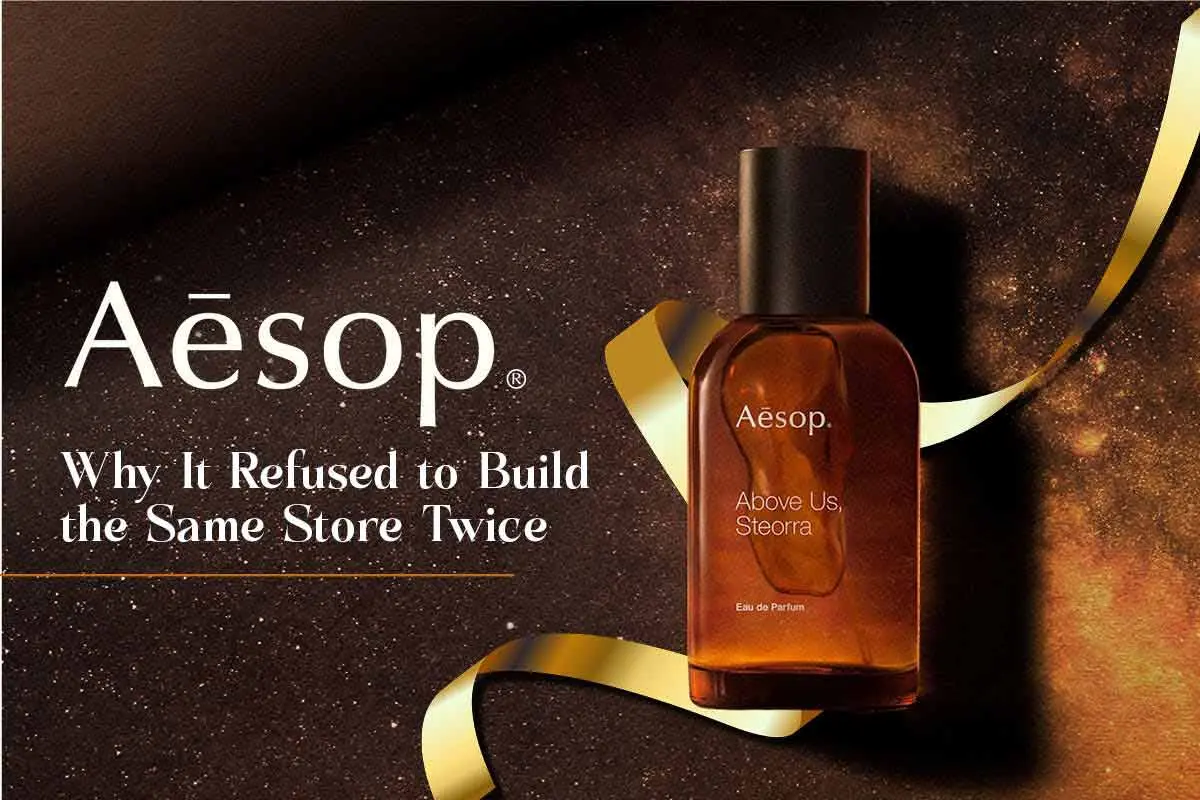
Aesop looks consistent everywhere, yet its stores rarely look the same. So how did a skincare company built on restraint, intellectual language, and distinctive retail spaces become a $2.5 billion acquisition for L’Oréal?
The answer sits at the heart of this Aesop case study. Starbucks built recognition through repeatable physical cues. Aesop took another route: one philosophy, many expressions. Its stores, words, textures, and experiences can change while the thinking behind them stays familiar.
The principle: Aesop never made every touchpoint identical. It made every decision feel like it came from the same mind.
Act I: A Hairdresser’s Different Idea
1987 | Melbourne
Dennis Paphitis began with a practical irritation. At his salon, harsh chemical smells disrupted the calm atmosphere he wanted clients to experience. He began experimenting with essential oils and botanical ingredients, searching for gentler formulations.
Then the product became a philosophy.
The Aesop case study shows three ideas taking shape early:
- Thoughtfulness over marketing claims: Products should earn attention through substance.
- Quality over cosmetic theatrics: Formulations mattered more than flashy promises.
- Beauty as an intellectual and sensory experience: Texture, scent, language, and use could invite curiosity.
Some Aesop formulations take years to develop. That patience reflects a deeper belief: good products deserve careful thought.
The key: This intellectual character existed before the stores, packaging, and distinctive market.
Act II: The Great Retail Pivot
The problem | Being on the shelf
Aesop’s early wholesale model created a quiet problem. Its products could be excellent, yet placing them beside competing beauty products made it harder to communicate the larger idea behind the brand. In the 2026 Anti-Starbucks analysis, Michael O’Keeffe describes this tension, while 2004 emerges as the decisive year when Aesop began rethinking its retail model.
The radical decision | Make the store part of the product
Instead of depending on conventional beauty retail, Aesop began treating its stores as a medium. Customers could receive personal consultation, explore scents and textures, and encounter spaces shaped with careful attention.
The Aesop case study shows why this changed the business: packaging could suggest the philosophy, but the store could make customers experience it. Retail became part of the brand itself.
Act III: Radical Inconsistency, Carefully Controlled

The Starbucks Test:
Starbucks asks: “Can you recognise us anywhere?”
Aesop asks: “Can you feel us anywhere?”
That difference explains Aesop’s unusual retail strategy. Each store can use a different architect, material palette, and spatial reference. A Melbourne location may feel nothing like one in Tokyo or New York. Yet the brand remains recognisable through restraint, sensory interaction, thoughtful product presentation, and considered service. WORK & Co confirms that every Aesop store is unique, with architects shaping each location around its physical context.
The paradox:
The Aesop case study reveals consistency without uniformity. Aesop does not copy the same store across cities. It protects the underlying rules while giving each space room to respond to its surroundings.
The takeaway: The strongest brands may need consistent principles, not identical outputs.
Act IV: The Store as a Ritual, Not a Shop

The invitation | Slow down
Aesop makes an ordinary act feel deliberate. At its signature sink, customers can wash their hands, test products, notice textures, and speak with a consultant without feeling rushed. Custom sinks, tactile materials, warm lighting, subtle scent, and minimal visual clutter create an atmosphere built for attention.
Why does the ritual matter?
Customers get time to smell, touch, ask questions, and experience a formulation before deciding to buy. The Aesop case study shows that this sensory experience is not decoration added to the retail space. It communicates the brand’s belief in care, attention, and quality.
The result is a shopping experience that feels personal rather than transactional. Customers remember how the space made them feel, giving the brand a reason to return.
Act V: When Language Became Part of the Product
A brand that sounds like itself
Aesop has developed a distinctive language that feels thoughtful, precise, and quietly playful.
Discuss:
- Literary product names
- Precise descriptions
- Intellectual references
- Dry humour
- Cultural storytelling
Aesop’s own website continues this approach through its Library, which explores literature, culture, architecture, design, sound, and film alongside product content. Post-Poo Drops is a perfect example of how Aesop combines sophistication with humour while keeping its character intact. The Aesop case study shows how language can become a powerful branding tool.
Key point: The writing does the same job as the stores: it creates a world customers want to enter.
Act VI: Marketing Without Looking Like Marketing
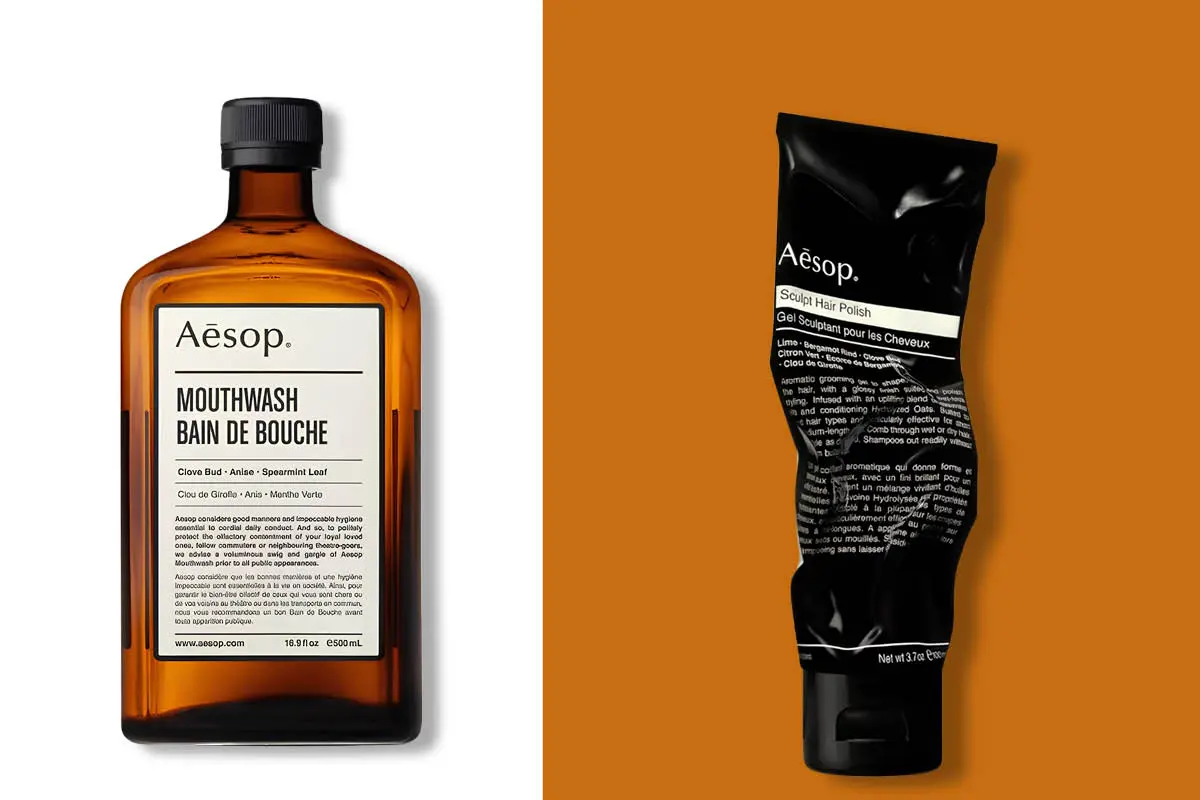
Loud Marketing:
Ads. Promotions. Constant attention.
Aesop largely chose a quieter path.
Quiet Communication:
- Editorial content
- Cultural collaborations
- Thoughtful design
- Word of mouth
- Selective creative partnerships
Aesop’s restrained approach to traditional advertising lets its ideas speak without demanding attention. Its collaborations add cultural depth while preserving the brand’s distinct character.
Then The Screen:
WORK & Co translated Aesop’s packaging, typography, motion, and consultant-style education into its website. The Aesop case study shows how the same philosophy works online: the website feels like an extension of the brand, rather than a conventional sales channel.
The principle:
Make the experience worth noticing. Don’t make the brand shout.
Act VII: The $2.5 Billion Proof
The acquisition | 2023
The L’Oréal Aesop acquisition was completed in 2023 at an enterprise value of approximately $2.525 billion. Aesop had reported $537 million in sales in 2022.
The business proof:
The Aesop case study reaches its clearest financial proof here. L’Oréal was buying more than successful skincare formulas. It was acquiring a distinctive brand system, a strong cultural position, and a retail methodology that had turned physical spaces into a defining part of the customer experience.
So, is Aesop worth it? The acquisition suggests that L’Oréal saw value well beyond the formulas themselves. Aesop’s philosophy had become an asset with measurable commercial value.
The bigger meaning:
Aesop’s philosophy had become an asset with measurable commercial value.
Finale: The Aesop Rulebook
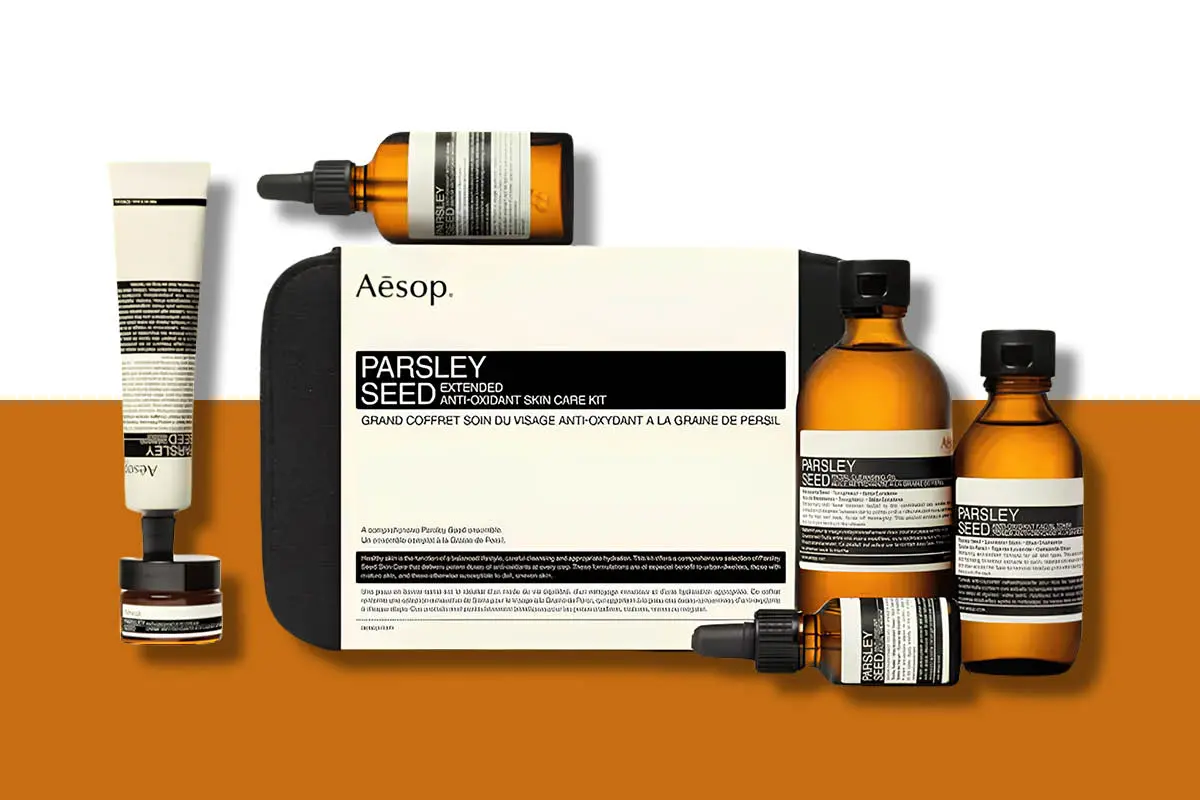
The verdict: Aesop kept its philosophy consistent while letting every expression feel local, tactile, and distinct.
- Make principles consistent, not every execution.
- Turn physical space into part of the brand.
- Give customers something to experience before buying.
- Make language a recognisable brand asset.
- Let culture replace constant promotion.
The Aesop case study proves the central paradox: Aesop became recognisable by refusing to look the same everywhere.