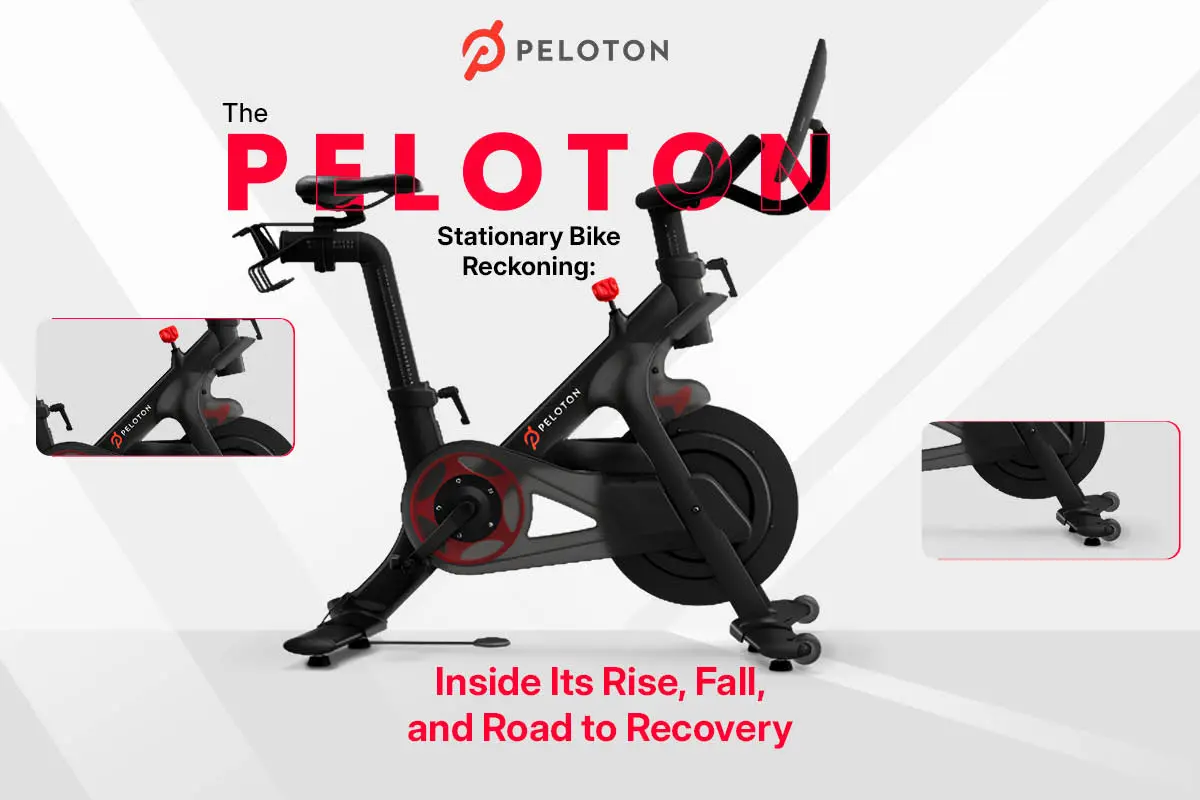
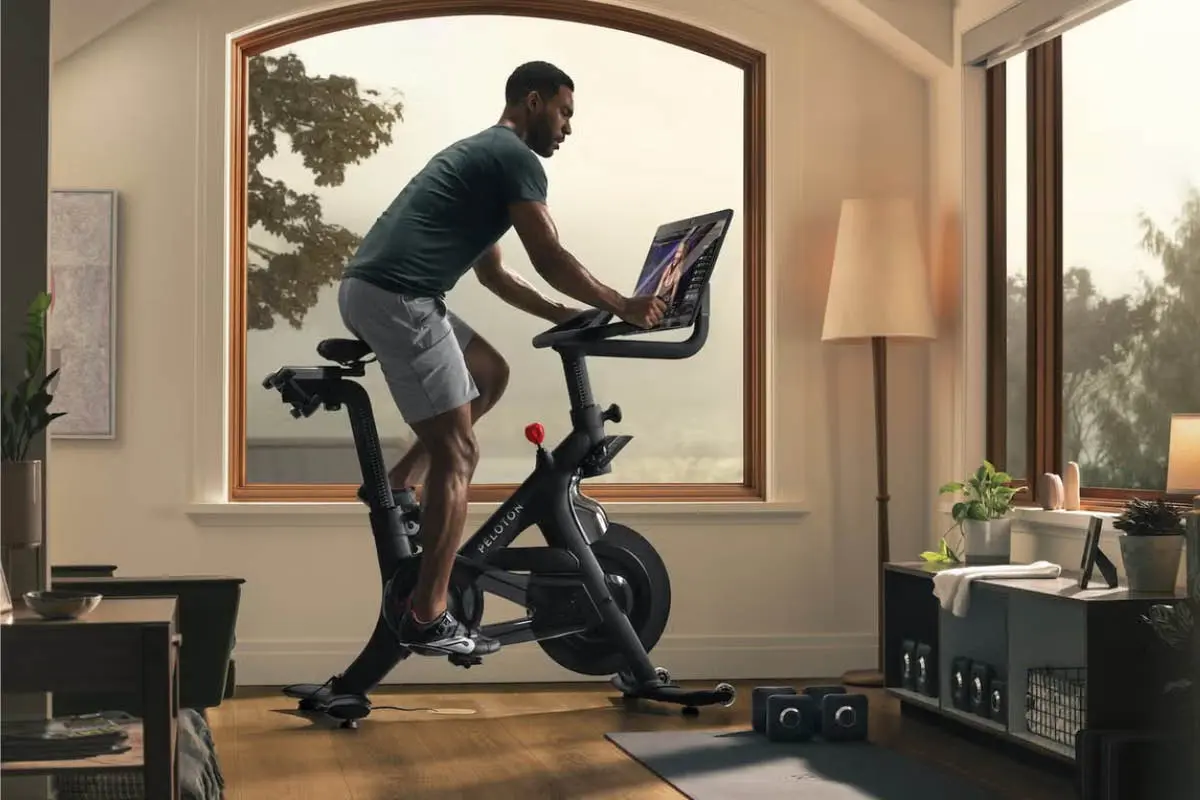
During the pandemic, Peloton looked unstoppable. Millions bought its Peloton stationary bike, joined live classes, and treated a home workout like a boutique fitness studio. Then demand collapsed, inventory piled up, and losses mounted. The company’s original idea remained simple: put expert instructors inside customers’ living rooms through connected equipment. Growth invited bold expansion, but shifting habits exposed the cost of running a hardware-heavy business.
How did a brand with such devoted customers fall into such trouble, and what steps did it take to recover? This case study examines its business model, early missteps, customer trust, financial strain, and eventual turnaround plan.
The business model: selling an experience, not just a bike
Peloton’s model worked like a business canvas brought to life:
- Product: The Peloton stationary bike and treadmill hardware, paired with a screen streaming live and on-demand classes led by instructors.
- Community: Leaderboards, performance stats, and shared milestones turned solitary workouts into group moments.
- Value proposition: Structured fitness at home, skipping the commute to a gym.
- Revenue: A one-time hardware purchase plus a recurring membership fee.
- Weakness: The steep upfront cost limited who could buy in, while subscription income depended on riders finding continued value beyond simply owning the equipment.
- Fix in progress: Renting hardware instead of selling it, borrowing from the hardware-as-a-service idea, to lower the barrier and widen the customer base.
This mix of strength and strain set the stage for what happened when demand suddenly surged.
The pandemic boom and its planning problem
The numbers below trace how a sudden rush of orders turned into a lasting operational strain.
| Stage | What Happened |
|---|---|
| Surge | Gym closures and lockdowns send millions of people searching for home workout options. Orders for the Peloton stationary bike and treadmill climbed quickly, and waitlists stretched for months. |
| Expansion | Rising orders push Peloton to expand production capacity, inventory, warehouse space, and staffing across the business. Leadership treats the growth as a lasting shift, not a temporary spike. |
| Reversal | Vaccines arrive, gyms reopen, and customer interest cools faster than leadership expected. |
| Fallout | Warehouses hold excess inventory. Delivery slows under the weight of the larger operation, and fixed costs from the buildout strain finances even as orders taper. |
| Lesson | Exceptional demand is not a dependable long-term forecast. Expansion decisions need room for uncertainty, since a company built for a temporary peak stays exposed when momentum fades. |
A brief surge can reshape a company for years after the surge itself has passed.
The crisis: safety concerns, reputation, and financial pressure
No single problem could explain the decline that followed the pandemic surge.
1. Product safety:
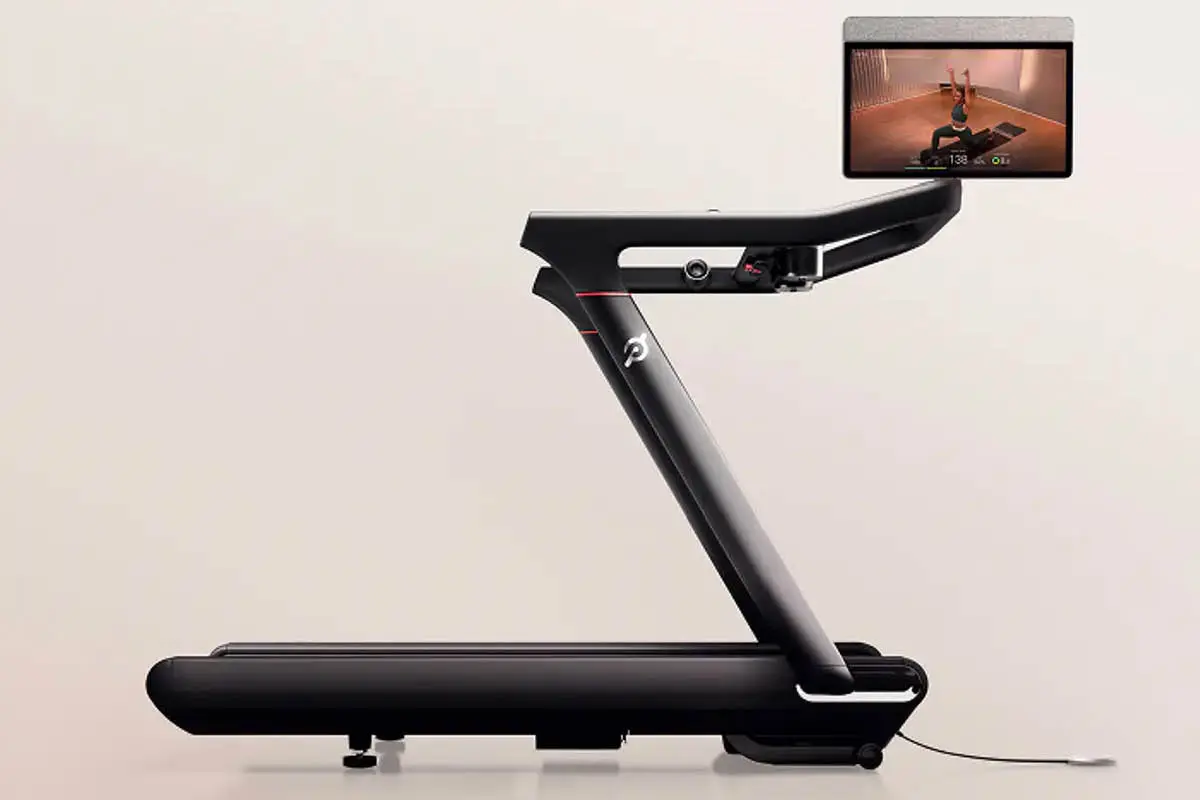
In 2021, Peloton’s Tread+ treadmill recall followed months of injury reports and a child’s death, plus a public dispute with safety regulators before the company reversed course. That delayed response left many owners questioning how carefully risks had been assessed.
2. Brand reputation:
Advertising controversies added pressure. A widely watched television scene depicting a character’s fatal heart attack right after an at-home ride sent shares tumbling, forcing an unplanned publicity campaign to repair public perception.
3. Demand and finances:
Once gyms reopened, the appeal of pricey home equipment faded. Sales slid, warehouses filled with unsold inventory, and investors grew uneasy as restructuring and layoffs followed.
The treadmill recall and the television scene were immediate triggers; heavy reliance on equipment sales and rapid expansion during the pandemic were the deeper vulnerabilities beneath them.
The response: cost control and a more flexible business model
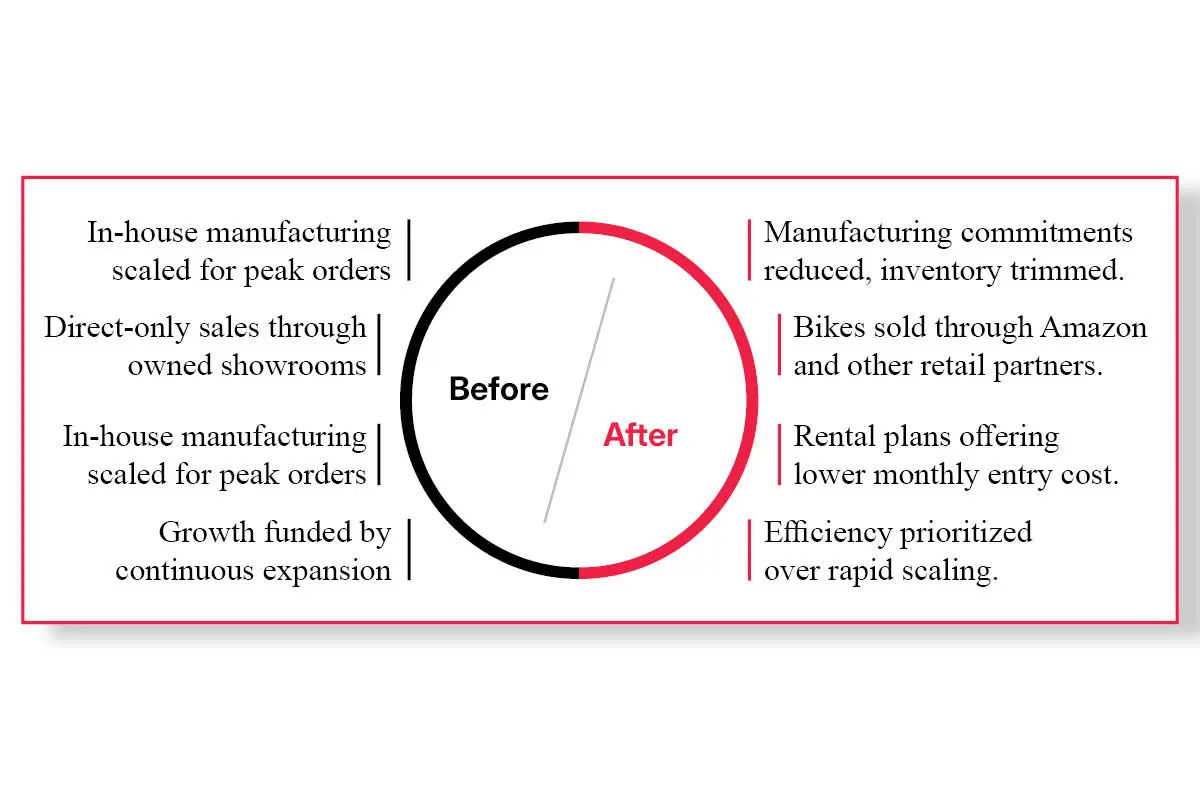
Facing a steep drop in demand, Peloton replaced its CEO and cut thousands of jobs to control costs.
- In-house manufacturing scaled for peak orders → Manufacturing commitments reduced, inventory trimmed.
- Direct-only sales through owned showrooms → Bikes sold through Amazon and other retail partners.
- Large upfront equipment purchase required → Rental plans offering lower monthly entry cost.
- Growth funded by continuous expansion → Efficiency prioritized over rapid scaling.
Executives also renegotiated manufacturing contracts to avoid holding excess stock. The rental model eased entry for hesitant buyers while keeping them tied to subscription revenue. Yet servicing equipment, managing logistics, and retaining subscribers still add cost, showing that recovery depends on discipline as much as reach.
Repositioning the product
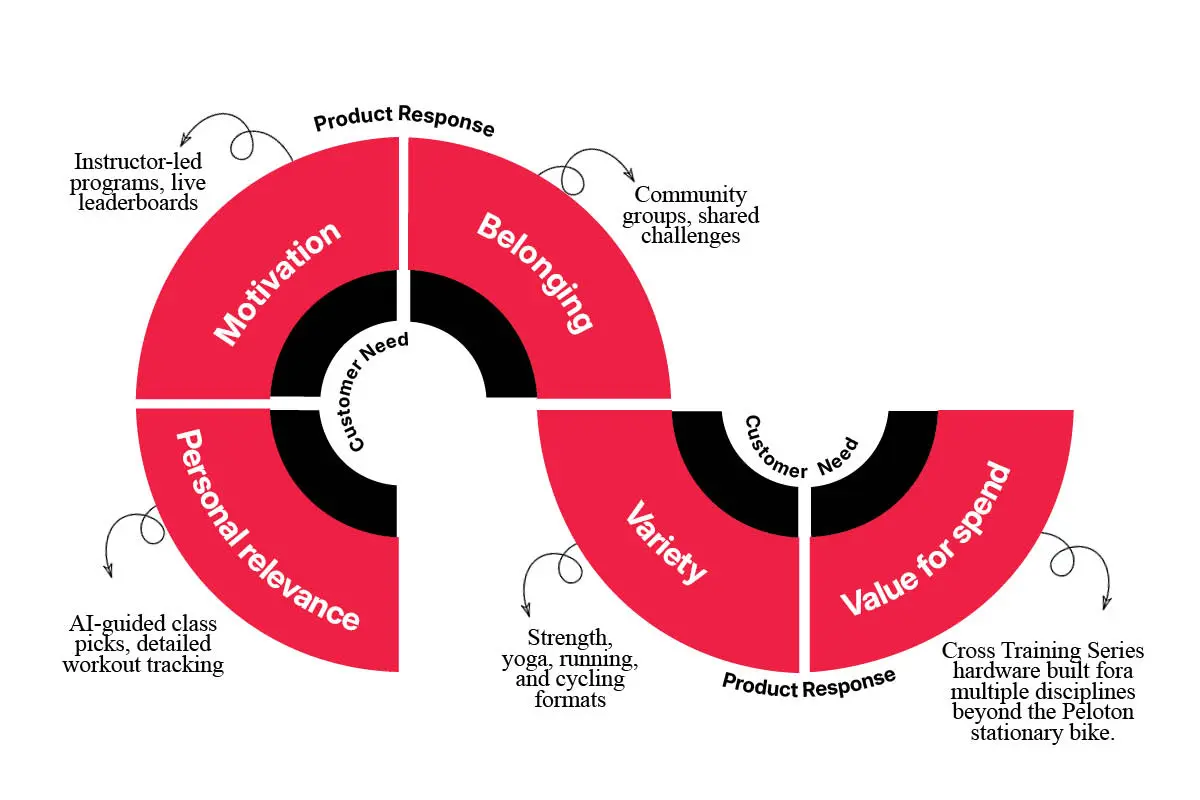
Peloton answered slipping engagement with a features-to-needs solution map:
| Customer Need | Product Response |
|---|---|
| Personal relevance | AI-guided class picks, detailed workout tracking |
| Motivation | Instructor-led programs, live leaderboards |
| Belonging | Community groups, shared challenges |
| Variety | Strength, yoga, running, and cycling formats |
| Value for spend | Cross Training Series hardware built for multiple disciplines beyond the Peloton stationary bike. |
The lineup broadens the brand past the Peloton stationary bike, letting current members mix routines and giving newcomers more reasons to join. Newer equipment and coaching technology extend this multi-discipline pitch further. Still, one question lingers: does the added functionality justify the equipment price and monthly membership fee for a genuinely undecided buyer?
SWOT analysis: internal capabilities and external risks
A structured view of the company’s position ties its internal strengths and weaknesses to the external forces shaping its next chapter.
| Strengths | Weaknesses |
|---|---|
| • Strong brand recognition • Instructor-led content library • Connected equipment and workout data • Engaged member community • Recurring membership revenue beyond hardware sales | • Premium equipment prices • Heavy dependence on hardware demand • Large operating commitments from rapid expansion • Reputational fallout from safety concerns |
| Opportunities | Threats |
|---|---|
| • Digital-only memberships • Rental plans • Corporate wellness partnerships • International markets • Broader workout content for equipment-free customers | • Competition from gyms and digital fitness apps • Shifting exercise habits • Tighter discretionary spending • Product liability • Subscription cancellations |
Strategic interpretation:
- Wider content and flexible purchase options target customers who skip expensive hardware.
- Tighter cost discipline addresses some weaknesses from the expansion years.
- Retention and profitability remain unresolved for Peloton going forward.
The matrix shows a company with real advantages still working to turn a loyal following into lasting financial stability.
Executive debrief: three lessons
Lesson 1: forecasting
Test whether a demand spike reflects lasting habits before expanding capacity. Peloton scaled as if pandemic-era demand would last, then faced overexpansion once habits shifted back.
Lesson 2: risk management
Clear safety reporting, honest customer communication, and swift corrective action protect trust. Delayed disclosures after safety concerns can weaken brand credibility fast.
Lesson 3: business resilience
Flexible costs, accessible pricing, recurring revenue, and products that stay useful as habits change keep a company steady through downturns.
Bottom line: Engagement and brand recognition alone cannot protect a business from weak planning or unsustainable costs.
Conclusion: a sustainable next chapter?
Peloton began as a bold connected-fitness idea, grew explosively when pandemic demand surged, then faced serious financial strain once conditions normalized. In response, the company cut costs, changed distribution, added rental plans, expanded subscriptions, and broadened its fitness programming beyond the Peloton stationary bike itself.
Whether these steps work now depends on four factors:
- Customer retention
- Equipment demand
- Subscription profitability
- Cost discipline
Each addresses a different pressure point, but none guarantees success alone. The real test is quieter than a pandemic surge: can the brand keep members paying for workouts long after the extraordinary circumstances that built it have faded?