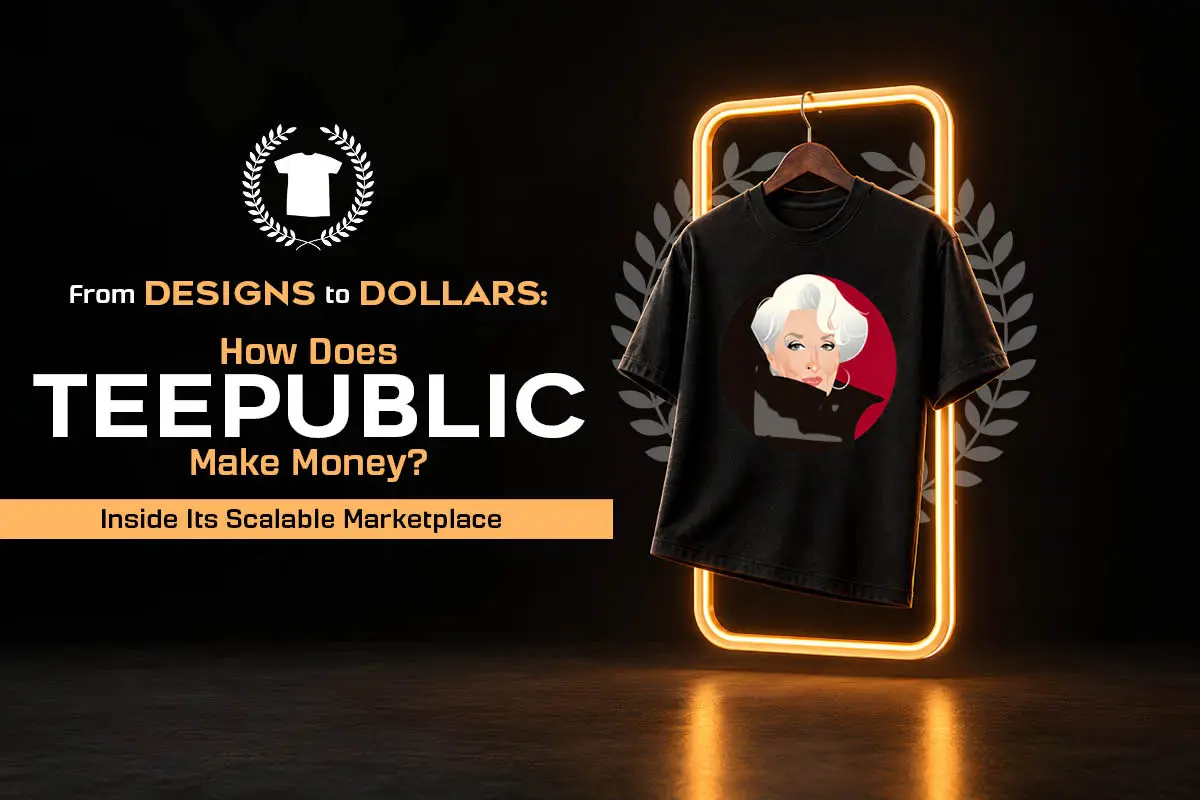
A T-shirt business usually starts with a product. TeePublic started with a different question: what if the people with the best ideas did not have to work for the company?
Founded in 2013 by Josh Abramson and Adam Schwartz, TeePublic built a marketplace where independent artists upload designs, shoppers choose products, and third-party fulfillment partners print and ship orders. The model allows TeePublic to build a large product catalogue without designing or manufacturing every product itself.
Abramson had already built CollegeHumor in 1999 and later BustedTees. After buying CollegeHumor back from IAC in 2011, he and Schwartz launched TeePublic. Today, the marketplace carries more than 1.2 million designs across more than 75 products. So, how does TeePublic make money? The answer lies in the economics of its creator-driven marketplace.
TeePublic at a Glance
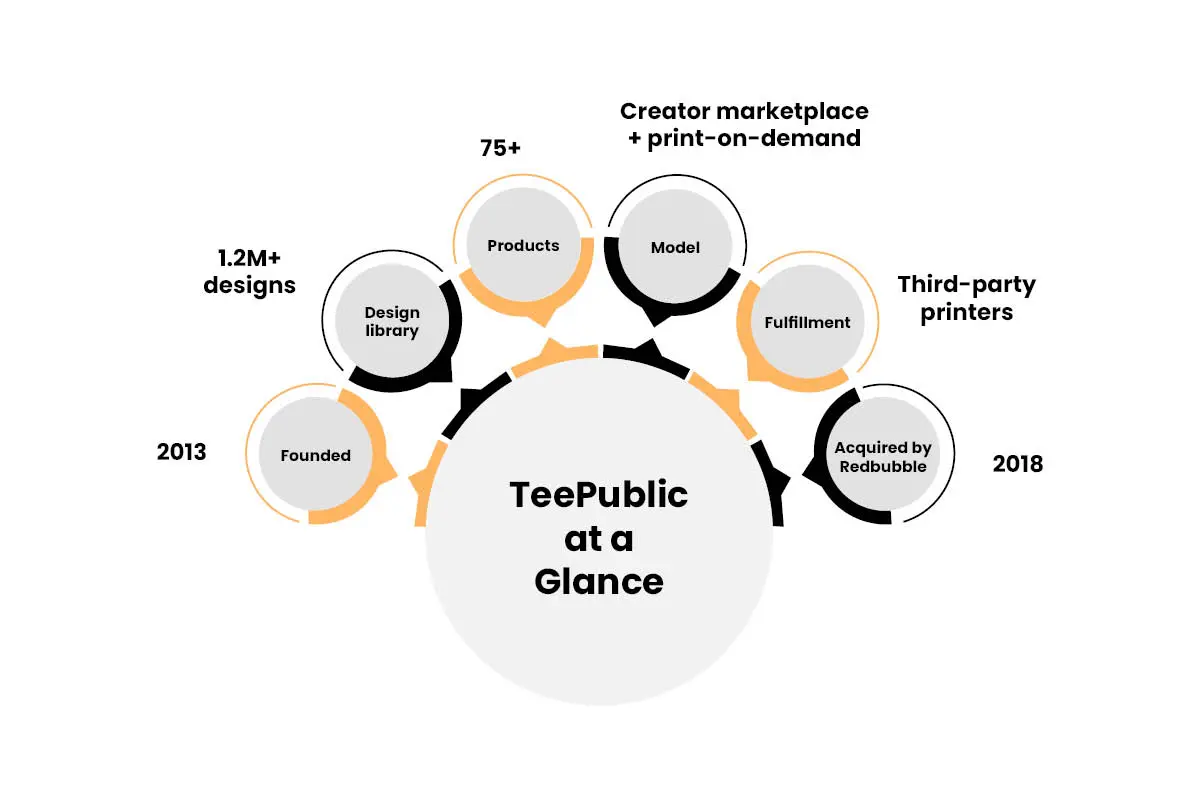
- Founded: 2013
- Design library: 1.2M+ designs
- Products: 75+
- Model: Creator marketplace + print-on-demand
- Fulfillment: Third-party printers
- Acquired by Redbubble: 2018
The Money Engine: How Does TeePublic Make Money?
So, how does TeePublic make money in practice? The model is straightforward. TeePublic does not need to manufacture thousands of designs before knowing whether customers want them. It does not need warehouses stocked with every possible product or its own printing facilities. Artists upload their work. Shoppers select designs and products, and TeePublic facilitates the transaction while third-party fulfillment partners handle printing and shipping. Artists earn a share from eligible sales, while TeePublic retains the amount remaining after creator earnings and fulfillment costs.
TeePublic controls product pricing and places artists in different earning tiers. Its Curator affiliate model provides an additional way to bring customers and sales to the marketplace.
The important point is that TeePublic does not need to create every product that sells. It provides the marketplace, catalogue, customer access, and selling infrastructure.
The Catalogue Becomes the Engine
The model creates a simple growth flywheel:
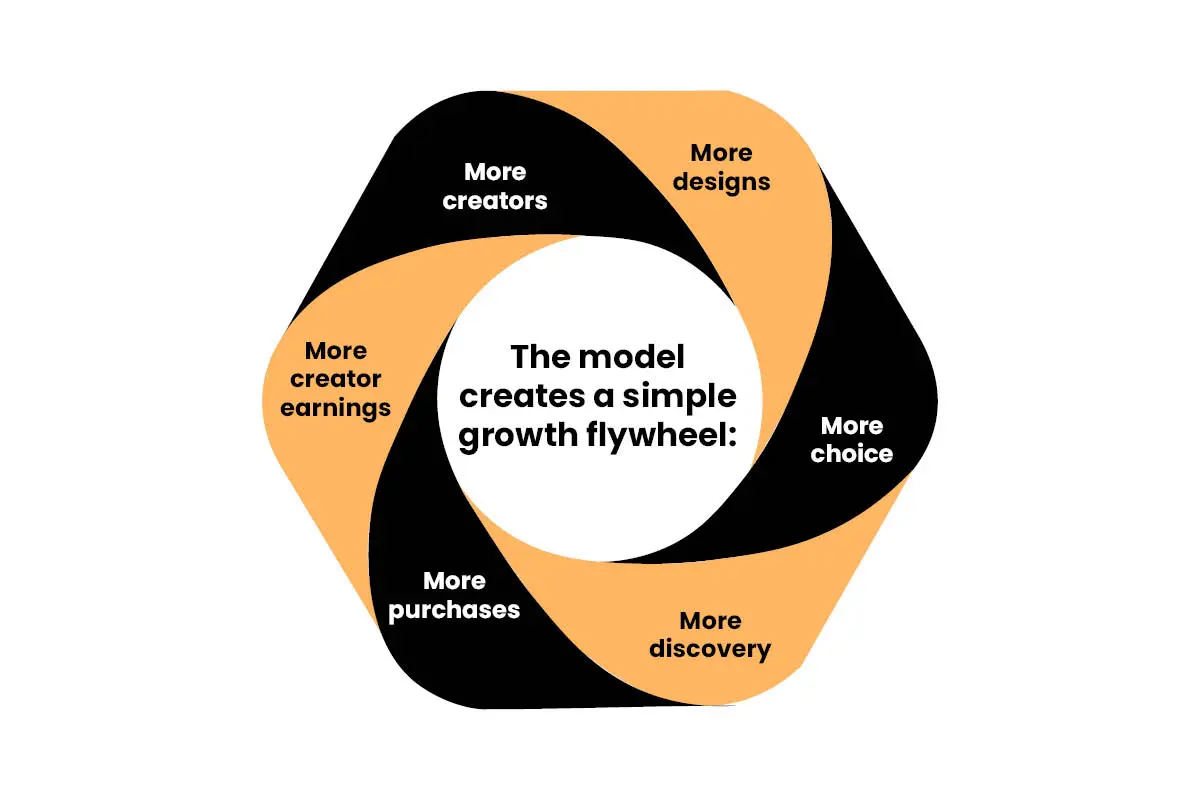
- More creators
- More choice
- More discovery
- More purchases
- More creator earnings
- More designs
This model also helps explain: How does TeePublic make money without carrying the traditional risks of an apparel business? Traditional apparel businesses often make products before demand is known. TeePublic can place a design in front of customers and produce the product after an order is placed.
That reduces inventory risk while allowing the catalogue to grow. Fulfillment partners handle production, while TeePublic can scale marketing, support, and marketplace operations without increasing manufacturing capacity at the same pace.
Marketing the Long Tail
A large catalogue creates another challenge: discovery. Having millions of designs means little if the right customers cannot find them.
TeePublic faced this issue when it wanted to increase paid-social spending but lacked confidence that additional spending would generate incremental revenue. Its existing approach relied heavily on Facebook data, while acquisition, remarketing, and re-engagement were not sufficiently separated.
Working with Simon Data, TeePublic integrated its customer data and segmented these audiences more precisely. The result was a 161% increase in paid-social revenue, a 21% increase in ROAS, and a 121% increase in paid-social spend.
The lesson was not simply to spend more. It was to become more precise about who sees what and when. How does TeePublic make money? In part, by turning that discovery into purchases. For a marketplace built around a huge design catalogue, discovery is part of the business model.
Read More: Redbubble Business Model: How Scattered Data Nearly Broke a Marketplace
Scaling Without Carrying Everything In-House
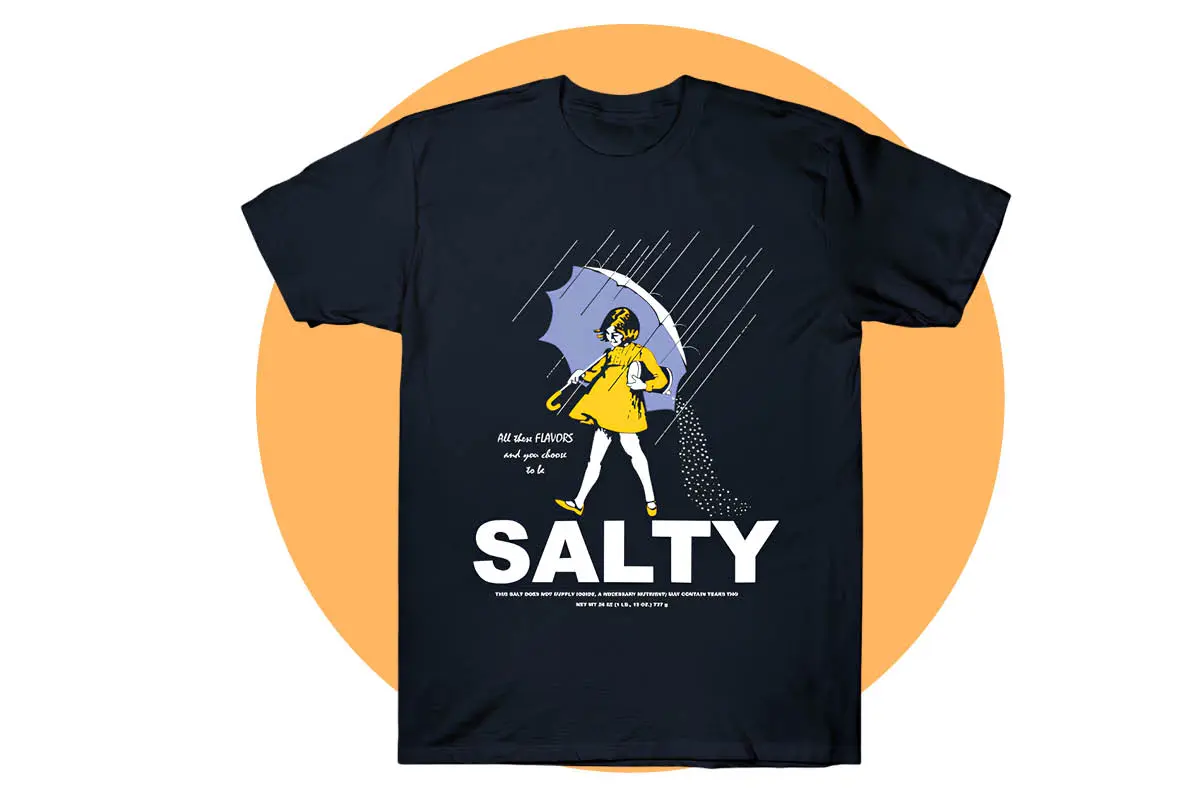
TeePublic also used outside expertise to expand without building every function internally.
According to HKR.TEAM’s case study, the company grew from roughly 10 people into a nine-figure business without venture capital. The relationship began in 2016 with one affiliate marketing hire and expanded into customer support, content moderation, creator and affiliate relationships, recruiting, and lead generation.
By Q4 2022, HKR.TEAM was co-managing more than 100 customer-support employees. During the holiday surge, more than 85 representatives were added in under two months, with reported time-to-hire below 14 days.
The case study reports 97% customer satisfaction, 99% quality assurance, less than 2% attrition, and approximately $2 million in annual payroll savings.
That operating model is another part of how TeePublic makes money at scale: external capacity allowed TeePublic to absorb growth without building every capability itself.
One Owner, Two Brands
In 2018, Redbubble acquired TeePublic for US$41 million. TeePublic continued operating as a distinct brand within the broader Redbubble group.
The acquisition was positioned as part of Redbubble’s multi-brand strategy, allowing the group to reach different markets and customer segments while allowing TeePublic to retain its distinct identity rather than being folded into the Redbubble brand.
That added another layer to TeePublic’s growth story: the marketplace model remained the foundation, while ownership by a larger parent company provided additional strategic support.
Inside the Print-on-Demand Battlefield
How does TeePublic make money? One answer lies in what the platform handles for creators. The competitive question is not simply which platform offers the most features. It is how much of the selling process the creator has to handle.
TeePublic offers established marketplace traffic and takes responsibility for much of the retail machinery. Printful emphasizes branded stores, ecommerce integrations, and pricing control. Redbubble is closer to TeePublic as a marketplace but gives creators greater pricing flexibility. Zazzle emphasizes personalization and royalty control. Threadless combines a marketplace with Artist Shops, while Spreadshirt offers both a marketplace and independent stores.
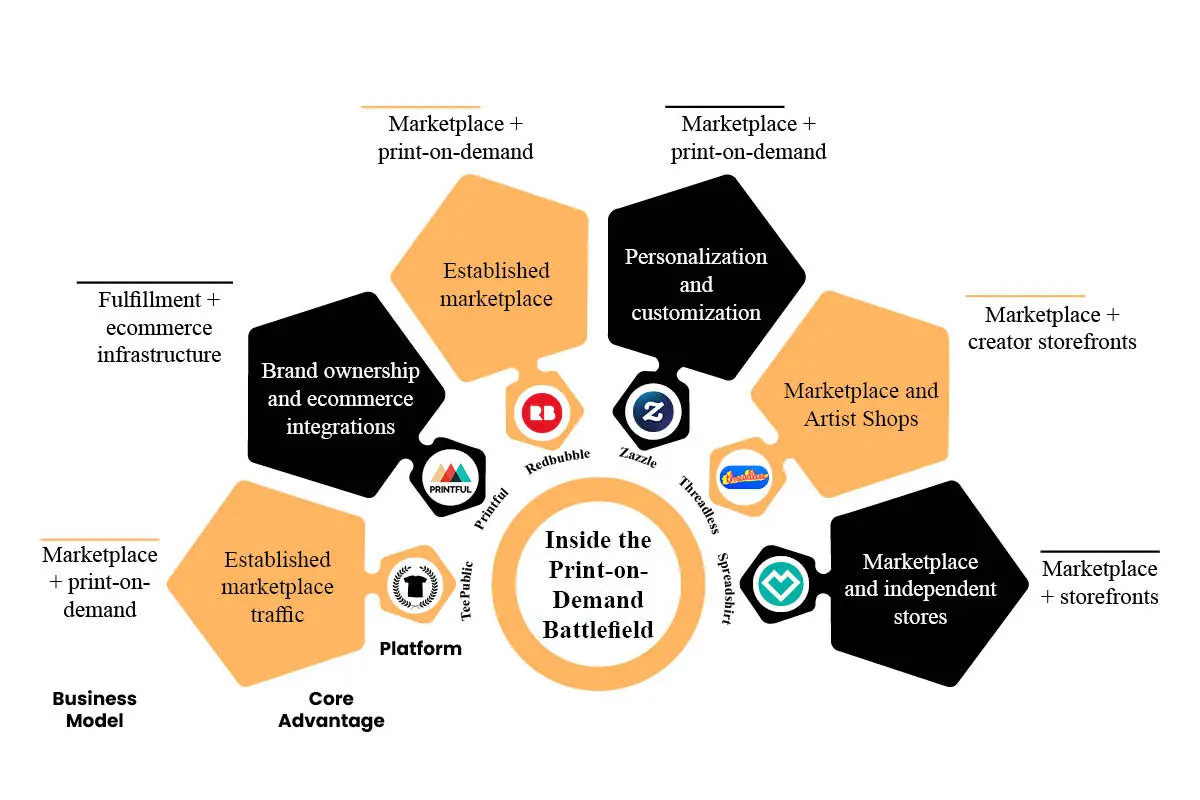
| Platform | Core Advantage | Business Model |
| TeePublic | Established marketplace traffic | Marketplace + print-on-demand |
| Printful | Brand ownership and ecommerce integrations | Fulfillment + ecommerce infrastructure |
| Redbubble | Established marketplace | Marketplace + print-on-demand |
| Zazzle | Personalization and customization | Marketplace + print-on-demand |
| Threadless | Marketplace and Artist Shops | Marketplace + creator storefronts |
| Spreadshirt | Marketplace and independent stores | Marketplace + storefronts |
The comparison represents a trade-off rather than a ranking. TeePublic reduces the number of retail and operational decisions creators have to manage, while platforms such as Printful give creators greater control over branding, pricing, and storefronts. That additional control also comes with greater responsibility for running the business.
TeePublic’s bet is simple: make it easier for a creator to turn an idea into a product without requiring that creator to become a full-time retailer.
The Bigger Business Lesson
So, how does TeePublic make money?
TeePublic makes money by operating a marketplace that connects independent creators with customer demand at scale. Customers create the demand, creators provide the designs, and fulfillment partners handle production and shipping. TeePublic sits at the center of that system, providing the marketplace, customer access, and selling infrastructure, while marketing drives discovery and external support helps the business absorb growth.
The strategies also show how TeePublic makes money at scale. A larger creator base expands the catalogue. A larger catalogue creates more opportunities for discovery. Better targeting turns discovery into sales. Sales create more earning opportunities for creators, which can attract more designs.
That is what makes TeePublic a useful example of a multi-strategy brand. The product may look like a T-shirt, but the business is really a marketplace connecting creators, customers, data, fulfillment, and operations.
TeePublic began by giving independent artists somewhere to sell their ideas. Its bigger achievement was finding a way to make the marketplace around those ideas grow.
Read More: Aesop Case Study: Why It Refused to Build the Same Store Twice