Key Points:
- Artemis II enters final launch preparations with SLS and Orion positioned at Kennedy Space Center.
- The first crewed lunar mission in 50+ years will send four astronauts on a 10‑day journey around the Moon.
- Historic inclusivity milestone as the mission features the first woman, person of color, and non‑American astronaut at lunar distance.
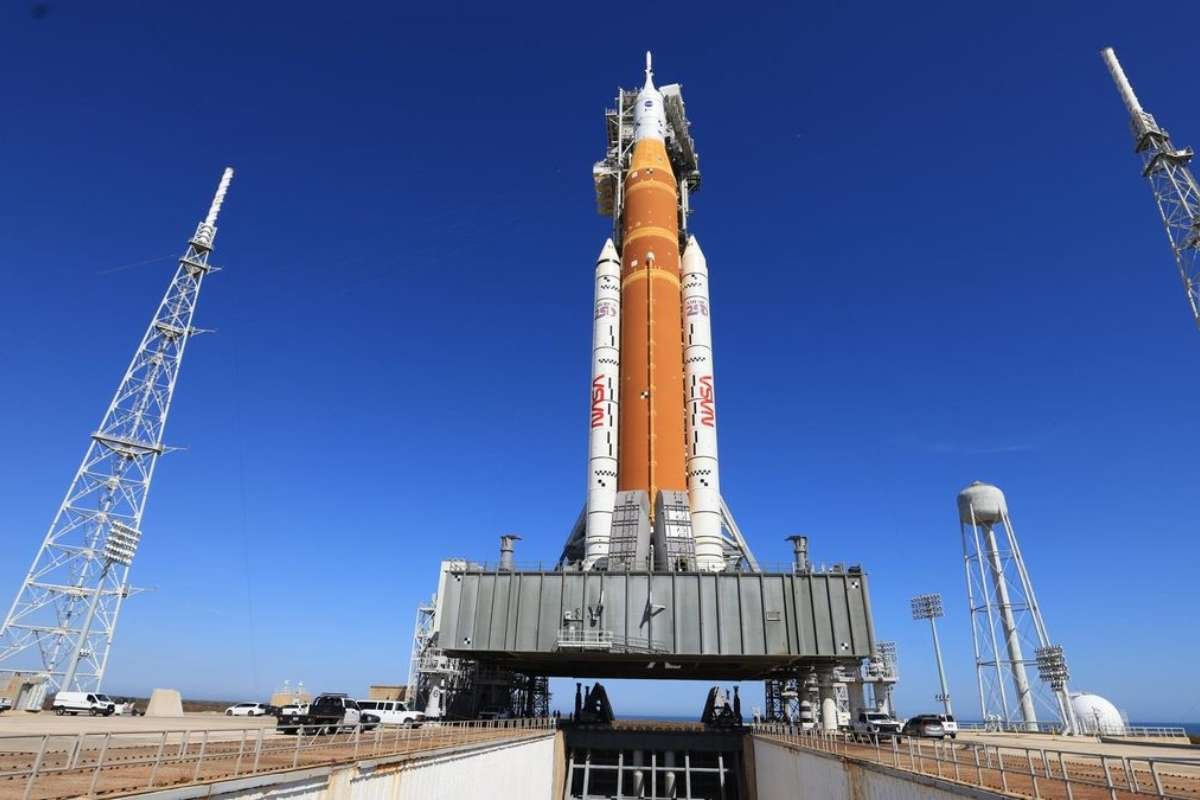
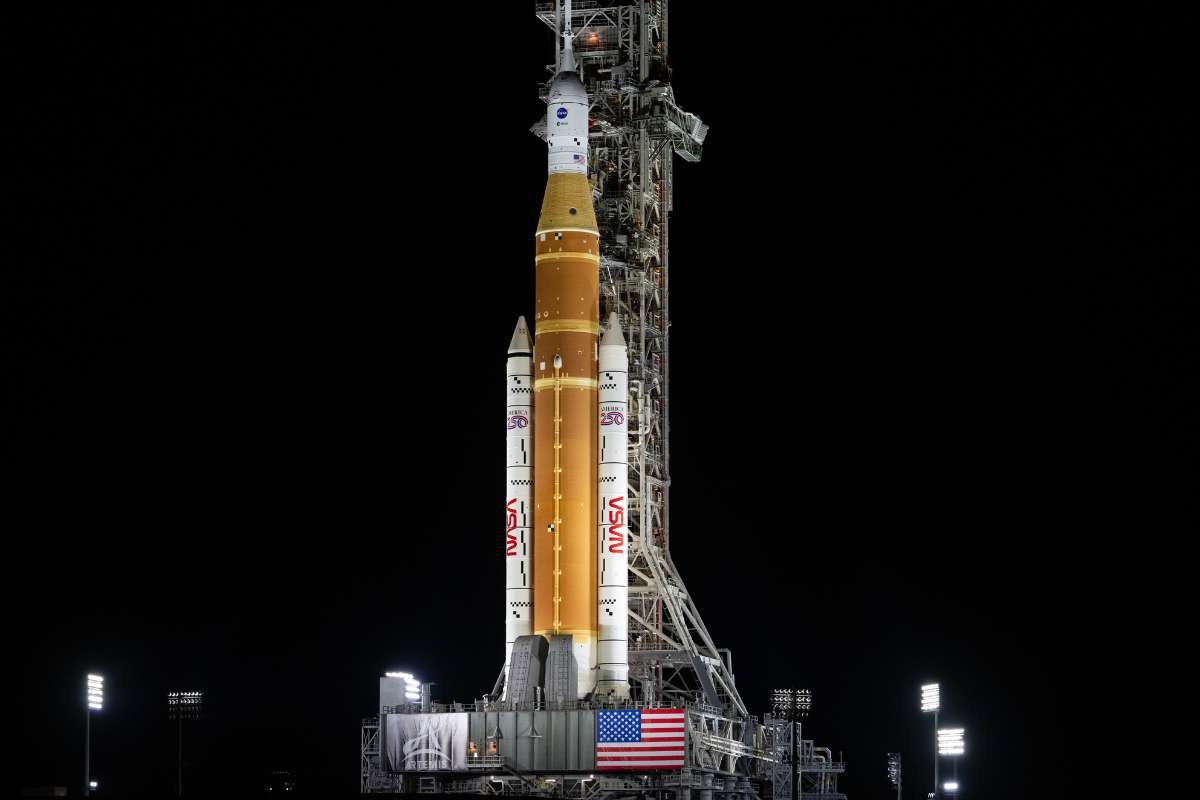
NASA has reached a pivotal milestone in its return-to-the-Moon program as the Artemis II mission moves into its final stages of preparation. The agency has successfully positioned the Space Launch System (SLS) rocket and the Orion spacecraft at Launch Complex 39 B at the Kennedy Space Center, signaling the transition from assembly to launch readiness. The rollout marks a major step toward the mission’s planned launch window in early 2026 and represents the most advanced phase yet of NASA’s effort to send humans beyond low Earth orbit since the Apollo era.
The Artemis II mission will be the first crewed mission of the Artemis program and the first human lunar voyage in more than 50 years. The mission is designed to take four astronauts on a roughly 10-day journey around the Moon and back to Earth. While the spacecraft will not land on the lunar surface, it will travel farther from Earth than any human mission in decades, testing the systems needed for sustained deep-space exploration.
Testing the Path to the Moon
With the rocket now at the launch pad, NASA teams are focused on a series of critical pre-launch evaluations, including full countdown simulations and fueling tests designed to replicate launch conditions. These rehearsals will determine whether the spacecraft, rocket, and ground systems are fully prepared for liftoff. While early February remains the target, alternative launch windows later in the spring remain available should additional technical checks be required.
The Artemis II mission crew includes Commander Reid Wiseman, Pilot Victor Glover, Mission Specialist Christina Koch, and Canadian Space Agency astronaut Jeremy Hansen. Together, they will test Orion’s life-support systems, propulsion, navigation, and communications in the harsh environment of deep space. The spacecraft will follow a carefully planned free-return trajectory, looping around the Moon before using Earth’s gravity to guide it home.
The mission also marks a historic step forward in inclusion in space exploration. Artemis II will carry the first woman, the first person of color, and the first non-American astronaut on a human mission to lunar distance, reflecting NASA’s commitment to a more representative future in spaceflight.
Inspiring a New Era of Exploration
Beyond its technical goals, the Artemis II mission carries symbolic weight. NASA has invited members of the public to submit their names to fly aboard Orion, allowing millions worldwide to feel personally connected to the mission. The initiative underscores the agency’s broader aim to make space exploration a shared human endeavor rather than a distant scientific pursuit.
Scientists and mission planners view Artemis II as a critical bridge between testing and landing. Data gathered during the flight will help engineers understand how astronauts and spacecraft perform beyond Earth’s protective magnetic field, informing future missions that aim to place humans on the Moon and eventually send crews to Mars.
As anticipation builds, Artemis II is widely seen as a turning point for human spaceflight. If successful, it will not only validate the technology required for long-term lunar exploration but also reignite global excitement about humanity’s next steps into deep space.