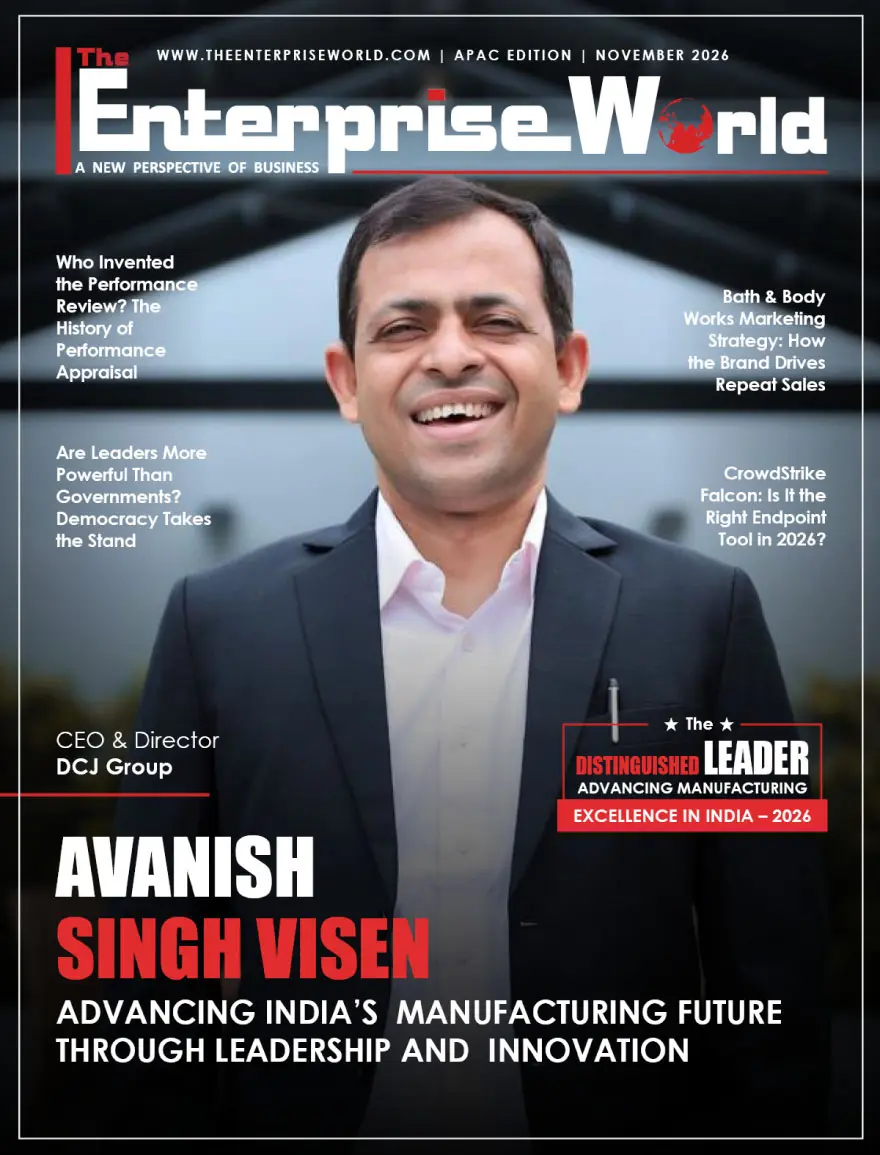


CEO & Director, DCJ Group
AVANISH SINGH VISEN
ADVANCING MANUFACTURING EXCELLENCE
A career built across industries
Avanish Singh Visen, CEO & Director of DCJ Group, has built his leadership journey within the manufacturing and engineering environment of the Group. His work has centred on supply-chain management, procurement, sourcing, vendor development and coordination across manufacturing operations—areas that connect product quality, dependable delivery and customer confidence.
At DCJ Group, Avanish Singh Visen managed supply-chain activities across 13 plants before becoming CEO of Encraft in 2018 and CEO of DCJ Group in 2020. This progression gave him practical experience of the operational details that keep manufacturing moving, as well as the broader responsibility of setting priorities, developing teams and preparing the organization for future opportunities.
His leadership approach emphasizes timely decisions, quality, accountability, customer focus, and trust. He believes issues should be raised early, responsibilities should be clear, and decisions should be taken with urgency without overlooking their consequences. The aim is to build an organization that can respond to customers and market changes while protecting the standards on which its reputation depends.
A manufacturing legacy dating to 1961
DCJ Group’s story began in 1961, when its Chairman, Shri D. C. Jain, started with the extrusion of HDPE strips for cane furniture. Over more than six decades, the Group expanded into a diversified portfolio of manufacturing and engineering businesses, including PVC pipes, drip irrigation products, refrigeration sealing systems, thermoplastic engineering profiles, uPVC doors and windows, glass products and other polymer-based solutions.
The history reflects a central challenge for any established manufacturer: preserving hard-earned experience while adapting to new customer needs, technologies and market conditions. A business cannot rely on its past alone. It must continue to refine its products, strengthen its capabilities and develop solutions that remain relevant to the industries it serves.
Today, businesses including Ajay Poly, Encraft India, and Enczo India Private Limited serve different applications and customer segments. Their products and markets vary, but the fundamentals remain connected: understand the application, engineer a suitable solution, maintain quality, coordinate supply and respond reliably.
Avanish’s focus is on strengthening these fundamentals while encouraging practical innovation. This means improving coordination, developing people, reviewing processes and adopting technology where it can create measurable value. The aim is not change for its own sake; it is to make the Group more responsive and better prepared for future requirements.
Speed and quality: A practical leadership philosophy
Manufacturing businesses must balance competing priorities. Customers expect dependable delivery, competitive costs, and consistent quality. Suppliers need clear specifications and realistic plans. Production teams need materials, equipment, and information at the right time. Across multiple plants and product categories, a delay or quality issue can quickly affect other operations and ultimately the customer.
Avanish’s approach is to investigate the underlying cause rather than simply address the visible symptom. That involves bringing the right people together, reviewing available information, identifying where a process has failed, and assigning clear responsibility for corrective action. His experience in supply-chain management, procurement and vendor development has reinforced the value of planning, visibility and early communication.
He encourages teams to raise concerns before they become larger problems. A small issue can often be resolved more effectively when it is identified early. Accountability, in this context, is not only about assigning responsibility after something goes wrong; it is also about learning from the event and improving the process so that the issue is less likely to recur.
His leadership mantra, “Speed and Quality,” expresses this balance. Timely decisions help an organization respond to customers and changing conditions. Quality protects reliability, reputation, and long-term value. One cannot be pursued at the expense of the other.
Awards and recognition: Milestones along the journey
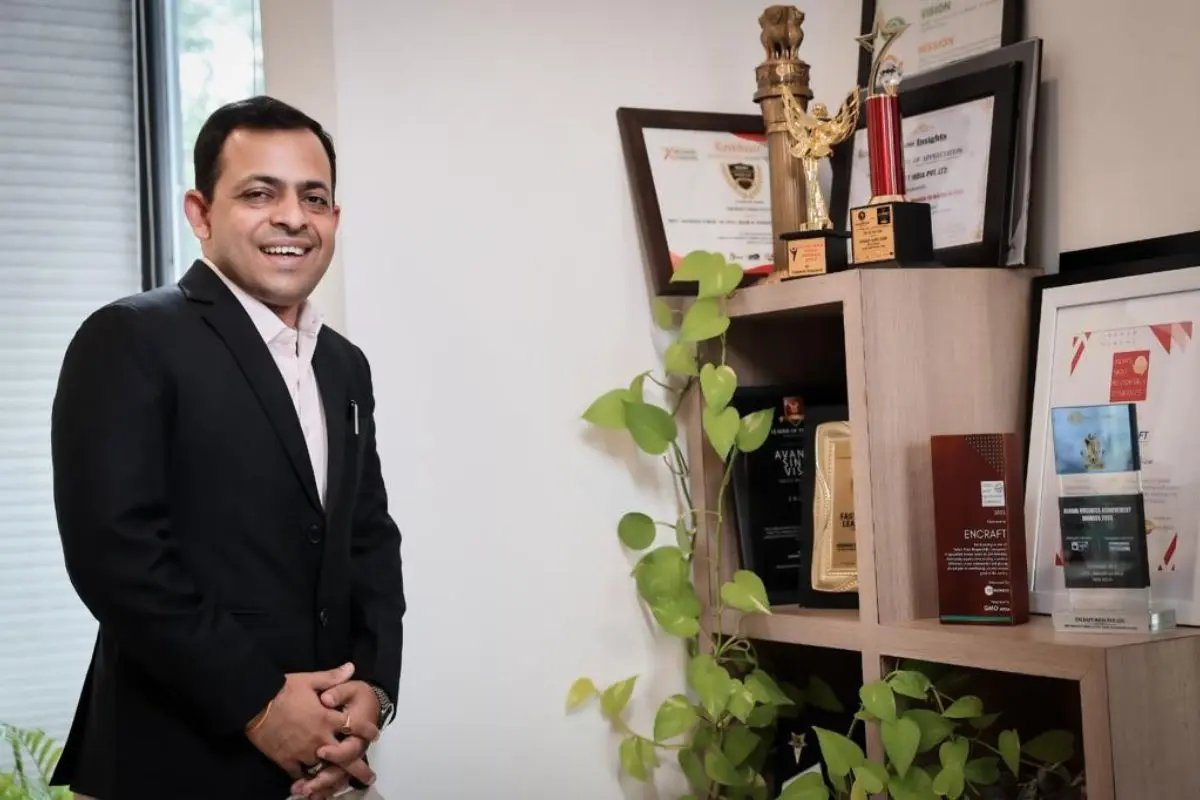
Avanish Singh Visen’s recent recognitions include the 40 Under Forty – Excellence in the Field of Fenestration Industry honour from Z Media. This recognition acknowledges his work in the fenestration sector and reflects the contribution of the teams, partners, fabricators, stakeholders and customers who support the business.
In 2026, he received the International Atal Award – Entrepreneur of the Year 2026 for Best Make in India, presented by the Atal Foundation at the Prime Minister’s Museum in New Delhi. This followed the Young World Entrepreneur Atal Icon Award 2025, under the Atal Youth Icon 2025 category, presented at the National Atal Award Ceremony. These recognitions connect his leadership journey with manufacturing, entrepreneurship, and the broader Make in India vision.
His other listed recognitions include Inspirational Leaders of Asia 2022, Business Leader of the Year 2021, Times SME Icon of India 2020–21 and Trusted CEO 2020–21. The exact award title, year, and awarding organization should be matched to official certificates before the article is signed off. Company or product awards should be listed separately from honours presented to Avanish Singh Visen personally.
Together, these milestones form part of a continuing journey at DCJ Group: strengthening manufacturing capabilities, developing people, supporting customers and building products and businesses for a changing Indian market.
Selected awards and recognition timeline
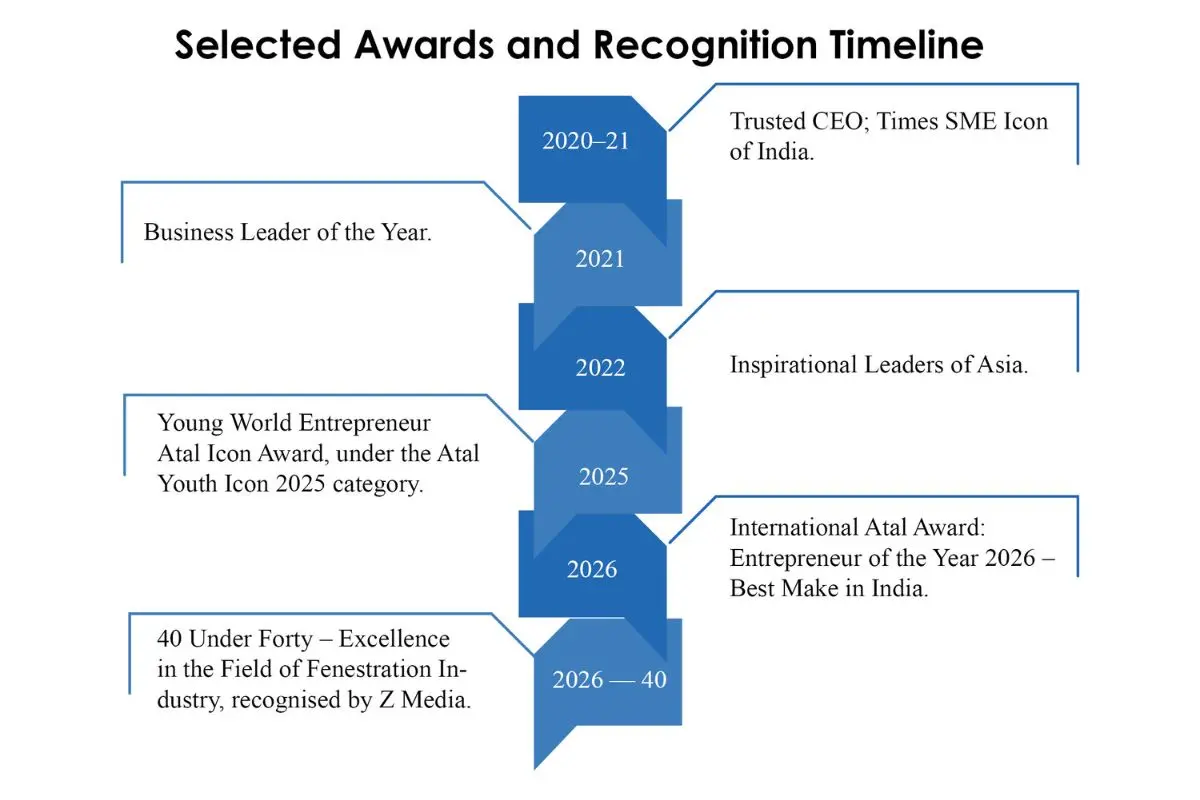
- 2020–21 — Trusted CEO; Times SME Icon of India.
- 2021 — Business Leader of the Year.
- 2022 — Inspirational Leaders of Asia.
- 2025 — Young World Entrepreneur Atal Icon Award, under the Atal Youth Icon 2025 category.
- 2026 — International Atal Award: Entrepreneur of the Year 2026 – Best Make in India.
- 2026 — 40 Under Forty – Excellence in the Field of Fenestration Industry, recognised by Z Media.
Strengthening the supply chain
Efficiency begins with dependable fundamentals: suitable materials, reliable suppliers, appropriate inventory, clear quality standards, and accurate information. Avanish’s experience as SCM Head, including responsibility for supply-chain activities across 13 plants, gave him direct exposure to the complexity of coordinating a distributed manufacturing network.
Supplier relationships are an important part of that system. Suppliers need to understand specifications, delivery requirements, and longer-term plans. When they are treated as partners and receive clear communication, risks can be identified earlier and expectations aligned more effectively. Supplier development and competitive sourcing can contribute to reliability when they are supported by quality discipline and realistic planning.
Accountability also depends on visibility. Teams need to know what is expected, who owns each process, and how progress will be reviewed. Technology can improve access to information, but it produces better results when employees have the skills and routines to act on that information.
For Avanish Singh Visen, operational improvement is therefore a combination of planning, collaboration and follow-through. The goal is to reduce avoidable disruption, protect customer commitments and make performance more predictable across the business.
Engineering solutions around customer needs
Customer requirements differ by application. Products may need particular dimensions, materials, tolerances, performance characteristics or installation features. DCJ Group’s businesses operate across a range of industrial and consumer-facing applications, making customer understanding and customization central to their work.
Ajay Poly Ltd (APPL) works with original equipment manufacturers on refrigeration sealing systems, speciality profiles and glass products designed for specific applications and tolerances. Engineering and computer-assisted modelling support product development and help align solutions with customer requirements.
Encraft develops uPVC and aluminium fenestration solutions for Indian conditions, with configurations and customization options suited to different needs. Its work includes attention to performance, weather conditions, energy efficiency, testing, and customer expectations.
For Avanish, the process begins with listening: understand the application, define the requirement, identify the right solution, maintain quality, and respond promptly. This approach turns customer service into an operating discipline. Feedback from real applications can also identify opportunities to improve design, manufacturing, packaging, installation, or service.
Innovation with a practical purpose
Innovation does not always begin with a new machine or a headline-making technology. It can begin with a product that needs to last longer, a process that must become more consistent, material use that can be improved, or a customer requirement that standard products cannot meet.
Across thermoplastic engineering products, refrigeration sealing systems, glass products and fenestration solutions, product development brings together design, materials, tooling, manufacturing processes, testing and customer requirements. Encraft has reported investment in in-house tooling, testing facilities and training infrastructure to support product development and performance.
Avanish’s emphasis is on innovation that creates value. Depending on the application, that value may appear as better durability, quality, productivity, efficiency, cost control or customer experience. Technology should be adopted because it solves a defined problem, not simply because it is new.
Looking ahead, automation, data, advanced materials and Industry 4.0 practices offer opportunities to improve visibility and consistency. Their value will depend on selecting the right applications, developing employee capability, and integrating new tools into dependable processes.
DCJ Group at a glance
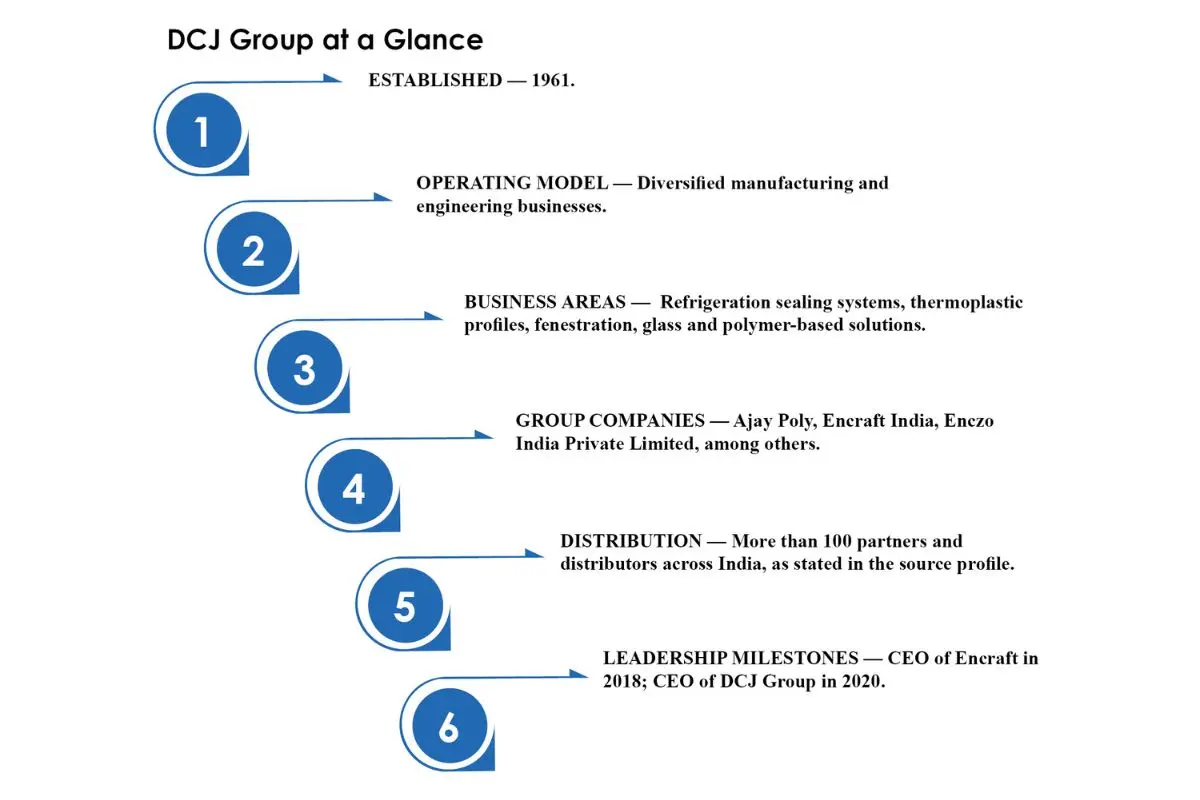
- ESTABLISHED — 1961.
- OPERATING MODEL — Diversified manufacturing and engineering businesses.
- BUSINESS AREAS — Refrigeration sealing systems, thermoplastic profiles, fenestration, glass and polymer-based solutions.
- GROUP COMPANIES — Ajay Poly, Encraft India, Enczo India Private Limited, among others.
- DISTRIBUTION — More than 100 partners and distributors across India, as stated in the source profile.
- LEADERSHIP MILESTONES — CEO of Encraft in 2018; CEO of DCJ Group in 2020.
Customer feedback and continuous improvement
Customers use products in real conditions, so their observations can reveal problems that routine production checks may not expose. Avanish Singh Visen sees feedback as an opportunity to address the immediate concern and understand the process behind it.
When a customer raises an issue, a prompt response matters. So does determining why it occurred. The cause may relate to design, material selection, packaging, installation, communication, or manufacturing controls. Corrective action is strongest when it addresses the cause and reduces the likelihood of recurrence.
This approach requires open communication. Customers need to feel heard, while teams need to be able to report problems early. Consistent follow-through helps turn feedback into useful learning and supports long-term relationships.
For Avanish, trust is built through repeated actions: clear communication, dependable delivery, honest responses, and a genuine willingness to improve.
The future of Indian manufacturing
Avanish Singh Visen sees significant opportunity for Indian manufacturing to strengthen its role in domestic and global markets. Realizing that potential will require investment in technology, stronger supplier ecosystems, operational discipline, and the skills needed for more advanced production environments.
Automation and data can support productivity, consistency, safety and decision-making. Localization can strengthen domestic supplier networks and help reduce avoidable supply interruptions. Sustainability calls for efficient energy use, reduced waste and responsible resource management. Advanced materials can deliver products that are lighter, stronger, more durable or better suited to specific applications.
People remain central to each of these developments. Technology can provide information and automate tasks, but employees still need the skills to interpret results, solve problems and improve work. Leaders must invest not only in equipment and systems, but also in training, communication and continuous learning.
His message to manufacturing leaders is to prepare early, keep customers in view and combine innovation with disciplined execution. Organizations that develop capable teams, dependable supply chains and a consistent commitment to quality will be better positioned to respond to changing expectations.
From individual execution to organizational leadership
Earlier in his career, Avanish’s focus was on learning, executing responsibilities, solving problems, and building relationships with suppliers and colleagues. Experience across engineering, procurement, vendor development and supply-chain management gave him a practical understanding of the details that keep manufacturing operations moving.
As a senior leader, his decisions affect employees, customers, suppliers, partners and the organization’s longer-term direction. Success increasingly depends on building systems that work beyond one individual, developing future leaders and giving teams the clarity to take responsibility.
The transition is from solving every problem personally to creating the capability to solve problems consistently across the organization. That requires trust, clear expectations, capable people, and a willingness to keep learning. For Avanish Singh Visen, leadership is not defined by designation alone; it is earned when people understand the direction, trust the purpose, and share responsibility for outcomes.
Five leadership principles reflected in his journey
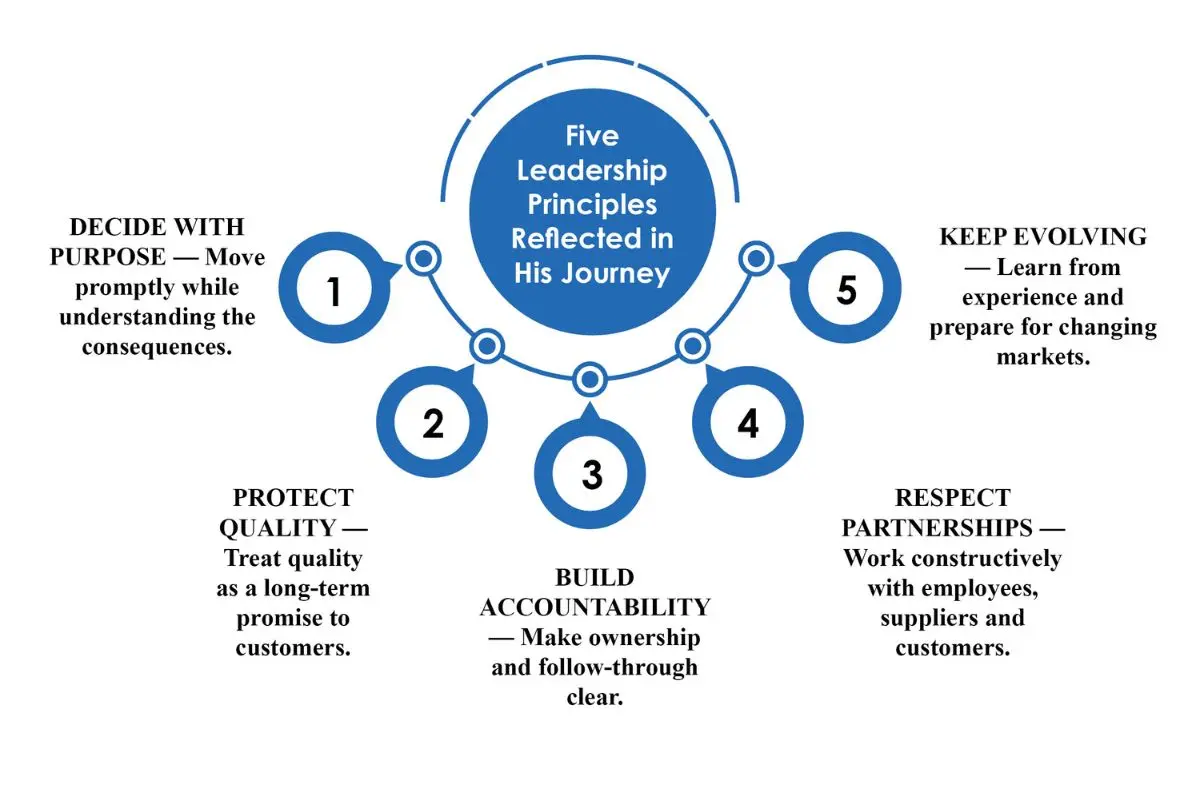
- DECIDE WITH PURPOSE — Move promptly while understanding the consequences.
- PROTECT QUALITY — Treat quality as a long-term promise to customers.
- BUILD ACCOUNTABILITY — Make ownership and follow-through clear.
- RESPECT PARTNERSHIPS — Work constructively with employees, suppliers and customers.
- KEEP EVOLVING — Learn from experience and prepare for changing markets.
A future built on experience and adaptation
Avanish Singh Visen’s journey brings together operational experience, manufacturing leadership and a commitment to customer-focused solutions. From his early work in engineering and sourcing to supply-chain responsibility across 13 plants, and then to leading Encraft and DCJ Group, his career has moved across the practical and strategic sides of business.
DCJ Group’s history since 1961 provides a substantial foundation. Its next chapter will depend on how effectively it responds to customer needs, strengthens its capabilities, develops its people and adopts useful innovation. The challenge is not simply to grow, but to remain dependable as technologies, markets and expectations change.
The awards and recognitions associated with Avanish and the Group mark important milestones, but they sit within a continuing journey. The lasting test of leadership is the ability to build capable teams, earn trust over time and deliver products and solutions that serve real needs. For Avanish, speed, quality, accountability and continuous learning remain essential to that task.