Key Takeaways:
- AI adoption is becoming a workforce strategy issue.
- AI regulation could directly affect business costs.
- Responsible AI is becoming a leadership priority.
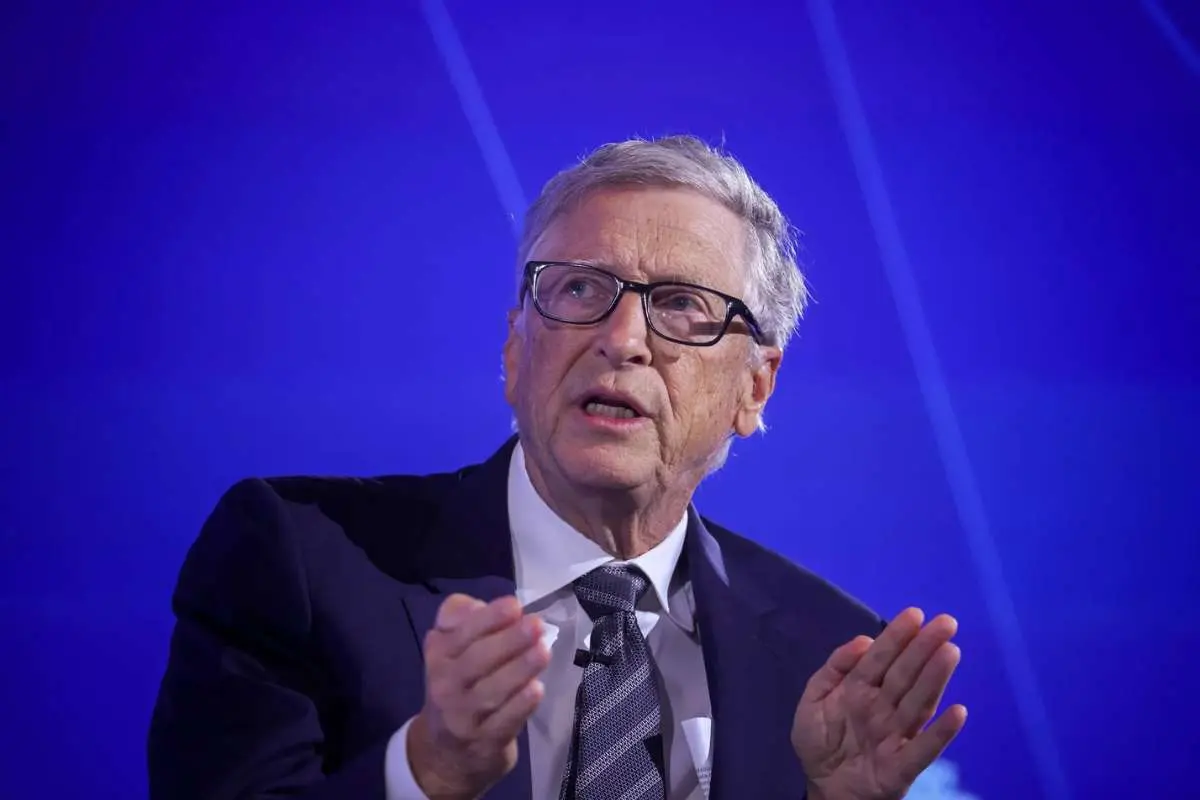
Artificial intelligence is advancing faster than many governments and institutions can adapt, according to Microsoft co-founder Bill Gates. While he remains optimistic about AI’s ability to improve healthcare, education, scientific research and productivity, his Bill Gates AI outlook warns that its rapid adoption could create significant disruption across labour markets and the wider economy.
Gates believes AI is different from earlier waves of automation because it can increasingly perform tasks that require human reasoning. Writing, coding, research, analysis and customer service are among the areas already being transformed, while advances in robotics could eventually affect physical jobs as well. The result could be major changes in how businesses organise work and how employees build careers, a shift already visible in recent AI breakthroughs reshaping entire industries.
AI could change jobs and economic policy
Gates’ primary concern is the possibility of widespread job displacement. Businesses have strong incentives to adopt AI because it can lower costs, improve efficiency and increase productivity. However, if companies replace workers faster than new roles emerge, governments could face greater pressure to provide retraining and financial support.
He has therefore argued that policymakers should prepare for AI-driven disruption rather than respond after large-scale job losses occur. Education and reskilling programmes could become increasingly important as employees move into roles that require skills AI cannot easily replicate.
One of the most notable proposals in the Bill Gates AI roadmap is the creation of “human-reserved” jobs. These would be occupations or responsibilities that society deliberately keeps primarily in human hands even when AI becomes technically capable of performing them. Healthcare, caregiving, and other roles that depend heavily on empathy, trust, and human relationships could be candidates. Gates has suggested that potentially 40% of jobs could eventually be reserved for humans, although determining which roles qualify would require difficult policy decisions.
Gates has also proposed taxing AI-driven automation. Such a measure could reduce the financial advantage of replacing employees with machines while generating revenue for retraining and social programmes. For businesses, this could eventually mean that the cost of automation includes not only technology investment but also broader economic and regulatory considerations.
AI safety becomes a business priority
The Bill Gates AI safety agenda also raises concerns about the security risks associated with increasingly powerful AI systems. Advanced models can already assist with technical and cybersecurity tasks, raising the possibility that criminals or hostile actors could use similar capabilities for sophisticated attacks.
He has warned that AI could also be misused to support biological threats, manipulate individuals and spread convincing misinformation. These risks could extend beyond individual companies and national borders, making international cooperation increasingly important.
Gates has called for an international organisation dedicated to monitoring advanced AI and establishing common safety standards, according to remarks reported by CNN. He has also expressed interest in discussions with Chinese President Xi Jinping, arguing that cooperation among major powers will be necessary to manage risks associated with the technology.
For business leaders, the Bill Gates AI message is increasingly clear: AI is no longer simply an innovation or productivity issue. Its expansion could influence workforce planning, taxation, cybersecurity, regulation and corporate responsibility.
Gates is not calling for AI development to stop. Instead, he is urging governments and businesses to move as quickly on safeguards and preparation as they are moving on the technology itself. The decisions made now could determine whether AI becomes a broadly shared source of economic growth or deepens existing inequalities and disruptions.