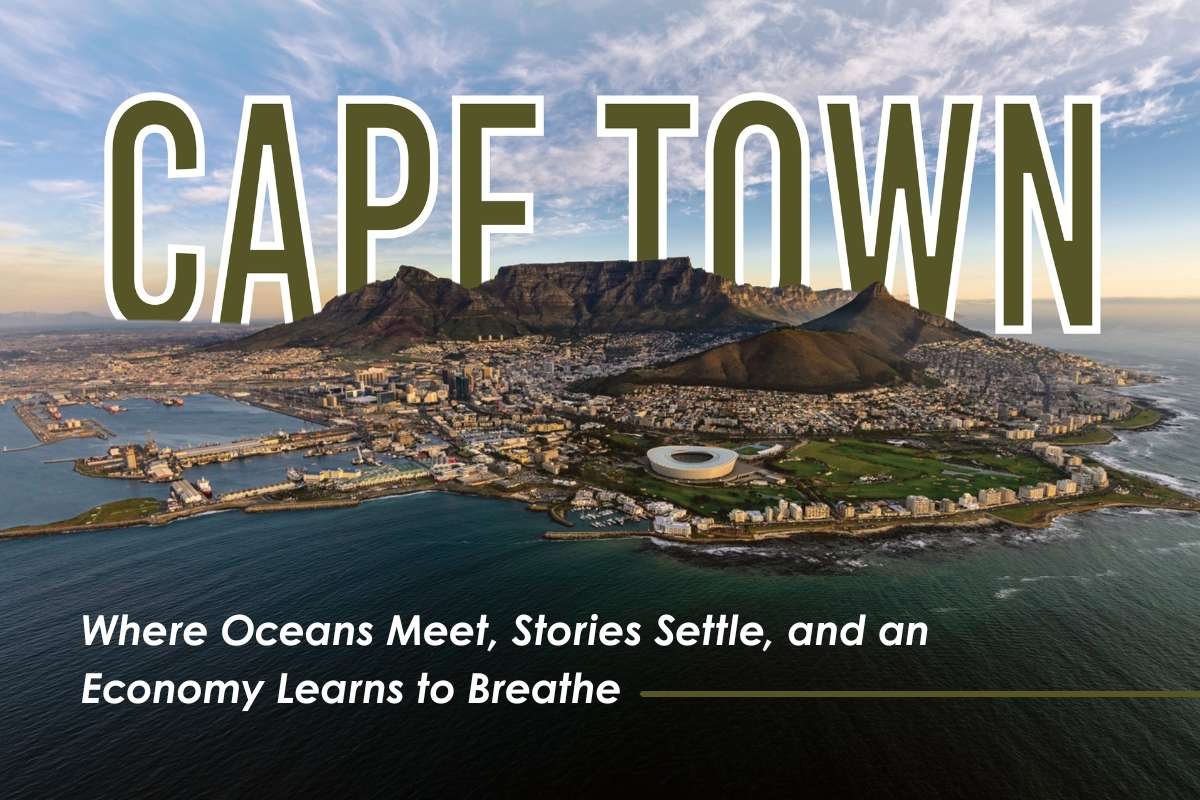
A City of Memory, Markets, and a Quiet, Hard-Earned Resilience
The City That Remembers Before It Reimagines. Cape Town does not rush its story.
It unfolds it. Slowly, visibly, sometimes uncomfortably.
Few cities wear their past so openly layered into their present streets. Here, history is not tucked away in archives; it is lived, walked, debated, and continuously reinterpreted.
Long before colonial borders, this land was shaped by the Khoi and San, whose lives moved with the seasons and whose knowledge lived in story and memory. That relationship with the land still surfaces today through place names, heritage walks, and efforts to tell histories that predate colonisation.
Colonial rule recast the Cape as a stopover for the empire. Slavery and racial hierarchy built the early city, yet culture endured. In Bo-Kaap, Cape Malay communities preserved identity through faith, food, and language. The bright houses stand as a presence, not an ornament.
Apartheid later turned separation into law, shaping neighbourhoods, mobility, and access in ways that persist. Cape Town does not progress by forgetting this past. Through Robben Island, District Six, and community museums, memory remains active, guiding a vision of growth rooted in repair, access, and inclusion.
A Geography That Shapes Ambitions
Cape Town makes its presence felt without demanding attention. Table Mountain does not dominate the city; it steadies it. It gives the city a sense of proportion, a reminder of both fragility and endurance. Two oceans meet here, shaping the coastline along with how the city has always looked outward to the world. The Cape Floral Kingdom adds another layer, a quiet reminder that growth here comes with ecological responsibility.
This geography has always guided how the city works. As a port, Cape Town once traded goods, people, and ideas. Today, what moves through the city looks different. Services, creativity, knowledge, and culture have taken centre stage. Cape Town actively attracts visitors and shapes livelihoods across renewable energy, agriculture, film, design, and hospitality.
The skyline may be modest by global standards, but the economy is not. Cape Town is less about height and spectacle and more about connection. How industries intersect, how people move between spaces, and how place continues to influence possibility.
Heritage as Economic Infrastructure
Different from cities that treat heritage as nostalgia, Cape Town integrates it into economic participation. Cultural tourism isn’t peripheral; it is structural.
Bo-Kaap is more than a place to photograph; it is walked, studied, and thoughtfully contextualised. Robben Island stands far from a monument frozen in time; it functions as an economic engine for education, dialogue, and meaningful employment. District Six exists as no mere memory; it is actively reclaimed through museums, storytelling, and sustained discourse on land restitution.
Heritage tours, museums, and community-led walking experiences generate employment while advancing a more ethical tourism economy. Visitors move beyond consuming scenery; they become participants in a living narrative.
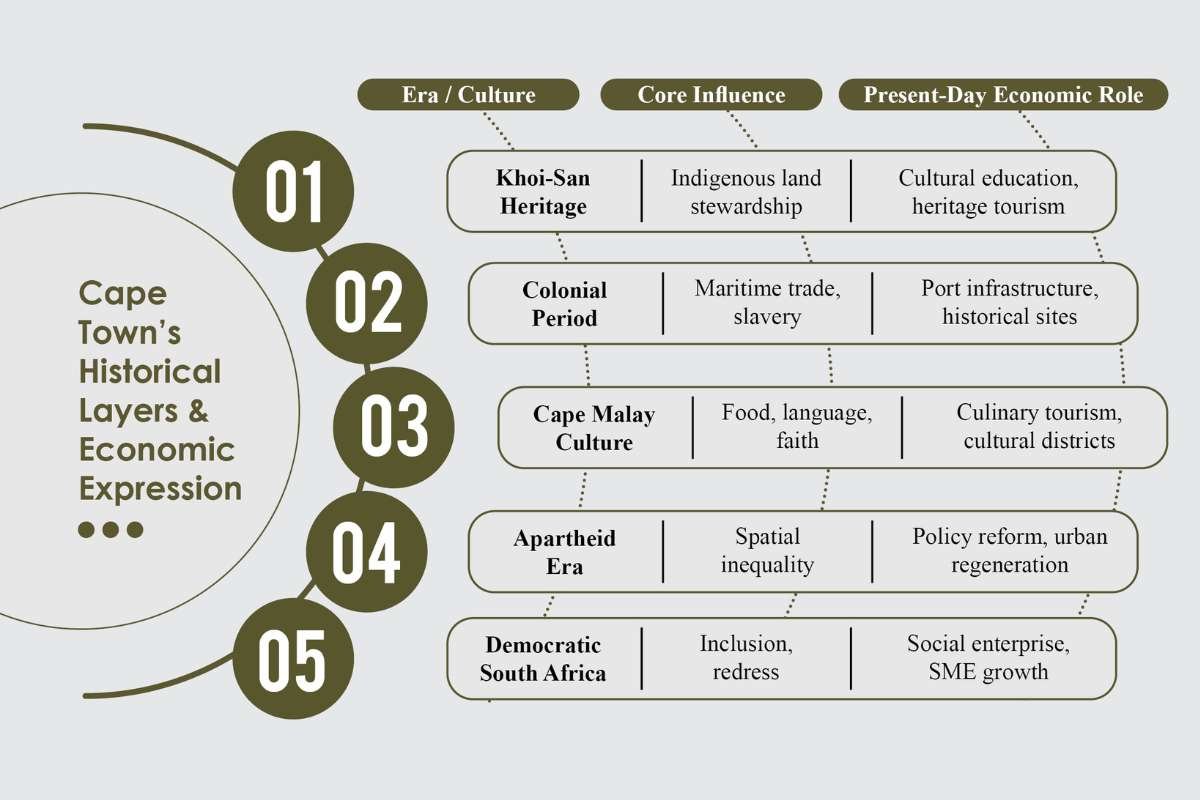
| Cape Town’s Historical Layers & Economic Expression | ||
|---|---|---|
| Era / Culture | Core Influence | Present-Day Economic Role |
| Khoi-San Heritage | Indigenous land stewardship | Cultural education, heritage tourism |
| Colonial Period | Maritime trade, slavery | Port infrastructure, historical sites |
| Cape Malay Culture | Food, language, faith | Culinary tourism, cultural districts |
| Apartheid Era | Spatial inequality | Policy reform, urban regeneration |
| Democratic South Africa | Inclusion, redress | Social enterprise, SME growth |
The Economy of a City That Must Balance More Than Growth
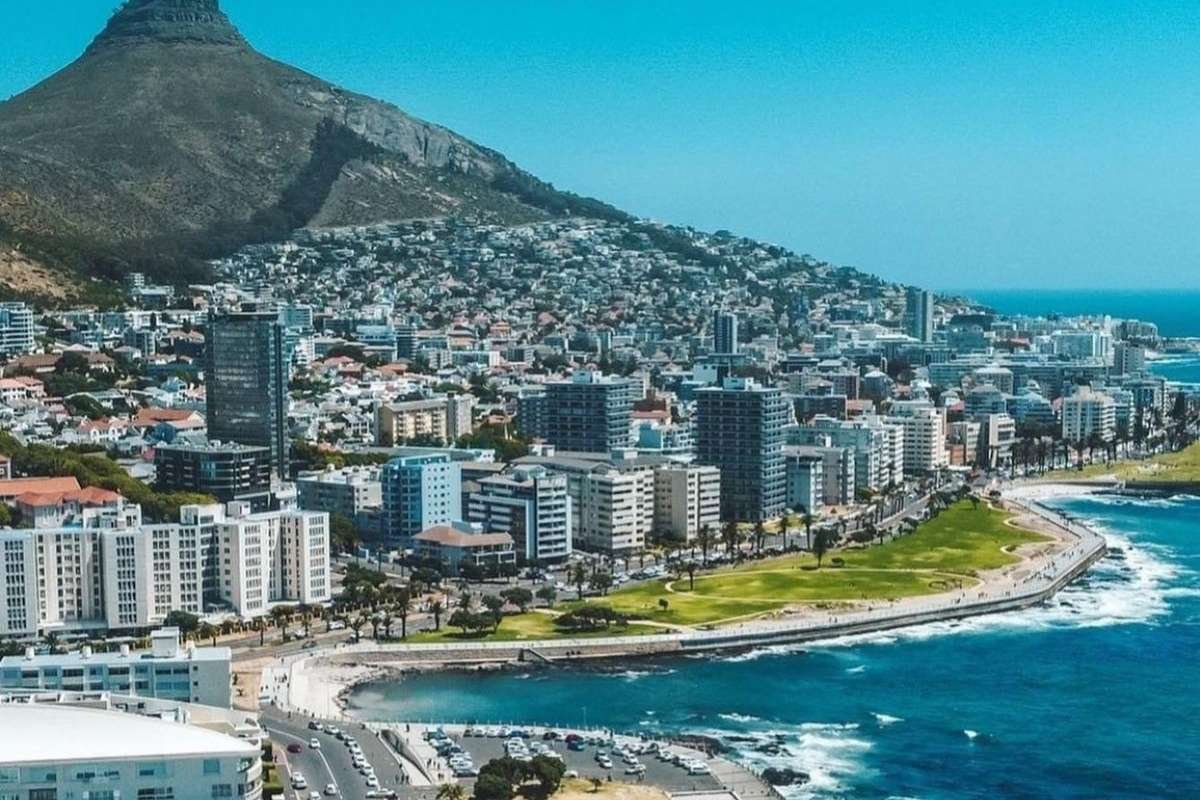
Cape Town’s economy cannot afford to be simplistic. It carries the weight of national inequality, historical exclusion, and global competitiveness simultaneously. Unlike purely financial hubs, its economic success is measured beyond GDP contribution, on the contrary, it is measured by its ability to create access.
As one of South Africa’s primary economic engines, Cape Town contributes significantly to national output through a diversified portfolio:
- Tourism and hospitality
- Financial and business services
- Manufacturing and agri-processing
- Technology and digital services
- Film and creative industries
- Renewable energy and green economy
What distinguishes Cape Town is not dominance in one sector; it is the resilience through diversity.
Read More: Walking through Munich: A City Lived and Remembered
The Gateway Industry That Feeds Many Others – Tourism
Tourism is often Cape Town’s most visible industry, but its true economic value lies beneath the surface. It sustains accommodation, food supply chains, transport, events, informal trade, arts, and heritage preservation.
Unlike extractive tourism models, Cape Town increasingly positions itself around experience-based, culturally informed travel. Wine routes support agriculture. Township tours support local entrepreneurs. Culinary tourism sustains generational food economies.
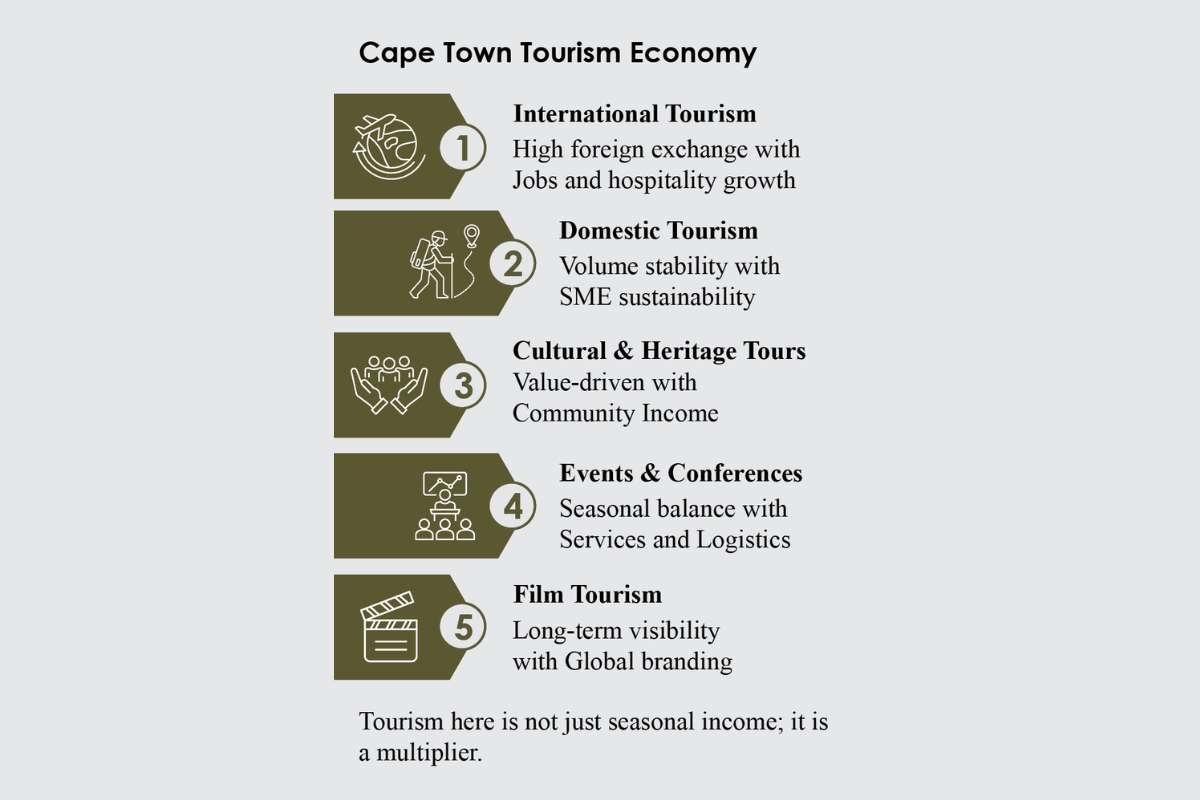
| Cape Town Tourism Economy | |
|---|---|
| Segment | Contribution and Economic Impact |
| International Tourism | High foreign exchange with Jobs and hospitality growth |
| Domestic Tourism | Volume stability with SME sustainability |
| Cultural & Heritage Tours | Value-driven with Community Income |
| Events & Conferences | Seasonal balance with Services and Logistics |
| Film Tourism | Long-term visibility with Global branding |
Tourism here is not just seasonal income; it is a multiplier.
Agriculture, Wine, and Export Logic
Cape Town’s proximity to fertile land has made agriculture central to its economy. The Western Cape’s wine industry is globally recognised, exporting to Europe, North America, and Asia. But beyond wine, the region produces fruit, grains, and value-added food products.
Agri-processing has become a strategic focus, moving the economy beyond raw export toward manufacturing, branding, and logistics. This creates higher-value jobs and buffers the economy against commodity volatility.
The wine industry, in particular, reflects Cape Town’s broader economic challenge: balancing global prestige with local labour equity. Transformation, sustainability, and ethical sourcing are no longer optional; they are market requirements.
A Growing Technology and Innovation Hub
Cape Town is increasingly recognised as Africa’s most mature tech ecosystem. It may not shout about unicorns, despite building companies with global clients.
Fintech, software development, e-commerce infrastructure, and platform services have flourished here, supported by strong universities, relatively stable infrastructure, and international connectivity.
What makes Cape Town’s tech sector distinctive is its orientation toward services rather than speculation. Many firms operate globally while employing locally, bringing foreign revenue into the South African economy.
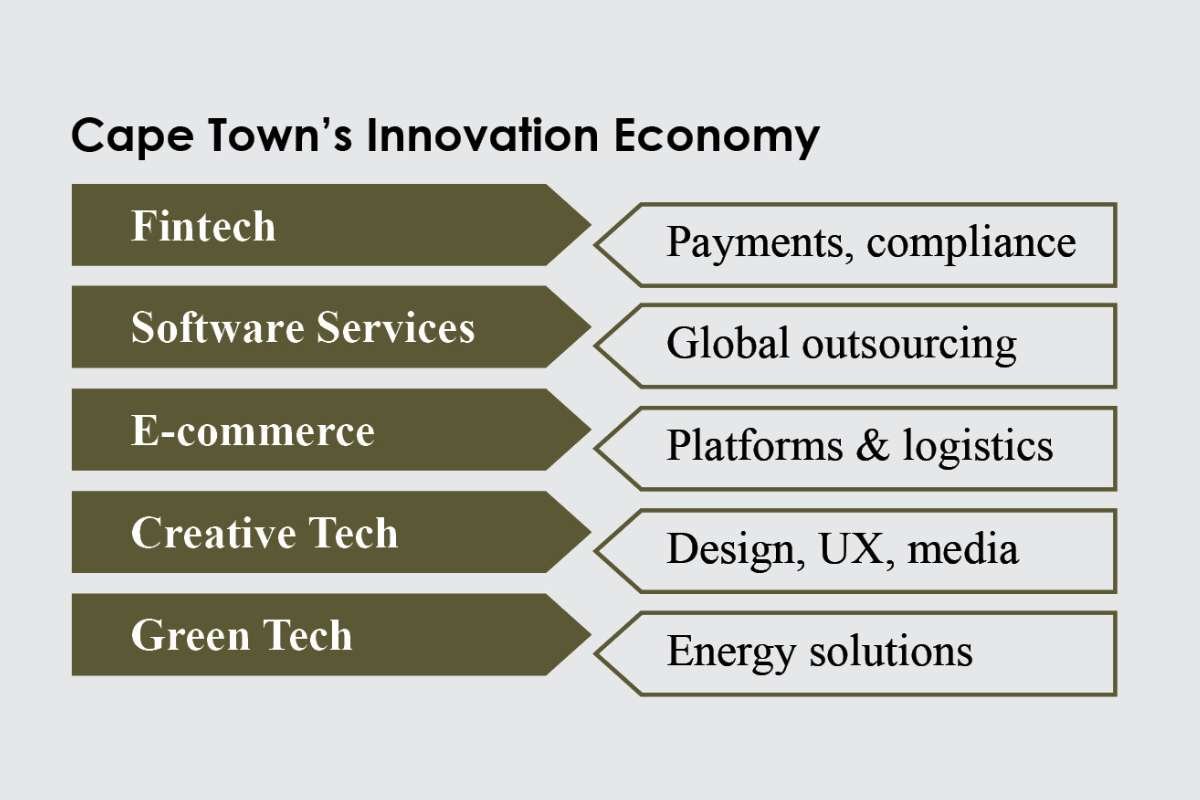
| Cape Town’s Innovation Economy | |
|---|---|
| Sector | Focus Area |
| Fintech | Payments, compliance |
| Software Services | Global outsourcing |
| E-commerce | Platforms & logistics |
| Creative Tech | Design, UX, media |
| Green Tech | Energy solutions |
This sector also intersects with the gig economy, offering flexible but contested forms of employment that demand regulatory foresight.
Film, Creativity, and the Business of Culture

Cape Town is one of the most filmed cities in the world. Its geography can double for multiple continents, making it attractive for international productions. This industry injects billions into the local economy annually, supporting crews, equipment suppliers, accommodation, catering, and post-production services. Beyond film, design, fashion, music, and visual arts form a creative economy that exports identity as value. Cape Town does not fabricate culture; it derives economic value from lived authenticity.
This creative economy is far from ornamental. It is increasingly acknowledged as a substantive employer and a measurable contributor to GDP.
Infrastructure, Inequality, and Economic Tension
Structural realities constrain Cape Town’s economic ambition. Spatial apartheid means many workers live far from economic centres, increasing transport costs and reducing productivity. Housing shortages affect labour mobility. Energy instability impacts manufacturing and services alike.
Yet, the city has responded with policy experimentation. Investment in public transport corridors, renewable energy projects, and mixed-use developments reflects an attempt to align growth with access.
Cape Town’s economy is not free from tension, even though it is actively negotiating it.
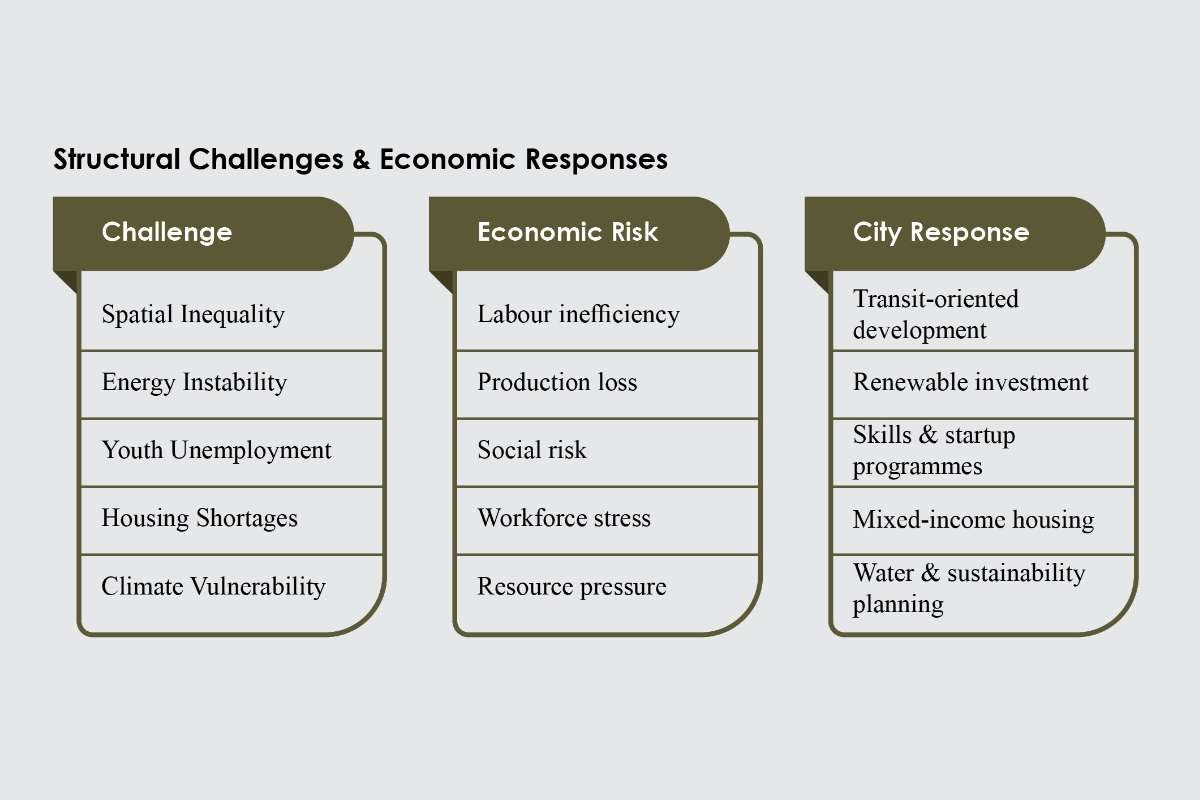
| Structural Challenges & Economic Responses | ||
|---|---|---|
| Challenge | Economic Risk | City Response |
| Spatial Inequality | Labour inefficiency | Transit-oriented development |
| Energy Instability | Production loss | Renewable investment |
| Youth Unemployment | Social risk | Skills & startup programmes |
| Housing Shortages | Workforce stress | Mixed-income housing |
| Climate Vulnerability | Resource pressure | Water & sustainability planning |
Read More: Austin in Focus: A Fast-Growing Metro Learning to Manage Its Own Success
A City That Learns Economically From Its Past
What sets Cape Town apart is its awareness. Economic decisions here are made with historical consequences in mind. The city understands that growth without inclusion repeats old patterns, and inclusion without growth is unsustainable.
Its economy is increasingly values-driven. Environmental responsibility, cultural preservation, and social equity are becoming economic strategies.
This makes Cape Town slower than some global cities, less explosive, and more deliberate, along with a more grounded approach.