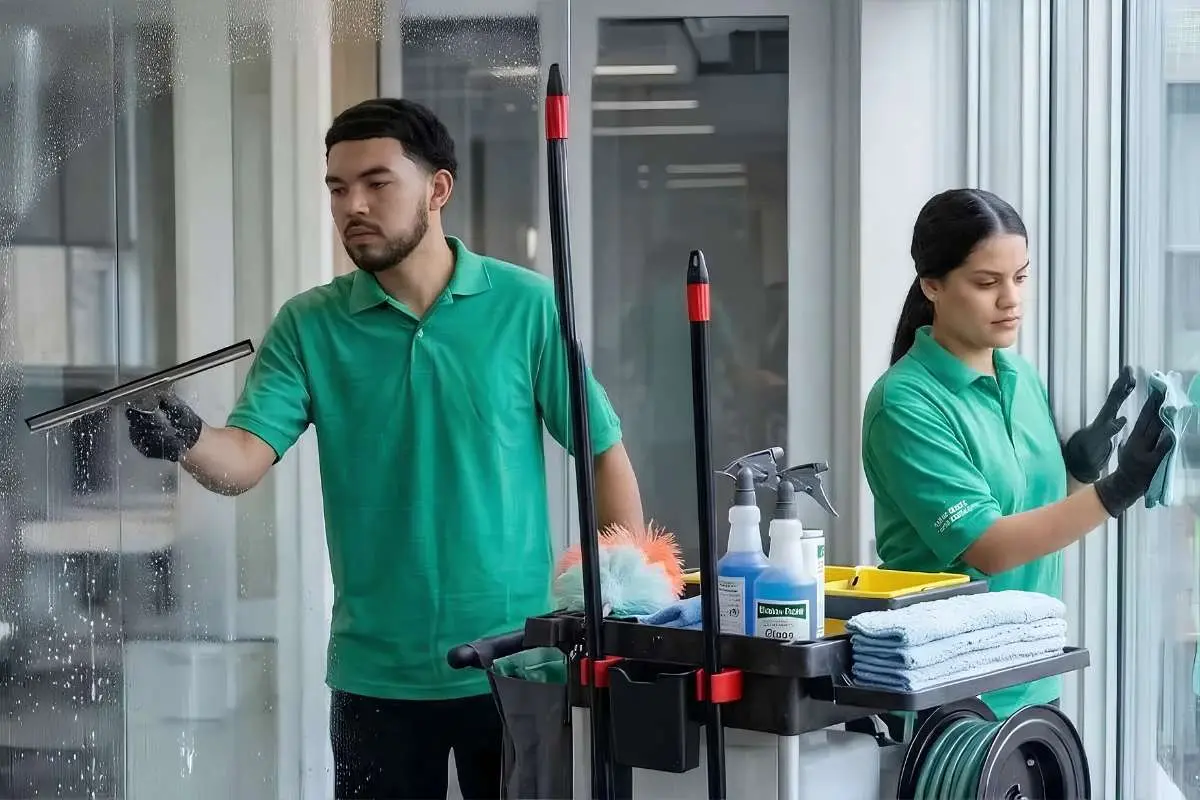
Most Austin facility budgets treat glass as an afterthought. Interior cleaning gets a monthly line. HVAC gets a service contract. Windows get whatever is left when someone notices they look bad. Austin businesses that work with a commercial cleaning company often find a planned glass program costs less per year than a reactive approach.
The reason is simple. Glass is the one building surface where neglect becomes permanent. And that point arrives sooner than owners expect.
Why commercial window cleaning differs from other cleaning
Dirty carpet looks bad, then cleans up. Neglected glass does something else.
Austin water is hard. Sprinkler overspray, rain runoff, and condensation all dry on glass. Each cycle leaves mineral deposits behind.
Left in place, those deposits bond to the surface. Then they begin to etch it.
Etched glass cannot be cleaned clear again. It needs restoration polishing, which is costly. Or panel replacement, which costs far more. The maintenance decision has a deadline built in.
What drives commercial window cleaning frequency in Austin?
Owners often ask how often glass should be cleaned. The honest answer depends on conditions, not the calendar.
Four factors matter most:
- Traffic and construction nearby. Buildings on arterial roads collect particulate fast.
- Irrigation overspray. Landscaping that sprays glass is the biggest source of mineral deposits at ground level.
- Orientation and exposure. Wind and rain direction mean elevations soil at different rates.
- Seasonal pollen. Central Texas produces a heavy pollen load that sticks to glass.
A single uniform schedule therefore fails. It over-serves sheltered faces. It under-serves exposed ones. Vary the frequency by elevation instead.
Signs your building needs window cleaning sooner
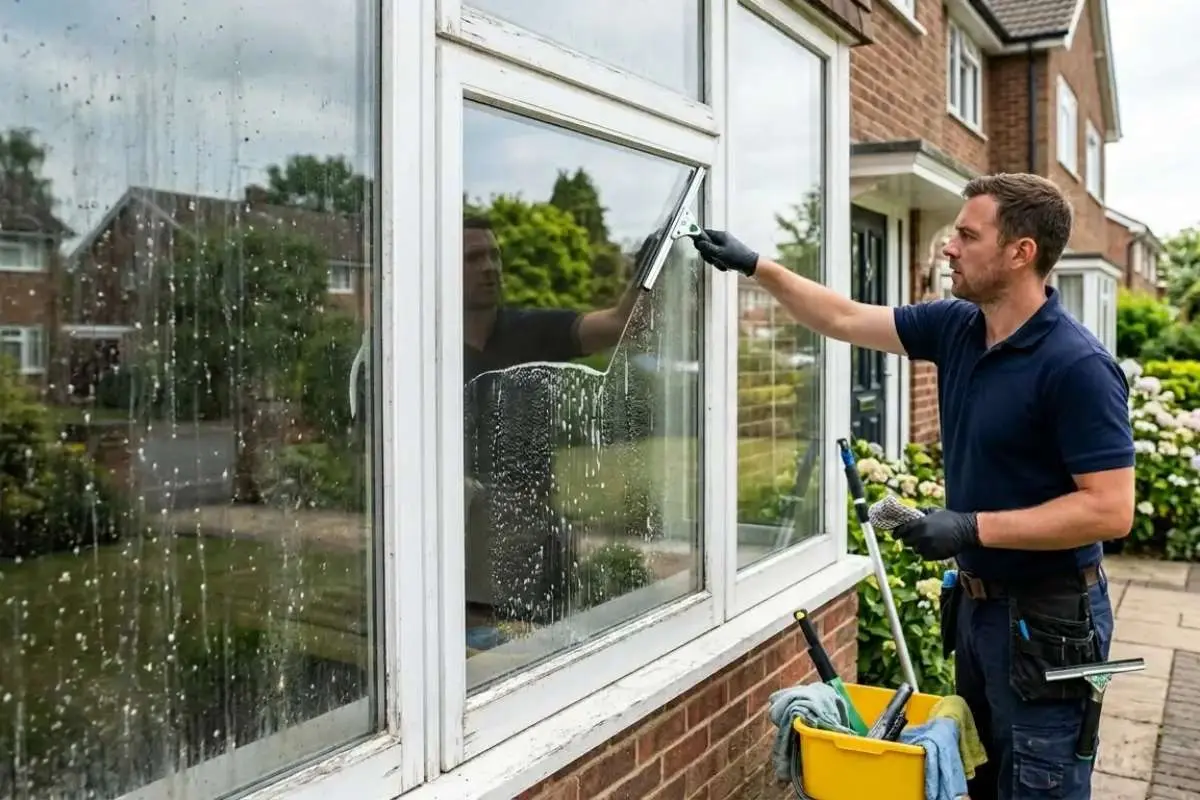
Some warning signs appear well before the glass looks dirty.
- White spotting that returns quickly. An early stage of mineral deposit buildup.
- Streaking that will not wipe away. Often the first sign of surface etching.
- A dull cast in bright sunlight. Film scatters light even when glass looks clear.
- Green staining near landscaping. Organic growth from irrigation contact.
Any of these means the current schedule is too thin. Adjust before restoration becomes the only option.
Interior glass cleaning is half your window cleaning scope
Modern Austin offices are full of interior glazing. Conference room walls. Partition systems. Entry vestibules. Reception screens. Full-height glass doors.
This glass gets touched constantly. Handprints appear at door height within hours.
Afternoon light makes every smudge visible. That happens exactly when clients are in the building.
Dust also settles along every horizontal edge and mullion. Routine cleaning misses that detail most often.
Companies setting commercial window cleaning schedules that cover interior partitions alongside exterior glazing see the improvement immediately.
The reason is straightforward. Interior glass is what people actually stand next to.
How to budget for commercial window cleaning?
Glass maintenance becomes predictable once you split it into three parts.
- Routine interior glass. Partitions, doors, and vestibules. Fold these into the regular cleaning schedule, weekly or biweekly.
- Exterior low-level glass. Ground and second-floor glazing reachable by pole. Usually quarterly.
- Exterior high-level glass. Anything needing lifts or rope access. Semi-annual or annual, with access costs priced upfront.
Separating these three makes the annual figure easy to forecast. It also prevents a common failure. High-level glass gets deferred forever because nobody budgeted the access equipment.
Why access equipment drives window cleaning costs?

In multi-story buildings, cleaning the glass is often the smaller cost. Reaching it is the larger one.
Lift rental adds cost. Certified rope access adds cost. Scheduling safely around occupants adds cost.
This is why ad hoc glass cleaning gets expensive. Every single visit carries the full mobilization charge.
Planned programs spread that cost across scheduled visits. Providers can then quote it accurately upfront.
Owners who move from reactive to scheduled window cleaning often report a lower annual total, even with more visits.
Coated glass needs the right cleaning products
Modern commercial glazing is rarely plain glass. Most of it carries a coating.
Low-emissivity layers improve thermal performance. Hydrophobic treatments shed water. Anti-reflective films cut glare.
All of these sit on the surface. All of them react to cleaning chemistry.
Abrasive pads scratch coated glass. High-alkaline detergents cloud it. Once a coating is damaged, the panel cannot be restored.
So record your glazing type in the cleaning specification. Then list the approved products beside it.
This single page protects an expensive asset. It also gives the cleaning crew clear instructions instead of guesswork.
How clean windows affect commercial property appeal?
Beyond preservation, there is a direct commercial case.
Glass is the most visible surface on any building. Prospective tenants see it on a tour. Clients see it walking in. It photographs badly when neglected.
Property managers consistently report that well-maintained glazing shapes how a building is judged during viewings.
Clean glass also transmits more daylight. That supports the interior environment and the lighting performance the building was designed around.
For tenants, the signal runs deeper. Visible care of the envelope suggests a landlord who maintains everything else too.
How to specify a commercial window cleaning program?

A useful glass cleaning specification answers five questions.
- Which elevations, and at what frequency for each?
- What access method, and is equipment cost in the quoted rate?
- What cleaning products, especially where coated glazing is installed?
- Is interior glass included, or handled under a separate cleaning scope?
- Is condition reporting included, so damage gets flagged during visits?
That last point deserves attention. A crew working the glass on a cycle is inspecting your building envelope.
Failed gaskets, cracked panels, and corroding fixings stay invisible from the ground. Catching one early separates a small repair from a water ingress investigation.
Who should own the window cleaning schedule?
In many buildings, nobody owns it. That is the root problem.
Interior glass often sits with the janitorial provider. Exterior glass sits with a specialist. Nobody holds the whole picture.
Assign one owner for all glass, interior and exterior. Give that person the full schedule and the budget line.
Single ownership closes the gap where responsibility usually falls through.
Conclusion: Treat window cleaning as a planned program
Window and glass maintenance sits awkwardly on most facility budgets. Too visible to ignore. Too easy to postpone. Rarely costed properly until restoration is needed.
Treating it as a planned program fixes all three problems.
The annual cost becomes predictable. The building holds its appearance. The glazing lasts longer. And routine visits double as envelope inspections.
For a line item most companies underestimate, that is a strong return on modest planning.
Commercial window cleaning FAQs
1. How often should commercial windows be cleaned in Austin?
It depends on exposure, not a fixed calendar. Ground-floor exterior glass usually needs quarterly cleaning. High-level glazing needs semi-annual or annual service. Interior partitions need weekly or biweekly attention. Buildings near construction or irrigation overspray need more frequent service.
2. Can hard water permanently damage commercial glass?
Yes. Central Texas water is hard. Mineral deposits left through repeated wet and dry cycles begin to etch the surface. Etching cannot be cleaned away. It requires restoration polishing or panel replacement. Regular cleaning removes deposits before they bond.
3. Why is high-level window cleaning more expensive?
Access drives the cost, not the cleaning itself. Lift rental, certified rope access, and safe scheduling all add expense. Each separate visit carries full mobilization cost. Scheduled programs spread that overhead across planned visits, which usually lowers the annual total.
4. Should interior glass be part of the window cleaning contract?
It can sit in the routine cleaning scope or a separate glass program. Either works. What matters is specifying it somewhere. Interior partitions show handprints within hours and sit at eye level, so leaving them unassigned is a frequent oversight.
5. What should a commercial window cleaning quote include?
It should list elevations covered with a frequency for each. It should state the access method and whether equipment cost is included. It should name approved products for coated glazing. It should define interior glass scope and confirm whether condition reporting is provided.