


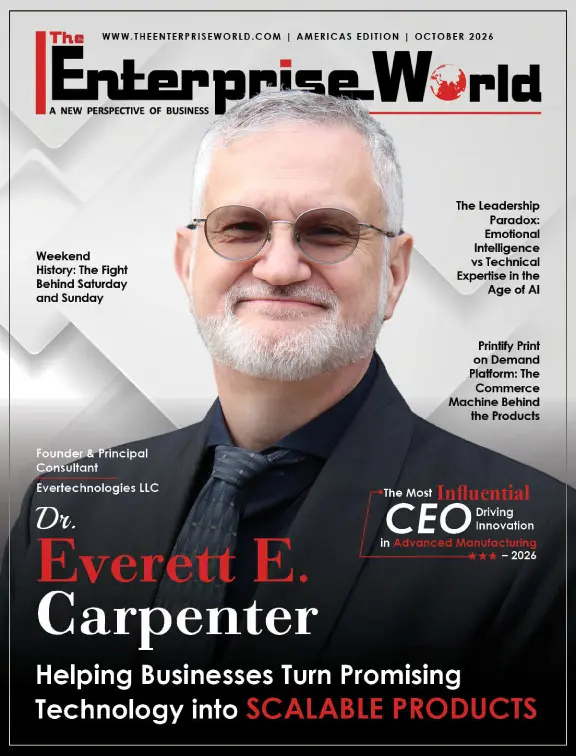
A great product idea can fail long before it reaches the market. If a promising technology cannot be produced consistently, scaled affordably, or protected from competitors, months or even years of research can struggle to create real business value. For many innovators, the hardest question is not whether something works in a laboratory, but whether it can work at scale, at the right cost, and with the quality customers expect.
This is where Dr. Everett E. Carpenter, Founder & Principal Consultant of Evertechnologies LLC, brings his expertise. With more than two decades of experience spanning advanced materials, manufacturing, research, intellectual property, and commercialization, he helps organizations bridge the gap between technical innovation and commercial production.
Under his leadership, Evertechnologies brings process design, scale-up strategy, IP development, market entry, and investment considerations together to build manufacturing systems that are practical and economically viable. His approach has delivered tangible value in an environmental remediation materials engagement, where he helped address production limitations by developing a path toward continuous processing while strengthening the protection of the manufacturing advances.
Backed by more than 190 peer-reviewed publications, 30+ invention disclosures, 10 awarded patents, and 8,000+ research citations, Dr. Everett E. Carpenter is helping redefine how advanced innovations move from the laboratory to the factory floor.
From manufacturing curiosity to building evertechnologies
Dr. Everett E. Carpenter’s interest in advanced manufacturing began early in his career, when his initial work in manufacturing led him to question how production processes were designed, where inefficiencies came from, and how changes in one stage could affect the final product. His later scientific training added another dimension to this understanding, giving him deeper knowledge of materials at the molecular and nanoscale levels. Over time, he brought these two perspectives together: understanding how materials behave and knowing how to turn them into useful products.
A major turning point came during his graduate studies when he received his first patent. Until then, his work had largely focused on finding answers through research. The patent helped him see that a discovery could become much more than a research finding. It could be protected, developed, manufactured, licensed, and eventually turned into a business opportunity.
His career since then has spanned government research, academia, startups, manufacturing scale-up, intellectual property, and executive leadership. These experiences eventually led to the creation of Evertechnologies. Along the way, Dr. Everett E. Carpenter recognized a recurring challenge: coming up with a strong idea was often not the hardest part. The real challenge was building the technical, operational, and business foundation needed to turn that idea into something useful and scalable.
An integrated approach to scaling technology
Evertechnologies helps companies move promising technologies from the development stage toward practical, commercially viable manufacturing. The company works with organizations to identify what needs to change for an innovation to be produced efficiently, protected through intellectual property, supported by investment, and ready for the market.
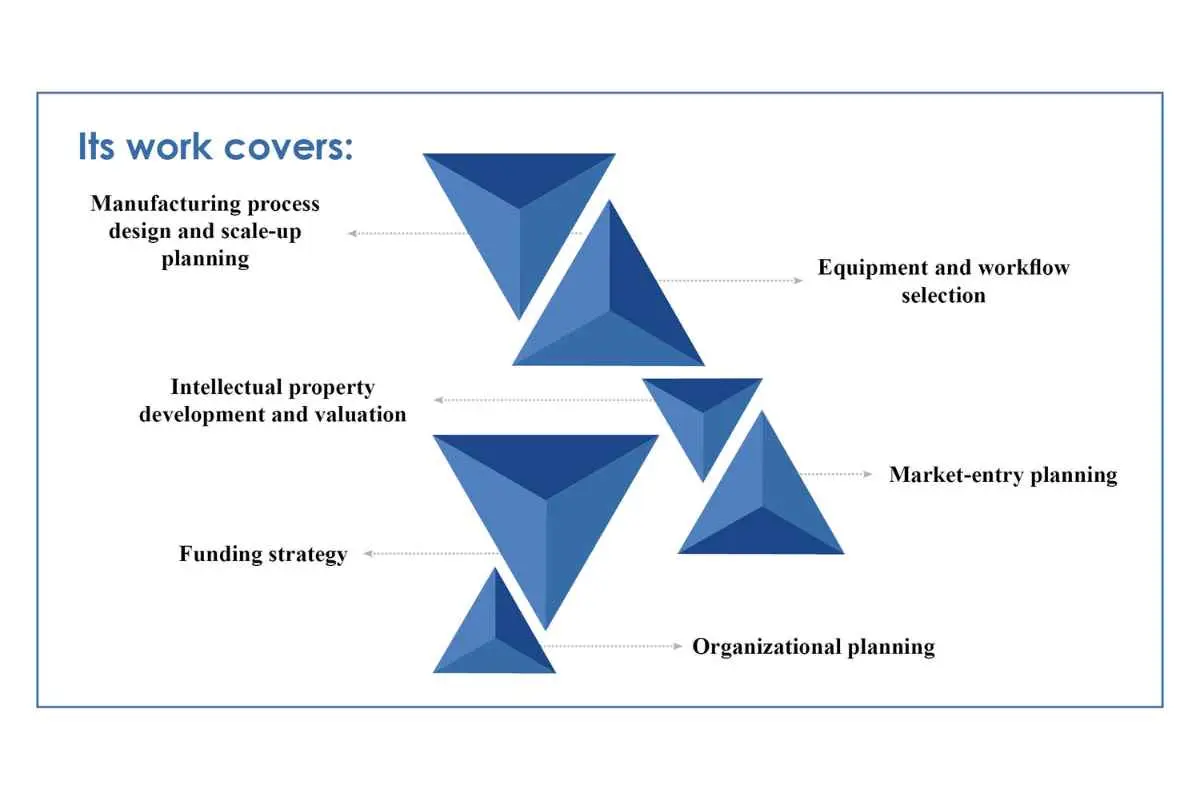
Its work covers:
- Manufacturing process design and scale-up planning
- Equipment and workflow selection
- Intellectual property development and valuation
- Market-entry planning
- Funding strategy
- Organizational planning
Rather than treating these areas as separate tasks, Evertechnologies considers how they affect one another. A change that reduces production costs, for example, may also create new intellectual property, while customer needs or investment limits may influence how a manufacturing process is designed.
One project involving advanced materials for environmental remediation shows this approach in practice. Although the product performed well, its batch production process limited volume and affected its economics. Evertechnologies identified the key production variables and helped develop a path toward continuous processing while strengthening protection around the manufacturing improvements. The goal was to create a production model that could support greater scale while giving the business a stronger competitive position.
Identifying essential steps for mass production
One of Dr. Everett E. Carpenter’s key lessons in advanced manufacturing is that a process that works in a laboratory cannot automatically be treated as a production-ready process. Laboratory methods are mainly created to prove that a product can be made and to understand how it works. Commercial manufacturing has a much bigger responsibility: it must deliver consistent quality, meet production needs, and remain cost-effective at the required scale.
For Dr. Everett E. Carpenter, successful scale-up starts by understanding the commercial requirements and working backward.
This means asking:
- What do customers actually need?
- How much product must be produced?
- What cost structure can the business support?
- Which laboratory steps are truly essential?
- Which variables become critical at higher production volumes?
Some steps that are useful at a small scale may become unnecessary in commercial production, while small variables that seem unimportant in the laboratory can become critical when production increases.
This approach can lead to major changes in how a manufacturing system is designed. Rather than waiting until a product succeeds to think about scale, Dr. Everett E. Carpenter believes production requirements should be considered from the very beginning. Building with scale in mind can help companies create processes that are more efficient, reliable, and commercially practical.
Capital-efficient manufacturing
One of the key principles behind Evertechnologies’ approach is capital-efficient manufacturing. Many early-stage companies assume that growing production requires a large facility, expensive equipment, and heavy upfront investment. Making that commitment too early can put pressure on the business before customer demand is fully established.
Dr. Everett E. Carpenter takes a different approach. He first looks for the smallest manufacturing unit that can operate efficiently. The focus is on balancing production capacity, quality, staffing, equipment use, and operating costs. Once that model works, it can be replicated as demand increases.
This approach can support modular and distributed manufacturing, allowing production units to be added where they are needed instead of putting all expansion into one large facility. It can help companies limit capital risk, expand faster, improve supply-chain flexibility, and increase capacity in line with actual demand.
For Dr. Everett E. Carpenter, controlling capital is not simply a financial decision. It is part of good manufacturing design. Along with yield, production time, product performance, and quality, the cost of building and running a manufacturing system must also make business sense.
Changing market conditions demand a new business direction
One of the toughest challenges for a business leader comes when strong execution is no longer enough because the conditions behind the business have changed. Dr. Everett E. Carpenter experienced this while working with an advanced-materials venture whose technology and original business model showed strong potential. However, changes in the global market affected the economics and required the team to rethink a strategy that had once seemed right.
The experience taught him an important leadership lesson: the destination can remain the same even when the route needs to change. Leaders can become attached to plans because of the time, money, and effort already invested in them. Dr. Everett E. Carpenter believes that this can make it harder to recognize when circumstances have changed. His approach is to step back and return to the basics: understand the customer’s problem, reassess the value being offered, identify which assumptions have changed, review the resources available, and consider new options. For him, leading through uncertainty means breaking a complex problem into clear, manageable decisions and being willing to change course when the facts demand it.
Quality in every stage of manufacturing
Dr. Everett E. Carpenter sees quality as an ongoing feedback process, not something that should be checked only at the end of production. If a defective product reaches the final inspection stage, it often means a problem was missed earlier in the process. His approach focuses on identifying the factors that affect quality and monitoring them early enough to address issues before they become costly.
He applies the same thinking to safety, regulatory compliance, and intellectual property. Instead of adding controls after the process is established, he believes they should be built into the way work is carried out from the beginning. Reliable evidence also plays an important role. Performance claims should be supported by repeatable results, while important measurements should be independently verified when needed. Intellectual property should also be documented as it develops to protect valuable knowledge and prevent accidental disclosure.
Customer feedback is another important source of learning for Dr. Carpenter. He gives particular value to feedback from former customers because they may point out weaknesses that satisfied customers never mention. For him, real improvement comes from being willing to listen to criticism, question existing assumptions, and use what is learned to make processes stronger.

A proven track record across research, patents, and industry
Dr. Carpenter brings more than two decades of experience in research, intellectual property, industrial collaboration, and executive leadership. His work has resulted in more than 190 peer-reviewed publications, 30+ invention disclosures, and 10 awarded patents. His research has received more than 8,000 citations, placing him among the top 1% of cited researchers worldwide in the Elsevier/Stanford rankings and among the top 5% of materials scientists worldwide according to Research.com.
His contributions have also earned recognition from the International Association of Advanced Materials, where he is a Fellow and has received several technology and engineering honors. He is also a Senior Member of the National Academy of Inventors at VCU.
Over the years, Dr. Carpenter has worked on federally supported programs involving the DOE, ARPA-E, NSF, DARPA, and the U.S. Department of Defense, along with industrial collaborations involving organizations such as BASF, Lockheed Martin, and Rogers Corporation. These engagements have covered joint development, non-dilutive funding, intellectual property, and technology commercialization.
At Evertechnologies, he applies this experience to a practical goal: helping clients turn technical ideas into commercially workable solutions. In one environmental-remediation materials project, his team combined process redesign, scale-up planning, and IP strategy to create a stronger path toward higher-volume production while helping the company protect and better value its manufacturing advantage.
Connecting material design with the manufacturing process
Dr. Carpenter sees one of the most important developments in manufacturing as the growing ability to design materials and the processes used to make them as one connected system. Traditionally, materials scientists developed a material first, while manufacturing engineers later worked out how to produce it at scale. Today, additive manufacturing, computational tools, advanced testing, automation, and process data are bringing these areas closer together.
This shift allows manufacturers to ask a more useful question: Can the manufacturing process itself help create the desired material properties? Dr. Carpenter’s academic work in additive manufacturing explores this idea through rare-earth-free and reduced-rare-earth magnetic materials, examining how printing conditions affect material structure and, ultimately, magnetic performance.
He believes this approach can extend far beyond magnetic materials. The manufacturers that gain an advantage will not simply automate existing processes. They will understand how process conditions, material structure, performance, data, and costs influence one another and use that understanding to design better manufacturing systems. Digital tools can support this work by making these connections easier to measure, understand, and control.
Culture of engineering excellence, innovation, experimentation
Dr. Carpenter believes strong teams should make room for different opinions. He encourages people to question ideas, raise concerns, and offer alternative solutions instead of simply agreeing with the leader. For him, healthy disagreement helps teams make better engineering decisions and brings different areas of expertise into the discussion.
He also believes that good decisions should be based on clear goals and solid evidence. Team members need to understand what they are working toward and have the information and authority to contribute effectively.
For Dr. Carpenter, accountability is different from blame. He believes responsibilities and commitments should be clear, while problems should be brought forward early so they can be addressed before they become costly. A culture based on blame can make people hide mistakes, while accountability encourages them to take ownership and find solutions.
As Evertechnologies grows, he sees culture as something built through everyday actions rather than statements or slogans. Leaders must show that evidence matters, questions are welcome, commitments should be honored, and changing a decision when better information becomes available is a sign of good judgment, not weakness.
Life before and after stepping into an entrepreneurial role
Before
- Scientific specialist
- Focused on solving defined technical problems
- Built deep scientific and technical expertise
- Focused on individual achievement
- Concentrated on research and technical execution
- Explored what was scientifically possible
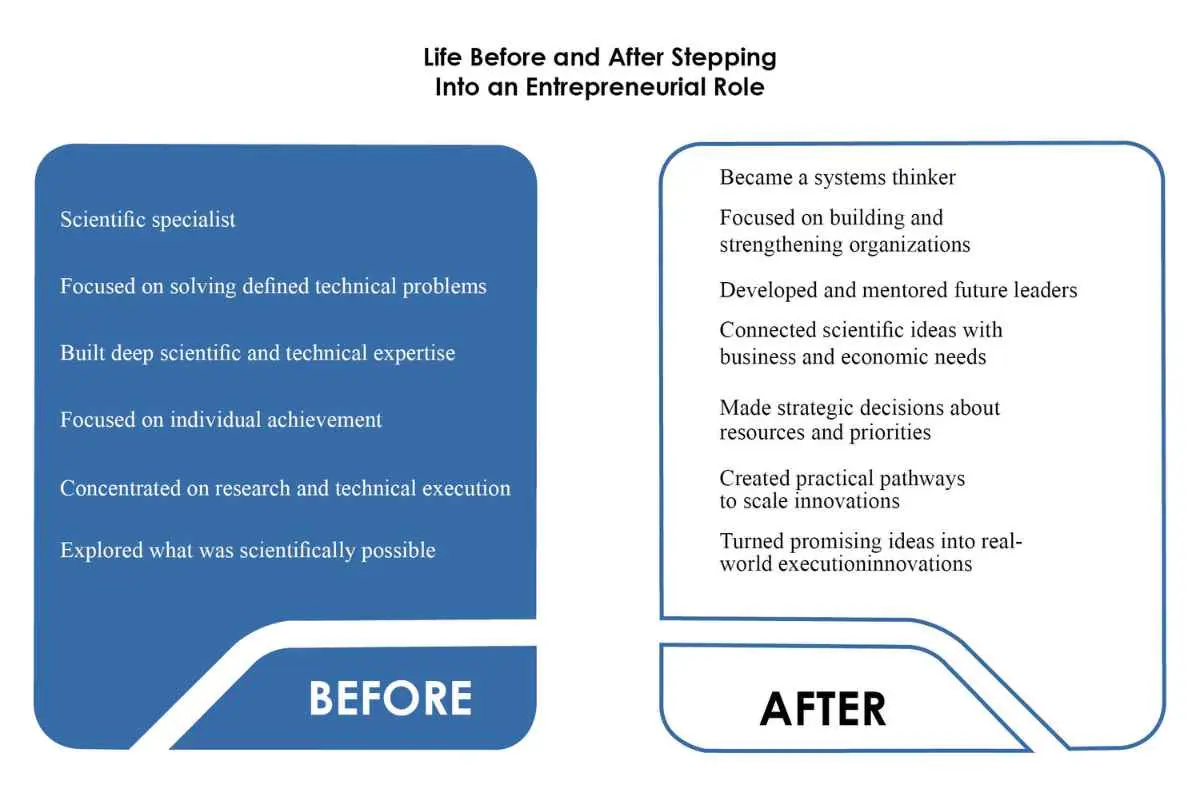
After
- Became a systems thinker
- Focused on building and strengthening organizations
- Developed and mentored future leaders
- Connected scientific ideas with business and economic needs
- Made strategic decisions about resources and priorities
- Created practical pathways to scale innovations
- Turned promising ideas into real-world execution
Dr. Carpenter sees leadership as a shift from solving problems personally to creating the right conditions for others to take on bigger challenges. Over time, his role has moved beyond finding technical answers himself. He now focuses on building capable teams, providing the right resources, and giving people the freedom, support, and direction needed to solve complex problems and deliver meaningful results.
Long-term vision
In the years ahead, Dr. Carpenter believes manufacturing will need to be treated as a strategic part of business rather than simply a way to produce goods at the lowest possible cost. Supply-chain risks, rising energy needs, changing global conditions, limited material availability, and regional demand are already encouraging companies to rethink where and how they manufacture their products.
Through Evertechnologies, he aims to help organizations build manufacturing systems that can grow without requiring excessive upfront investment. His approach brings together process design, intellectual property, market entry, and investment planning so companies can expand their production in a practical and well-planned way.
For Dr. Carpenter, the impact of his work goes beyond building a successful company. He wants to help scientists, engineers, founders, and business leaders understand the technical and commercial sides of their work. He believes future manufacturing leaders will need to look at the bigger picture, including materials, costs, people, markets, policies, and business needs.
His advice to the next generation is straightforward: build strong expertise in something challenging, then continue learning beyond that area. Deep knowledge builds credibility, while a broader understanding helps people recognize where their expertise can make the greatest difference.
Quick takes
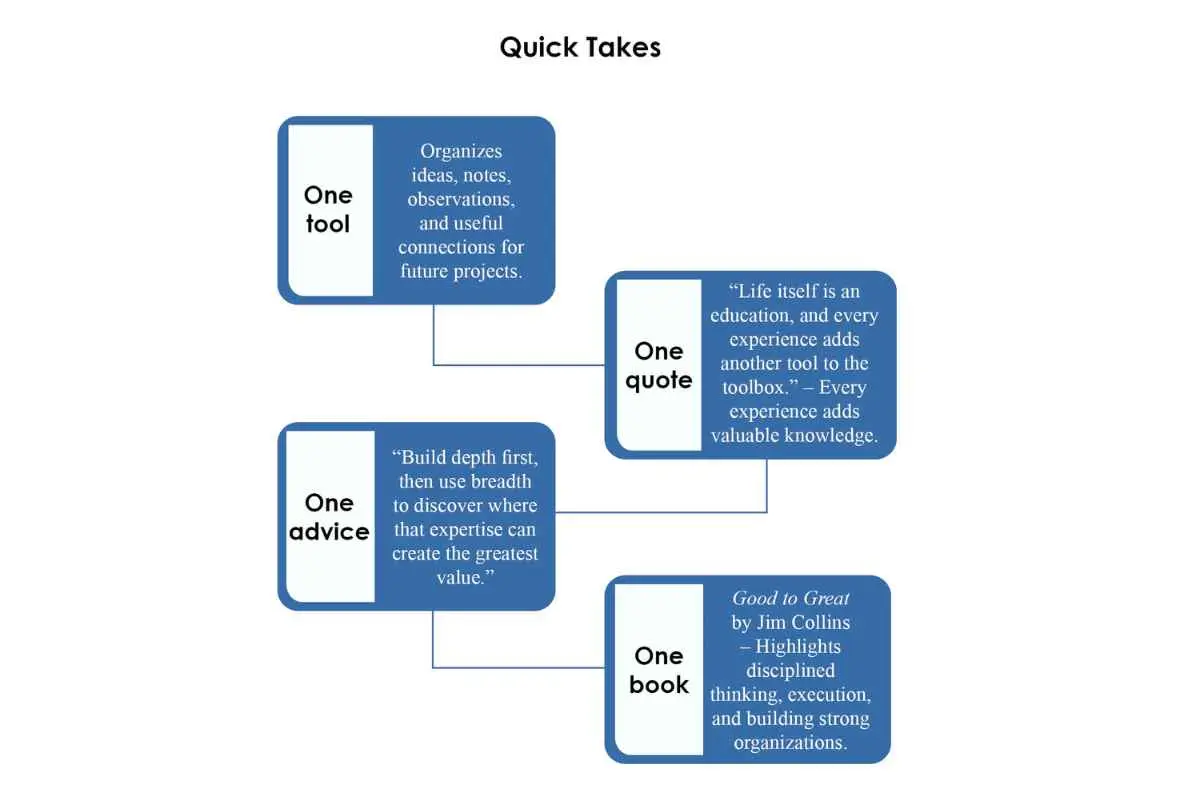
| One tool | Organizes ideas, notes, observations, and useful connections for future projects. |
| One quote | “Life itself is an education, and every experience adds another tool to the toolbox.” – Every experience adds valuable knowledge. |
| One advice | “Build depth first, then use breadth to discover where that expertise can create the greatest value.” |
| One book | Good to Great by Jim Collins – Highlights disciplined thinking, execution, and building strong organizations. |
Dr. Everett E. Carpenter’s 5 impactful business mantras:
- Think beyond the breakthrough: A great innovation matters only when it can deliver real value at scale.
- Design with growth in mind: Build manufacturing processes that can grow without unnecessary cost or complexity.
- Let facts shape decisions: Listen to data, feedback, and changing market conditions, even when they challenge the original plan.
- Connect innovation with business: Technical excellence becomes more valuable when it aligns with customer needs, economics, and market opportunities.
- Go deep, then look wider: Build strong expertise first, then broaden your













