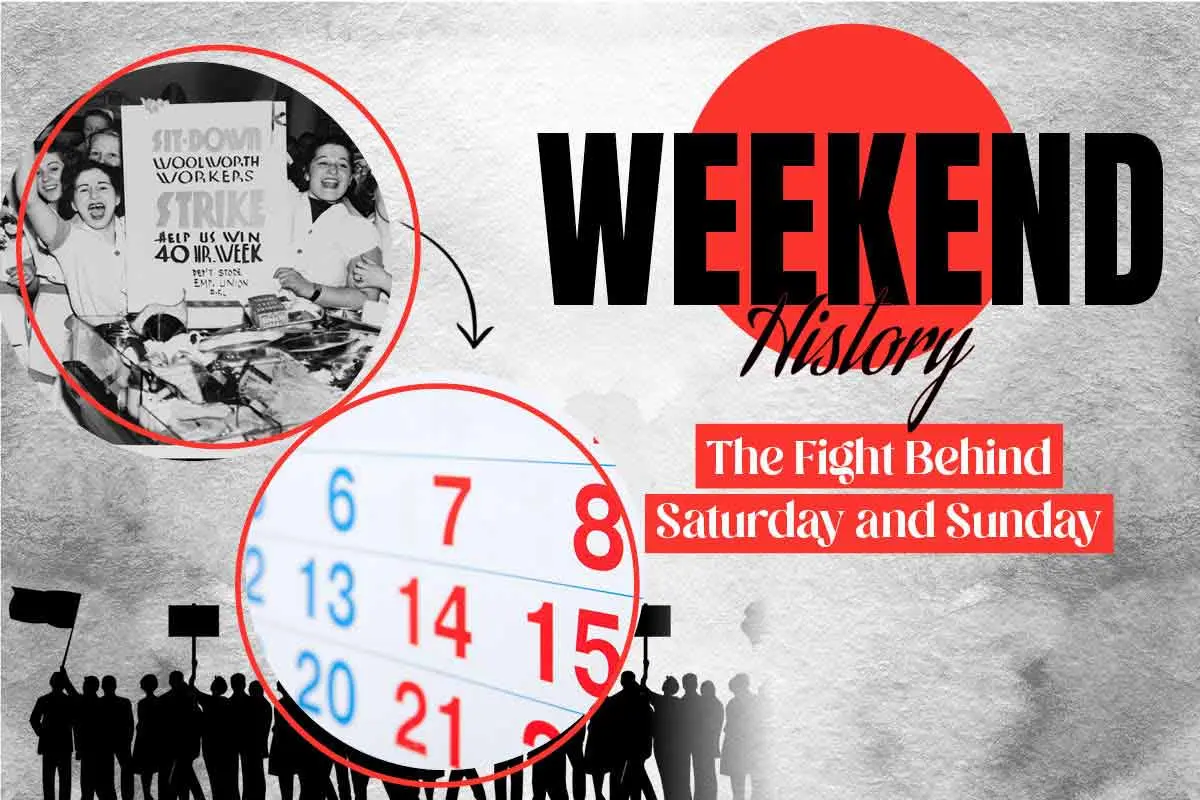
Friday evening carries a familiar lift, that sense of two days ahead of rest. Yet this arrangement is newer than it feels. The seven-day cycle is a human invention, not a natural rhythm like sunrise or seasons. Religious traditions shaped early patterns of rest: the Jewish Sabbath and, later, Christian Sunday gave communities a recurring pause.
Roman market days offered similar scheduled breaks from labor. None of these customs created today’s paired Saturday and Sunday. Weekend history begins here, with the slow shaping of a shared calendar for work and leisure.
The Factory Changed the Meaning of Time
Before industrialization, work followed the rhythm of seasons, trades, and daylight. Farmers paused when the harvest ended, and many skilled trades set their own pace. Some communities kept quiet, informal days away from work, though no fixed pattern applied everywhere.
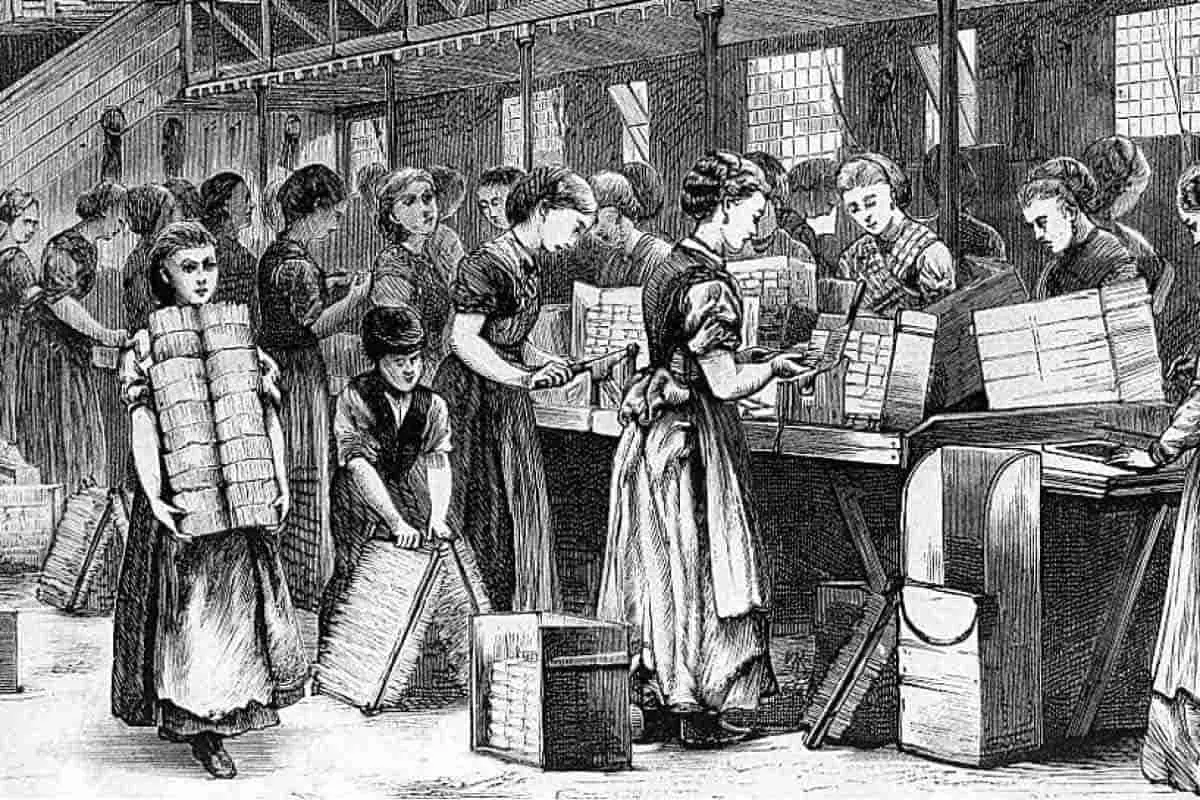
Factories changed that rhythm entirely. Machines ran on their own strict schedule, and workers had to match it. Twelve-hour shifts became ordinary, and six or seven days a week grew common across many industries. Steel production pushed this further, since some furnaces were costly to stop once started. American steelworkers sometimes worked six days one week and seven the next.
This shift shows why Weekend History centers on a single question: who controlled a worker’s time?
Eight Hours became the First Big Demand
Before the weekend existed, workers had to win the hour first.
- 1860s: American labor groups pushed for an eight-hour day, built on a simple principle: work, rest, and personal time in equal measure.
- 1867: Illinois passed an eight-hour law, though employers found loopholes that blunted its force.
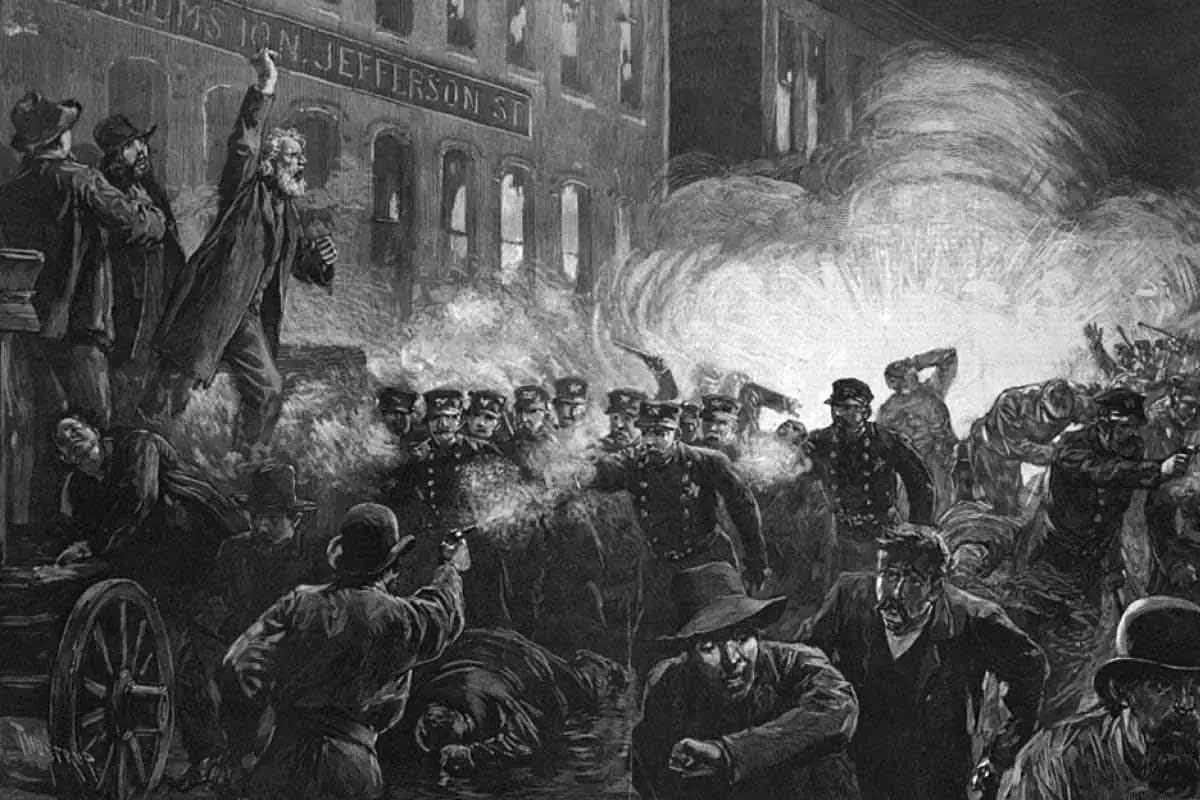
- 1886: The May Day movement pulled thousands into the streets demanding shorter hours. The Haymarket clash became one of the era’s most painful chapters.
- 1916: The Adamson Act granted railroad workers an eight-hour day after a bitter dispute nearly triggered a nationwide strike.
Each milestone points to a truth central to Weekend History: the fight for free time came first, and the two-day break followed only later.
Saturday Slowly Became the Missing Half
Long before Saturday became official rest, it was already a quiet battleground between workers and employers.
- Problem: Sunday gave many communities a shared day of rest, yet six-day work schedules remained standard practice across most industries.
- Worker response: In Britain, Saint Monday let some workers stretch Saturday leisure into an unofficial day away from the job.
- Employer response: Factory owners noticed irregular Monday absences steadily hurt output. Several began offering Saturday afternoon as a compromise, hoping steadier attendance would soon follow.
- Social response: Religious leaders, reformers, and labor organizations wanted a predictable break, and trade unions pushed for formal rules instead of relying on informal custom.
Saturday did not appear overnight. Weekend History shows it took shape through negotiation and steady practical pressure, not sudden generosity.
1908: A Small Factory Experiment
THE TURNING POINT — 1908 CASE STUDY
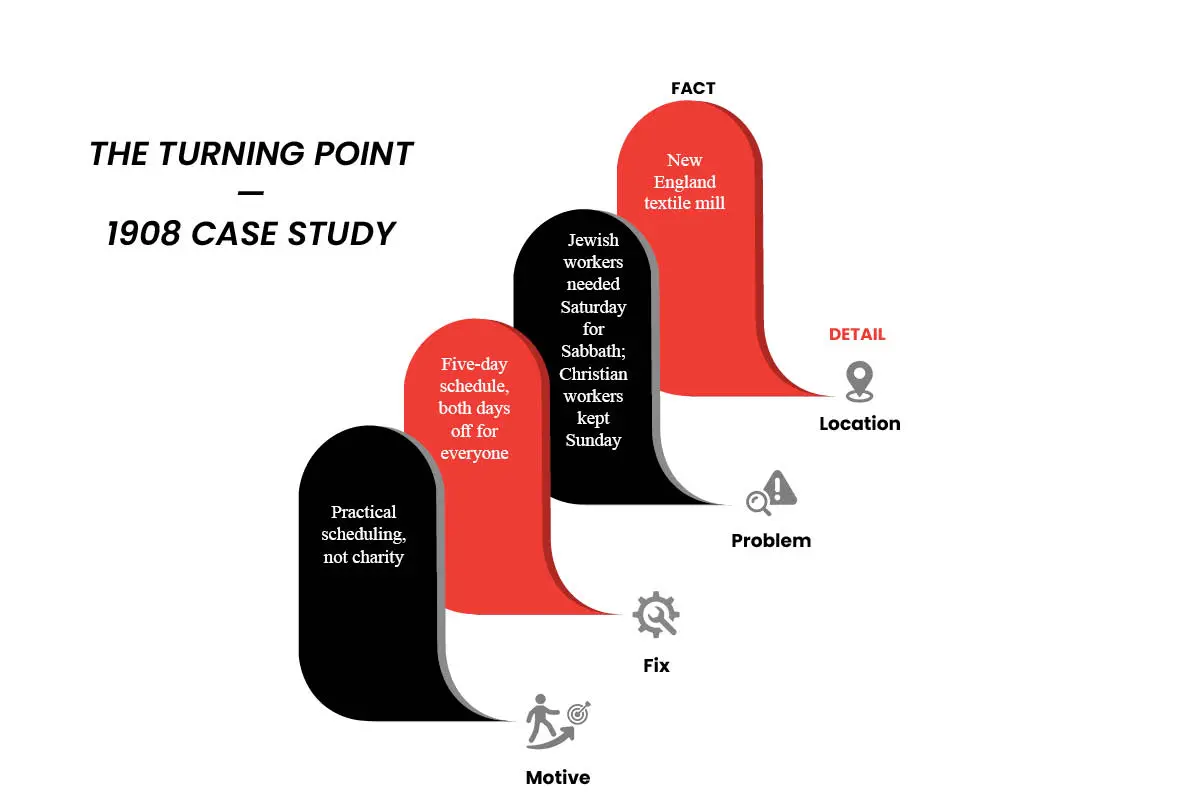
| Detail | Fact |
| Location | New England textile mill |
| Problem | Jewish workers needed Saturday for Sabbath; Christian workers kept Sunday |
| Fix | Five-day schedule, both days off for everyone |
| Motive | Practical scheduling, not charity |
A small mill owner faced a puzzle: two faiths, one calendar. Rather than force a choice, he closed the factory Saturday and Sunday alike. The fix cost little and kept skilled hands loyal. No famous inventor signed off on it; a shop floor did.
This modest ruling counts among the earliest sparks in Weekend History, proof that rest days grew from ordinary friction between faith and payroll, not grand design. The case still stands as one of the plainest early snapshots of that period’s real, everyday negotiations.
Ford Turns an Experiment Into a Business Model
Henry Ford had already stirred debate in 1914 by paying higher wages for a shorter, eight-hour workday. By 1926 he pushed further, moving factory workers onto a five-day, 40-hour schedule. This chapter of Weekend History reads less like generosity and more like calculated strategy.
The Business Case
- Workers needed genuine rest, and Ford expected sharper output in return.
- Shorter weeks meant more free days for spending, and Ford wanted buyers for his own cars.
- Rivals watched profits hold steady and copied the schedule soon after.
- The five-day week started looking like standard practice rather than a favor.
- Unions and earlier reformers had already built the groundwork; Ford simply scaled it up.
Ford’s version simply had a bigger stage, and a bigger paycheck, behind it.
The Law Makes the Arrangement Standard
Private choices needed government backing to last. A brief legislative staircase shows how that backing arrived:
| Year | Milestone |
| 1933 | The National Industrial Recovery Act set federal limits on working hours, though courts later struck it down. |
| 1936 | The Public Contracts Act required many federal contractors to follow a 40-hour week. |
| 1938 | The Fair Labor Standards Act set national rules for maximum hours and overtime, with the limit reaching 40 hours within two years. |
Each step turned a workplace habit into formal law, one rule at a time. By the close of this run, government policy, employer practice and union demands lined up around the same five-day pattern, closing the first major chapter of Weekend History.
Word count: 120. “Weekend” appears only inside the keyword itself; elsewhere I used “five-day week” and “five-day pattern” as the alternative phrasing.
When the Weekend Went Global
Europe adopted the five-day week gradually, following the same factory-era reforms seen elsewhere. Rest patterns varied by region and belief. Several predominantly Muslim countries once followed Thursday-Friday arrangements, with many later shifting to Friday-Saturday or Saturday-Sunday for trade alignment.
The Soviet Union offers a useful counterexample: its continuous-week system gave workers staggered rest days, but families rarely shared free time, so the experiment ended in 1940. This spread of Weekend History shows a shared pause carries value well beyond the workplace itself.
The Weekend Is Still Being Negotiated
Then vs. Now: What’s Changed
- Standard model: five days on, two days off, still the norm for most employees.
- New pressure: gig platforms and remote jobs blur when work actually starts or stops.
- Old question, new stakes: shorter weeks are back on the table, echoing earlier fights over hours.
- What’s different: technology lets some jobs run at any hour, day or night.
Seen through Weekend History, this debate is less about calendars and more about who controls a person’s time. So the real question remains: will the next labor win be another day off, or something else entirely?
Conclusion: Leisure Was Negotiated, Not Given
What We Inherited
The two-day break looks ordinary now because many hands shaped it over time. Religious rest days set aside one day for pause. The eight-hour movement argued that workers deserved hours outside the factory. Saturday experiments and Ford’s five-day schedule turned that argument into daily practice.
Federal law then made the 40-hour week durable in the United States. Together these steps form the backbone of Weekend History: free time became a labor right before it became a habit. Tonight, as the office empties and porch lights flick on, that ordinary Friday evening still carries every one of those fights inside it.