


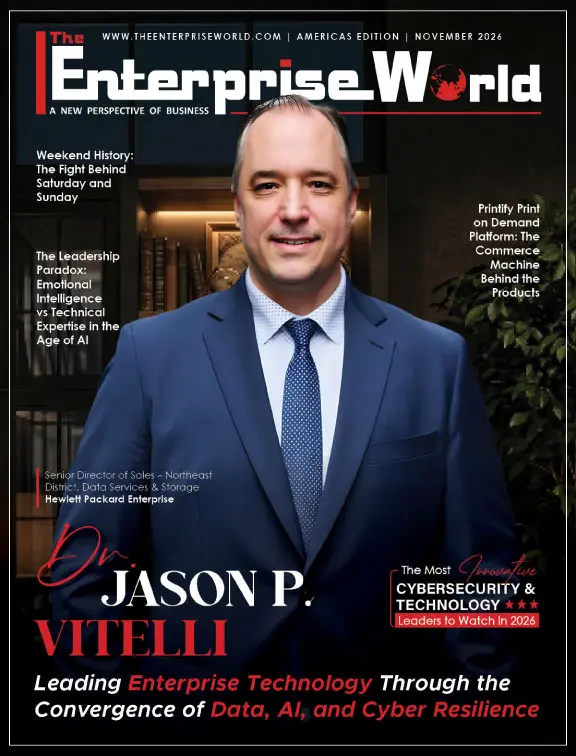
When technology becomes more interconnected, leadership must become more consequential. AI is accelerating demand for computing and data, cyber threats are challenging traditional notions of protection, and hybrid environments are making enterprise infrastructure complex. Against this backdrop, the real differentiator is no longer simply how quickly organizations adopt new technology, but how confidently they can build, protect, and evolve the foundations beneath it. The journey from selling technology to shaping strategic outcomes reflects a broader evolution in enterprise leadership, one where resilience, customer trust, and execution matter as much as innovation. Few lessons illustrate this shift more clearly than the move from proving individual capability to creating conditions in which teams, customers, and organizations can perform at their best.
That evolution defines the leadership story of Dr. Jason P. Vitelli, Senior Director of Sales – Northeast District, Data Services & Storage at Hewlett Packard Enterprise. Having navigated enterprise technology across Hewlett-Packard, Dell Technologies, Virtana, Pure Storage, and HPE, he has witnessed firsthand how quickly markets, customer expectations, and technology architectures can change. Today, his work centers on helping enterprises connect infrastructure modernization with resilience, cybersecurity, hybrid cloud, AI, and long-term business continuity.
The making of a resilient technology leader
Dr. Jason P. Vitelli’s career has been shaped by enterprise technology, complex customer environments, and leading teams through significant change. He began his career working with enterprise customers, where he quickly developed an interest in not only technology itself, but also the business outcomes it could enable.
Over the years, he has held leadership and strategic sales positions with Hewlett-Packard, Dell Technologies, Virtana, Pure Storage, and Hewlett Packard Enterprise. These experiences gave him exposure to some of the world’s largest and most complex organizations and reinforced his understanding of technology infrastructure as a critical part of modern business.
Today, Dr. Jason P. Vitelli leads the Northeast District within HPE’s Data Services and Storage business, overseeing enterprise strategy, revenue performance, go-to-market execution, customer engagement, and high-performing teams.
His perspective on infrastructure has evolved significantly. Storage, compute, cloud, networking, data protection, and cybersecurity can no longer be viewed independently; together, they form interconnected components of business resilience.
This understanding shaped his long-term focus on helping customers build environments that are secure, resilient, intelligent, and prepared for what comes next. His leadership philosophy centers on accountability, preparation, transparency, and empowering people to succeed through clear direction and the removal of obstacles.
The evolution from individual achievement to lasting impact
Dr. Jason P. Vitelli’s leadership journey reflects a shift from building personal expertise and proving capabilities to creating impact through accountability, strategic thinking, and developing others. As his responsibilities expanded, so did his perspective—from achieving individual success to enabling teams and customers to succeed together.
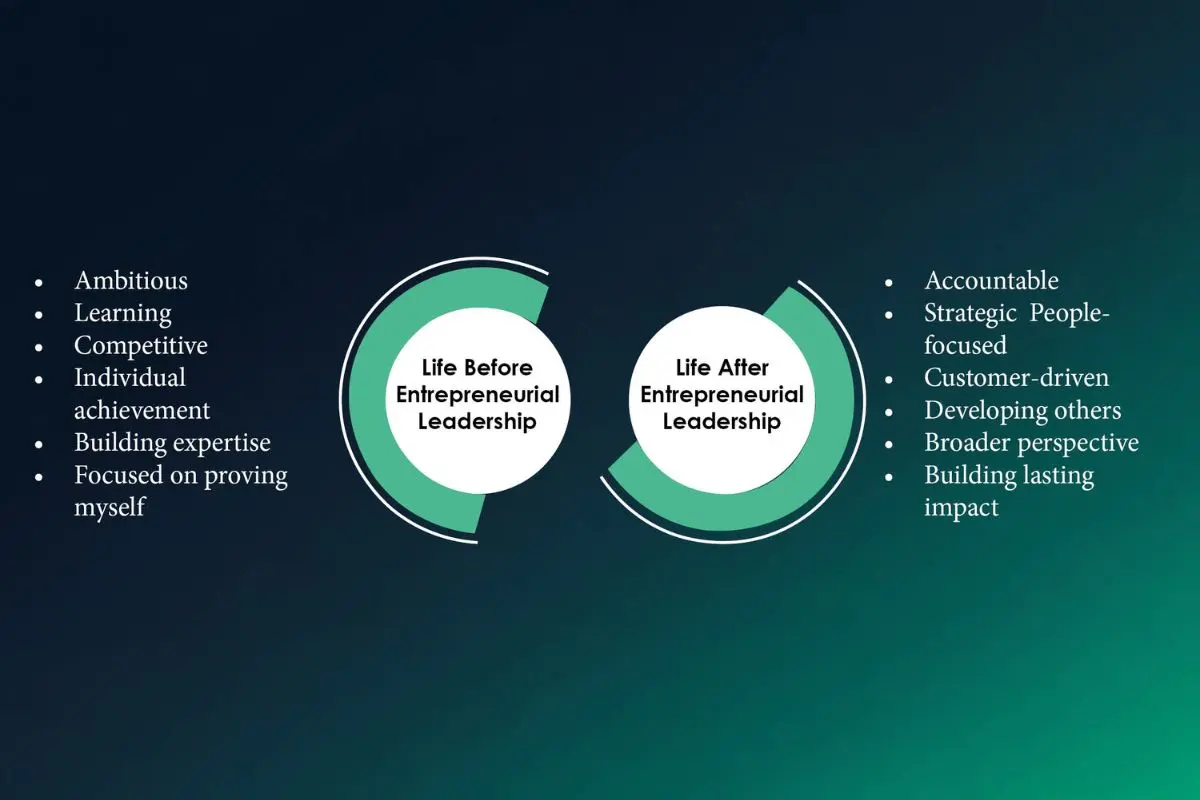
Life before entrepreneurial leadership
- Ambitious
- Learning
- Competitive
- Individual achievement
- Building expertise
- Focused on proving myself
Life after entrepreneurial leadership
- Accountable
- Strategic
- People-focused
- Customer-driven
- Developing others
- Broader perspective
- Building lasting impact
Transformation under pressure
One recurring challenge throughout Dr. Jason P. Vitelli’s career has been leading organizations through transformation while remaining accountable for immediate business results. Technology markets do not wait for organizations to catch up. Customer priorities change, competitors emerge, buying models evolve, and disruptive technologies can redefine an industry very quickly. As a leader, he has often had to transform an organization while simultaneously delivering today’s business results.
Through these experiences, Dr. Jason P. Vitelli learned that the answer is not to choose between short-term execution and long-term transformation. Strong organizations must do both. Achieving that balance requires clarity and discipline. Teams need to understand where the business is going, what success looks like, and what role they personally play in achieving it. His approach relies heavily on measurable objectives, customer engagement, pipeline discipline, coaching, and direct communication.
The biggest lesson Dr. Jason P. Vitelli has taken from these experiences is that leadership becomes most important when circumstances are difficult. Anyone can lead when everything is going well. During periods of uncertainty, people need consistency, honesty, direction, and confidence from their leaders. For him, the ability to provide that stability while continuing to move the organization forward remains an essential part of effective leadership.
Turning enterprise complexity into resilience
Dr. Jason identifies several challenges that enterprises are facing simultaneously, including explosive data growth, sophisticated cyber threats, AI adoption, hybrid and multi-cloud complexity, rising infrastructure costs, and the need to modernize legacy environments without disrupting the business.
Cyber resilience is particularly important in this environment. Organizations have historically focused heavily on preventing attacks, and while prevention remains essential, he believes enterprises must also assume that disruption can occur. This means designing environments capable of protecting critical data and recovering rapidly when disruption takes place.
At HPE, Dr. Jason approaches these challenges from the perspective of the entire hybrid environment. His conversations with customers connect infrastructure modernization, data management, hybrid cloud, AI, security, and business continuity rather than treating them as separate priorities.
The goal is not simply to sell infrastructure. It is to help customers create an architecture that gives them greater control of their data, improves operational efficiency, strengthens resilience, and provides the foundation for future innovation.
Clarity that drives execution
Dr. Jason P. Vitelli’s approach to leadership and enterprise sales can be summarized in three words: clarity, accountability, and execution. For him, clarity means ensuring that everyone understands the objective and why it matters. Accountability means encouraging people to take ownership of their commitments, while execution is about translating strategy into measurable action.
His sales philosophy begins with the customer’s business problem rather than the technology itself. He focuses on understanding what the customer is trying to accomplish, what may be preventing them from reaching that objective, and what the financial or operational impact of doing nothing could be. Once those questions are clearly understood, technology becomes an enabler of the desired outcome rather than simply a product.
He also views complex enterprise sales as team efforts. Major transformations require coordination across sales, engineering, partners, services, finance, legal, executives, and customer stakeholders. As a leader, he focuses on creating alignment across these groups and maintaining momentum toward the customer’s desired outcome.
A day in Dr. Jason P. Vitelli’s life
Balancing strategic priorities, customer engagement, team leadership, and personal time, Dr. Jason P. Vitelli’s day reflects a disciplined approach to leading with clarity, accountability, and purpose.
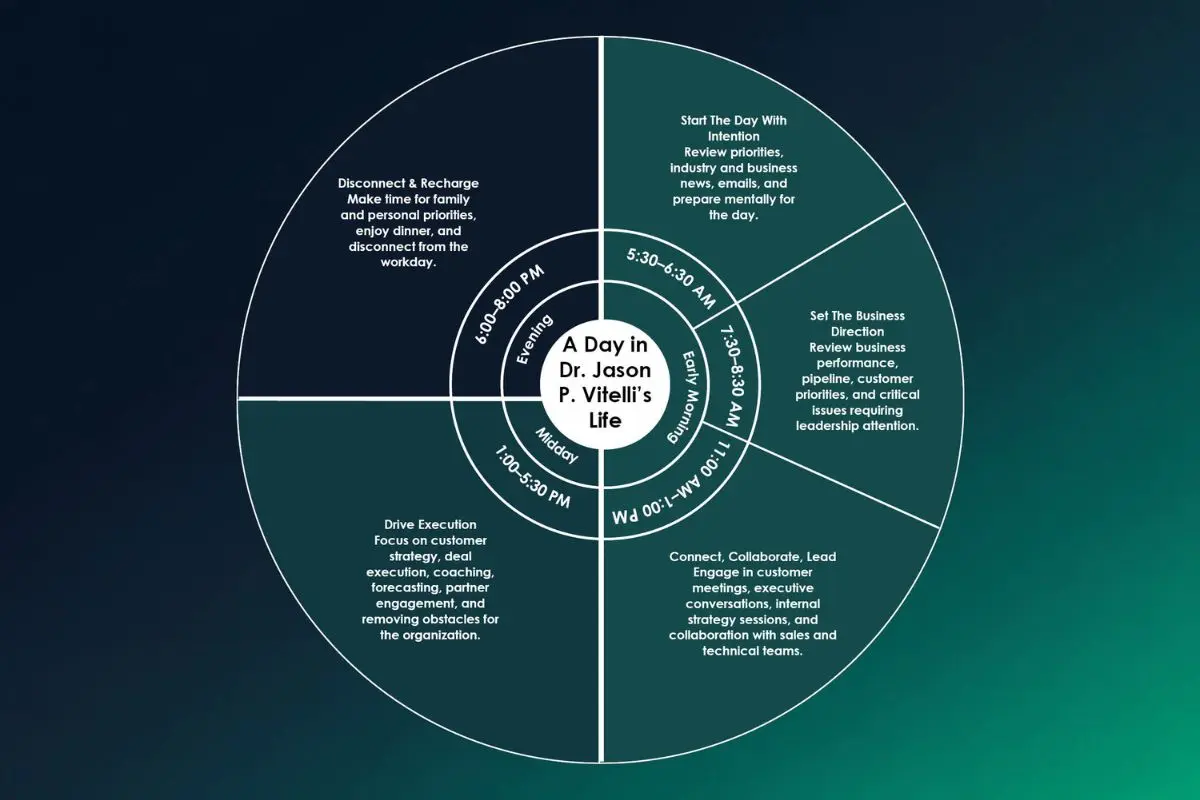
5:30–6:30 AM | Start the day with intention
Review priorities, industry and business news, emails, and prepare mentally for the day.
7:30–8:30 AM | Set the business direction
Review business performance, pipeline, customer priorities, and critical issues requiring leadership attention.
11:00 AM–1:00 PM | Connect, collaborate, lead
Engage in customer meetings, executive conversations, internal strategy sessions, and collaboration with sales and technical teams.
1:00–5:30 PM | Drive execution
Focus on customer strategy, deal execution, coaching, forecasting, partner engagement, and removing obstacles for the organization.
6:00–8:00 PM | Disconnect & recharge
Make time for family and personal priorities, enjoy dinner, and disconnect from the workday.
The strategic technology partnership
Some of the most rewarding engagements Dr. Jason has been involved with have started with customers facing significant infrastructure or business challenges rather than simply looking to purchase technology.
In one such example, Dr. Jason P. Vitelli and the HPE team worked with a large enterprise organization that needed to modernize a critical environment while improving resiliency and preparing its infrastructure for future growth. Rather than approaching the engagement as a product refresh, the team worked across technical, business, financial, and executive stakeholders to understand the broader business requirements.
Based on those requirements, the team developed a modernization strategy that improved infrastructure resiliency, provided additional capacity and scalability, and created a stronger foundation for future workloads.
What made the engagement successful was not any individual product, but the collaboration between the customer and the broader HPE team, including sales, engineering, services, partners, and leadership, all focused on solving the business problem.
This represents what strategic technology partnerships should look like: bringing the right people together around a shared business challenge and focusing on the solution rather than the product.
Trust that strengthens teams
For Dr. Jason, fostering strong teams begins with consistency. He believes people need to understand what is expected of them while also knowing that their leader will support them. This balance creates the foundation for direct communication, healthy debate, collaboration, and continuous learning.
Dr. Jason P. Vitelli recognizes that technology evolves too quickly for any leader to assume they have every answer. He therefore values the perspectives of those who work closely with customers and partners, believing some of the strongest ideas can emerge from the people closest to the challenges. Creating an environment where those voices are heard allows teams to collaborate more effectively and continue learning as the industry evolves.
Alongside collaboration and learning, he places customer trust at the center of decision-making. He believes short-term revenue should never take precedence over doing what is right for the customer. In enterprise technology, where critical data, security, privacy, and infrastructure are involved, credibility carries lasting importance. His view is straightforward: credibility can take years to build and only minutes to lose.

The value of giving back
Mentoring has always been an important part of Dr. Jason P. Vitelli’s professional journey. Throughout his career, he has benefited from leaders who challenged him, gave him opportunities, and recognized capabilities in him before he recognized them himself. Those experiences have influenced his commitment to supporting the growth of others.
He spends considerable time coaching sales professionals and leaders on strategic account planning, executive engagement, negotiation, career development, and leadership. He has also participated in industry events and customer forums, where he shares his perspectives on enterprise technology and evolving customer challenges.
For Dr. Jason, sharing knowledge is an important part of professional contribution. He believes that knowledge becomes more valuable when it is shared, making mentorship and knowledge-sharing a meaningful extension of his leadership journey.
Leading technology’s next chapter
The convergence of AI, data, hybrid cloud, and cybersecurity is an area Dr. Jason finds particularly exciting. He sees the industry moving toward a future where infrastructure becomes intelligent and automated, while recognizing that this evolution also brings greater responsibilities around security, governance, resilience, and trust.
He is motivated by the opportunity to help organizations navigate this transition responsibly and successfully. He also remains committed to building and mentoring teams capable of engaging customers in strategic technology conversations rather than simply transactional discussions.
For him, the opportunity lies in helping customers turn technology into a genuine competitive advantage while ensuring that the data and systems supporting their businesses remain protected and resilient.
The future that runs on connected technology
Looking ahead, Dr. Jason sees artificial intelligence as one of the most transformative forces shaping the next five years. However, he believes the more significant challenge lies in the infrastructure, data, security, and governance required to operationalize AI at enterprise scale. For organizations, adopting AI will therefore involve much more than implementing new capabilities; it will require the right technological foundations to support them effectively.
Dr. Jason views AI ultimately as a data challenge. Organizations need access to trusted data, sufficient computing capability, secure infrastructure, governance, and architectures capable of operating across hybrid environments. At the same time, he expects cyber resilience to become even more important as businesses become digital and interconnected, particularly as the cost of downtime and compromised data continues to rise.
Hybrid cloud will also remain critical, with enterprises continuing to operate workloads across private infrastructure, public cloud, colocation facilities, and edge environments. From Dr. Jason’s perspective, the organizations that succeed over the next five years will be those capable of bringing AI, hybrid cloud, data, automation, and security together into a coherent operating model.
An open letter to future leaders
Dear Future Leaders,
Don’t build your career around a title. Build it around learning, relationships, credibility, and results.
Technology will change repeatedly during your career. Products will change. Companies will change. Markets will change. Your ability to learn, adapt, communicate, and earn people’s trust will remain valuable regardless of the technology cycle.
I would also encourage you to become comfortable with accountability. Leadership isn’t about receiving credit when things go well. It is about taking responsibility when they don’t.
With best wishes,
Dr. Jason P. Vitelli
Senior Director of Sales
Hewlett Packard Enterprise
Building resilient enterprises through clarity, accountability, and trust
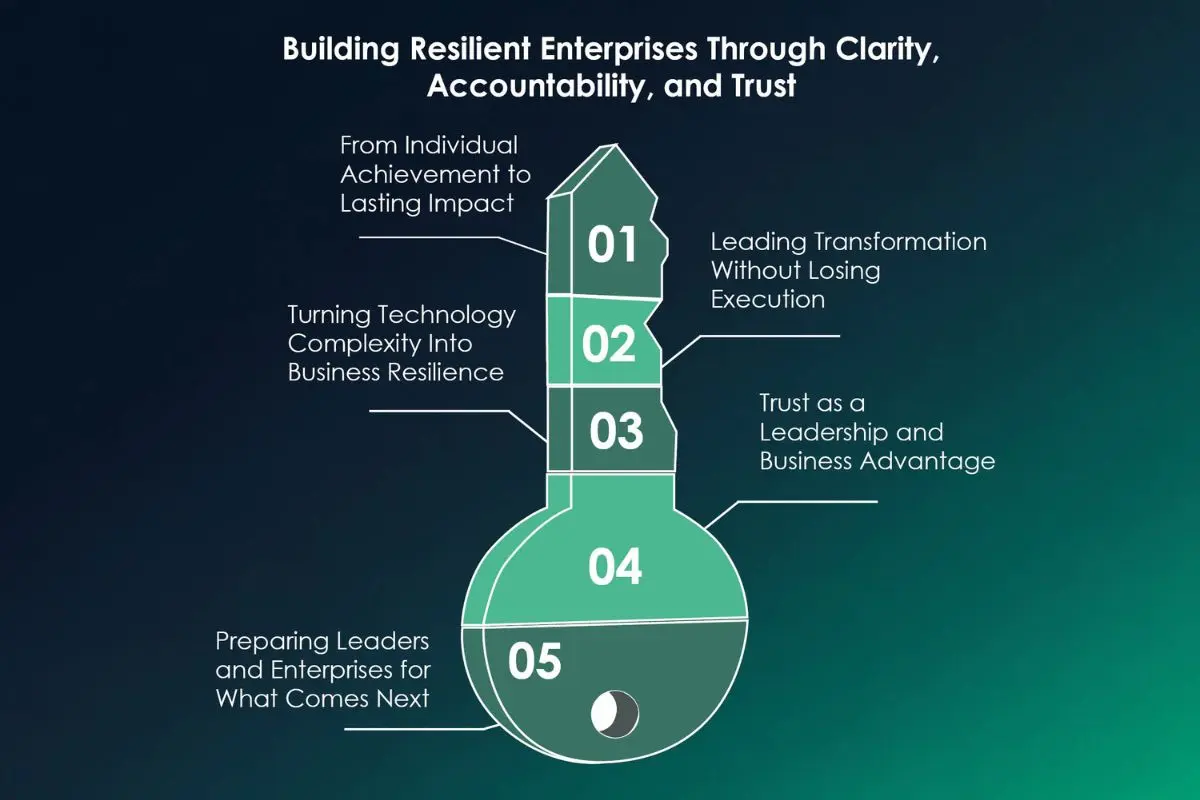
- From Individual Achievement to Lasting Impact
- Leading Transformation Without Losing Execution
- Turning Technology Complexity Into Business Resilience
- Trust as a Leadership and Business Advantage
- Preparing Leaders and Enterprises for What Comes Next
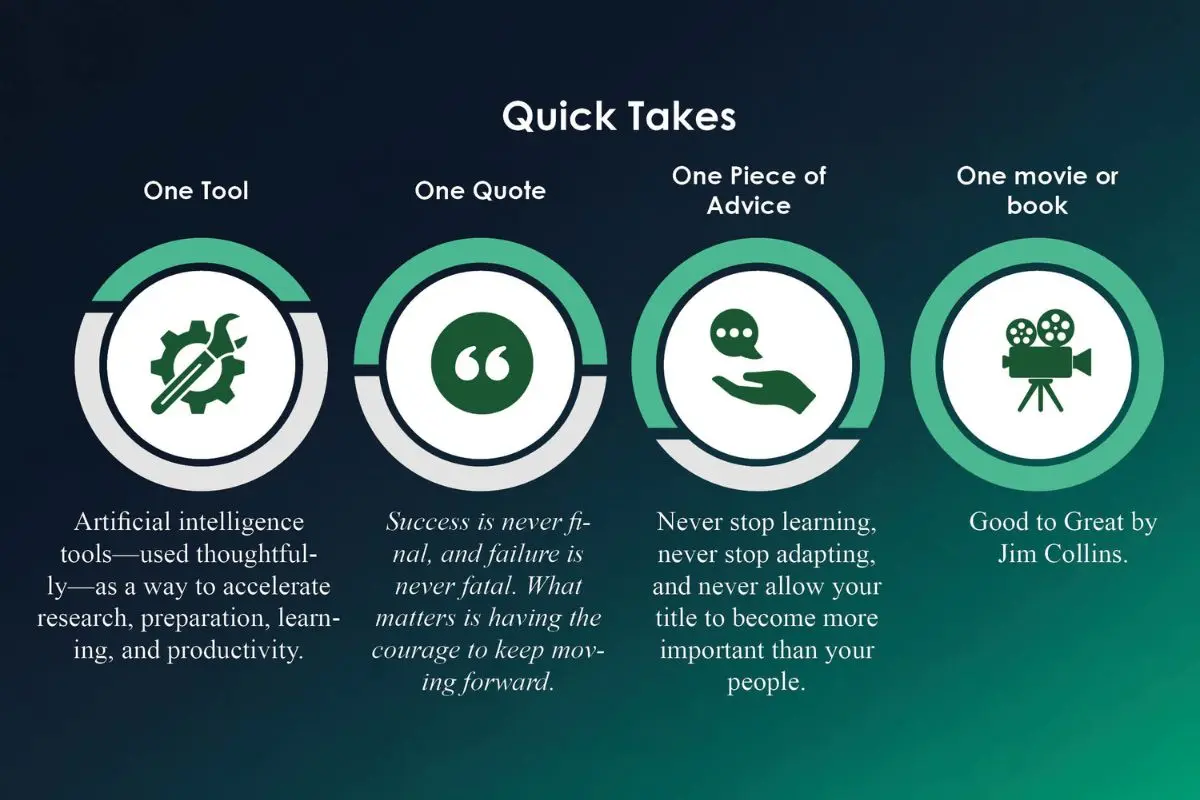
| Quick Takes | |
| One tool or app | Artificial intelligence tools—used thoughtfully—as a way to accelerate research, preparation, learning, and productivity. |
| One quote | Success is never final, and failure is never fatal. What matters is having the courage to keep moving forward. |
| One piece of advice | Never stop learning, never stop adapting, and never allow your title to become more important than your people. |
| One movie or book | Good to Great by Jim Collins. |













