
Employee engagement statistics provide a data-driven view of how employees feel about their work, leaders, and organizations. This article brings together 50 statistics covering overall engagement, business impact, remote and hybrid work, generational differences, and employee disengagement. It also examines what these numbers reveal about workplace culture.
Every year, leadership teams review internal survey results hoping to see clear proof that their cultural investments are paying off. Seeing how your workplace measures up against broader industry benchmarks helps executives separate actual progress from mere gut feelings.
Understanding workforce data gives management teams a clear picture of team morale across departments. Analyzing current employee engagement statistics offers leaders a reliable reality check on productivity trends, burnout risks, and hidden turnover costs. Turning these insights into concrete management habits enables executive teams to fix communication gaps before they hurt overall performance.
Tracking workforce metrics over time shifts leadership from reactive troubleshooting to proactive talent strategy. Grounding your management approach in clear evidence builds a resilient culture where high performers thrive.
50 employee engagement statistics influencing the workplace
Employee engagement statistics show how employees feel about their work, leaders, and organizations. The numbers cover key areas such as motivation, productivity, retention, remote work, leadership, and disengagement. Together, they offer a clear view of the current state of employee engagement and the factors that shape it.
We have divided the stats into 5 key sections. All the statistics have been taken from studies done by Gallup, Gartner, and People Insights. So, let us begin:
General employee engagement statistics
Engagement statistics offer a broad view of how employees connect with their work and organizations. The figures cover motivation, pride, company goals, leadership, and employee feedback. Together, they show that many employees feel connected to their companies, even as overall engagement continues to fall.
- 83% of employees say that working at their company makes them want to do the best work they can. (People Insight)
- Global employee engagement dropped to 20% in 2025, reaching its lowest level since 2020. (Gallup)
- 81% of employees are proud to say they work for their company. (People Insight)
- In 2025, global employee engagement fell for a second consecutive year after peaking at 23% in 2022. (Gallup)
- 91% of employees care about the future of their company. (People Insight)
- Only 10% of UK employees are engaged at work. (People Insight)
- 85% of employees understand the aims of their company. (People Insight)
- 73% of employees feel their senior leaders provide a clear vision of the overall direction of their company. (People Insight)
- 85% of employees know how the work they do helps their company achieve its aims. (People Insight)
- 58% of employees say they wish their employer would conduct employee engagement surveys. (People Insight)
What this tells us
Many employees feel connected to their companies. They feel proud, understand company goals, and care about the future. Yet global engagement fell to 20% in 2025, showing that connection does not always lead to engagement.
These employee engagement statistics also show gaps in leadership engagement strategies and feedback. While 85% understand company aims, only 73% see a clear leadership vision. Also, 58% want their employers to run engagement surveys.
Overall, these statistics reveal a mixed picture of employee engagement. Employees often care about their organizations and understand their purpose, but global engagement remains low. Employers must look beyond company goals and focus on the daily experiences that shape how employees feel, contribute, and stay connected.
Statistics on the business impact of engagement

Employee engagement affects more than workplace morale. It can influence productivity, profitability, retention, communication, motivation, and business performance. These statistics show how strongly employee experiences connect with measurable business outcomes.
- Highly engaged businesses are 21% more profitable than those without an engaged workforce. (People Insight)
- Low global employee engagement costs the world economy an estimated $10 trillion in lost productivity, or 9% of global GDP. (Gallup)
- Organizations that successfully embed their desired culture into employees’ daily work see up to a 34% increase in employee performance. (Gartner)
- 77% of employees say they would like to still be working for their company in two years’ time. (People Insight)
- Evolving the HR operating model has the highest predicted impact on AI productivity gains at 29%. (Gartner)
- Organizations using effective internal communication tools are 3.5 times more likely to have better business results. (People Insight)
- 79% of employees say an increase in recognition rewards would make them more loyal to their company. (People Insight)
- Employees who receive regular feedback are 2.8 times more likely to be engaged. (People Insight)
- 86% of employees say they would switch employers for one that offered more opportunity to grow. (People Insight)
- 84% of employees feel recognition affects their motivation to succeed at work. (People Insight)
What this tells us
Employee engagement can affect key business results. Highly engaged businesses report higher profits, while low engagement costs the global economy trillions in lost productivity. Strong culture and communication can also improve employee performance.
Employee experience also affects loyalty and retention. Regular feedback, growth opportunities, and recognition programs can help employees stay engaged. Businesses can strengthen engagement by focusing on these areas.
Overall, these statistics show that engagement has a direct connection with several business outcomes. Profitability, productivity, loyalty, motivation, and retention can all improve when employees feel supported and connected. For employers, engagement should therefore remain a business priority rather than a separate HR initiative.
Remote and hybrid work engagement statistics

Where and how employees work can shape their level of engagement. Remote and hybrid work can offer more flexibility and control, but the experience can differ across work settings. These statistics show how flexibility, autonomy, and work-life balance connect with employee engagement.
- 32% of remote employees feel highly engaged, compared to 28% of employees working in a physical office. (People Insight)
- In 2025, job market optimism dropped by 5 percentage points among fully remote workers. (Gallup)
- 77% of employees would prefer to work for a company that gives them the flexibility to work from anywhere. (People Insight)
- Job market optimism among remote-capable, fully on-site workers dropped by 14 percentage points in 2025. (Gallup)
- 59% of employees believe flexibility is more important to them than salary or other benefits. (People Insight)
- Job market optimism remained flat among hybrid workers in 2025. (Gallup)
- Employees are 12% more likely to report being happy with their job and engaged with their role when they have freedom and autonomy to do work in their own way. (People Insight)
- The 2025 increase in job market optimism came entirely from non-remote-capable, fully on-site workers (+2 percentage points). (Gallup)
- 86% of employees say they have the freedom required to get on with their jobs. (People Insight)
- 72% of employees are able to strike the right balance between work and home life. (People Insight)
What this tells us
The data shows that flexibility and autonomy can support remote engagement. Remote employees report higher engagement than office-based employees, while many workers value the freedom to work from anywhere. Nearly six in 10 employees also rate flexibility above salary or other benefits.
Work setup can also affect how employees view their jobs and the wider job market. Remote and hybrid workers showed different changes in optimism during 2025. The figures suggest that employers need to build work models that give employees both flexibility and the support they need.
Equitable hybrid engagement is successful when employees have control over how they work. Giving employees flexibility, autonomy, and a healthy work-life balance can create a better work experience.
Generational engagement statistics

Employee engagement can vary across age groups and genders. Employees may have different views on leadership, growth, feedback, and wellbeing. These statistics show how workplace experiences can differ between younger and older employees, as well as between men and women.
- 65% of employees aged 18–29 say senior leaders make the effort to listen to staff, compared to 54% of employees aged 60 and above. (People Insight)
- 73% of employees aged 18–29 say they have the right opportunities to learn and grow at work, compared with 59% of those aged 50–59. (People Insight)
- 68% of women say they can strike the right balance between work and home, compared to 65% of men. (People Insight)
- 86% of employees aged 18–29 say they can get the training and development needed to do their jobs, compared to 68% of those aged 50–59. (People Insight)
- 72% of women say their line manager gives regular feedback on how they are doing, compared to 67% of men. (People Insight)
- 70% of employees aged 29 and younger believe their company does enough to support their health and wellbeing, compared to 62% of employees aged 50–59. (People Insight)
- 61% of women say their career development aspirations are being met, compared to 56% of men. (People Insight)
- 62% of men believe senior leaders make the effort to listen to staff, compared to 60% of women. (People Insight)
- 61% of women tend to receive praise for their work, compared to 56% of men. (People Insight)
- 68% of Gen Z and younger millennial employees report experiencing stress for much of the day, compared to 56% of Gen X and 40% of Baby Boomers. (Gallup)
What this tells us
The data shows that younger employees report stronger support in several areas. They are more likely to feel they have access to training, growth, and wellbeing support. Younger workers also report higher levels of leadership listening than older employees.
Gender differences appear smaller but still matter. Women report slightly better results for work-life balance, feedback, career growth, and praise. At the same time, younger employees report much higher daily stress than older groups, showing that stronger support does not always mean lower stress.
These differences show why employers should avoid using one approach for every employee group. Age, career stage, and workplace experience can shape what employees need to stay engaged. Understanding these differences can help leaders impact employee engagement strategies.
Statistics on employee disengagement and its costs

Disengagement can affect trust, communication, motivation, and retention. These statistics show how poor management and weak employee support can push people away from their work. They also reveal the wider cost of disengagement for organizations.
- Manager engagement dropped by 9 percentage points globally between 2022 and 2025, falling to 22%. (Gallup)
- 90% of Brits are either disengaged or actively disengaged at work. (People Insight)
- Global manager engagement saw its largest single-year drop between 2024 and 2025, falling 5 percentage points from 27% to 22%. (Gallup)
- 79% of employees claim a “lack of appreciation” as the reason for quitting their job. (People Insight)
- South Asia experienced an 8-percentage-point decline in manager engagement in 2025, the largest decline of any region globally. (Gallup)
- 82% of employees don’t trust their manager to tell the truth. (People Insight)
- 32% of UK employees don’t have the confidence to put ideas forward to their managers. (People Insight)
- Only 59% of employees believe change will happen as a result of an employee survey. (People Insight)
- 86% of employees blame company failures on poor communication. (People Insight)
- Only 47% of employees are satisfied with the pay they receive for the work they do. (People Insight)
What this tells us
The data shows a clear link between weak management and disengagement. Manager engagement has fallen sharply, while trust in managers remains low. When employees do not trust their managers or feel heard, they may become less willing to share ideas or stay with the company.
Poor communication and a lack of appreciation also stand out as major issues. Many employees link company failures to poor communication, while others leave because they do not feel valued. Low satisfaction with pay adds another concern, showing that both workplace culture and rewards can shape employee engagement.
These figures show that disengagement can grow when employees lack trust, recognition, communication, and fair rewards. Leaders who address these areas can reduce the factors that drive employees away and create a stronger workplace experience.
Why employee engagement statistics matter
They help leaders make better decisions. They can track changes over time, spot common issues, and choose areas that need action. When used with employee feedback, engagement data can guide stronger workplace strategies and improve employee experience.
Employee engagement statistics also help businesses understand how employees feel about their work and workplace. They show where engagement is strong and where problems may exist.
How to measure employee engagement?
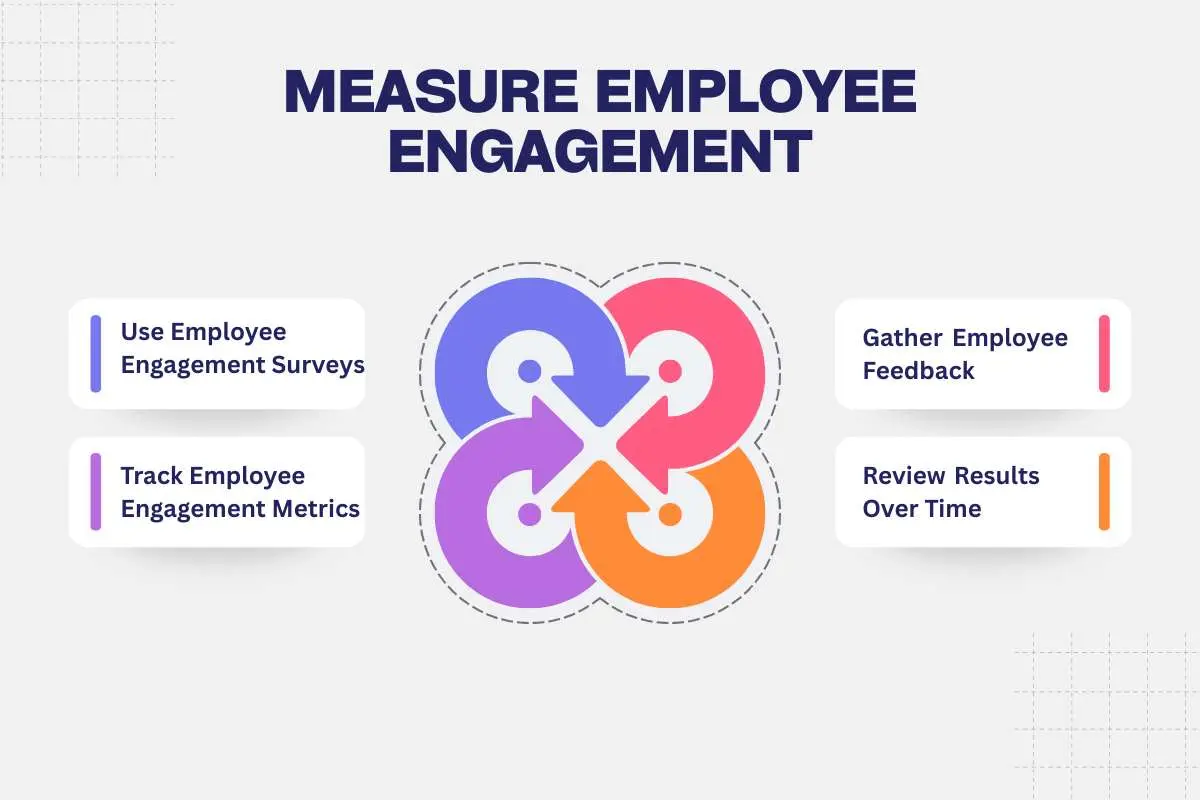
Measuring employee engagement helps leaders understand how employees feel about their work, managers, and workplace. A mix of methods gives a clearer view than using one survey alone.
1. Use employee engagement surveys
Regular surveys can measure job satisfaction, motivation, trust, and connection. Use short questions and keep the survey simple. Pulse surveys can also track changes more often.
2. Track employee engagement metrics
Metrics can show changes in engagement over time. Common measures include employee retention, absenteeism, turnover, participation, and internal promotion rates. Compare these numbers with survey results to find clear patterns.
3. Gather employee feedback
One-on-one meetings, focus groups, and team discussions can add context to survey results. Employees can explain why certain issues affect their experience. This helps leaders move from data to improving employee engagement.
4. Review results over time
A single survey gives only a snapshot. Compare results across teams, locations, roles, and time periods. This can help leaders spot engagement gaps and measure whether new actions are working.
The best approach combines surveys, workplace data, and direct feedback. Together, these methods give leaders a clearer picture of employee engagement and help them take focused action.
Conclusion:
Analyzing employee engagement metrics gives organizations the clarity needed to make smarter, human-centered decisions. Tracking key employee engagement statistics allows executive teams to pinpoint operational friction, reduce turnover costs, and build high-trust environments where top talent genuinely thrives.
When leaders use data to refine daily management habits, cultural improvement shifts from a vague goal into a predictable growth engine. Grounding your engagement strategy in clear evidence ensures your business stays resilient, competitive, and continuously aligned.
FAQs
1. What are the most critical employee engagement statistics to track?
Organizations usually track voluntary turnover rates, net promoter scores, absenteeism, pulse survey participation, and internal promotion rates to gauge overall team health.
2. How often should companies measure employee engagement metrics?
Running short pulse surveys quarterly alongside annual comprehensive reviews provides a steady, accurate picture of team sentiment without causing survey fatigue.
3. Do employee engagement statistics directly correlate with profitability?
Yes, extensive research shows that teams in the top quartile of engagement consistently report higher productivity, better customer retention, and stronger profit margins.