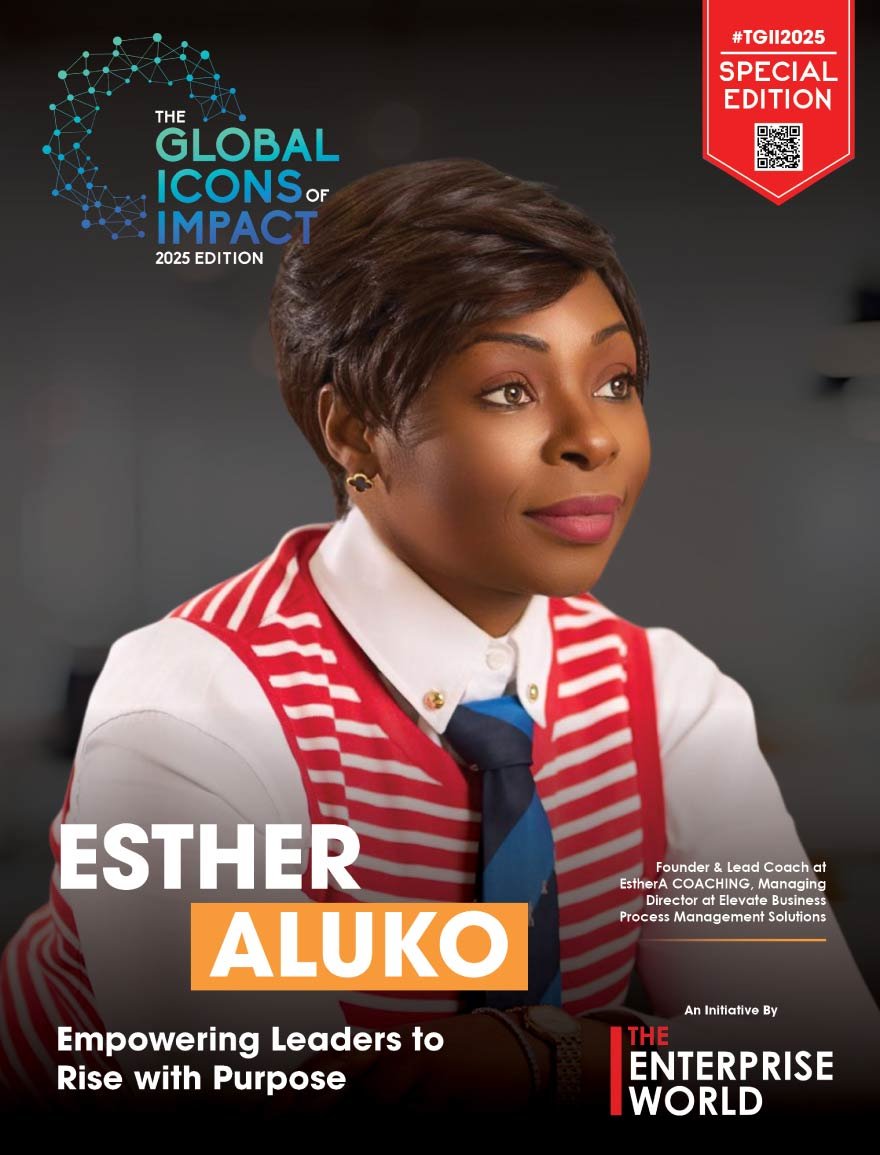
True leadership often begins in unexpected places. Not in boardrooms or classrooms, but in moments of personal transformation. For Esther Aluko, the founder of EstherA Coaching, that transformation began early in life. A major life change forced her to live independently at a young age, and in that solitude, she found her strength. Books became her mentors, shaping her thinking and fueling her desire to build a purposeful life. From the teachings of Les Brown and T.D. Jakes to the resilience of Oprah Winfrey and Folorunsho Alakija, Esther absorbed lessons of perseverance, self-discipline, and faith—qualities that would define her as a leader and coach.
Today, Esther Aluko is a highly regarded leadership coach, speaker, and consultant based in Manchester, UK. Since founding EstherA Coaching in 2020, she has empowered professionals, students, and organisations to unlock their potential through her signature frameworks and transformative programs. Her approach combines authenticity with practical wisdom, inspiring individuals to lead with confidence and impact.
In this exclusive conversation with The Enterprise World, Esther Aluko reflects on her journey, her philosophy of leadership, and her mission to raise a generation of purpose-driven leaders.
1. Can you walk us through your early journey and what experiences shaped your leadership path?
My journey into leadership started with a major life change that forced me to live alone at a very young age. I quickly learned that I had to take responsibility for my own decisions, whether I wanted to just exist or intentionally build a life of purpose. Books became my refuge and my compass.
I devoured works like The 7 Habits of Highly Effective People, Les Brown’s motivational speeches, T.D. Jakes’ wisdom, Joel Osteen’s teachings, Oprah Winfrey’s story, and the example of Folorunsho Alakija. I discovered that the best of the best had to put in the work, and that nothing good truly comes easy. Over time, I developed a habit of “stealing” positive traits from these role models—adopting their discipline, resilience, and ways of working while walking my own unique path. Those experiences shaped me into the leader I am today.
2. Who or what inspired you to pursue your current career direction?
Oprah Winfrey was my first major inspiration. Her authenticity and ability to turn pain into power spoke directly to me. But I was equally inspired by the countless books I read. They made me realise that while others may have spoken similar words before, no one can say them the way I can. My voice, my insights, and my responses are shaped by my own journey. That recognition gave me permission to step fully into coaching, leadership development, and public speaking.
3. Looking back, what was a defining moment that gave you clarity about your purpose as a leader?
A defining moment came when I coached someone with no higher education background into a high-paying role and later into their own leadership position. What felt natural to me—helping them believe bigger—changed the trajectory of their life. That was when I realised my true purpose: I help people unlock confidence, rise above limitations, and see possibilities they may have never considered. When people leave our sessions motivated enough to get out of bed and go beyond the ordinary, I know I’m walking in my calling.
4. How do you define leadership in today’s rapidly changing world?
Leadership today is not about titles or positions; it’s about influence, adaptability, and intentional service. In a world of rapid change, a true leader creates clarity in uncertainty, inspires action through authenticity, and empowers others to lead in their own right. For me, leadership is less about being followed and more about raising others to a place where they can stand tall and lead themselves.
5. What core values or principles guide your decision-making and leadership style?
- Integrity – I believe in doing the right thing even when no one is watching.
- Service – Leadership is service, not entitlement.
- Excellence – If my name is on it, it must reflect the highest standard I can give.
- Growth mindset – Every challenge is an opportunity to learn.
- Faith – My faith anchors me and gives me perspective beyond the immediate moment.
6. In your view, how has leadership evolved with the rise of AI and digital transformation?
The digital era has reshaped leadership. Leaders no longer only manage people; they must now guide teams through constant technological shifts. AI has made knowledge widely accessible, but emotional intelligence, ethics, and human connection remain irreplaceable. Leaders who thrive today are those who combine digital fluency with empathy, leveraging technology while never losing sight of humanity.
7. What unique leadership philosophy or framework have you developed over the years?
My signature philosophy is The 3Ps – Package, Position, Pitch.
- Package yourself by cultivating your skills, values, and experiences into a clear identity.
- Position yourself where opportunities can find you.
- Pitch your value with confidence, so that doors open.
This framework has guided not just my own journey but also the many professionals and students I’ve mentored.
8. Could you share one milestone or achievement that you’re particularly proud of?
One of my proudest milestones was launching my program Campus to Career: Package, Position, Pitch (The 3Ps) at one of the top five universities in the UK. The session helps students see that their career doesn’t begin after graduation—it begins on Day One of university. By equipping them to build LinkedIn profiles, translate part-time jobs into “career currency,” and learn how to pitch their strengths, I’ve seen students graduate ready, not just hopeful.
9. What has been your toughest leadership challenge, and how did you overcome it?
My toughest challenge has been leading in environments where trust was broken—either by previous leaders or by systemic issues. Winning trust is never quick. I overcame it by choosing transparency, showing consistency over time, and never asking people to do what I wasn’t willing to model myself. Slowly but surely, people saw I wasn’t there to take but to give, and that shifted the culture.
10. How do you balance long-term vision with short-term business realities?
I anchor everything in a clear long-term vision, but I break it down into achievable milestones. I often say: Start with the end in mind, but strategy sets the steps. I’m realistic about immediate challenges—whether financial constraints or resource gaps—but I don’t let them shrink the bigger picture. I treat short-term actions as investments into the long-term legacy.
11. What excites you most about the future of your industry?
What excites me most is the growing hunger for authentic leadership and personal growth. More people—students, professionals, organisations—are recognising that success is not just technical; it’s personal. Coaching, leadership development, and empowerment are no longer “nice-to-haves”; they’re essential. The future belongs to leaders who know how to combine competence with character.
12. What role do you think leaders must play in shaping responsible and sustainable growth?
Leaders must be stewards, not just achievers. That means building organisations that thrive without exploiting people or the planet. It means mentoring the next generation rather than hoarding opportunities. Responsible growth is growth that lasts, and leaders must be intentional about leaving systems, people, and communities better than they found them.
13. What advice would you give to the next generation of leaders aspiring to create global impact?
Own your story. Don’t wait until you feel “ready.” Package your experiences, position yourself in spaces where your voice matters, and pitch with boldness. Impact is not about being the loudest—it’s about being consistent, credible, and committed to serving. And never forget: leadership is not about you; it’s about what you unlock in others.
14. What does being featured as a keynote speaker at The Global Icons of Impact 2025 mean to you personally and professionally?
Being featured is both humbling and affirming. Personally, it reminds me of how far I’ve come—from surviving challenges in my early years to now standing on a global stage. Professionally, it validates the work I’ve poured into coaching, speaking, and consulting. But more than the spotlight, it’s an opportunity to inspire others: if I can rise from where I started to this platform, so can they.
Additional Insights:
What would be your advice for business leaders to incorporate work-life balance into their schedule?
Balance is not about equal hours; it’s about intentional priorities. Leaders should protect rest as fiercely as they protect meetings. I encourage scheduling family time, self-care, and spiritual renewal the same way you would schedule a board meeting—non-negotiable.
What is the best lesson you’ve learned throughout your career?
That resilience beats perfection. You don’t need to have everything figured out; you just need to keep showing up, learning, and adjusting.
Can you brief us about your financial journey?
My financial journey started from survival, working multiple jobs just to keep afloat. Over time, I learned to build streams of income from my passions—coaching, consultancy, speaking, and business ventures. I’ve gone from cleaning jobs to leading multi-sector businesses and speaking on global stages. For me, money is no longer just about survival; it’s about creating impact and building generational stability.