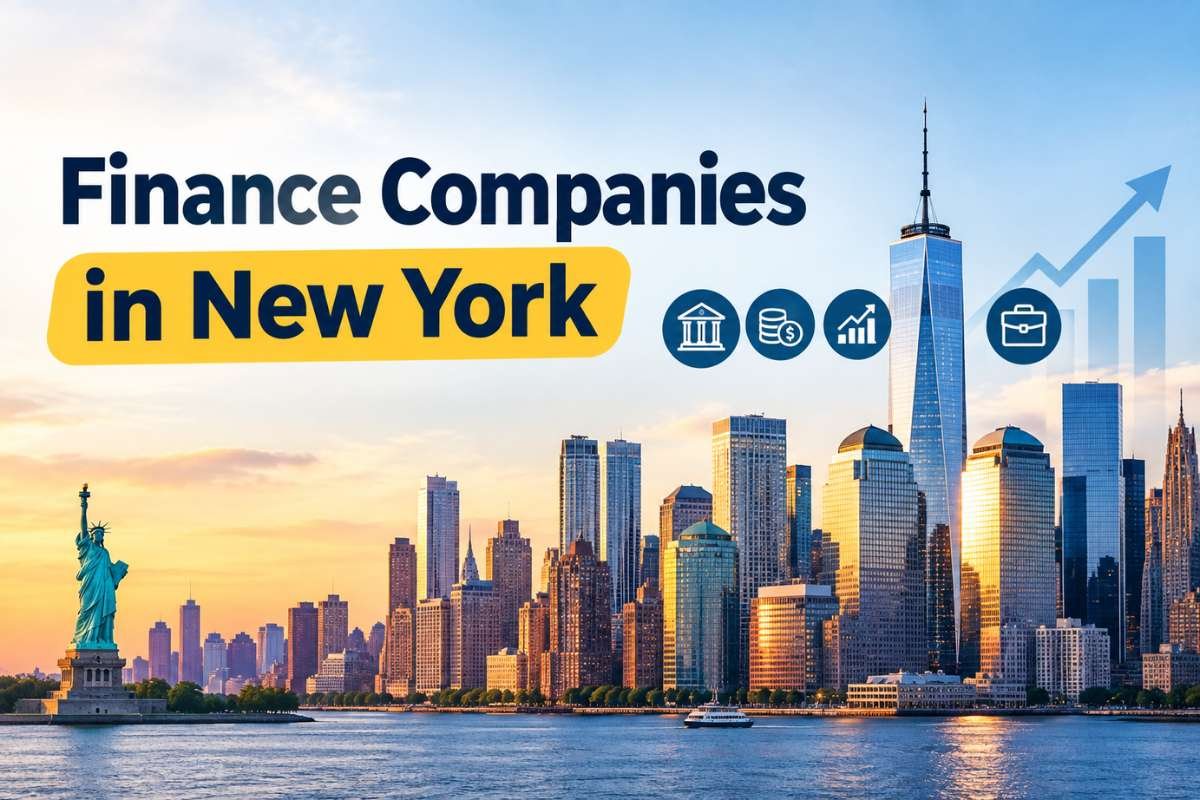
New York remains a global financial hub, with finance companies in New York spanning traditional banks, asset managers, private-equity firms, hedge funds, market makers, wealth managers, and fintech companies.
The sector operates at enormous scale. JPMorgan Chase had about $5.0 trillion in total assets as of June 2026, while BlackRock managed $15 trillion and BNY reported $62.6 trillion in assets under custody or administration.
Quantitative investing and fintech are also reshaping the industry. Two Sigma manages more than $80 billion, while Millennium Management oversees about $87 billion in hedge-fund assets. Citadel also maintains a significant presence in New York.
Together, these firms show how New York’s financial ecosystem has expanded beyond traditional banking to include technology, AI, alternative investments, capital markets, and wealth management. This list highlights 10 major finance companies in New York in 2026 based on scale, assets, workforce, market influence, and New York presence.
Quick-Filter Table: Top Finance Companies in New York
Use this quick-filter table to compare leading financial firms based on their sector, scale, and core business focus. It offers a snapshot of the companies shaping New York’s financial landscape, from traditional banking institutions to technology-driven investment and wealth-management firms.
| Firm Name | Sector | Global AUM / Relevant Assets | NYC HQ / Principal Address |
| JPMorgan Chase | Investment Banking / Banking | $4.8T AUM; $5.0T total assets | 270 Park Avenue |
| Goldman Sachs | Investment Banking | ~$4.0T assets under supervision | 200 West Street |
| Morgan Stanley | Investment Banking / Wealth Management | $1.9T investment-management AUM | 1585 Broadway |
| BlackRock | Asset Management / FinTech | $15.3T AUM | 50 Hudson Yards |
| BNY | Asset Management / Financial Infrastructure | $2.2T AUM; $62.6T custody/administration | 240 Greenwich Street |
| Apollo Global Management | Private Equity / Alternatives | ~$1.05T AUM | 9 West 57th Street |
| KKR | Private Equity / Alternatives | $796 billion | 30 Hudson Yards |
| Citadel | Hedge Fund / Quantitative Trading | ~$77B AUM | 425 Park Avenue* |
| Two Sigma | Hedge Fund / Quantitative Investing | $80B+ AUM | 100 Avenue of the Americas |
| Millennium Management | Hedge Fund / Multi-Strategy | ~$87B hedge-fund AUM | 399 Park Avenue |
*Citadel’s global headquarters are in Miami. Its New York addresses are major offices rather than its global headquarters.
Top Finance Companies in New York by Sector
New York’s financial ecosystem includes established global banks, investment firms, quantitative hedge funds, asset managers, fintech companies, and wealth-management platforms. The table below provides a quick comparison of leading firms by sector, helping readers identify the major players across different areas of New York’s finance industry.
1. JPMorgan Chase & Co.

| Sector | Investment Banking / Banking |
| Founded | 1799 |
| Global Employees | 320,000+ |
| 2026 Total Assets | Approximately $5.0 trillion |
| 2026 AUM | Approximately $4.8 trillion |
| NYC Headquarters | 270 Park Avenue |
JPMorgan Chase remains one of the largest and most influential financial companies in New York. Its businesses span investment banking, commercial banking, consumer banking, payments, asset management, and other financial services.
The firm reported approximately $5.0 trillion in total assets and $375 billion in stockholders’ equity as of June 30, 2026. Its first-quarter 2026 results also showed approximately $4.789 trillion in assets under management and $7.103 trillion in total client assets.
Its New York presence has become even more prominent following the opening of its new global headquarters at 270 Park Avenue in 2025. The building is designed to accommodate approximately 10,000 employees, while JPMorgan Chase has about 24,000 employees in New York City.
The firm’s investments in technology, data, and artificial intelligence also position it at the intersection of traditional banking and technology-driven finance.
2. Goldman Sachs

| Sector | Investment Banking |
| Founded | 1869 |
| Global Employees | 47,000+ |
| 2026 Assets Under Supervision | Approximately $4 trillion |
| NYC Headquarters | 200 West Street |
Goldman Sachs is one of the financial institutions most closely associated with New York’s investment-banking industry and remains one of the most prominent finance companies in New York.
It advises corporations, governments and institutional investors on mergers and acquisitions, capital raising, restructuring and other strategic transactions. Its businesses also include global markets, asset management and wealth management.
Goldman Sachs Asset Management has expanded well beyond traditional public-market investing, with approximately $4 trillion in assets under supervision as of June 30, 2026.
Its alternatives platform spans private equity, private credit, real estate, infrastructure, growth equity and hedge-fund strategies. In the second quarter of 2026, Goldman Sachs reported $20.34 billion in net revenues and $6.63 billion in net earnings.
The firm’s combination of investment banking, alternative assets, wealth management, and technology keeps it central to New York’s financial ecosystem.
3. Morgan Stanley

| Sector | Investment Banking / Wealth Management |
| Founded | 1935 |
| Global Employees | 82,000+ |
| Investment-Management AUM | $1.9 trillion |
| NYC Headquarters | 1585 Broadway |
Morgan Stanley combines investment banking, institutional securities, wealth management, and investment management. Its clients include corporations, governments, institutional investors, and individuals across global markets.
Its investment-management business reached $1.9 trillion in assets under management at the end of 2025, according to the firm’s 2026 shareholder reporting. Its wealth-management business also surpassed $1 trillion in individual retirement account assets under management in March 2026.
With more than 82,000 employees worldwide, Morgan Stanley remains a major employer and one of the leading finance companies in New York.
Its significance increasingly extends beyond traditional investment banking as wealth management, retirement services, and technology-enabled financial advice become larger parts of the financial industry.
4. BlackRock

| Sector | Asset Management / FinTech |
| Founded | 1988 |
| Global Employees | Approximately 25,000 |
| 2026 AUM | $15.3 trillion |
| NYC Headquarters | 50 Hudson Yards |
BlackRock represents the scale of modern asset management and is one of the world’s most significant financial companies in New York. The company provides investment strategies across equities, fixed income, alternatives, private markets, and multi-asset portfolios.
Its technology platform, Aladdin, has also made BlackRock an important player in financial technology. The platform supports investment management, portfolio analytics, and risk management.
BlackRock reported $15.3 trillion in assets under management as of June 30, 2026, following $868 billion of net inflows over the preceding 12 months. Its global workforce is approximately 25,000 employees across more than 40 countries.
The combination of asset management, investment technology, data analytics, and AI makes BlackRock particularly relevant to the evolution of finance beyond traditional banking.
5.BNY
| Sector | Asset Management / Financial Infrastructure |
| Founded | 1784 lineage |
| Global Employees | Approximately 50,000 |
| 2026 AUM | $2.2 trillion |
| Assets Under Custody or Administration | $62.6 trillion |
| NYC Headquarters | 240 Greenwich Street |
BNY is one of the oldest financial institutions in the United States, but its modern role is closely connected to the infrastructure supporting global financial markets. It is also one of the most important financial companies in New York outside traditional investment banking.
Its businesses include asset servicing, custody, investment management, wealth management, payments, and securities services. As of June 30, 2026, BNY reported $62.6 trillion in assets under custody and/or administration and $2.2 trillion in assets under management.
The company employs approximately 50,000 people and is increasingly incorporating artificial intelligence into its operating model. Its 2026 investor materials highlight an “AI at our Core” strategy.
BNY therefore represents an often-overlooked part of New York finance: the technology and infrastructure that enables global investing to function.
6. Apollo Global Management
| Sector | Private Equity / Alternative Investments |
| Founded | 1990 |
| Global Employees | 5,700+ |
| 2026 AUM | Approximately $1.05 trillion |
| NYC Headquarters | 9 West 57th Street |
Apollo Global Management reflects the growing importance of alternative investments within New York’s financial sector. The firm operates across credit, equity, and real assets and has expanded beyond its traditional private-equity roots.
Apollo crossed the $1 trillion AUM threshold in 2026, reaching approximately $1.05 trillion as of June 30. The firm employs more than 5,700 people across more than 26 cities, while its private-equity platform alone had approximately $70 billion in AUM.
Its platform also includes retirement services through Athene and investments across private equity, private credit, infrastructure, and real assets.
Apollo’s growth shows why alternative investment firms have become an increasingly important part of the finance companies in New York landscape.
7. KKR
| Sector | Private Equity / Alternative Investments |
| Founded | 1976 |
| Global Employees | Approximately 4,200 core employees |
| 2026 AUM | $744 billion |
| NYC Headquarters | 30 Hudson Yards |
KKR helped define modern private equity and has evolved into a diversified global investment company. Its platform spans private equity, credit, infrastructure, real estate, and other alternative investments.
As of March 2026, KKR reported approximately $744 billion in AUM, including $322 billion in credit and liquid strategies, $229 billion in private equity, and $192 billion in real assets. The firm reported approximately 4,200 core employees.
Its infrastructure platform had approximately $119 billion in AUM as of June 30, 2026, highlighting the growing importance of private markets and infrastructure investing.
KKR’s expansion demonstrates how finance companies in New York increasingly extend beyond public markets into private capital, infrastructure, and alternative assets.
8. Citadel
| Sector | Hedge Fund / Quantitative Trading |
| Founded | 1990 |
| Global Employees | 3,000+ |
| 2026 AUM | Approximately $77 billion |
| NYC Office | 425 Park Avenue and 660 Fifth Avenue |
Citadel adds a different dimension to the list: New York’s quantitative and multi-strategy hedge-fund industry.
Founded by Ken Griffin, Citadel operates across equities, fixed income, macro, commodities, and other strategies. Its investment platform combines research with sophisticated technology, data, and quantitative analysis.
The firm’s AUM is approximately $77 billion based on recent 2026 reporting. Citadel’s global headquarters are now at 830 Brickell Plaza in Miami, but its New York offices remain important centres for investment and trading talent.
Its presence demonstrates how modern finance companies in New York increasingly depend on computing power, mathematics, data and sophisticated trading infrastructure.
9. Two Sigma
| Sector | Hedge Fund / Quantitative Investing |
| Founded | 2001 |
| Global Employees | Approximately 1,700 |
| 2026 AUM | $80 billion+ |
| NYC Headquarters | 100 Avenue of the Americas |
Two Sigma is one of the clearest examples of the convergence between finance, computer science, artificial intelligence, and quantitative research.
The firm applies mathematical modelling, data science, machine learning, and advanced computing to investment management and trading. It reports more than $80 billion in assets under management and approximately 1,700 employees.
Its researchers use thousands of data sources and a technology infrastructure designed to process large volumes of information. In 2026, the firm’s approach also highlights generative AI alongside mathematical and quantitative techniques.
Two Sigma represents a newer model of finance companies in New York, where investment firms increasingly resemble technology companies in their dependence on data, engineering, and advanced computing.
10. Millennium Management
| Sector | Hedge Fund / Multi-Strategy |
| Founded | 1989 |
| Global Employees | 6,600+ |
| 2026 Hedge-Fund AUM | Approximately $87 billion |
| NYC Principal Office | 399 Park Avenue |
Millennium Management is another major force in New York’s multi-strategy hedge-fund industry.
Founded by Israel Englander, Millennium operates a multi-manager model in which specialist investment teams operate within a common risk-management framework. The firm manages approximately $87 billion in hedge-fund assets based on 2026 industry reporting.
Its regulatory AUM figure can be substantially higher because regulatory measures may include gross or leveraged positions and should not be interpreted as equivalent to investor capital.
With its principal New York office at 399 Park Avenue and a global network of employee locations, Millennium illustrates how modern hedge funds combine specialist investment teams with quantitative research, automated risk systems, alternative data and technology.
Read More:
- Which are the Top Business Valuation Companies That You Don’t Know?
- Think You Know the Largest Banks in America? Think Again After Seeing These Top 15 Banks.
New York’s Quantitative Finance Boom
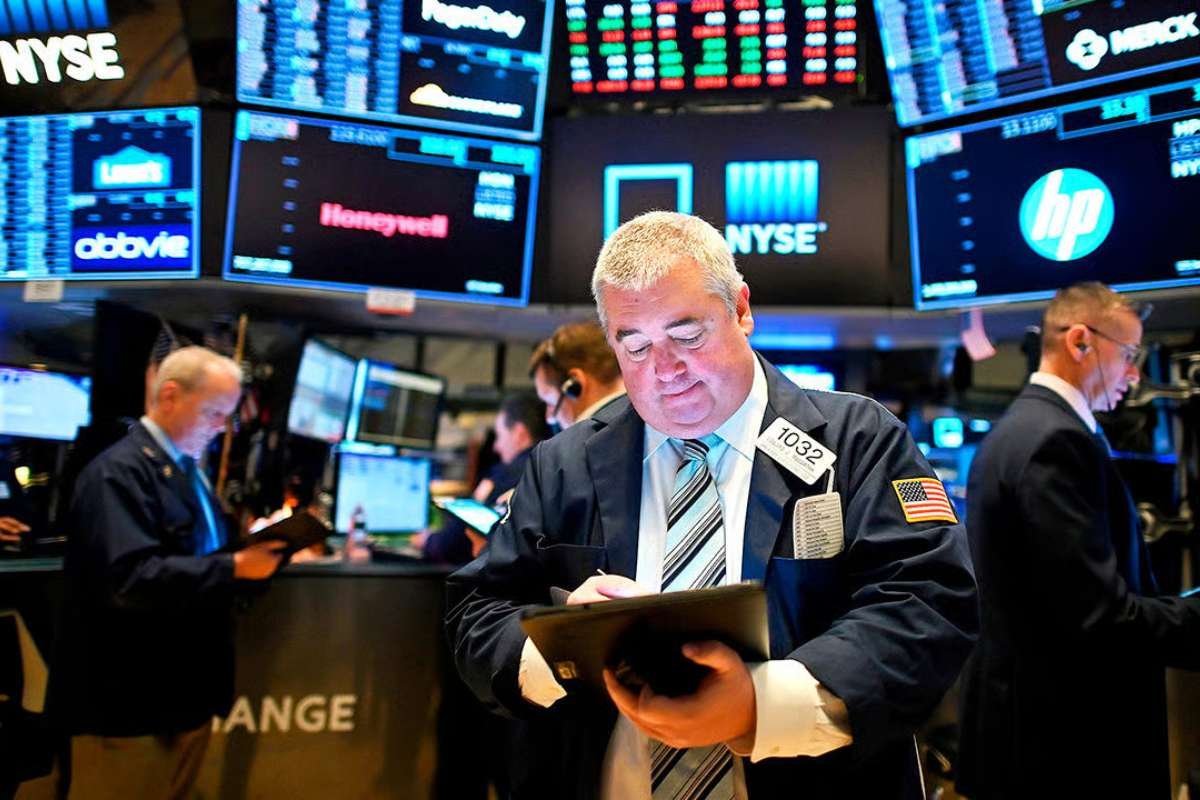
The rise of firms such as Citadel, Two Sigma and Millennium reflects how finance companies in New York are increasingly blending investing with technology, data science and AI. Two Sigma, for example, manages more than $80 billion and processes around 25 petabytes of data, using quantitative research, advanced computing and generative AI in its investment process.
This shift is also reshaping financial talent, increasing demand for quantitative researchers, data scientists, software engineers and AI specialists. New York’s Comptroller estimates that productivity gains in finance and other high-skill services could exceed 2% during 2026, highlighting the growing economic impact of AI.
NYC’s FinTech and AI Wealth-Management Ecosystem
New York’s financial sector is expanding beyond traditional banks as finance companies in New York increasingly adopt fintech, AI, and digital infrastructure. A strong example is the 2026 FinTech Innovation Lab, which selected 11 companies, many focused on agentic AI, financial research, automation, fraud prevention, and wealth management.
The ecosystem has already supported 130 technology companies, whose graduates have created 3,000+ jobs and raised more than $3 billion in venture funding.
One 2026 example is Zeplyn, an AI-native wealth-management platform using AI agents to help advisors deliver personalized advice and automate workflows. This shows how AI is moving from back-office applications into investment research, wealth management, and client services.
Why New York Remains a Global Financial Centre
New York’s advantage in 2026 comes from the concentration of different financial capabilities within one ecosystem.
Global banks provide capital and transaction services. Asset managers allocate trillions of dollars. Private-market firms finance businesses and infrastructure. Hedge funds deploy quantitative and fundamental strategies, while custody and financial-infrastructure companies support global markets.
Around these established institutions, FinTech companies are building new technology for payments, compliance, investment research, and wealth management. This combination of capital, talent, and technology gives finance companies in New York access to an unusually deep financial ecosystem.
Conclusion:
The leading finance companies in New York in 2026 represent a much broader industry than traditional Wall Street banking.
JPMorgan Chase and Goldman Sachs remain major investment-banking forces, while Morgan Stanley combines institutional finance with wealth management. BlackRock and BNY demonstrate the scale of asset management and financial infrastructure. Apollo and KKR reflect the expansion of private markets, while Citadel, Two Sigma, and Millennium show how quantitative investing and technology are reshaping the financial industry.
At the same time, New York’s FinTech ecosystem is creating another layer of growth. AI is moving into investment research, portfolio analysis, compliance, financial planning, and wealth management, while startups are developing new infrastructure for financial institutions.
The result is a financial ecosystem where banks, asset managers, hedge funds, private-equity firms, software engineers, AI researchers, and FinTech entrepreneurs increasingly operate side by side.
Frequently Asked Questions:
1. What are the top finance companies in New York?
Leading firms include JPMorgan Chase, Goldman Sachs, Morgan Stanley, BlackRock, BNY, Apollo, KKR, Citadel, Two Sigma, and Millennium Management.
2. Why is New York a major financial centre?
New York combines Wall Street, global banks, asset managers, hedge funds, private equity firms, fintech companies, and deep financial talent.
3. Which quantitative finance companies are based in New York?
Two Sigma, Millennium Management, and Citadel are among the leading quantitative and technology-driven investment firms with major New York operations.
4. Is New York still important for fintech and AI?
Yes. New York’s fintech ecosystem is expanding rapidly, particularly across AI, wealth management, payments, cybersecurity, and financial automation.
5. What types of finance companies operate in New York?
The city hosts investment banks, asset managers, private equity firms, hedge funds, custodians, fintech companies, and quantitative trading firms.
Sources:
- https://www.blackrock.com/corporate/global-directory
- https://investor.vanguard.com/corporate-portal
- https://www.fidelity.com
- https://www.ssga.com/us/en/intermediary
- https://www.morganstanley.com
- https://www.jpmorganchase.com
- https://www.goldmansachs.com
- https://www.capitalgroup.com/choose-location
- https://www.bny.com/corporate/apac/en.html
- https://www.pimco.com/us/en?showSplash=1