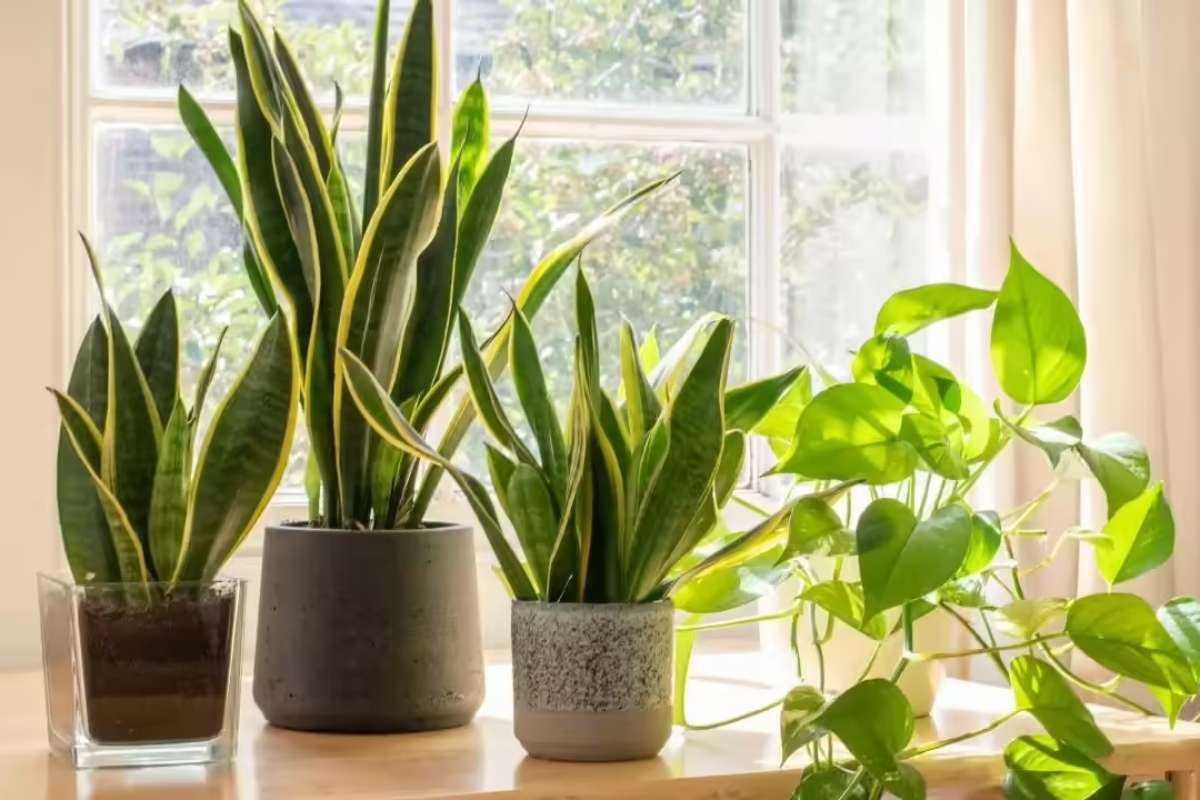
The snake plant truly deserves a “plant of the year” title if there were one for toughness and style combined. This plant behaves like a superhero in the world of houseplants because it can survive almost anything. It doesn’t mind if you forget to water it now and then, and it doesn’t demand perfect lighting to stay healthy. Even in dim corners with low sunlight, it still manages to look crisp and bold, making it a perfect subject for your living room selfies.
Growing snake plants is amazingly simple, so simple that even someone who isn’t great with plants can feel confident and proud. Whether you’re just starting with plants or you have plenty of green thumbs under your belt, learning to grow and care for snake plants brings fresh, vibrant green into your space without any fuss or stress. If you’re ready to become a true Leaf legend, let’s get started!
Why Are Snake Plants Popular and Easy to Grow?
Snake plants have earned their spot as the darling of indoor greenery for great reasons. They survive where many plants fail, in low light, irregular watering, and indoor environments with dry air. Their stiff, sword-shaped leaves add a modern, architectural element to any space.
They are forgiving, needing little fuss, which appeals to busy lifestyles and first-time plant owners. Their ability to clean indoor air by absorbing toxins boosts their popularity as a natural air purifier. Simply put, snake plants combine style, stamina, and simplicity, making them an ideal choice.
Snake Plant Basics and History
Snake plants come from Africa. They grew in dry lands where they learned to store water and survive tough heat. Today, people value them for their hard leaves and deep green lines. When you grow and care for a snake plant in your home, you enjoy a plant with a long story of strength.
Basic Information
| Common Name: Snake Plant | Sun Exposure: Low to bright light | Flower: Greenish white with a sweet scent |
| Botanical Name: Dracaena trifasciata | Soil Type: Fast-draining | Hardiness Zones: 9-11 |
| Family: Asparagaceae | Soil pH: Slightly acidic to neutral | Native Area: West Africa |
| Plant Type: Evergreen | Bloom Time: Rare indoors | Toxicity: Toxic to pets if eaten |
| Mature Size: 1-4 feet |
Main Varieties and What Makes Them Special
You can pick tall, short, thin, thick, yellow-edged, or dark-striped varieties. Each adds a unique vibe. Tall ones suit corners. Short ones fit desks. Variegated ones brighten dull rooms. The diversity makes them perfect for any home style.
Types of Snake Plant with Grow and Care Details
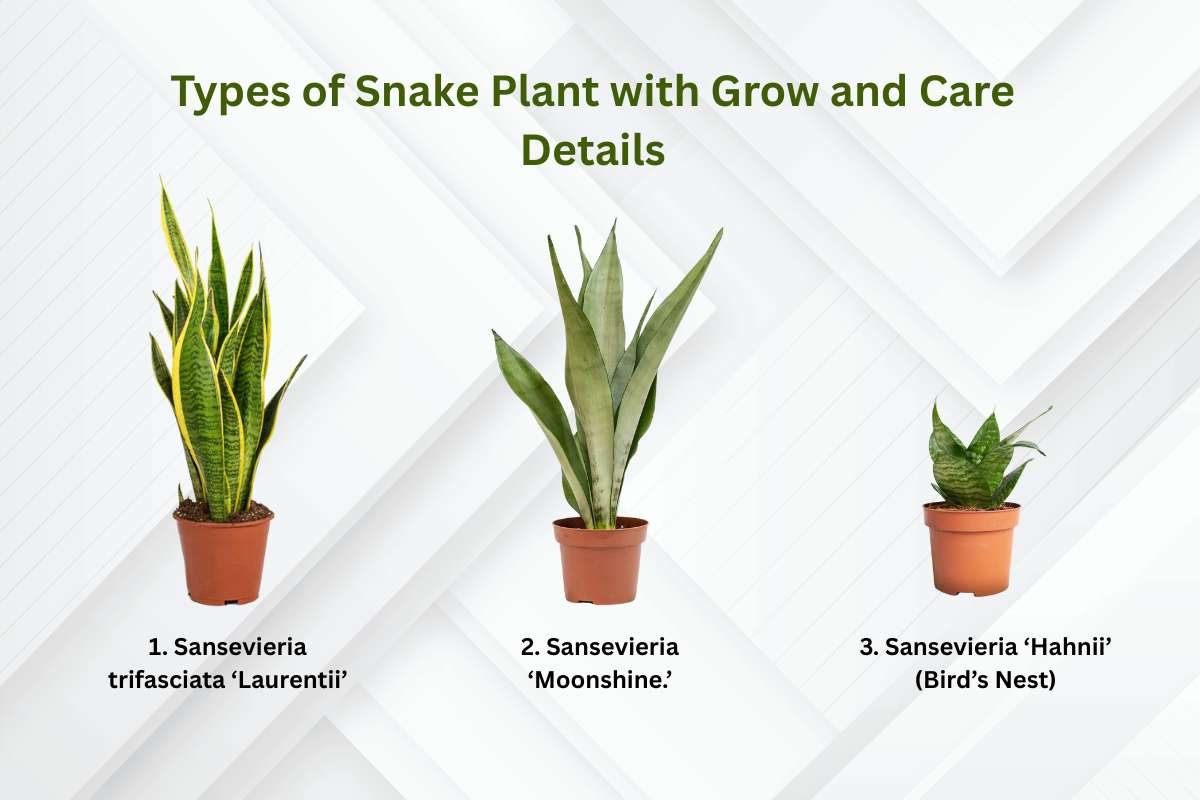
1. Sansevieria trifasciata ‘Laurentii’
This type has tall, upright leaves with bold yellow edges that make it look sharp and stylish even from across the room. The leaves grow in long, sword-like shapes, so it works well as a floor plant or a corner filler in living rooms, hallways, or offices.
When you grow and care for a snake plant of this variety, give it a spot with medium or filtered light so the yellow borders stay bright and fresh. Water only when the soil dries out fully, because this plant stores water in its thick leaves and dislikes wet roots. It stays healthy with minimal effort and holds its shape year-round.
2. Sansevieria ‘Moonshine.’
Sansevieria ‘Moonshine’ looks soft and modern because of its wide silver-green leaves that almost glow in the light. The pale shade gives a calm and clean feel to any space. It suits bedrooms, minimalist interiors, and study areas.
When you grow and care for a snake plant of this type, bright but indirect light helps keep the silver tone bright and prevents it from turning dark green. The plant grows slowly, so you don’t need to repot often. Let the soil dry between watering, as too much moisture can dull the leaf color and weaken the roots.
3. Sansevieria ‘Hahnii’ (Bird’s Nest)
Sansevieria ‘Hahnii’ stays short and forms a neat rosette that looks like a small nest, which is why it is perfect for desks, shelves, and small side tables. The leaves are thick, tidy, and grow close together, giving the plant a compact, rounded look.
You can grow and care for a snake plant of this type even in low-light areas, and it will still hold its shape. But moderate light brings out its patterns and makes the leaves look deeper and more vibrant. It needs very little water, and its small size means you can easily move it around your home to brighten dull corners.
Ideal Growing Conditions of Snake Plant
Snake plants flaunt flexibility in growing conditions, though they thrive best with bright indirect light. Morning sunlight or a few hours of filtered light keep the leaves vibrant and firm. This gentle light helps the plant maintain its natural patterns and prevents the leaves from fading.
Direct afternoon sun feels too intense for them and can burn the edges, so it’s safer to place them where sunlight is soft. They also manage well in low-light spaces, which is why they fit perfectly in offices, hallways, or rooms with limited natural light. Even corners with artificial lighting can support steady growth.
Temperature preferences hover between 70°F and 90°F during the day, with a minimum of 50°F at night. These warm conditions match their natural environment, helping the plant stay strong. Cold drafts from open windows, air conditioners, or winter chills can stress the leaves. Keeping them away from temperatures below 45°F prevents sudden drooping and leaf damage. Humidity does not have to be high; snake plants evolved in dry regions and do not rely on moisture in the air. Moderate room humidity of around 40-50% works well. They stay comfortable in normal home conditions, making them easy to maintain in any living space.
Soil & Potting: The best soil mix to grow and care for snake plants should drain fast and keep roots from sitting in water. Snake plants prefer light, airy soil that lets extra moisture escape. A cactus or succulent mix works well, or you can create your own blend with simple ingredients.
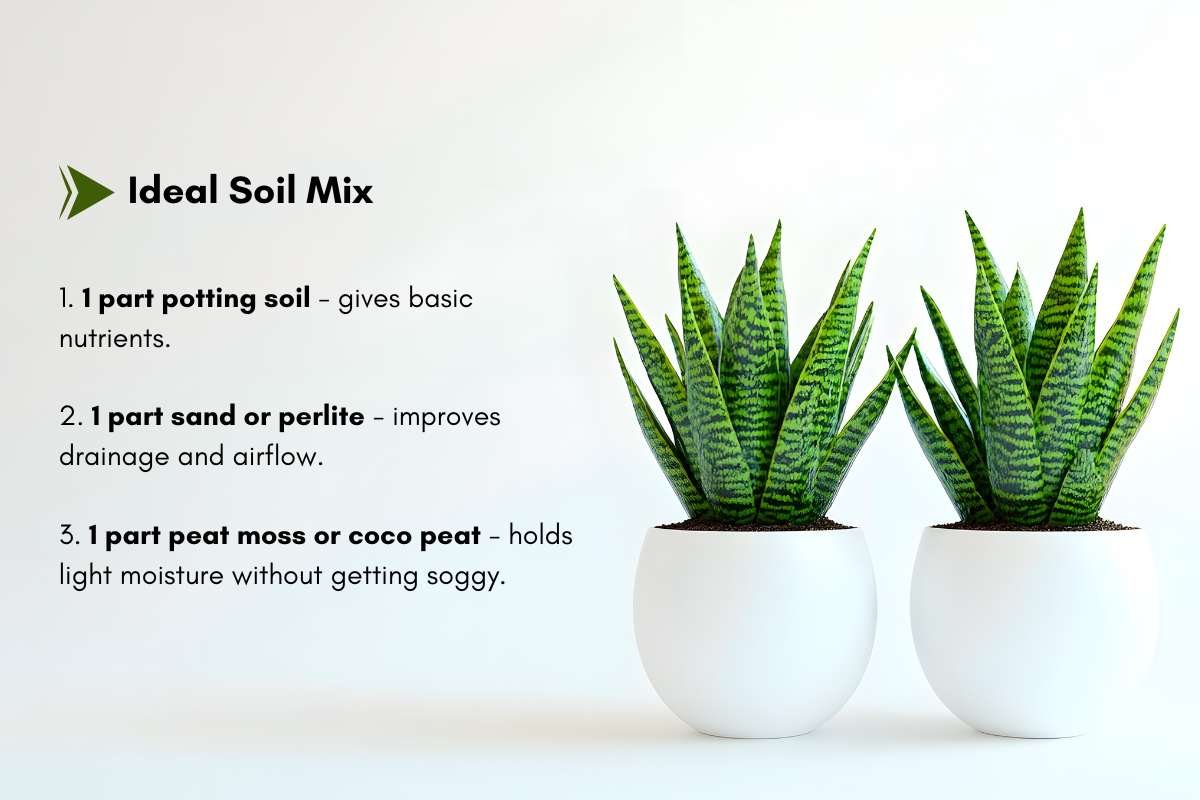
Ideal Soil Mix
Use this formula for healthy roots:
- 1 part potting soil – gives basic nutrients.
- 1 part sand or perlite – improves drainage and airflow.
- 1 part peat moss or coco peat – holds light moisture without getting soggy.
This mix protects roots from rot and keeps the soil firm yet breathable.
Right Pot Choice

Picking the right pot matters as much as the soil:
- Always choose pots with drainage holes to release extra water.
- Pick terra-cotta pots if possible because they absorb excess moisture.
- Avoid oversized pots since they hold too much wet soil and increase rot risk.
- Repot every 2-3 years to refresh the soil and help the roots grow comfortably.
Watering Guide
Overwatering is the most common mistake people make when they grow and care for snake plants. This plant stores water in its leaves, so it needs less water than most indoor plants.

How to Water Properly?
- Check the soil first. Water only when the top 2 inches feel dry.
- Water every 2-6 weeks, depending on weather, humidity, and home temperature.
- Reduce watering in winter because the plant grows more slowly and needs less water.
- Water deeply until the water drains out of the bottom of the pot.
- Empty the tray so the plant never sits in standing water.
Signs of Wrong Watering
- Yellow leaves → too much water
- Mushy leaves → root rot
- Dry brown tips → underwatering or dry air
Correct watering and good drainage keep the plant firm, green, and healthy.
Fertilizing
Snake plants are light feeders, which means they need very little fertilizer to grow well. The goal is to support growth, not push it too fast.

How to Fertilize the Right Way?
- Use a balanced houseplant fertilizer diluted to half strength.
- Feed once every 2-3 months during spring and summer only.
- Use a slow-release fertilizer or a succulent-safe formula for gentle feeding.
- Avoid high-nitrogen fertilizers because they make leaves soft and weak.
- Stop fertilizing in fall and winter when the plant is dormant.
Benefits of Proper Feeding
- Stronger, firmer leaves
- Deeper green patterns
- Better overall growth
- Less chance of leaf weakness or breakage
Gentle feeding supports healthy, long-lasting growth without stressing the plant.
Propagation Easy Methods
Growing new snake plants is fun and surprisingly easy. You do not need special skills or expensive tools. The most common methods to grow and care for a snake plant propagation include techniques that work well for beginners and experienced plant lovers. Each method has its own charm, and they all help you create new plants from the ones you already have.
Leaf cuttings:
Cut healthy leaves near the base and keep the pieces clean and even. Let them dry for a day so the cut area can form a callous. This protects the leaf from rotting. After that, place the leaf in slightly moist soil. Keep the pot in a warm place. Roots start forming in a few weeks, and small shoots appear shortly after. This method is slow but rewarding.
Water method:
This method looks interesting because you can see the roots as they grow. Place leaf cuttings in a glass of clean water. Make sure only the bottom part touches the water. Change the water every few days to keep it fresh. After healthy roots grow, shift the cuttings to soil so they can grow into full plants. This method works well when you want to check progress easily.
Division:
This is the fastest and most reliable method. Remove the plant from the pot and shake off extra soil. You will see thick root clumps, also known as rhizomes. Gently separate these clumps by hand or with a clean knife. Each section should have roots and leaves attached. Plant them in separate pots with fresh soil. They settle quickly and start growing soon after.
Propagation lets you multiply your snake plant family with minimal effort. It feels satisfying, and it helps you grow and care for snake plant collections without buying new ones. It is simple, clean, and perfect for anyone who enjoys seeing plants grow.

Common Problems and Quick Fixes
1. Yellow Leaves
Cause: Too much water.
Fix: Let the soil dry out before watering again.
2. Brown Tips
Cause: Dry air or long gaps without water.
Fix: Trim the brown edges and keep a steady watering routine.
3. Soft or Mushy Leaves
Cause: Root rot from soggy soil.
Fix: Remove damaged leaves, replace the soil, and reduce watering.
4. Pests (Mealybugs and Spider Mites)
Cause: Warm, dusty leaves or weak plant health.
Fix: Wipe the leaves with neem spray or a mild soap solution.
Note: These issues get solved fast when you grow and care for snake plants with good soil, stable watering, and proper light.
Benefits of Snake Plant
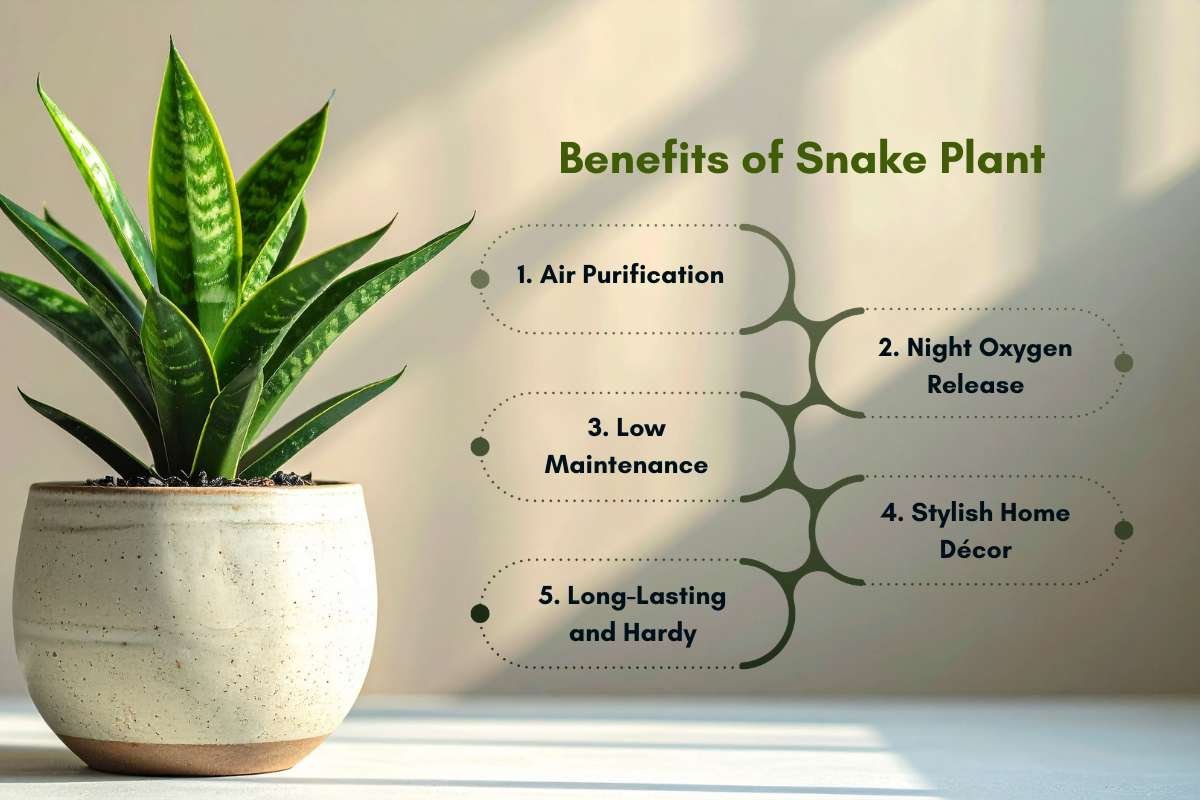
1. Air Purification
- Removes toxins from indoor air.
- Helps improve room freshness.
2. Night Oxygen Release
- Produces oxygen even at night, making it great for bedrooms.
3. Low Maintenance
- Stays healthy with minimal care.
- Handles busy schedules and irregular routines.
4. Stylish Home Décor
- Tall leaves add height and structure to any room.
- Fits bedrooms, offices, living rooms, and small corners.
5. Long-Lasting and Hardy
- Stays green all year.
- Handles low light and dry conditions with ease.
When you grow and care for a snake plant with simple daily habits, you enjoy cleaner air, a calmer space, and a beautiful plant that always looks fresh.
Quick Care Tips for Beginners
| Do’s | Don’ts |
| Water only when the soil dries | Overwater or let sit in water |
| Place in bright indirect light | Exposure to harsh direct sun |
| Use well-draining soil | Use heavy or compacted soil |
| Choose pots with drainage | Use pots without holes |
| Fertilize sparingly in spring | Fertilize in fall or winter |
| Wipe leaves to remove dust | Ignore pest problems |
These dos and don’ts make growing and caring for the snake plant straightforward and worry-free.
Facts and Stats
- NASA research listed snake plants as air-purifying plants.
- Snake plants survive long droughts due to their thick leaves.
- Studies show that indoor plants reduce stress in homes.
These facts support why people love to grow and care for snake plants in modern homes.
Conclusion
Snake plants are your reliable green companion that blends style, toughness, and simplicity. They thrive on minimal fuss yet reward you with air-purifying benefits and architectural beauty. Just like your favorite go-to jeans, learning how to grow and care for snake plants gives you a timeless, low-maintenance piece to brighten any room.
Treat your snake plant like a chill friend who only needs occasional water and light, and it will return the favor with thriving leaves and fresh vibes every day.