The app market keeps getting busier every year. Thousands of new apps show up every month. Most developers spend weeks or months on an idea that feels good at first but fails to get attention later, often because they never check the current app store trends before building. Some people think their idea is fresh but the market already has hundreds of similar ones. Others release apps at the wrong time when users are looking for something else.
It can be hard to guess what users want next. Without the right data, you are just hoping to be lucky. But luck rarely helps in such a crowded space.
Analyzing app store trends sounds like a big job but it is actually simple once you understand the basics. You do not need to be a data expert. You just need to know what to look for and how to use a few tools. There are many ways and even a free app analytics tool that can help you collect useful data. You can use it to see what kind of apps people download most. You can also see which ones are rising fast and what users are talking about.
Let’s Go Step by Step So You Can Learn How to Analyze App Store Trends Like a Pro:
Step 1: Watch App Categories Closely
Every app store divides apps into categories like games, health, or finance. These categories are your starting point. They tell a story about what people care about right now. For example, health apps often get a boost at the start of each year when many users make fitness goals. Shopping apps grow during holiday seasons. Education apps rise around back-to-school months.
By watching these categories, you can see when interest in certain types of apps goes up or down. This is how smart developers find timing for new releases. When a category starts growing fast, it probably means new user habits are forming.
Step 2: Check the Top Charts Often
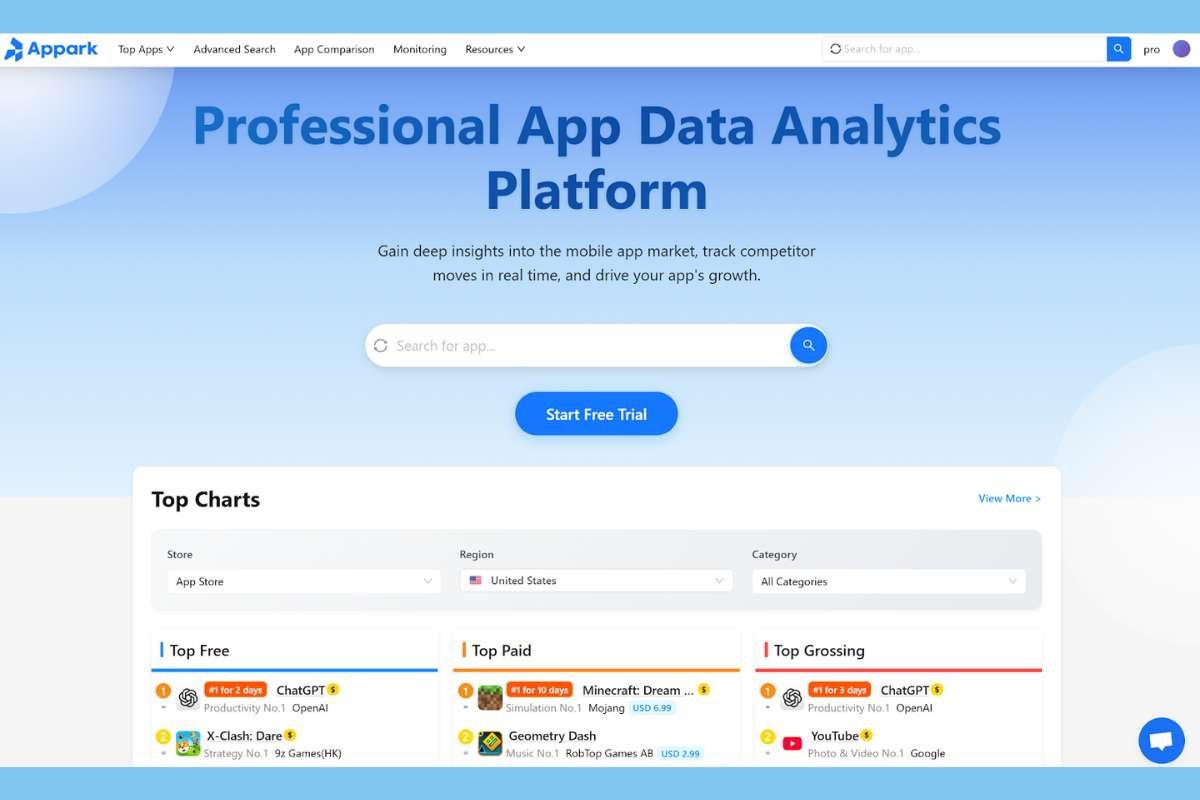
Top charts show which apps are downloaded most at any moment. They change quickly so it is better to check them often instead of once a month. When you see an app jump from rank 50 to 10 in a few days, it usually means users found something fresh in it. Apps that hold their top spots for weeks often have strong features or loyal users.
Keep a small notebook or a digital list to track these changes. Over time you will notice patterns. You might see that certain kinds of apps keep rising together or that some big names suddenly start falling. That is a sign the market is shifting.
Step 3: Learn from Keywords
When people search for apps, they use words like “photo editor” or “budget planner.” These keywords show what users want. Tools can tell you which keywords have high searches and which ones are too crowded.
For example, “fitness” might be too common but “home workout planner” might still be open for new apps. Picking the right words can help your app show up in searches faster. Keywords change over time so checking them every few weeks keeps you updated.
Step 4: Compare Regions

App store trends aren’t uniform globally; what’s popular in one country may not even exist in another. For example, meditation apps may rise in the US while payment or finance apps lead in Asia. By watching regional charts, you can find ideas that are already successful somewhere else but not yet known in your own country.
This is often how developers spot early chances. When a new app type gets famous in one region, it usually spreads later to others. Acting early gives you an edge.
Step 5: Read User Reviews
Numbers like downloads and rankings tell you what is popular. Reviews tell you why. They explain how people feel about an app. When you read through reviews, focus on the small details. Look at what users praise most and what they complain about often.
You might see that many people love one feature but dislike another. Maybe they want faster performance or fewer ads. These small clues show what people really need. If you build something that fixes their complaints, your app will have a better chance.
Step 6: Watch How Top Apps Update
The best apps never stop changing. They add new features, fix problems, or refresh their design often. Watching these updates teaches you what works. Notice how often updates happen, what kind of changes are made, and how users react afterward.
If you see an app update too often with only bug fixes, it probably struggles with quality. But if it releases meaningful updates that users like, that is a good sign of smart planning. This habit helps you learn from others instead of making the same mistakes.
Step 7: Mix Information from Different Sources

No single place gives all the answers. Professionals often use more than one tool to study app data. They might use app competitor analysis tools to compare downloads, reviews, and revenue. They mix all this data to get a full picture.
One tool might show downloads growing but another shows ratings dropping. That means the app is popular but not satisfying users. Seeing both sides helps you think deeper about what success really looks like.
Step 8: Find Early Signals
Trends usually start small. You can spot them early by watching apps with few users but strong engagement. Sometimes an app begins with only a few thousand downloads but a very active community. This often means the idea is fresh and loved by its users.
Other early signals come from social media. When people start talking about a new type of app again and again, that is usually the start of something big. The trick is to notice these signs before the trend becomes obvious.
Step 9: Make It a Habit
Checking app store trends once is not enough; the app world moves too fast, so you should make it a weekly habit. Spend some time every week going through top charts, keyword lists, and reviews. Keep small notes of what is changing. After a while, you will start to recognize shifts without needing any chart at all.
This habit keeps your mind alert. You will notice patterns faster and understand what kind of apps people are ready for next.
Step 10: Turn Insights into Real Action

Data is only useful when you use it. Once you understand the trends, turn that knowledge into small steps. You can test new ideas, adjust your app’s look or plan your next launch date based on what users are searching for most.
Even small changes made at the right time can make a big difference. The more you act on your findings, the more confident you will become in your decisions.
Conclusion
Learning to analyze app store trends is like learning to read a map. At first it feels confusing but with a little practice the direction becomes clear. You don’t need to guess what users want. You can see it in the charts, in the reviews and in the shifts that happen every week.
Anyone can do this, not just experts. The secret is to keep your eyes open, stay curious and look at the data often. In 2025, the people who understand these small signs are the ones who find the biggest chances. When you learn to see what others ignore, you start making smarter choices and better apps.