Most of a summit’s value is lost in the two weeks after it ends, not during the event itself. Collecting dozens of business cards and taking notes means nothing if you never message those contacts again.
Staying in touch with the people you meet does not have to be complicated. By sending quick, helpful messages right after the event, you can keep conversations going and turn new connections into long-term working relationships.
This article covers how to follow up after a business summit, step by step, so you can turn brief event chats into real business deals. So, let us begin!
How to follow up after a business summit?
A business summit can create useful contacts, but the real value often comes after the event. A quick and relevant follow-up can turn a short conversation into a meeting, partnership, or future business opportunity. The key is to act while the discussion is still fresh and give each contact a clear reason to continue the conversation.
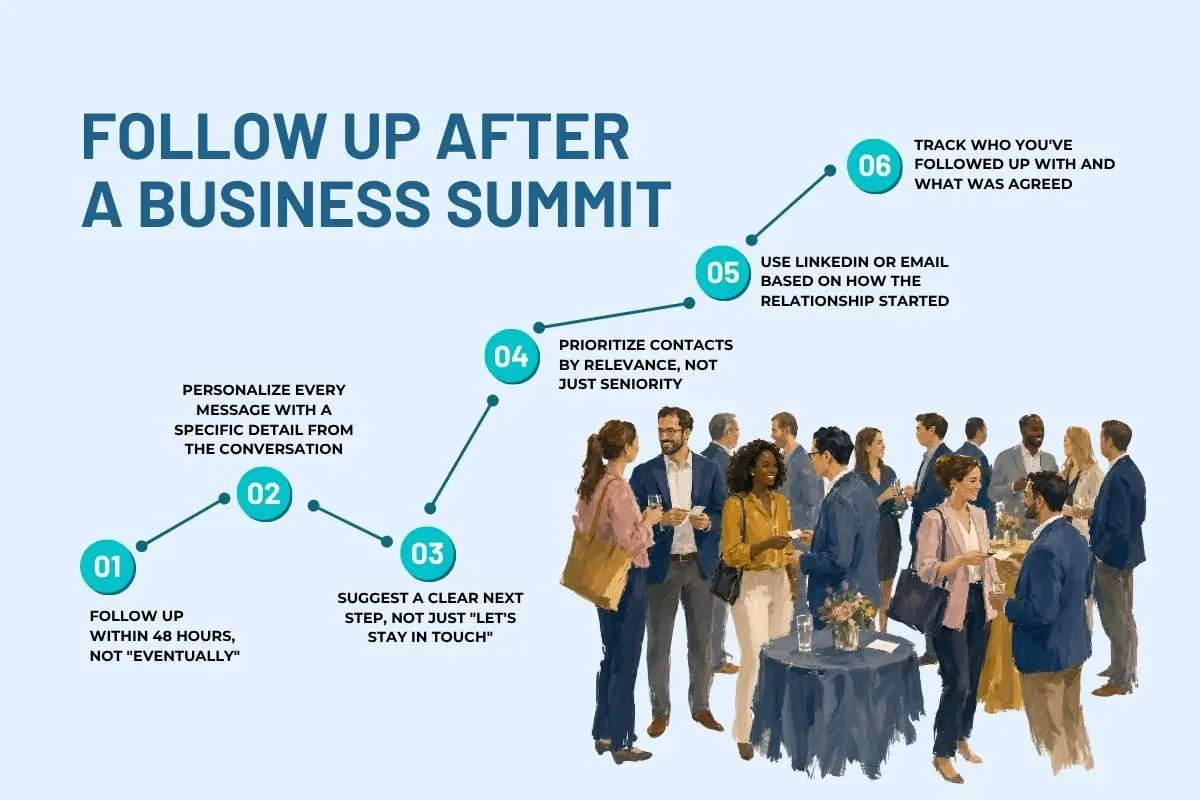
Step 1: Follow up within 48 hours, not “eventually”
Try to contact important connections within 48 hours of the summit. People meet many attendees at business events, so waiting too long can make your conversation harder to remember. A short message soon after the event also shows that you value the discussion. Mention the event and the topic you discussed to help the person recall the meeting.
Step 2: Personalize every message with a specific detail from the conversation
Avoid sending the same message to every contact. Refer to something specific that you discussed, such as a business challenge, shared interest, or idea. This makes the message feel more relevant and helps the recipient remember your conversation. It also gives you a natural way to continue the discussion without forcing a sales pitch.
Step 3: Suggest a clear next step, not just “let’s stay in touch”
Give the person a simple action they can take. You could suggest a short call, share a useful resource, or ask about a suitable time for a meeting. A clear next step makes it easier for both sides to decide what happens next. It also turns a general conversation into a more focused business discussion.
Step 4: Prioritize contacts by relevance, not just seniority
A senior title does not always mean a contact will be the right fit for your goals. Review each conversation and look at factors such as business needs, shared interests, decision-making authority, and potential areas of collaboration. Start with contacts who have a strong connection to your current goals, even if they do not hold the most senior position.
Step 5: Use LinkedIn or email based on how the relationship started
Choose the channel that fits the way you first connected. If you spoke through LinkedIn or exchanged profiles at the summit, a LinkedIn message can feel natural. Use email when you discuss a specific business matter or need more space to share details. The goal is to continue the relationship in a way that feels natural to both sides.
Step 6: Track who you’ve followed up with and what was agreed
Keep a simple record of your follow-ups. Note who you contacted, when you reached out, what you discussed, and any next step you agreed on. This helps you avoid missed conversations and repeated messages. It also makes future follow-ups more useful because you can refer back to the earlier discussion.
A strong follow-up does not need to be long. It needs to be timely, personal, and clear. When you connect each message to the original conversation and define the next step, you give the relationship a clear path forward.
What are some common follow-up mistakes to avoid?

A good follow-up can strengthen a new business connection, while a poor one can end it before the relationship starts. Avoiding a few common mistakes can help you build better connections after a summit.
- Sending the same message to everyone: A copy-pasted message can feel impersonal. Mention a specific point from your conversation to show that you remember the person and the discussion.
- Waiting too long: If you wait for weeks, both sides may forget key details from the conversation. A timely message keeps the discussion fresh and makes the next interaction easier.
- Giving up after one message: Some contacts may need time to respond. If you do not hear back, send a polite follow-up after a reasonable gap. Do not send repeated messages too often.
- Focusing only on senior contacts: Seniority does not always match relevance. A contact with a strong fit for your goals may offer more value than someone with a higher title.
By knowing how to follow up after a business summit and focusing on relevant connections, you can build on the relationships you started at the summit. This can, in turn, help you in building executive authority and personal branding.
How can you apply this to the NEXT Conclave 2026?

At NEXT Conclave 2026, follow-up can continue beyond your personal contact list. Build or update your NEXT Member Profile to stay visible in the NEXT Global Member Directory after the event. NEXT Connect lets you highlight specific interests, such as investment, partnerships, and market expansion. This can help you find relevant contacts again after the business and leadership summit.
These sessions give you a useful reason to restart conversations and build relationships instead of sending a cold follow-up message weeks later.
Conclusion:
A business summit’s real value gets created in the follow-up, not the initial handshake. While exchanging contacts on-site starts the conversation, knowing how to follow up after a business summit with clear value matters. It is what actually transforms casual event chats into lasting professional relationships.
By sticking to a simple, step-by-step outreach routine, modern platforms offer built-in community tools, you can easily stay connected, keep conversations moving forward, and turn every new connection into a real business win.
FAQs
1. How to follow up after a business summit?
Send your first follow-up message within 24 to 48 hours while the conversation is still fresh.
2. What should you say in a post-summit follow-up email?
Mention a specific topic you discussed, offer a helpful resource, and suggest a quick next step.
3. Where is the best place to connect with summit contacts?
LinkedIn is the best platform to connect professionally, followed by direct email for specific business proposals.
4. How do you follow up with a speaker or executive?
Keep your message brief, compliment a specific point from their talk, and ask one clear question.
5. What should you do if someone does not reply to your follow-up?
Send a polite, friendly check-in message after five to seven business days before moving on.