Craps attracts players with its energetic atmosphere and social gameplay. The game uses two dice and allows multiple betting options simultaneously. Most casinos feature at least one craps table, where players gather around a specialized layout to place their wagers.
Understanding the Craps Table and Basic Rules
The craps casino table accommodates up to 20 players at once. Each participant can bet on different outcomes during the same roll, creating the animated energy the game is known for. Three casino staff members typically manage each table: two dealers handle bets on the sides, while a stickman controls the dice and manages the center bets.
Craps Table Layout Explained
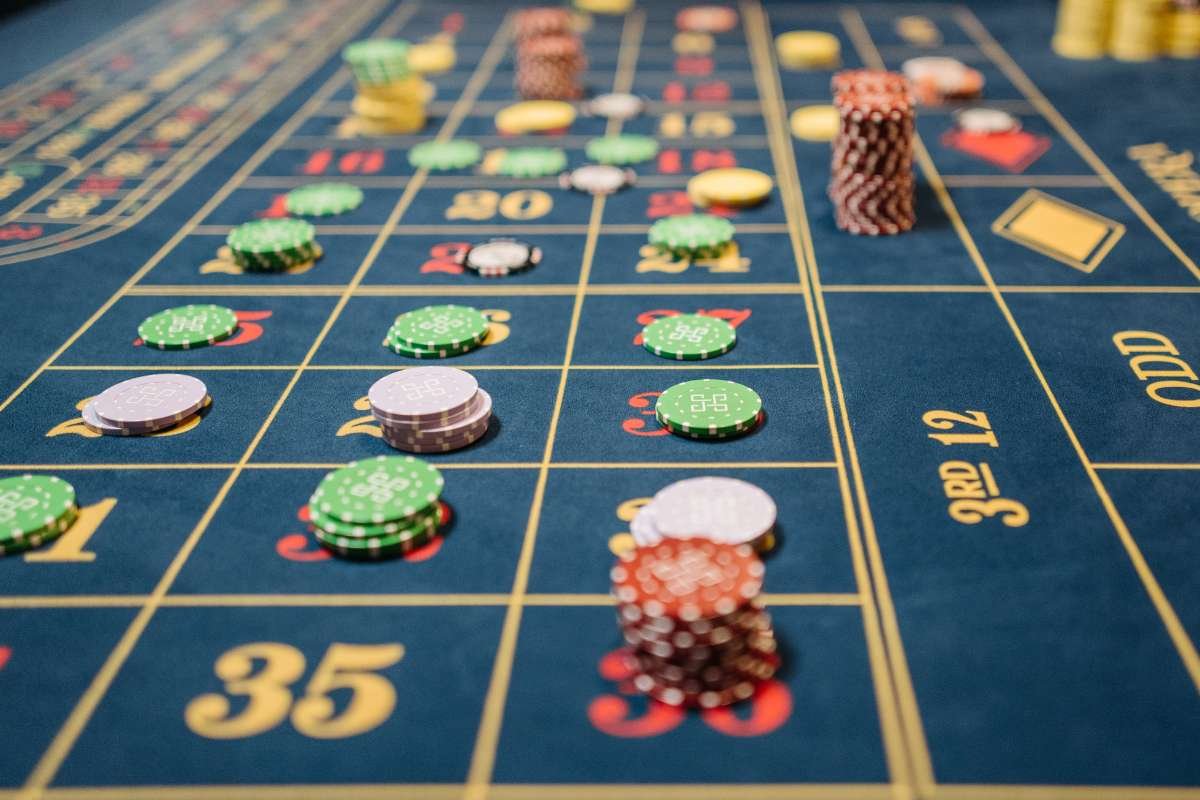
The table features a mirrored layout on both sides so players can access the same betting areas regardless of where they stand. The center section displays proposition bets, which the stickman manages. The outer ring contains the Pass Line and Don’t Pass Line markings, where most beginner action occurs. Above those areas sit the Come and Don’t Come boxes.
Numbers 4, 5, 6, 8, 9, and 10 appear in designated boxes for Place bets. The Field section covers single-roll wagers on a group of specific numbers. Dealers use colored chips to mark individual player bets, preventing confusion when multiple people bet on similar outcomes.
| Table Section | Primary Function | Managed By |
| Pass/Don’t Pass Line | Main betting area for most players | Side dealers |
| Come/Don’t Come boxes | Secondary core bets after the point | Side dealers |
| Center proposition bets | High-risk, single-roll and specialty bets | Stickman |
| Place bet numbers (4, 5, 6, 8, 9, 10) | Target specific outcomes | Side dealers |
| Field | Single-roll bets on grouped numbers | Side dealers |
The Role of the Shooter and the Dice
The shooter is the player currently rolling the dice. This role rotates clockwise around the table after each completed round. Any player can decline to shoot when their turn arrives. When a new shooter is selected, the stickman presents several dice; the shooter chooses two.
The shooter must throw both dice hard enough to bounce off the far wall of the table. This requirement prevents controlled throws that might influence outcomes. If one or both dice leave the table, the stickman retrieves them, inspects them for damage, and either returns them to play or replaces them. Players can request new dice if they suspect irregularities.
How a Round of Craps Casino Works
Each craps casino round follows a predictable sequence that alternates between two distinct phases: the come-out roll and the point phase. Once you understand these phases, the entire game becomes much easier to follow.
The Come-Out Roll
The come-out roll initiates every new round. A white puck marked “OFF” sits in the Don’t Come box, signaling this phase to all players. Pass Line bets must be placed before the come-out roll. The shooter then throws the dice, and three possible types of results can occur:
- Natural (7 or 11): All Pass Line bets win immediately and pay even money. The shooter keeps the dice and makes another come-out roll.
- Craps casino (2, 3, or 12): All Pass Line bets lose immediately. The shooter keeps the dice and starts a new come-out roll.
- Any other number (4, 5, 6, 8, 9, 10): That number becomes the point and the round moves into the point phase.
When a point is established, the dealer flips the puck to “ON” and places it in the numbered box corresponding to the point. This visual marker lets everyone see which number the shooter is now aiming to hit.
Establishing the Point and Continuing the Round
Once the point is set, the objective changes. The shooter now aims to roll that specific number again before rolling a 7. Pass Line bets remain active and cannot be removed, though players can add Odds bets behind them (explained later).
The point numbers have different probabilities:
- 6 and 8: 5 different dice combinations each (most common points).
- 5 and 9: 4 combinations each.
- 4 and 10: 3 combinations each (least common points).
During the point phase, players can also place Come bets, which function like Pass Line bets but use the next roll as their personal come-out roll. This allows new betting opportunities even after the main point is set.
Ending the Round: Win or Seven Out
The shooter continues rolling until one of two things happens:
- The point rolls again: Pass Line (and related Odds) bets win and pay even money on the base bet. The round ends, the puck returns to OFF, and the same shooter starts a new come-out roll.
- A 7 rolls before the point: This is called “sevening out”. Pass Line bets lose, the round ends, and the dice move clockwise to the next shooter.
After each roll, the stickman announces the number and calls out which bets won or lost. Dealers collect losing chips, pay winners, and then allow players to place or adjust bets before the next throw.
Essential Craps Casino Rules for Beginners
Craps casino operates under specific casino regulations designed to keep the game fair and fast-paced:
- The dice must hit the back wall on every valid throw. If they do not, or if they hit someone’s hand and land awkwardly, the roll may be ruled invalid and re-thrown.
- Only the shooter is allowed to handle the dice during their turn, and they must use one hand to throw.
- Cash cannot be used directly as a bet. Players must exchange currency for chips with the dealer between rolls.
- The table minimum applies to Pass Line bets (for example, a $10 minimum table requires at least $10 on the Pass Line), though some side or proposition bets may accept smaller amounts.
- Bets can only be placed or changed at specific times, typically when the dice are in the center of the table and the stickman has not yet called “dice out.”
Beyond basic table etiquette and betting rules, casinos also strictly prohibit any behavior that attempts to interfere with randomness or game integrity. While many beginner myths revolve around “systems” or lucky routines, some actions are simply not allowed at regulated tables. Understanding where the line is drawn helps players avoid costly mistakes. Platforms like CritiqueJeu provide useful context on how casinos enforce fair play across table games, including dice-based games like craps casino.
Beginner Mistakes to Avoid
New players often make timing and etiquette mistakes that slow down the game or frustrate others. Common errors include:
- Trying to place bets after the stickman announces “dice out”.
- Reaching across the layout while the dice are in flight, risking a collision that invalidates the roll.
- Placing cash directly on the felt instead of handing it to the dealer to exchange for chips.
- Attempting to remove Pass Line bets after the point has been established, when those bets must remain until the round ends.
- Touching chips that dealers have not yet pushed to you or clearly paid out as winnings.
- Standing in the shooter’s throwing lane or blocking other players’ view of the table.
- Leaving winnings on the table too long, creating confusion about whether they are active bets or chips to be collected.
Confusion about which bets remain active often causes disputes. Pass Line and Come bets stay in play until resolved. Many Field and proposition bets resolve in a single roll. When in doubt, ask a dealer instead of guessing.
The Core Craps Bets You Must Know
Three fundamental bets form the foundation of sensible craps casino strategy. These wagers offer the lowest house edge and are used by most experienced players.
Pass Line Bet: The Foundation of the Game
The Pass Line bet is the most popular wager at the craps casino table and the best starting point for beginners. You place this bet on the Pass Line before the come-out roll.
The rules for Pass Line bets are:
- On the come-out roll, 7 or 11 wins immediately (even money).
- On the come-out roll, 2, 3, or 12 loses immediately.
- Any other number (4, 5, 6, 8, 9, 10) becomes the point. Your bet stays on the Pass Line.
- After the point is set, your bet wins if the point is rolled again before a 7, and loses if a 7 comes first.
The house edge on a Pass Line bet is about 1.41%, making it one of the most favorable bets in the casino.
| Roll Result | Come-Out Roll | After Point Set |
| 7 | Win (pays 1:1) | Lose (seven out) |
| 11 | Win (pays 1:1) | No effect |
| 2, 3, or 12 | Lose | No effect |
| Point number (4, 5, 6, 8, 9, or 10) | Establishes point | Win (pays 1:1) if rolled again |
| Other numbers | Establishes point | No effect |
Come Bets: Your Strategic Next Step
Come bets work exactly like Pass Line bets but are placed after the point has already been established. They allow you to create new action during the point phase.
The rules mirror the Pass Line:
- On the next roll after you place a Come bet, 7 or 11 wins immediately; 2, 3, or 12 loses immediately.
- Any other number becomes that Come bet’s personal point. The dealer moves your chips to the corresponding number box.
- From then on, your Come bet wins if its point is rolled before a 7, and loses if a 7 appears first.
The house edge on Come bets is also about 1.41%. Many players use 1–3 active Come bets to spread their action across multiple numbers while keeping the edge low.
Don’t Pass & Don’t Come Bets
Don’t Pass and Don’t Come bets are the “wrong-way” versions of Pass Line and Come bets. They win when the corresponding “right-way” bets lose and vice versa, with slightly better odds for the player.
For Don’t Pass on the come-out roll:
- 7 or 11 loses.
- 2 or 3 wins.
- 12 usually results in a push (tie), returning your bet.
- If a point is set, you win if a 7 rolls before that point number and lose if the point is rolled first.
Don’t Come bets use the same logic as Don’t Pass but apply to rolls after the initial point is established. The house edge on these bets is around 1.36%, slightly better than the Pass and Come bets.
Some mathematically minded players prefer these wagers, but they can create tension at social tables since you are effectively betting against most of the other players.
Other Popular Craps Casino Bets Explained
Once you understand the core bets, you can explore additional options that offer more variety, though often with higher house edges.
Place Bets: Targeting Specific Numbers
Place bets let you wager directly on individual point numbers (4, 5, 6, 8, 9, or 10). You can make or remove these bets between rolls, and they win if your chosen number appears before a 7.
Payouts vary by number:
- Place 6 or 8: pays 7:6, house edge ≈ 1.52%.
- Place 5 or 9: pays 7:5, house edge ≈ 4.00%.
- Place 4 or 10: pays 9:5, house edge ≈ 6.67%.
Strategically, Place 6 and 8 are the most efficient Place bets because their odds are closest to the true probabilities. Some players combine Place bets on 6 and 8 with Pass/Come bets and Odds to cover more numbers while retaining relatively good value.
Field Bets: Single-Roll Opportunities
Field bets are single-roll wagers that win if the next roll is 2, 3, 4, 9, 10, 11, or 12, and lose if it is 5, 6, 7, or 8.
Standard payouts are even money on winning numbers, with 2 and 12 paying higher—often 2:1, and in some casinos 3:1 on either 2 or 12. The house edge is usually around 5.56%, dropping to about 2.78% when one of those numbers pays 3:1.
Although the Field looks appealing because it covers many numbers, the losing numbers (5, 6, 7, 8) have more total dice combinations, which is why the house edge is relatively high.
Proposition Bets: High Risk, High Reward
Proposition bets occupy the center of the table and typically resolve in a single roll. They offer large payouts but come with some of the worst odds in the game, with house edges often between 9% and 16.67%.
Common proposition bets include:
- Any 7: pays 4:1, house edge ≈ 16.67%.
- Any craps casino (2, 3, or 12): pays 7:1, house edge ≈ 11.11%.
- Yo (11): pays 15:1, house edge ≈ 11.11%.
- Ace Deuce (3): pays 15:1, house edge ≈ 11.11%.
- Boxcars (12) or Snake Eyes (2): pays 30:1, house edge ≈ 13.89%.
These bets are fun and flashy but poor long-term choices. Most serious players either avoid them completely or treat them as occasional “for fun” wagers.
Hardways: Betting on Paired Numbers
Hardway bets win when the shooter rolls doubles (2-2, 3-3, 4-4, or 5-5) before rolling the same total the “easy way” (with different numbers) or before rolling a 7.
- Hard 6 (3-3) and Hard 8 (4-4): usually pay 9:1, house edge ≈ 9.09%.
- Hard 4 (2-2) and Hard 10 (5-5): usually pay 7:1, house edge ≈ 11.11%.
Hardways stay on the table across multiple rolls, which makes them appealing for players who like longer-lasting action. Some players use them as “hedges” for Place bets on the same numbers, but this almost always increases the total money at risk without improving the overall mathematical expectation.
Hop Bets: Predicting the Exact Dice Combination
Hop bets are single-roll wagers on a specific dice combination, such as “5-2” or “3-3.” Doubles typically pay 30:1, while non-double combinations pay 15:1, with house edges between roughly 11.11% and 13.89%.
Because you are trying to predict an exact combination instead of just a total, these bets are extremely difficult to hit consistently. They are best viewed as high-volatility, entertainment-only wagers rather than part of a sound strategy.
Understanding Craps Casino Odds and Multiple Bets
Odds bets are one of the most powerful tools in craps casino because they have a 0% house edge. You can attach them to Pass Line, Don’t Pass, Come, or Don’t Come bets after a point is established.

How Odds Bets Work (and Why They’re Powerful)
Once a point is set, you can place an Odds bet by putting additional chips directly behind your Pass Line bet. For Come bets, you slide chips to the dealer, who places the Odds on your number.
Odds bets pay true mathematical odds:
- On Pass/Come Odds:
- Points 4 or 10: pay 2:1.
- Points 5 or 9: pay 3:2.
- Points 6 or 8: pay 6:5.
- On Don’t Pass/Don’t Come Odds (reverse payouts):
- Against 4 or 10: pay 1:2.
- Against 5 or 9: pay 2:3.
- Against 6 or 8: pay 5:6.
Because Odds bets pay true odds, they do not give the house any additional edge. Adding maximum Odds to a Pass or Come bet reduces the overall edge on that combined wager. For example, a Pass Line bet alone has a house edge of about 1.41%, but at a 3x–4x–5x Odds table, the effective edge on your total bet can drop below 0.5%.
| Point Number | True Odds | Pass/Come Odds Payout | Don’t Pass/Don’t Come Odds Payout |
| 4 or 10 | 2:1 against | 2:1 | 1:2 |
| 5 or 9 | 3:2 against | 3:2 | 2:3 |
| 6 or 8 | 6:5 against | 6:5 | 5:6 |
Casinos allow these bets because they know many players do not fully understand them or lack the bankroll to consistently take full Odds. The original flat bet (Pass, Come, Don’t Pass, or Don’t Come) still carries the house edge, but Odds bets reduce its impact.
Combining Bets Without Getting Overwhelmed
A simple and effective approach for beginners is:
- Start with a Pass Line bet only.
- Add Odds behind your Pass Line once a point is established.
- After you’re comfortable, add one Come bet and take Odds on it when it moves to a number.
- Limit yourself to 2–3 active numbers at a time until chip management feels easy.
Place bets on 6 and 8 are often used to complement this setup when those numbers are not already covered by your Pass or Come bets. For example, if your Pass Line point is 5 and your Come bet has traveled to 9, placing 6 and 8 gives you action on four of the most frequent totals while still keeping the game manageable.
Before you start playing, decide how much you are willing to risk for that session and divide it into 20–30 base units. For instance, a $300 bankroll works well with $10 base bets on a $10 minimum table, leaving room for Odds and occasional Come or Place bets.
Craps Casino Strategies: Reality vs. Myth
Craps casino has inspired countless betting systems claiming to beat the game, but none can change the underlying math. The house edge applies to every dollar wagered, no matter how you vary your bet size or timing.
Popular Systems and Their Flaws
- Martingale: Doubling your bet after every loss to recover previous losses plus one unit. In practice, table limits and finite bankrolls guarantee that one long losing streak can wipe out many small wins.
- The Iron Cross: Covering the 5, 6, and 8 with Place bets plus a Field bet so that “almost every roll” wins. In reality, 7 appears often enough to erase profits, and the combined house edge on all those bets remains negative.
- Dice setting / controlled shooting: Attempting to influence outcomes via specific grips and throws. The requirement to hit the back wall with the dice makes consistent control essentially impossible.
- Trend or hot/cold table betting: Assuming that recent outcomes influence future rolls. Dice have no memory; each roll has the same probabilities.
- Hedge betting: Using offsetting bets (like a Hardway plus a Place bet on the same number) to “protect” against losses. This usually just adds more money to the table without improving expected value.
Short-term winning sessions sometimes make these systems look effective, but over the long run they all converge back to the house edge built into the game. The only truly sound approach is to focus on low-edge bets (Pass/Come and Don’t Pass/Don’t Come with Odds, plus selective Place bets on 6 and 8) and treat craps as entertainment with a known cost.
How to Learn Craps Fast
Craps looks intimidating at first because of the large layout and the fast-paced action, but you can become comfortable surprisingly quickly with structured practice.
Practice Methods for Beginners
- Use free online craps casino simulators that mimic real tables. Practice placing Pass Line and Come bets, adding Odds, and watching how the rounds unfold.
- Try mobile apps that include tutorials and explanations. These help you learn at your own pace during spare moments.
- Practice at home with two dice and a printed layout. Record outcomes in a notebook or spreadsheet to get a feel for how often certain numbers appear and how payouts work.
Watching Experienced Players at the Table
Standing behind a live table and simply observing can accelerate your learning:
- Watch how experienced players place their bets and how dealers handle payouts and co llections.
- Listen to the stickman’s calls to understand the rhythm of the game.
- Focus on a few players who seem calm and consistent, rather than those making wild or emotional decisions.
- Ask dealers questions during slow periods; most are happy to explain the basics to new players.
Low-Risk Ways to Build Confidence Before Playing Live
Many casinos offer free craps casino lessons during slower daytime hours. These sessions explain the rules and let you practice with real layouts using demonstration chips.
When you’re ready to play for real:
- Choose a lower-minimum table (such as $5 or $10) during off-peak hours like weekday mornings or afternoons.
- Buy in with a bankroll of 20–30 times the table minimum to comfortably handle swings.
- Tell the dealer you’re new; they will usually give you extra guidance and help with timing your bets.
- Limit your first session to 30–45 minutes. Multiple short sessions help you learn faster and avoid fatigue-driven mistakes.