
“The question isn’t who is going to let me; it’s who is going to stop me.”
Ayn Rand
Women-owned businesses are a major part of the U.S. economy. In 2023, women owned 14.2 million U.S. businesses that generated about $2.8 trillion in receipts, according to the U.S. Census Bureau. That included 1.4 million employer firms, while women also owned 12.9 million nonemployer businesses, showing the wide range of businesses women are building, from solo ventures to companies with employees.
But turning an idea into a real business takes more than motivation. To start a business as a woman, you need to validate demand, choose the right legal structure, estimate startup costs, find suitable funding, reach customers, and build systems that can grow with the business.
This article walks through the process step by step, including funding options and practical technology choices.
What challenges should women entrepreneurs plan for?
Starting a business as a woman does not require a separate business process, but access to capital, networks, mentorship, and procurement opportunities can affect the path a founder takes. That makes it useful to know about programs specifically designed for women-owned businesses.
The goal should not be to build a business around the label of being women-owned. The goal is to understand which resources can remove a practical barrier, whether that means finding a lender, learning how government contracting works, getting help with a business plan, or finding customers.
How to start a business as a woman step-by-step?
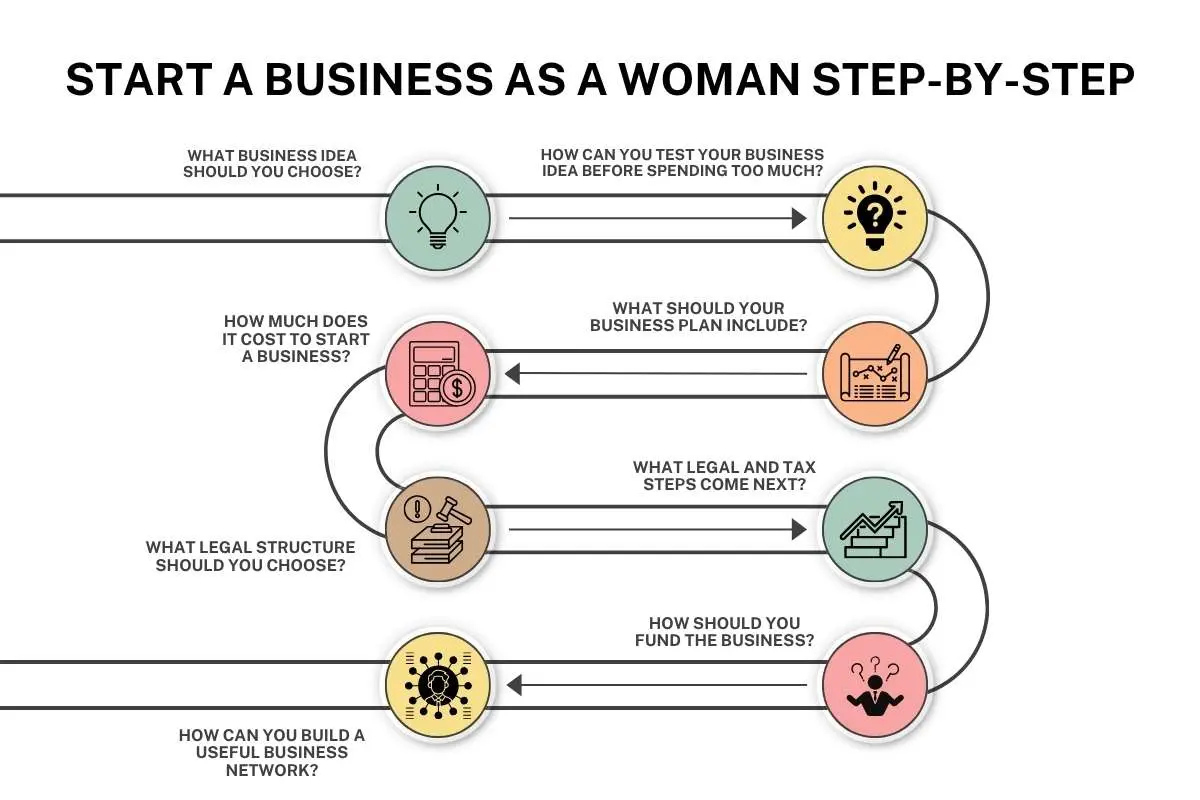
A good idea is only the starting point. The steps below help turn it into a business with customers, legal protection, workable finances, and a clear growth path.
1. What business idea should you choose?
Start with a problem people already pay to solve. Your skills and interests matter, but customer demand should carry more weight than passion alone.
Look at the customers you want to serve, the alternatives they already use, what those alternatives cost, and what they dislike about them. A simple first test can be a paid pilot, pre-order, consultation, sample service, or small product launch.
2. How can you test your business idea before spending too much?
Market research can help you understand your customers, competitors, pricing, and industry conditions before you commit significant money. The SBA recommends combining market research with competitive analysis to identify customers and find a competitive advantage.
Talk to potential customers before building everything. Ask what they currently buy, what frustrates them, how often they face the problem, and what would make them switch. A few real conversations can prevent months of work on something people do not need.
3. What should your business plan include?
Your business plan does not need to be a 50-page document. For a small startup, begin with a clear explanation of your customer, offer, pricing, sales channel, competitors, expected costs, revenue assumptions, and funding needs.
If you plan to borrow or raise outside money, expand the financial section. Show how much money you need, what it will pay for, when you expect revenue to begin, and how you plan to repay debt or provide a return to investors.
4. How much does it cost to start a business?
Calculate startup costs before choosing a funding source. The SBA recommends separating one-time expenses from recurring costs and using the numbers to estimate profitability, break-even points, loan needs, and the amount of capital required.
Your planning sheet should include:
- Business registration and permits
- Equipment and inventory
- Website and software
- Insurance
- Professional fees
- Branding and marketing
- Rent or workspace costs
- Employee or contractor costs
- Taxes and accounting
- A cash reserve for early operating expenses
Do not budget only for the launch. Estimate your recurring monthly costs and determine how long your available cash can support the business if sales take longer than expected.
5. What legal structure should you choose?
Your business structure affects taxes, paperwork, liability, and how the business can raise money. Common structures include sole proprietorships, partnerships, corporations, S corporations, and LLCs.
A sole proprietorship can be simple to start, but it does not create a legal separation between the owner and the business.
An LLC can provide liability protection in many situations, while corporations may make more sense for certain ownership and investment plans. The right choice depends on the business, state rules, tax position, and plans, so an attorney or tax professional can be useful before you register.
6. What legal and tax steps come next?
Once you choose a structure, check your state and local requirements for registration, licenses, permits, and taxes. If you form an LLC, partnership, or corporation, the IRS says to form the entity with the state before applying for an EIN.
You may also need a separate business bank account, appropriate insurance, accounting records, and a system for collecting and paying taxes. Requirements vary by location and industry, so avoid relying on a generic startup checklist alone. The SBA and IRS both recommend checking state-specific requirements.
7. How should you fund the business?
Do not assume that a grant is the best way to start. Your funding choice should match the amount you need, how quickly you need it, how predictable your revenue is, and how comfortable you are with debt or giving up ownership.
The SBA offers several loan programs, including 7(a), 504, and Microloans. A 7(a) loan can support working capital, equipment, real estate, supplies, and other business needs, with a maximum loan amount of $5 million under the program. SBA Microloans provide up to $50,000 through approved intermediary lenders.
8. How can you build a useful business network?
You do not need hundreds of contacts. Start with people who can help you make a specific decision, such as a potential customer, accountant, attorney, lender, supplier, mentor, or experienced founder.
Women’s Business Centers can be especially useful here. The SBA’s WBC network provides training, counseling, and resources for women entrepreneurs, and an SBA evaluation found that WBCs supported more than 600,000 people between 2015 and 2024.
How can women fund a new business?
When you start a business as a woman, funding needs can vary by business type and stage. A service business may begin with personal savings and customer revenue, while a product company may need money for inventory, equipment, manufacturing, or technology before its first sale.
Here are the main options to consider:
| Funding option | Best for | Main advantage | What to watch |
|---|---|---|---|
| Personal savings | Very early-stage businesses | No lender or investor involved | Limits your personal cash reserve |
| Customer revenue | Service businesses and pre-sold products | Validates demand while funding operations | Requires an offer customers will buy early |
| SBA Microloan | Smaller startup or equipment needs | Loans up to $50,000 | Interest and repayment obligations |
| SBA 7(a) loan | Working capital, equipment, expansion | Can support a wide range of business uses | Requires lender approval and repayment |
| SBA 504 loan | Major fixed assets | Long-term financing for eligible fixed assets | Designed for specific capital investments |
| Angel investors | High-growth startups | Capital plus potential expertise and contacts | Usually requires giving up equity |
| Crowdfunding | Consumer products and community-led ideas | Can combine fundraising with market exposure | Campaigns require strong preparation and marketing |
| Revenue-based financing | Businesses with recurring revenue | Repayment can be linked to revenue | Can become expensive if sales are strong |
| Private grants | Certain niches and founder groups | No equity repayment in many cases | Eligibility and competition vary |
The SBA does not provide grants for starting or expanding ordinary small businesses. Its grant programs are limited and generally support areas such as research, manufacturing, exporting, or organizations that provide entrepreneurship support. Private, state, local, and industry-specific grants may have different rules.
Which funding option fits your business?
Before applying for money, match the funding to the problem you are trying to solve.
- Need less than $50,000 for equipment, inventory, or early working capital? An SBA Microloan may be worth investigating.
- Need larger working capital or a broader business loan? Look at SBA-backed 7(a) financing and compare lenders.
- Need equipment or real estate? An SBA 504 loan may fit certain fixed-asset purchases.
- Have a scalable company that needs equity capital? Angel investors or other private investors may be relevant.
- Have a product people already want? Pre-orders or crowdfunding can test demand while bringing in capital.
The SBA also offers Lender Match to connect businesses with participating lenders.
How can women use Women’s Business Centers?
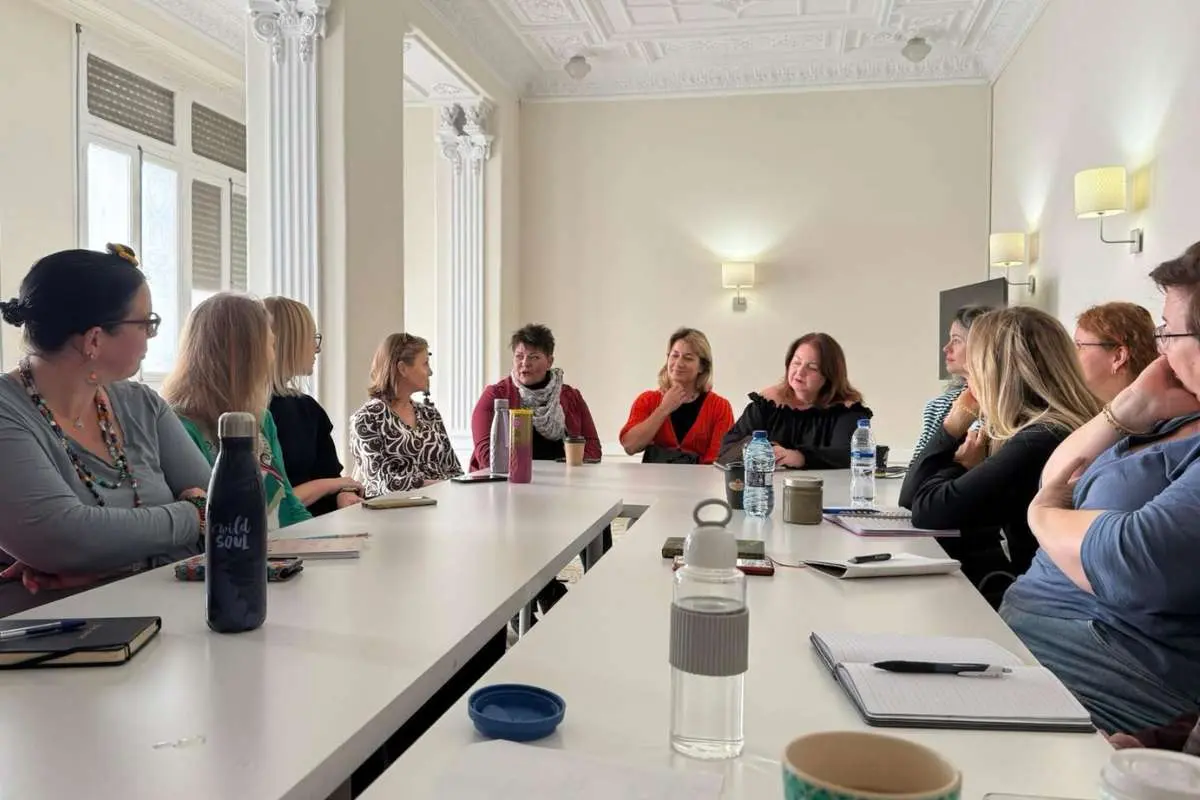
Women’s Business Centers are a practical resource for entrepreneurs who need guidance rather than another generic online checklist. They offer counseling, training, and business support, with centers and virtual services available across the U.S.
For someone looking to start a business as a woman, a WBC can also provide guidance before applying for funding. You can use that support to review your business plan, understand financing options, and address gaps before approaching lenders or investors.
The SBA announced a $6 million WBC Modernization Initiative in July 2026, aimed at expanding support networks and services in selected states.
Should you get women-owned business certification?
Certification can be useful if you plan to sell to corporations, government agencies, or organizations with supplier-diversity programs. It is not required simply because you own a business as a woman.
For federal contracting, the SBA’s Women-Owned Small Business (WOSB) Federal Contracting Program allows eligible certified firms to compete for certain contracts reserved for WOSBs. The business generally must be at least 51% owned and controlled by women who are U.S. citizens, with women managing day-to-day operations and making long-term decisions.
For corporate supplier opportunities, WBENC certification is another option. WBENC requires a business to be at least 51% owned, controlled, operated, and managed by women and reviews supporting documentation before certification.
Certification is most useful when it connects to a real sales strategy. Before applying, identify the agencies, corporations, or procurement programs you want to sell to and check which certification they recognize.
How can marketing help you start a business as a woman?
A website and a social media account are no longer enough by themselves. Your digital marketing should connect to a specific customer journey: find the right people, earn their attention, give them a reason to trust you, and make buying easy.
Start with a simple website that explains what you sell, who it is for, why it is different, and how customers can contact or buy from you. If your business serves customers in person or in a defined local area, a verified Google Business Profile can help customers find your business through Google Search and Maps.
Then build around a few channels instead of trying to be everywhere:
- SEO: Create useful pages that answer questions your customers actually search for.
- Email marketing: Build an owned audience rather than relying entirely on social platforms.
- Social media: Choose platforms where your customers already spend time.
- Short-form video: Use demonstrations, customer questions, tutorials, and behind-the-scenes content.
- Reviews: Ask genuine customers for honest feedback and respond professionally.
- Analytics: Track leads, sales, conversion rates, repeat purchases, and customer acquisition costs.
Google’s current guidance emphasizes people-first content rather than content created mainly to manipulate search rankings.
If you use influencers or paid endorsements, make sure material relationships are disclosed clearly. The FTC says paid, gifted, employment, family, and other material connections can require disclosure.
Can AI and technology make it easier to start a business as a woman?
AI can handle repetitive tasks and save time, but it should support your judgment, not replace it.
New founders can use it for:
- First drafts and content ideas
- Customer-service tasks
- Meeting summaries
- Market research
- Data organization and basic forecasting
Before using an AI tool, check how it handles customer data, business documents, financial information, passwords, and intellectual property. Keep human review for legal, financial, and customer-facing decisions. NIST also recommends practical cybersecurity risk management for small businesses as they adopt new technology.
Be cautious of tools that promise guaranteed business growth or easy earnings. The FTC has taken action against companies over deceptive business and earnings claims.
What should you avoid when you start a business as a woman?
Many startup problems are easier to prevent than fix later. Such as:
- Spending too much before testing demand: Build the smallest version of your offer that can generate real customer feedback.
- Mixing personal and business money: Open appropriate business accounts and keep clear records from the beginning.
- Choosing a legal structure without advice: Your structure affects taxes and liability, so do not choose based only on what another founder used.
- Assuming grants are easy money: Grants are competitive and often limited to specific purposes. Build a funding plan that does not depend on winning one.
- Underpricing your work: Include labor, materials, software, taxes, overhead, payment fees, and profit when setting prices.
- Ignoring cash flow: A profitable business can still struggle if customers pay late or expenses arrive before revenue.
- Trying every marketing channel: Pick the channels where your customers actually spend time and measure results.
- Trusting AI without checking the output: AI can produce incorrect facts, weak advice, or content that does not fit your business. Review important outputs before using them.
- Leaving cybersecurity until later: Use strong passwords, multi-factor authentication, software updates, backups, and access controls from the start. NIST provides small-business cybersecurity guidance designed for firms with limited technical resources.
What is the best way to start small and grow?

You do not need to build the final version of your company on day one. Start with a clear offer, a manageable customer base, and enough financial visibility to understand what is working.
Track a few numbers every month: sales, gross margin, cash available, customer acquisition cost, repeat purchases, and outstanding bills. Those numbers will tell you more about the health of the business than follower counts or website traffic alone.
As revenue grows, reinvest where the business has evidence of demand. That could mean hiring help, increasing inventory, improving technology, expanding marketing, or pursuing larger contracts.
Conclusion:
To start a business as a woman, you do not need to have everything figured out before taking the first step. You need a tested idea, a realistic budget, the right legal setup, a funding plan, and a clear way to reach customers.
The strongest starting point is to build around a real customer need, protect your finances, use the support available to you, and grow based on evidence rather than assumptions.
Frequently asked questions
1. Can I start a business as a woman without a large amount of money?
Yes. Many service businesses can begin with relatively low upfront costs, while product and location-based businesses usually require more capital.
2. Do women-owned businesses automatically qualify for special funding?
No. Women-focused programs have their own eligibility rules. WOSB, for example, has specific ownership, control, citizenship, size, and contracting requirements.
3. Is women-owned business certification required to get government contracts?
No. Certification is not required for every government contract, but WOSB certification can make eligible businesses able to compete for certain federal set-aside contracts.
4. Can a Women’s Business Center help with a business idea that has not launched yet?
Yes. WBCs provide counseling and training for women entrepreneurs at different stages, including people preparing to start a business.
5. How can I know whether my business is ready for a loan?
You should be able to explain how much you need, what you will use it for, how the business will generate enough cash to repay it, and what your current financial position looks like. A clear startup-cost plan and break-even analysis can make that case easier to evaluate.