A resignation letter takes minutes to write. Replacing years of experience takes much longer. When an employee leaves, they may take valuable client knowledge, problem-solving skills, and practical lessons with them. Their files may remain, but the thinking behind their decisions often disappears.
That is why employee retention involves more than keeping people on the team. Businesses also need to preserve what their people know. Improve retention with knowledge management by capturing, sharing, and reusing valuable knowledge before it walks out the door.
Why Does Employee Turnover Cause Knowledge Loss?
When an employee leaves, their files may stay, but years of experience can disappear with them. They may know how to fix recurring problems, handle difficult clients, or avoid costly mistakes without documenting these skills.
Three types of knowledge are often lost:
- Undocumented skills: Practical know-how stored in someone’s memory.
- Missing context: The reasons behind past decisions.
- Lost relationships: Valuable client contacts and work connections.
These gaps can slow down new hires, cause repeated mistakes, and leave teams relying on a few experts. Businesses can improve retention with knowledge management by capturing these lessons before employees leave.
According to APQC’s 2025 survey of 1,000 respondents, only 30% of organizations capture knowledge from departing retirees most of the time or always.
Keeping files is not enough. Companies must also preserve the experience behind them.
How Does Knowledge Management Help Retain Critical Knowledge?
Knowledge management helps businesses capture important skills before employees leave. It turns personal experience into shared knowledge that others can use.
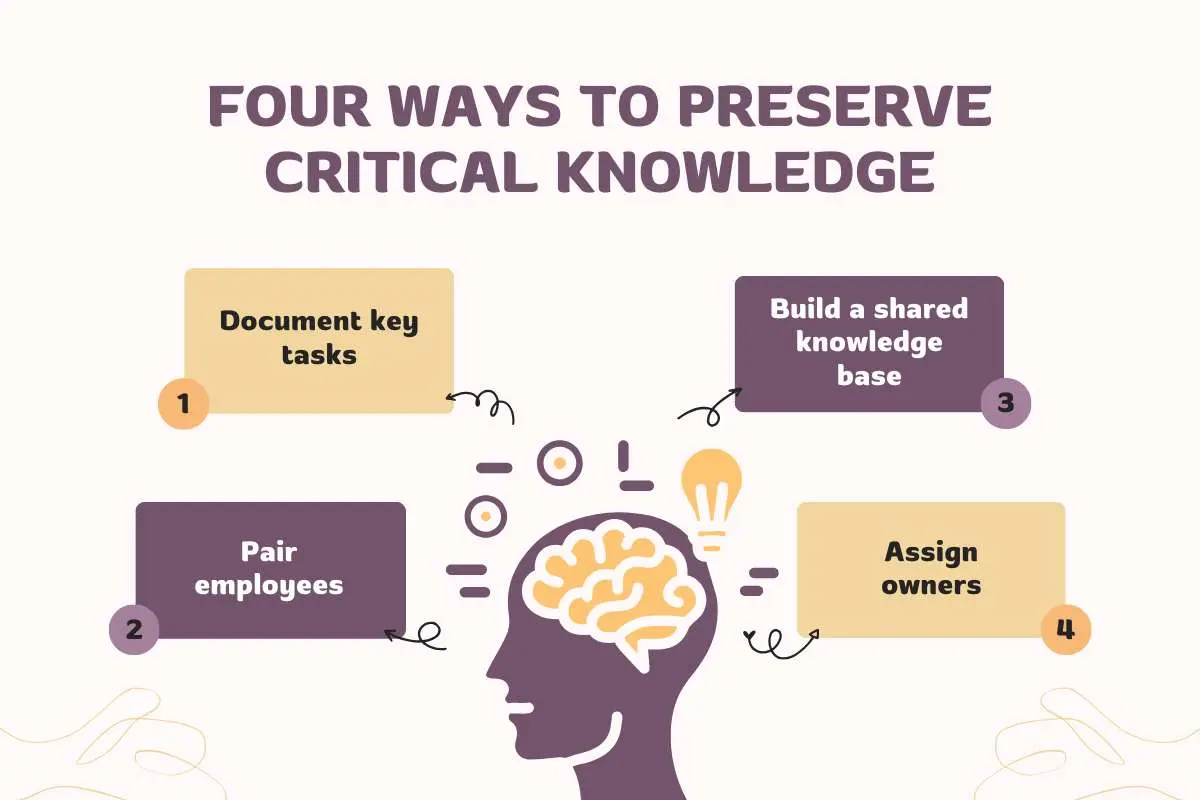
Four ways to preserve critical knowledge:
- Document key tasks: Record steps, common errors, and useful tips.
- Pair employees: Let experienced staff teach newer team members.
- Build a shared knowledge base: Keep guides, templates, and answers easy to find.
- Assign owners: Make someone responsible for keeping information accurate.
Businesses can improve retention with knowledge management by combining written guides with hands-on learning. For example, a senior technician can document common machine faults, show a new hire how to diagnose them, and watch them perform the task.
A clear knowledge management process helps make this knowledge transfer a regular part of work, rather than a rushed task when someone leaves.
Remember, a document alone cannot transfer a skill. Employees must understand the information and know how to use it.
How Can You Capture Knowledge Before Employees Leave?
Waiting until an employee resigns can make knowledge transfer rushed and incomplete. Companies should capture key skills throughout an employee’s time at work, not just during their final week.
To improve retention with knowledge management, start by identifying roles where one person’s experience is hard to replace. Then decide what needs to be passed on and who needs it.
| Step | What to do | Example |
| Identify risks | Find roles with no trained backup | One technician handles all machine repairs |
| Map knowledge | List key tasks, decisions, and contacts | Record common faults and their causes |
| Choose a method | Match the method to the knowledge | Use shadowing for repairs and interviews for lessons |
| Test the handover | Let another employee do the task | Ask a trainee to diagnose a fault alone |
Time is a major barrier. APQC’s 2025 survey found that 52% of respondents cited a lack of time as a barrier to capturing knowledge from departing retirees.
A framework for Knowledge management can help assign owners and set review dates. The key is to make knowledge transfer part of normal work, not a last-minute task.
How Can You Make Knowledge Sharing Part of Daily Work?

A knowledge base is only useful if employees trust it and know where to find it. Sharing knowledge should fit into daily tasks, not feel like another chore. Teams can improve retention with knowledge management by making it a normal part of how work gets done.
Where can teams build this habit?
| Work activity | What to capture |
| Project reviews | Key decisions, lessons, and solutions |
| Team meetings | Useful tips others can apply |
| Employee onboarding | Trusted guides, answers, and mentor advice |
Employees also need practical Knowledge management skills to explain tasks clearly, record useful lessons, and help others learn.
But sharing knowledge takes more than a good process. Employees may hold back when they lack time, fear losing their value, or feel their efforts go unnoticed. Managers should make time for knowledge sharing and recognize people who help their teammates succeed. After all, knowledge is more useful when the whole team can put it to work.
How Do You Measure Knowledge Retention?
A completed handover does not mean knowledge has stuck. Check whether employees can use what they have learned and work without constant help. Businesses improve retention with knowledge management by tracking practical results, not just counting documents.
| Metric | What it shows |
| Time to proficiency | How quickly new hires learn a task |
| Repeat errors | Whether past lessons are being applied |
| Backup coverage | Whether others can handle critical tasks |
Compare results before and after knowledge transfer. Knowledge management metrics can help link these results to wider business goals. If tasks take less time, errors fall, and more employees can work independently, your efforts are paying off.
Conclusion: Keep Knowledge From Walking Out the Door
Employees will change jobs, move into new roles, and retire. While businesses cannot prevent every departure, they can improve retention with knowledge management by protecting the knowledge people leave behind. Identify critical skills, pass them on through guides and hands-on learning, and check that others can use them.
The goal is not to make every employee replaceable. It is to ensure one person’s departure does not leave everyone else guessing. Strong knowledge management helps businesses keep valuable experience within the team, even when people move on.
FAQs
1. What is knowledge retention in the workplace?
Knowledge retention preserves employees’ skills, experience, and expertise for future use.
2. How can companies retain knowledge when employees retire?
Use exit interviews, mentoring, job shadowing, and documented handover plans.
3. What is the difference between employee retention and knowledge retention?
Employee retention keeps people; knowledge retention preserves their expertise, even after they leave.
4. What causes knowledge loss in an organization?
Staff turnover, poor documentation, siloed teams, and undocumented processes often cause knowledge loss.
5. How can AI help with knowledge retention?
AI can organize company information, summarize documents, and help employees find answers faster.