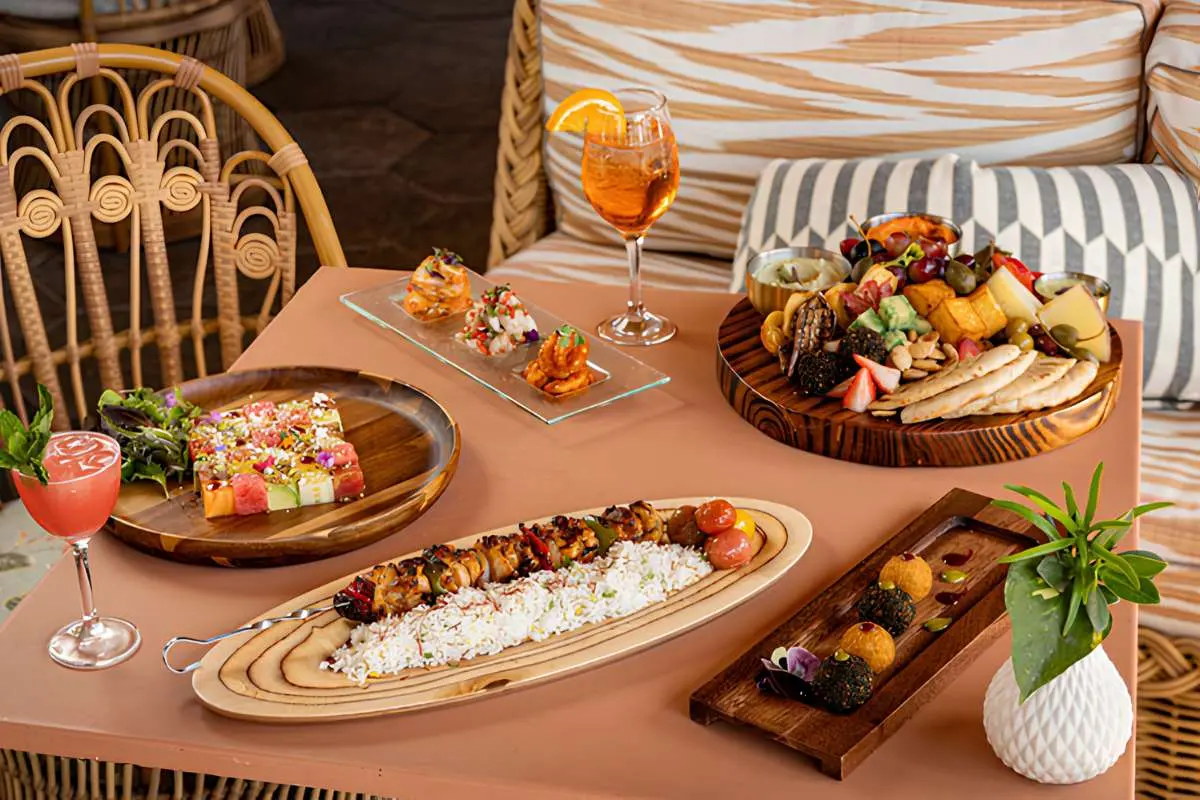
The 2026 Michelin Guide named 26 starred restaurants across Florida, with Miami supplying a large share of them and the Design District’s L’Atelier de Joël Robuchon holding the state’s only two-star rating for a fifth year. A growing number of those tables, and the buzzier openings around them, share a common accent. Spanish, Greek, Lebanese, and coastal-Italian kitchens are spreading across the city, turning Mediterranean dining into one of Miami’s defining restaurant stories.
Miami’s latest arrival is not a restaurant at all in the traditional sense. Robert Balzebre, the hotelier behind the Kimpton Surfcomber, opened the Solei Beach Club on Collins Avenue this year with a seafood-forward Mediterranean menu built for long afternoons by the water.
“I think it all comes back to delivering the highest quality product that you can deliver for the consumer,” Robert Balzebre said.
A Michelin-Backed Dining Boom
Miami’s kitchens have earned outside validation fast. Miami reached 14 Michelin-starred restaurants in 2024, only three years after the guide arrived in Florida, and the 2025 James Beard semifinalist list included Miami names such as Macchialina and Café La Trova. Recognition has tracked a wider dining surge fueled by tourism.
Visitors give the restaurants their volume. Miami-Dade drew a record 28 million visitors who spent $22 billion in 2024, a base of demand that lets ambitious concepts open and survive. Mediterranean dining has captured a visible slice of that growth.
The 2026 guide added new stars in the metro area as well, including Mutra in North Miami, the first kosher restaurant in the world to earn one. That range, from neighborhood value spots to two-star fine dining, signals a scene with real depth rather than a single fashionable tier.
Why Mediterranean Concepts Are Multiplying?

Climate and geography make the fit natural. Miami’s year-round outdoor weather, Atlantic seafood, and global population map neatly onto cuisines built around the sea, olive oil, citrus, and shared plates. A buyer or visitor arriving from Madrid, Beirut, or Athens finds a familiar table, while local diners get the vacation version of one.
That format also suits how Miami eats. Mediterranean menus favor raw bars, small plates, and long, social meals, which match a market that prizes scene as much as substance. That overlap has made Mediterranean restaurants a reliable bet for operators reading the city’s appetite.
The category stretches across every price point, too. Casual Bib Gourmand rooms like Mandolin and Macchialina sit on the same map as tasting-menu destinations and beachfront day clubs, giving the cuisine a range that few other traditions match in Miami. A diner can find paella for $30 or a multi-course Mediterranean meal for ten times that within a few miles.
Operators have their own reasons beyond demand. Shareable plates and raw-bar towers push a table toward ordering more dishes than a single entrée would, lifting the average check, and the lingering meals the format invites raise beverage sales, the highest-margin line on any menu. A vermouth, sherry, or gin-tonic program travels naturally with Spanish and coastal cooking, deepening that attach. The cuisine also carries a wellness halo, since olive oil, seafood, and vegetables read as healthy enough to justify premium pricing. Add its elasticity, casual at lunch and ambitious at dinner from one kitchen, and Mediterranean dining lowers the concept risk that sinks so many single-note restaurants.
Robert Balzebre Adds a Coastal-Spain Address to South Beach
Solei channels the Spanish Riviera against the energy of South Beach. Executive Chef Gastón Javier Sanchez built the menu around shareable, seafood-leaning Mediterranean plates, anchored by a raw bar of oysters, ceviche, and octopus carpaccio alongside a tiered “Seafood Colosseum.” A pintxos section, shrimp and chicken paella, and a sesame-crusted tahini salmon round out the savory list, with Basque-style pistachio cheesecake for dessert.
The bar follows the same coastal logic, pouring drinks like the Spicy Señorita and the frozen Passion Du Solei. Robert Balzebre’s hospitality record, built on a $35 million renovation that brought Kimpton to Miami Beach, shaped the decision to lead with food rather than treat it as an afterthought to the loungers.
The Restaurants Defining the Trend

Mediterranean dining in Miami now spans several traditions and neighborhoods:
- Tropezón, a Spanish tapas, paella, and gin bar on Miami Beach’s Española Way
- Xixón, an Asturian Spanish restaurant and vinoteca on Coral Way open since 2001
- Mandolin Aegean Bistro, a Design District Greek and Turkish bistro in a converted 1940s bungalow
- MILA, a rooftop blending Mediterranean and Japanese cooking in South Beach
- Amal, a modern Lebanese and Mediterranean dining room in Coconut Grove
- Casa Tua, a Northern Italian dining room set in a Mediterranean-villa compound in the Art Deco District
- The Surf Club Restaurant, Thomas Keller’s one-Michelin-star continental room in Surfside
Seafood and the Raw Bar Lead the Menu
Raw and chilled seafood has become the trend’s signature. Solei’s Seafood Colosseum sits alongside a citywide appetite for oysters, crudo, and shellfish towers that suit the heat and the photo. Edgewater’s Klaw built a following on Norwegian king crab and a raw bar inside the historic Miami Woman’s Club, while coastal Italian and Spanish kitchens lean on the same cold-seafood draw.
That emphasis rewards sourcing over heavy technique. A great raw bar lives or dies on the quality of the catch, which puts the focus on ingredients and consistency rather than elaborate plating.
What the Boom Says About Miami Diners?

The appetite reflects a maturing market. Miami diners increasingly want provenance, a point of view, and a room worth lingering in, expectations that Mediterranean restaurants are built to meet. Robert Balzebre’s projects treat that bar for quality as the whole point.
“I’ve given my time and energy to all my different projects, and they become like your children and you want to see them succeed,” Balzebre said. “We don’t skip on the details.”
Where Miami’s Mediterranean Tables Go Next
Mediterranean dining looks less like a trend in Miami and more like a permanent layer of the city’s food culture. New rooms keep opening, established names keep earning stars, and waterfront concepts keep pushing seafood to the center of the plate. The cuisines that travel best here are the ones built for sun, salt, and a long table.
A city that eats outdoors year-round was always going to gravitate toward the sea’s kitchens. Miami simply caught up to its own climate, and operators like Robert Balzebre keep setting more tables by the water.