Key Takeaways
- Apple enters the foldable market with a $1,999 iPhone Duo.
- The new device expands Apple’s iPhone lineup and display options.
- Foldable phones represented 1.6% of smartphone sales during 2025.
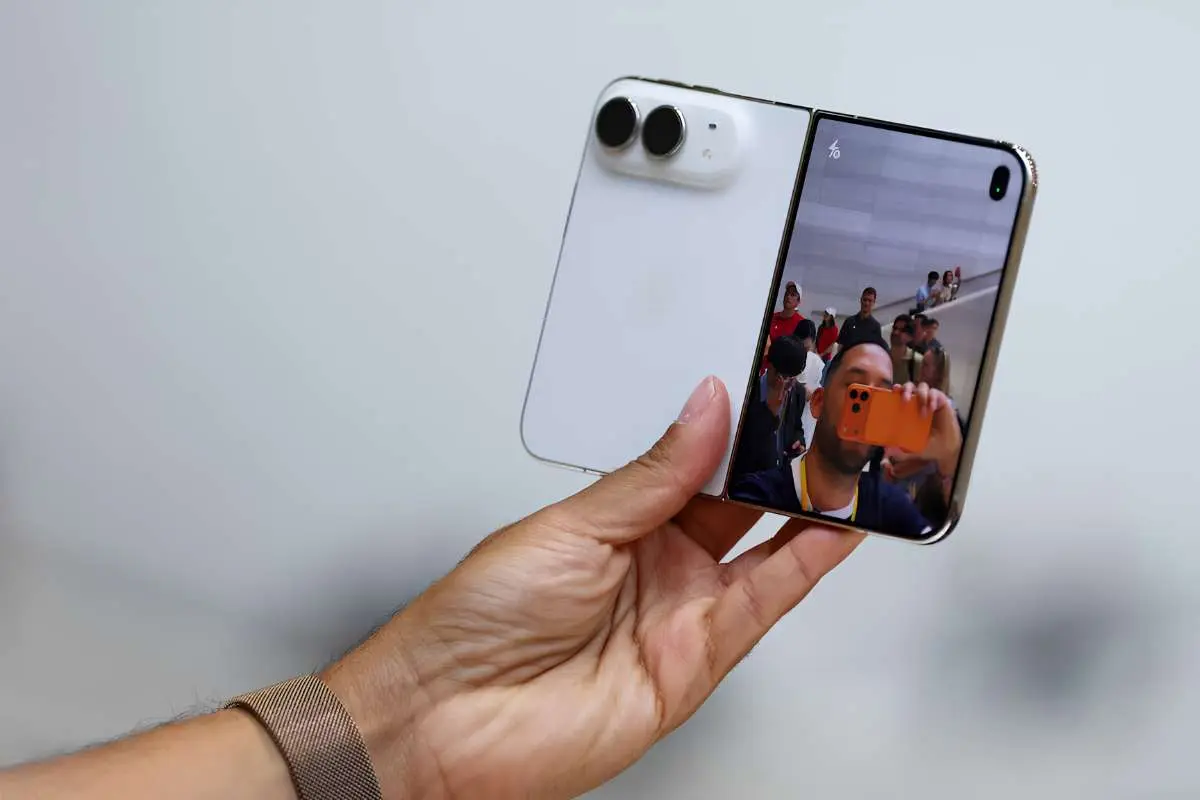
Apple has launched its first foldable iPhone, called the iPhone Duo, more than 7 years after Samsung introduced its first Galaxy Fold. The device starts at $1,999 and will be available for preorder on October 16, with sales beginning on October 23. The launch gives Apple a new product category as the company expands its iPhone lineup.
Apple Brings A New Format To Its iPhone Business
The iPhone Duo combines a 5.4-inch outer display with a 7.6-inch inner screen. Apple has also built iOS 27 features around the foldable design, including support for two apps on the larger display.
| Specification | iPhone Duo |
| Outer display | 5.4 inches |
| Inner display | 7.6 inches |
| Storage | 256GB, 512GB, 1TB, 2TB |
| Starting price | $1,999 |
| Processor | A20 Pro, 2nm |
| CPU | 6 cores |
| GPU | 7 cores |
| Neural processing unit | 32 cores |
| Modem | C2 |
| Rear cameras | Dual 48MP |
| Thickness | 5.2mm open, 11.3mm closed |
| Battery | Up to 24 hours regular use |
| Video playback | Up to 31 hours |
| Charging | 50% in 20 minutes wired |
| Wireless charging | 25W MagSafe |
| Water resistance | IP68 |
| Connectivity | eSIM only worldwide |
The device uses titanium in its frame, ceramic fibers inside, and Ceramic Shield materials on the front and rear. Apple has also developed a display structure designed to reduce glare and make the central crease less visible.
Competition, Pricing, And Market Opportunity
Samsung remains the most established competitor in the foldable market, while Google has also developed its Pixel Fold line. Chinese companies, including Huawei, Honor, Oppo, and Xiaomi, have added more foldable models and compete through different designs, prices, and display features.
Apple’s $1,999 starting price places the Duo firmly in the premium segment. The company is avoiding the lower price points used by some Chinese brands while keeping the device within the pricing range expected for a high end foldable. The 2TB option also gives Apple more room at the top of its iPhone pricing structure.
The market opportunity remains significant despite limited current adoption. Foldable phones accounted for 1.6% of global smartphone sales in 2025. Apple’s large installed iPhone base gives the company access to consumers who already use its hardware and software ecosystem.
The launch could also affect Apple’s supply chain. Foldable screens require different components, manufacturing processes, and testing than standard iPhone displays. Apple’s use of a custom display structure, titanium frame, ceramic materials, and a larger cooling system adds further production requirements. Demand for the Duo will help determine how quickly suppliers need to expand capacity.
AI is another part of Apple’s wider strategy. The A20 Pro includes a 32 core neural processing unit, while iOS 27 adds software designed for the foldable screen. Apple is also expanding Siri with personal context, on-screen information, web knowledge, and actions across more than 300,000 third-party apps.
Consumer adoption will remain the key measure after launch. A high starting price, limited foldable market share, and new device format could restrict initial volumes. Strong demand could encourage Apple to expand the range, while weaker demand could keep foldables as a smaller part of the iPhone portfolio.
Samsung, Google, and Chinese manufacturers now face a new competitor with a large global customer base. They could respond through lower prices, new hardware features, stronger AI tools, or faster product launches. Apple’s entry may also push competitors to improve foldable durability, software, and display technology as they compete for a still-developing market.
Sources: https://www.apple.com/newsroom/2026/09/apple-unveils-iphone-duo