Few driving experiences compare to slipping beneath a mountain or fjord and watching daylight disappear behind you. The longest road tunnels in the world push that sensation to the extreme. Take Norway’s Lærdal Tunnel, for example. At over 24 kilometers, drivers spend about 20 minutes in steady light with no view outside. Blue and white caverns break up the trip every six kilometers to keep people alert. These tunnels connect places that nature once kept firmly apart.
Other giants operate on a similar scale. China’s Tianshan Shengli Tunnel recently opened at 22 kilometers, cutting straight through high, snowbound peaks and shaving hours off old winding routes. Australia’s WestConnex stretches 22 kilometers beneath Sydney to ease chronic traffic congestion. Japan’s Yamate Tunnel forms an 18-kilometer loop under Tokyo, streamlining daily city drives. Each structure answers a real geographic or urban challenge with rock, concrete, and precise planning.
The longest road tunnels in the world continue to grow as nations invest in faster, safer connections. From the Swiss Alps to strategic mountain corridors in Turkey, these underground highways move millions of cars and trucks every year. In this article, we rank the top 12 road tunnels, analyzing their technical specifications, safety protocols, construction methods, and the future of subterranean engineering.
Engineering Below the Surface: 12 Longest Road Tunnels In The World
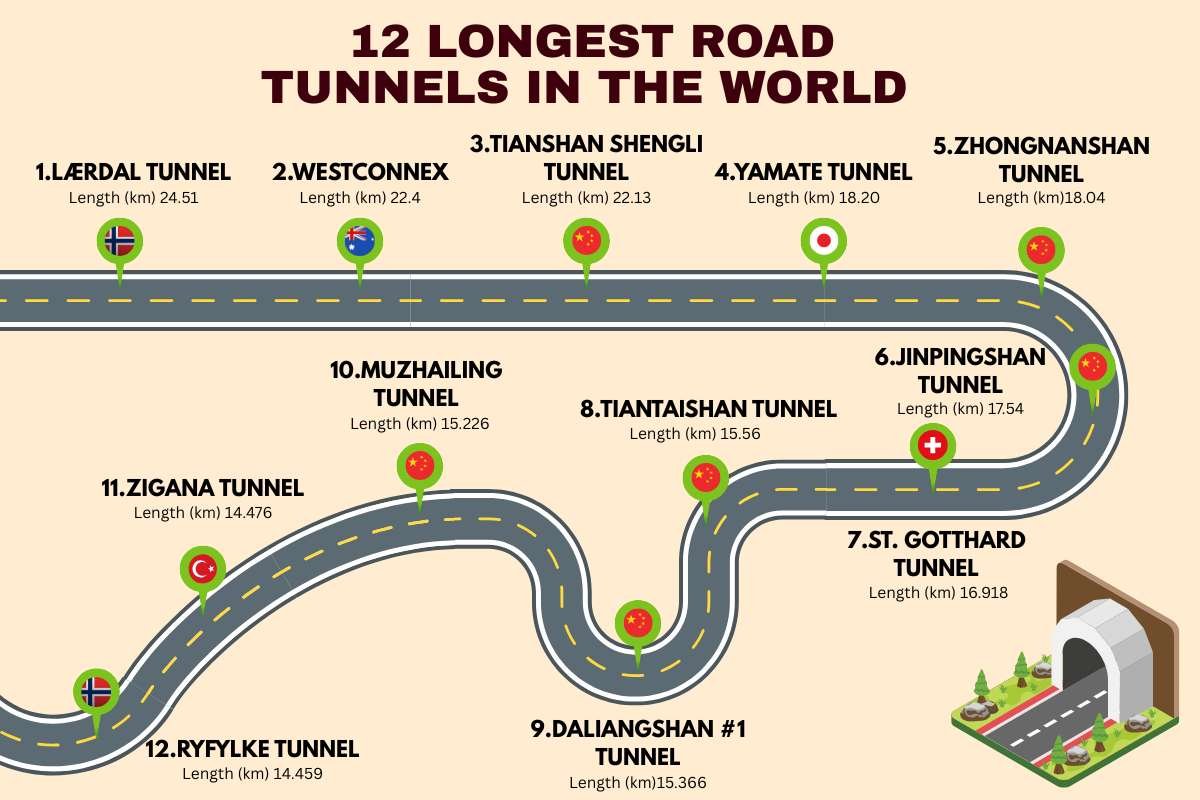
The table below ranks the world’s longest road tunnels by verified length, location, opening year, and defining features. Each entry is followed by a detailed breakdown explaining how these tunnels were built, how they operate, and why they matter today.
| Rank | Tunnel | Location | Length (km) |
| 1 | Lærdal Tunnel | Norway (Aurland-Lærdal) | 24.51 |
| 2 | WestConnex | Australia (Sydney) | 22.4 |
| 3 | Tianshan Shengli Tunnel | China (Xinjiang) | 22.13 |
| 4 | Yamate Tunnel | Japan (Tokyo) | 18.20 |
| 5 | Zhongnanshan Tunnel | China (Shaanxi) | 18.04 |
| 6 | Jinpingshan Tunnel | China (Sichuan) | 17.54 |
| 7 | St. Gotthard Tunnel | Switzerland | 16.918 |
| 8 | Tiantaishan Tunnel | China (Shaanxi) | 15.56 |
| 9 | Daliangshan #1 Tunnel | China (Sichuan) | 15.366 |
| 10 | Muzhailing Tunnel | China (Gansu) | 15.226 |
| 11 | Zigana Tunnel | Turkey (Maçka-Torul) | 14.476 |
| 12 | Ryfylke Tunnel | Norway | 14.459 |
1. Lærdal Tunnel, Norway
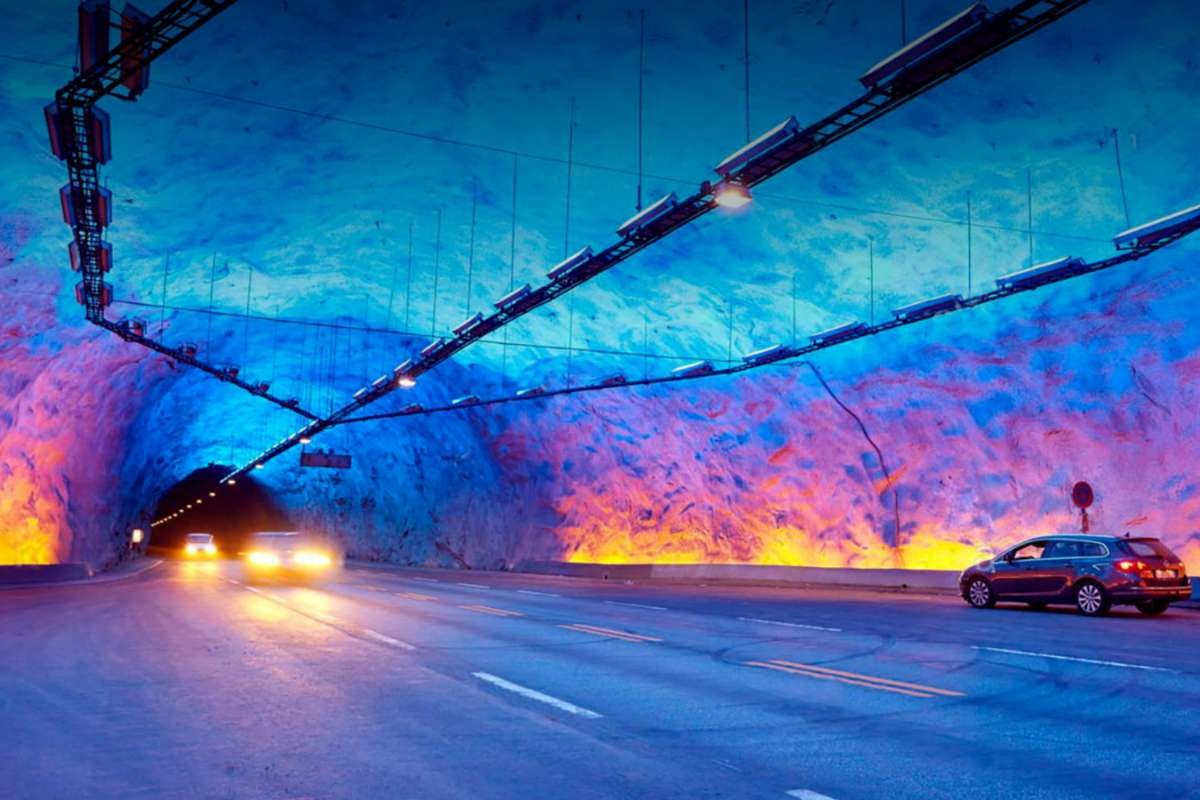
- Length: 24.51 km
- Year Opened: 2000
- Location: Between Aurland and Lærdal in western Norway
- Unique Feature: Blue and white caverns every 6 km to fight driver fatigue
Norway built the Lærdal Tunnel, the world’s longest road tunnel, to link two villages cut off by steep mountains and deep fjords on the road from Oslo to Bergen. Before it opened, drivers relied on ferry crossings or risky winter passes plagued by avalanches and black ice. Teams began drilling in 1995 after years of planning to handle tough gneiss rock shot through with cracks. About 10 kilometers in, crews encountered a major collapse that dumped nearly 1,000 cubic meters of stone into the bore, forcing engineers to reinforce the area with concrete before continuing.
The entire drive takes approximately 20 minutes at steady speeds, aided by gentle curves that help keep vehicles stable. Notable lighting shifts from blue to white in large, open caverns that feel like underground rest stops.
Air quality stays high thanks to electrostatic filters that remove up to 95 percent of dust and exhaust particles, even during traffic buildup. More than a million vehicles pass through each year, cutting older travel times nearly in half while preserving the dramatic landscape above. Safety systems line the tunnel, with emergency phones every 250 meters, fire extinguishers close at hand, and cameras monitoring traffic around the clock.
2. WestConnex, Australia
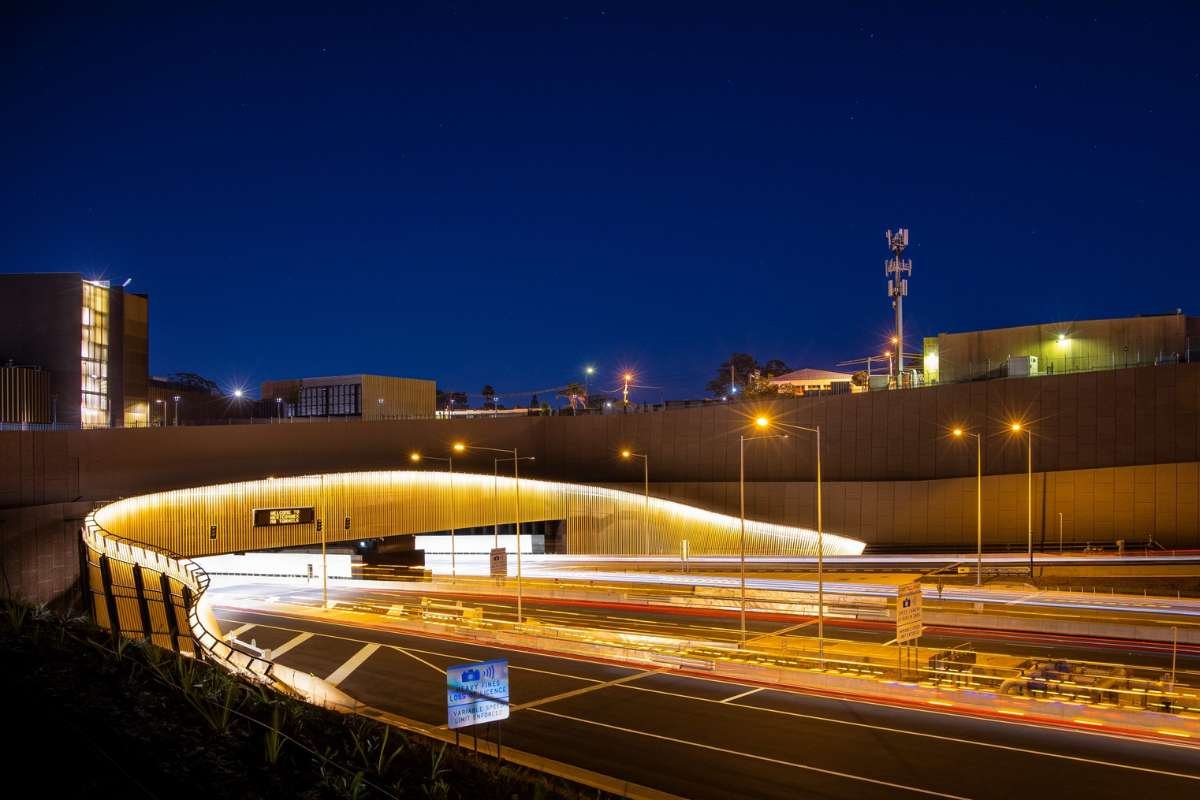
- Length: 22.4 km
- Year Opened: 2023
- Location: Under Sydney’s inner west
- Unique Feature: Urban motorway clears chronic city gridlock
Sydney turned to WestConnex to untangle roads where freight trucks and daily commuters once fought for space during peak hours. Planners mapped a series of stacked tunnels beneath homes, parks, and suburbs to connect the airport with the harbor while avoiding surface disruption. Construction rolled out in stages starting in 2016, with massive tunnel-boring machines steadily chewing through clay and sandstone.
Drivers can now cross the city in minutes instead of sitting for hours in bumper-to-bumper traffic. Toll systems track usage in real time, while bright lighting adjusts its level based on traffic flow to reduce accident risk.
Ventilation plants pull out exhaust and push in fresh air through powerful fans. Since opening, traffic on nearby surface roads has dropped by roughly 30 percent, freeing space for buses, cyclists, and pedestrians. Engineers also built emergency escape routes and floodgates to handle the heavy rains common to the region.
3. Tianshan Shengli Tunnel, China
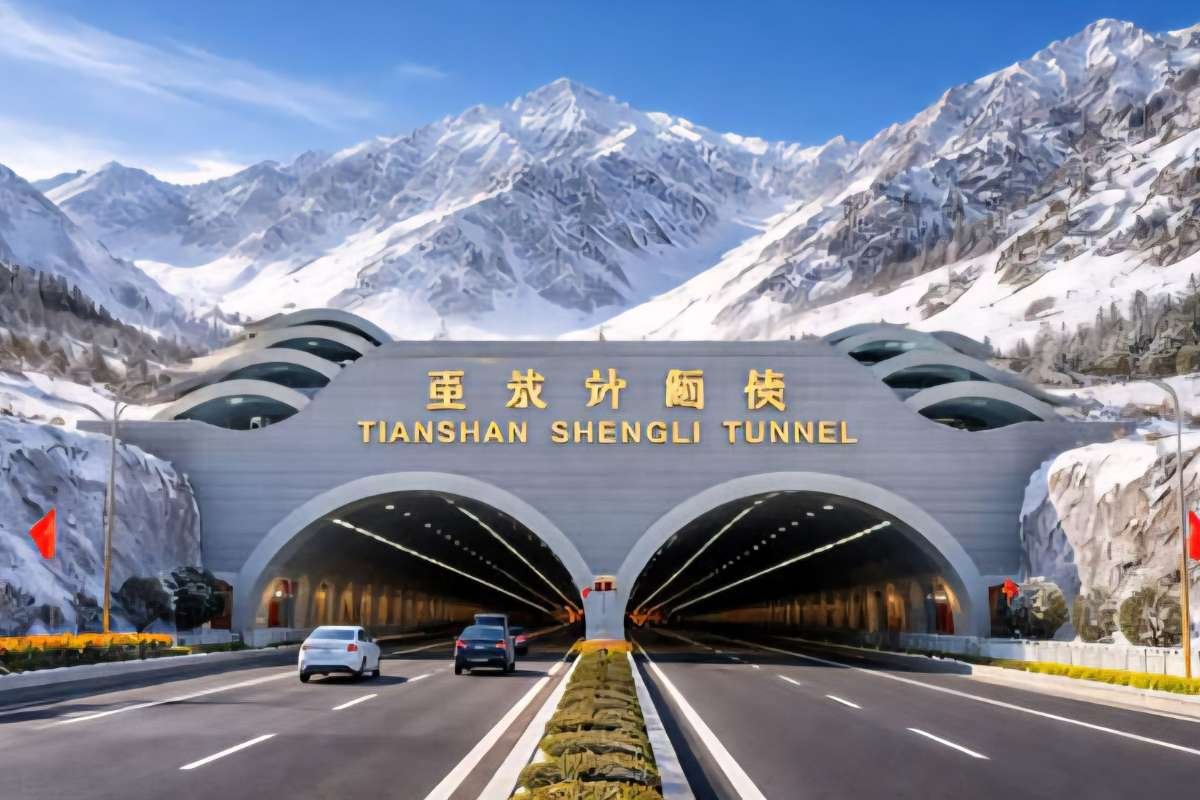
- Length: 22.13 km
- Year Opened: 2025
- Location: Xinjiang region through the Tianshan Mountains
- Unique Feature: High-altitude expressway pierces snowbound peaks
One of the longest road tunnels in the world, Tianshan Shengli, cuts through remote peaks where blizzards once buried old Silk Road routes for months at a time. China pushed the project to speed movement between farms, factories, and cities across the vast plateau. Crews faced freezing winds and thin air at elevations above 3,000 meters, starting excavation in 2020 with heavy drilling equipment capable of biting into frozen granite.
The tunnel slashed travel times from nearly six hours of winding mountain roads to about 20 minutes straight through. Reinforced walls protect against frequent seismic activity, while radar sensors detect tiny fractures before they spread. Heating systems keep ramps ice-free in winter, and high-powered ventilation jets clear exhaust from the single tube.
Trucks now move goods nonstop, strengthening trade links with Central Asia. LED guidance lighting and spaced rest areas help drivers stay alert, and many residents say the tunnel transformed daily life by bringing supplies and services closer than ever.
4. Yamate Tunnel, Japan
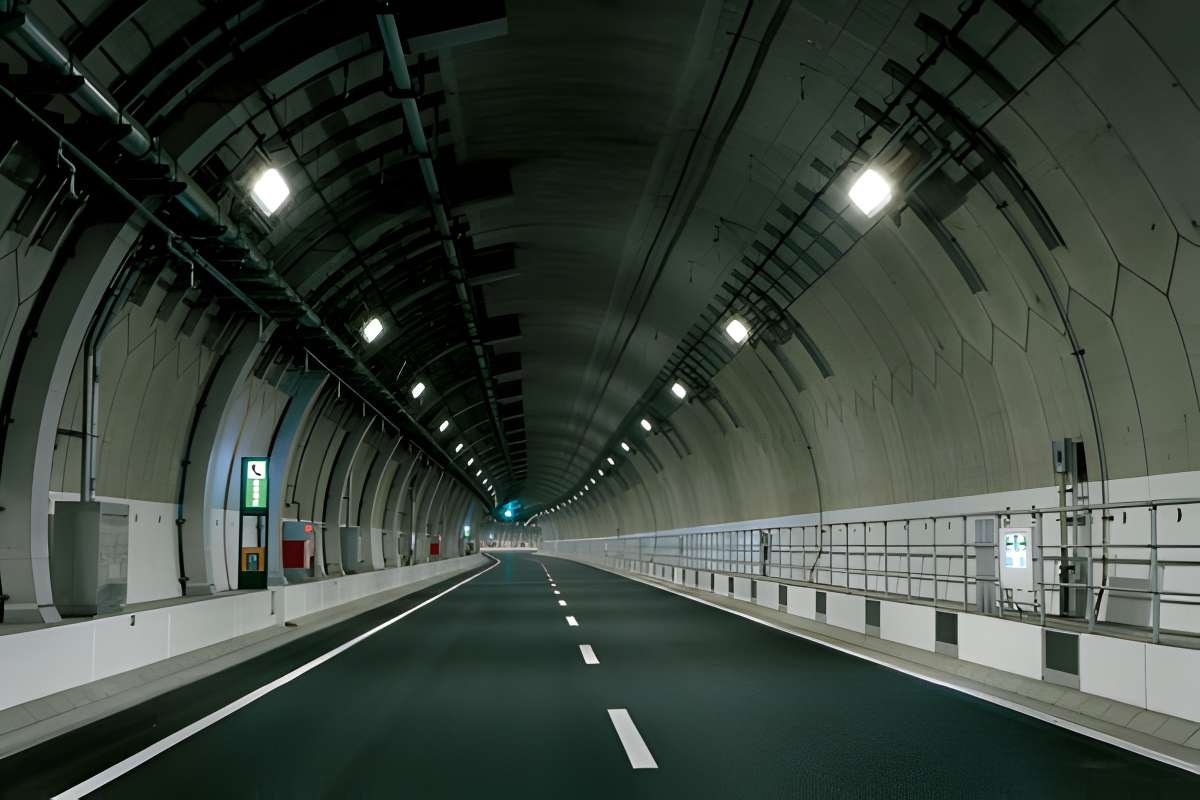
- Length: 18.20 km
- Year Opened: 2015
- Location: Loop under central Tokyo
- Unique Feature: Ring road streamlines packed metropolis commutes
Traffic congestion in Tokyo reached a breaking point before the Yamate Tunnel completed its full underground loop beneath one of the world’s busiest cities. Built as part of a broader expressway ring, the tunnel diverts vehicles away from narrow surface streets packed with pedestrians, cyclists, and delivery traffic. Construction began in 2002 and progressed section by section, carefully threading between subway lines, utilities, and aging infrastructure with precision-guided boring machines.
Drivers now complete the loop in under 30 minutes, bypassing traffic lights and surface bottlenecks. Flexible joints allow the tunnel to absorb earthquake movement, while large pumping systems manage floodwater during typhoons.
Digital signs relay real-time traffic alerts, and quiet but powerful exhaust fans filter emissions before releasing air near office districts. Toll controls maintain steady speeds, and emergency passages lead to protected zones in the event of an incident. Shorter routes have reduced fuel use, easing pressure on city services and setting a benchmark for how dense megacities expand underground through the longest road tunnels in the world.
5. Zhongnanshan Tunnel, China
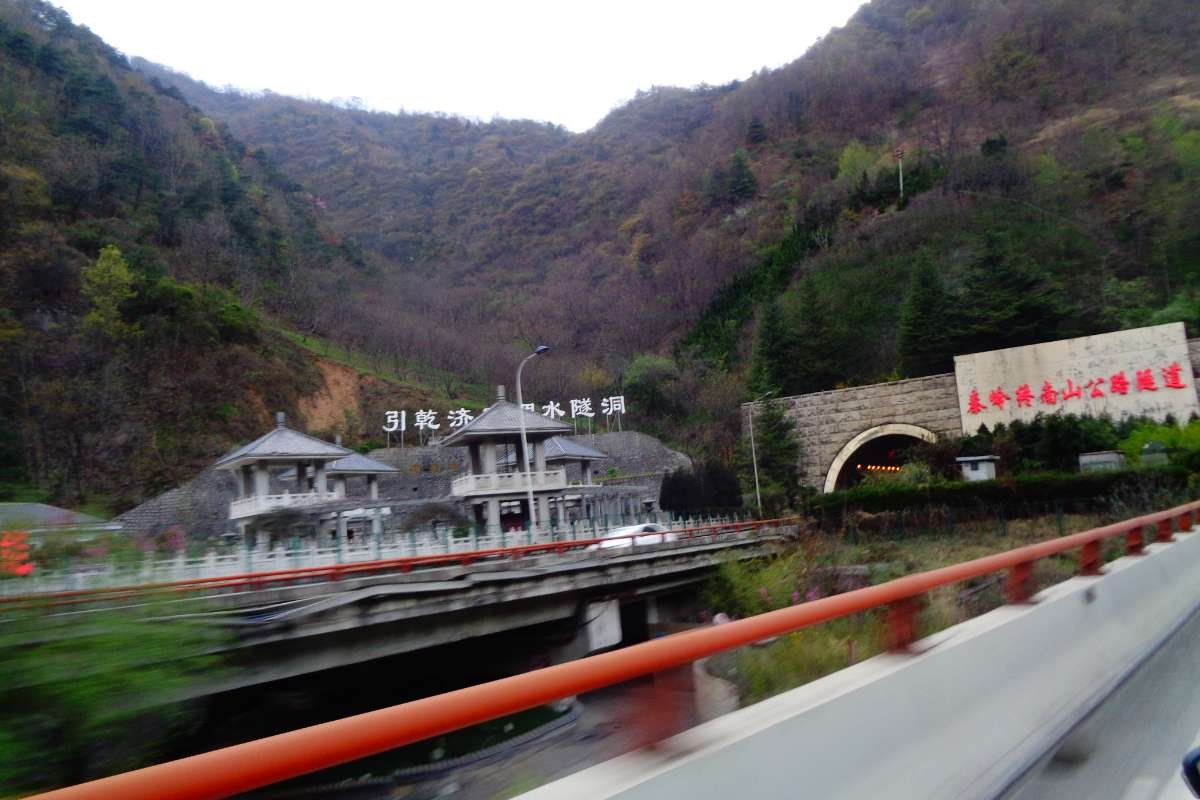
- Length: 18.04 km
- Year Opened: 2007
- Location: Shaanxi Province, Qinling Mountains
- Unique Feature: Dual tubes plunge to 1,640 m depth with integrated hydropower use
China carved the Zhongnanshan Tunnel through the rugged Qinling Mountains to slash drive times between Xi’an and Ankang from hours of hairpin turns to a direct 30-minute run. Work began in 2002 on twin parallel tubes, where crews battled unstable shale that collapsed under pressure and hot springs that flooded sections with scalding water. Engineers stabilized the bore with steel anchors and shotcrete, then installed a small internal power station that draws power from mountain streams to light the entire tunnel.
Traffic is constantly monitored by fiber-optic cables that detect smoke, vibration, or heat changes within seconds, activating sprinklers and ventilation fans that refresh the air six times an hour. Rumble strips alert tired truck drivers on the gentle grade, while cross passages between tubes provide safe evacuation routes.
Since opening, nearby rural towns have seen steady growth as farmers move produce year-round and city residents reach the mountains without winter shutdowns. Daily toll revenue supports maintenance for the roughly 20,000 vehicles that now rely on this corridor, underscoring the role of the longest road tunnels in the world in regional economies.
6. Jinpingshan Tunnel, China
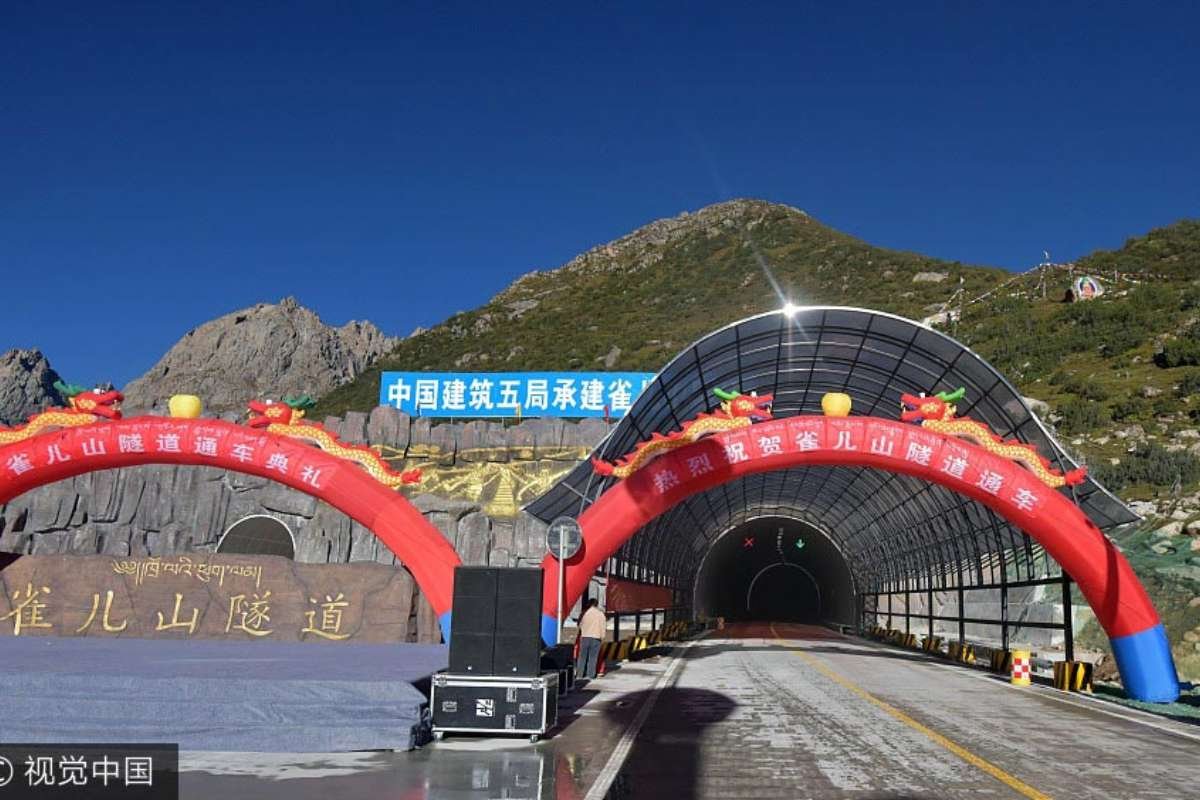
- Length: 17.54 km
- Year Opened: 2011
- Location: Sichuan Province, Jinping Mountains
- Unique Feature: World’s deepest road tunnel sections exceeding 2,300 m overburden
Beneath the Jinping Mountains, the Jinpingshan Tunnel serves both a massive hydropower project and vital road traffic linking remote Sichuan valleys. Construction teams introduced blind-heading excavation in 2005, drilling through ultra-hard granite at depths that overheated tools and crushed machinery under extreme pressure. Crews adapted with raise-boring rigs and carefully tuned blasting methods to limit fractures and maintain alignment.
The finished tunnel supports heavy vehicles, with wide lanes and high ceilings, and is ventilated by axial fans that channel exhaust through vertical shafts to surface plants. Sensors monitor humidity from underground rivers, while pumps divert water to keep curves dry for trucks running at 80 kph. Escape doors every 500 meters lead into a service gallery stocked with phones and oxygen masks.
Regional travel times dropped by nearly 70 percent after opening, helping factories expand and commuters reach jobs more reliably. Nightly inspections keep lighting, drainage, and road surfaces in shape, reinforcing why infrastructure at this depth earns a place among the longest road tunnels in the world.
7. Gotthard Road Tunnel, Switzerland
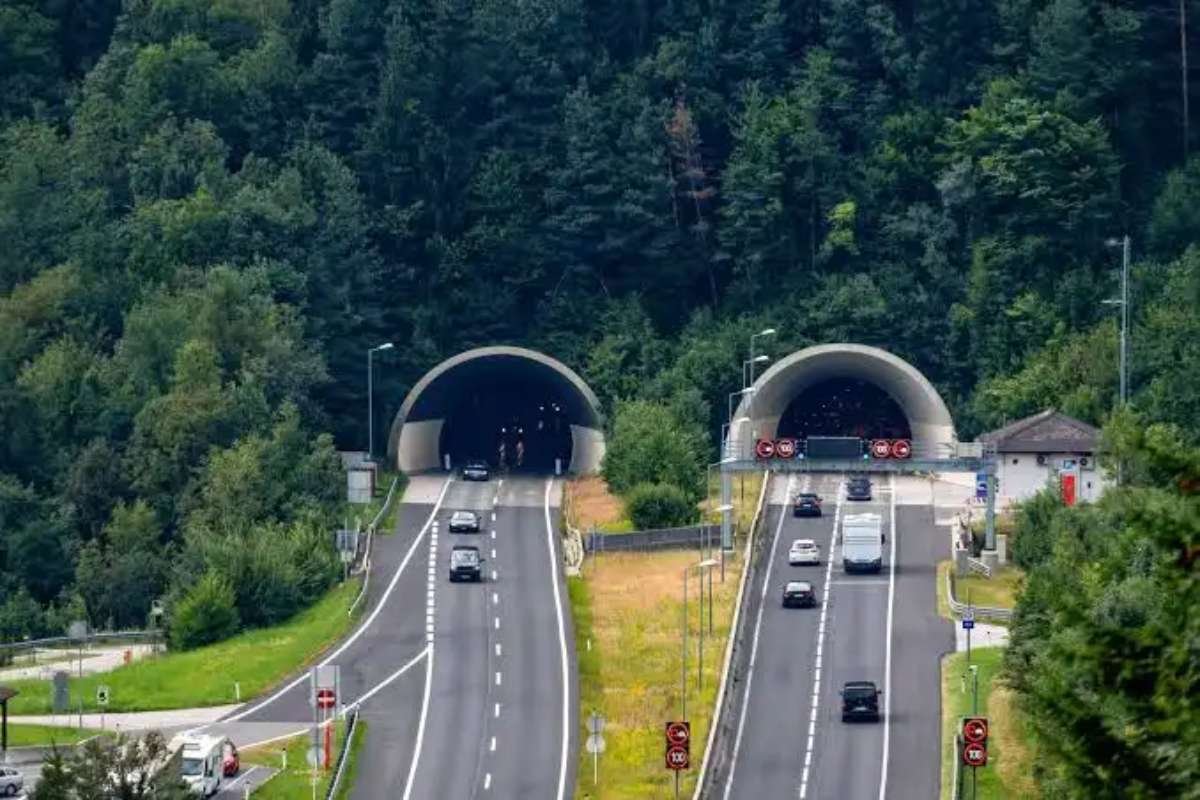
- Length: 16.918 km
- Year Opened: 1980
- Location: Gotthard Pass, Swiss Alps
- Unique Feature: Primary freight artery beneath the central Alps
Switzerland drove the St. Gotthard Tunnel through solid Alpine rock in the 1970s to keep north–south traffic moving when snow closed mountain passes. Crews advanced from both portals, averaging 20 meters a day before meeting underground in 1978 after sealing water inflows that repeatedly flooded work zones. Today, the single bi-directional tube carries up to 30,000 vehicles daily, with truck restrictions during peak periods to prevent bottlenecks.
Large fans can reverse airflow during fires, while jet ventilation maintains breathable conditions despite diesel traffic. Breakdown bays shelter disabled vehicles, and overhead gantries dynamically adjust speed limits, often dropping to 80 kph during fog or congestion.
The tunnel now handles the vast majority of freight crossing the Alps, cutting fuel use and emissions compared to older mountain routes. Ongoing upgrades include LED lighting, seismic reinforcement, and modern control systems, keeping this veteran link competitive with newer entries on lists of the longest road tunnels in the world.
Read Next: Inside the Top 20 Longest Sea Bridges in the World and the Calculations That Refused to Fail
8. Tiantaishan Tunnel, China
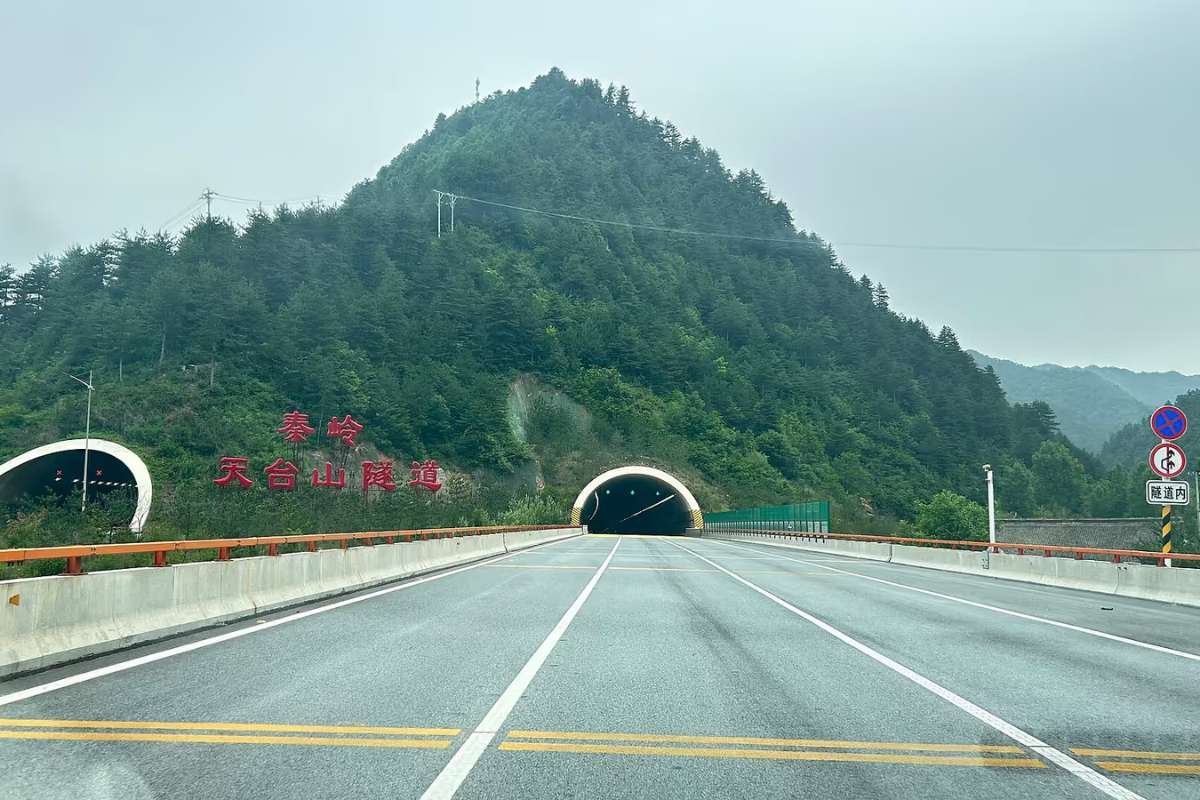
- Length: 15.56 km
- Year Opened: 2021
- Location: Shaanxi Province, high plateau
- Unique Feature: Rapid construction in prolonged sub-zero conditions
On Shaanxi’s high plateau, the Tiantaishan Tunnel emerged from a race against extreme cold. Crews began work in 2017, drilling through frozen limestone to connect coal fields with lowland highways. Snowstorms routinely halted equipment until heated enclosures and remote-controlled drilling rigs kept progress moving at nearly 40 meters per day.
The tunnel slopes gently for heavily loaded trucks, with de-icing systems preventing ice buildup at portals and drainage channels carrying meltwater away from the roadway. Cameras cover every curve, feeding data to control centers that adjust ventilation during peak haul periods.
Rest niches offer drivers a place to pause mid-run, while reinforced concrete liners resist frost damage, as verified by annual ground-penetrating radar scans. Since opening, coal shipments have doubled, stabilizing power supplies and creating long-term operations jobs as vehicles move continuously under bright lighting designed to reduce fatigue.
9. Daliangshan No.1 Tunnel, China
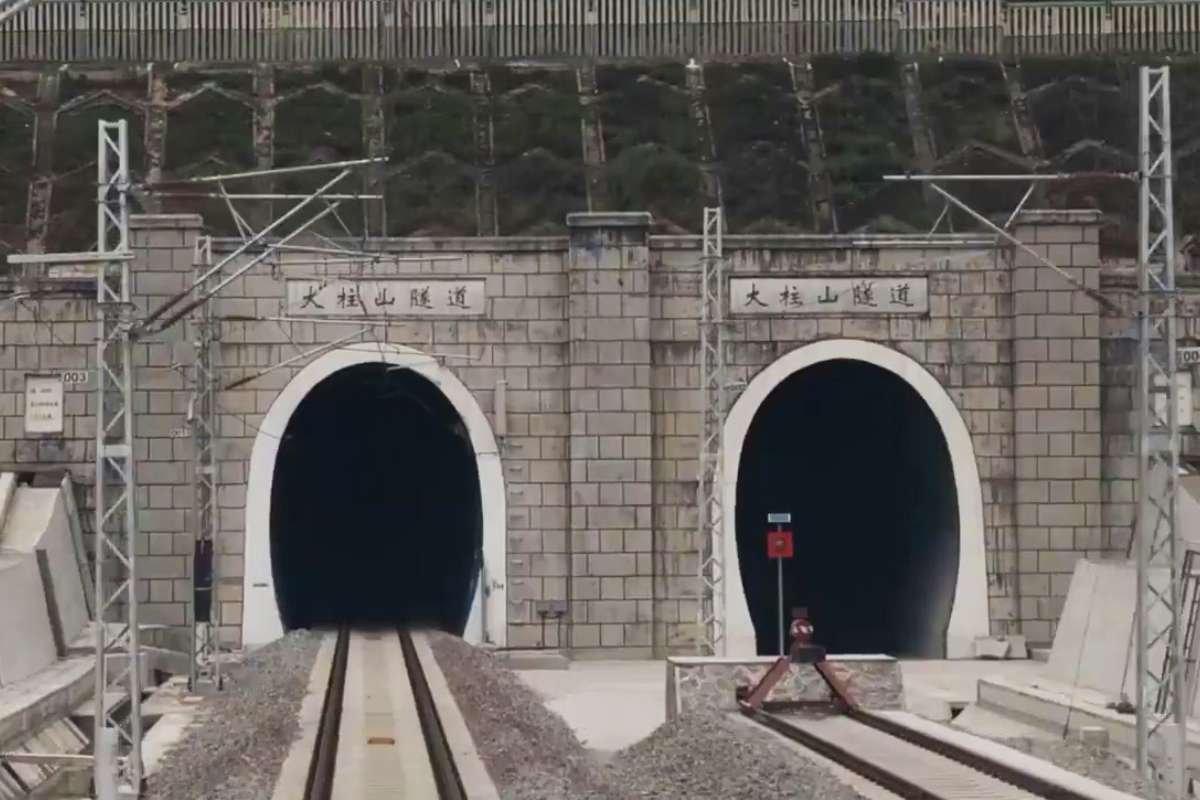
- Length: 15.366 km
- Year Opened: 2025
- Location: Sichuan Province, Daliangshan Mountains
- Unique Feature: New expressway segment strengthening regional connectivity
Engineers pushed the Daliangshan No.1 Tunnel through steep terrain in Sichuan to bring remote highland communities onto the national highway network. Work began in 2020 with near-constant blasting, but progress slowed early when hard basalt wore down cutting heads. Crews adapted by combining precision explosives with robotic drilling arms, eventually linking the tunnel to neighboring bores to create a continuous expressway.
The opening transformed freight movement. Timber and mineral trucks now descend safely without the landslides that once shut mountain passes during heavy rain, cutting transport costs for local mills by nearly half. Wide lanes accommodate double trailers, while overhead ducts pull diesel fumes into filtration units that remove roughly 80 percent of particulates.
Emergency alcoves every 300 meters store first-aid kits and radios tied to a central control room capable of halting traffic in under a minute. Drivers highlight the even lighting that follows the tunnel’s natural curves, easing strain after long hauls from Chengdu. Easier access has also fueled eco-tourism, drawing visitors to surrounding ridgelines without carving new surface roads, another marker of how the longest road tunnels in the world reform regional economies.
10. Muzhailing Tunnel, China
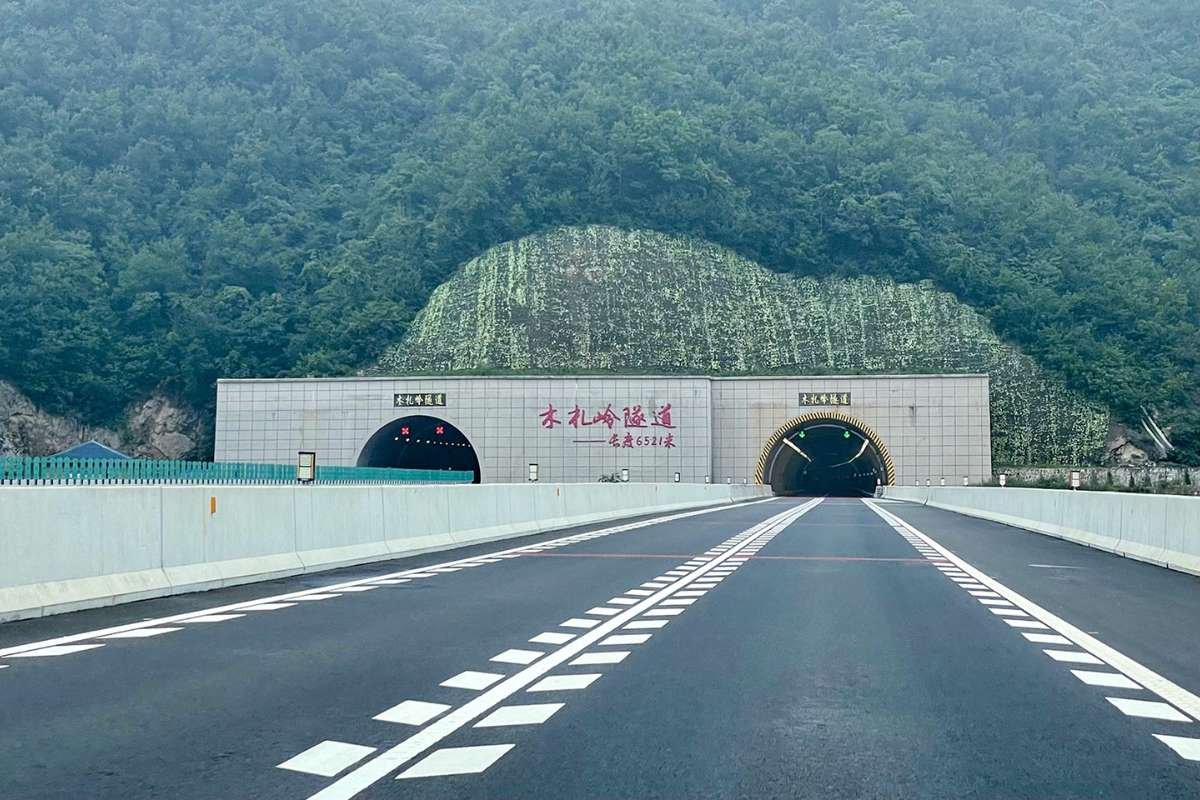
- Length: 15.226 km
- Year Opened: 2024
- Location: Gansu Province, along the G30 highway
- Unique Feature: Strategic shortcut on a vital mountain corridor
The Muzhailing Tunnel, which sliced through Gansu’s high plateau after excavation began in 2019, replaced a twisting mountain pass notorious for landslides that stranded trucks during summer monsoons. Crews stabilized fractured schist with steel ribs and sprayed concrete, then embedded seismic sensors to track frequent tremors in the region.
The tunnel channels heavy freight from Lanzhou toward remote mining zones, with pull-off bays for tire checks and coolant refills spaced along the grade. Massive ventilation towers at each portal drive clean air through the bore, countering exhaust buildup during winter cold snaps when engines idle longer.
Fiber-optic lines stream live video to operators, who adjust speeds via digital signs during traffic surges. Haulers report lower fuel bills as steady runs replace steep descents, while drainage vents divert groundwater to keep curves dry. As a backbone of Gansu’s logistics network, it underscores how the world’s longest road tunnels keep trade moving through rugged terrain.
11. Zigana Tunnel, Turkey
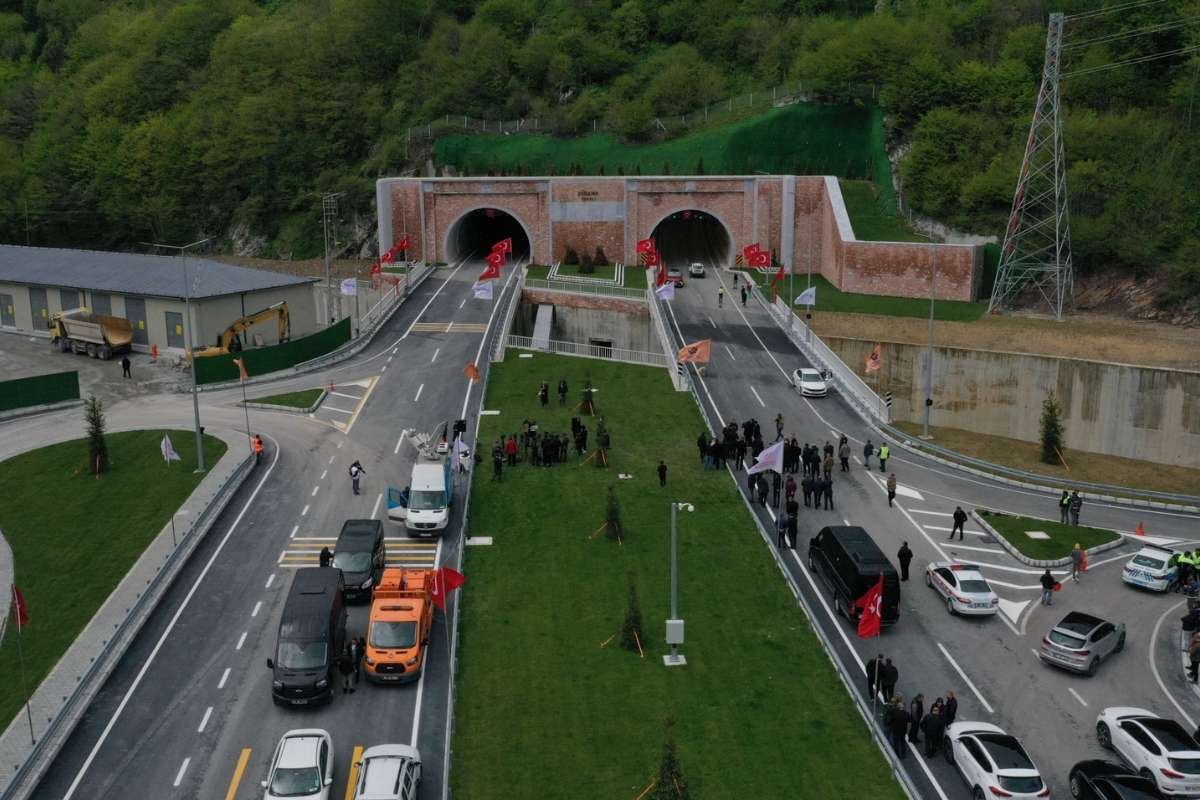
- Length: 14.476 km
- Year Opened: 2023
- Location: Between Maçka and Torul, Black Sea region
- Unique Feature: Eliminates dangerous winter mountain crossings
Turkey accelerated construction of the Zigana Tunnel between 2018 and 2023 to bypass the old Zigana Pass, where snow, fog, and ice caused frequent fatal crashes. Crews carved twin tubes through karst limestone riddled with hidden cavities, pumping out groundwater from underground channels to keep excavation faces dry.
Today, tourist convoys and freight trucks pass through in about 15 minutes, guided by color-coded lighting that signals clear lanes ahead. Fire suppression pipes line the ceiling, and cross-passages allow vehicles to shift into the parallel tube during maintenance or emergencies.
Automatic toll cameras fund surface radar systems that detect ice buildup at portals. Year-round access has transformed nearby villages, bringing schools, markets, and services closer and reducing long-standing isolation. Structural girders designed for seismic resilience are inspected monthly, keeping this link reliable in a fault-prone zone.
12. Ryfylke Tunnel, Norway
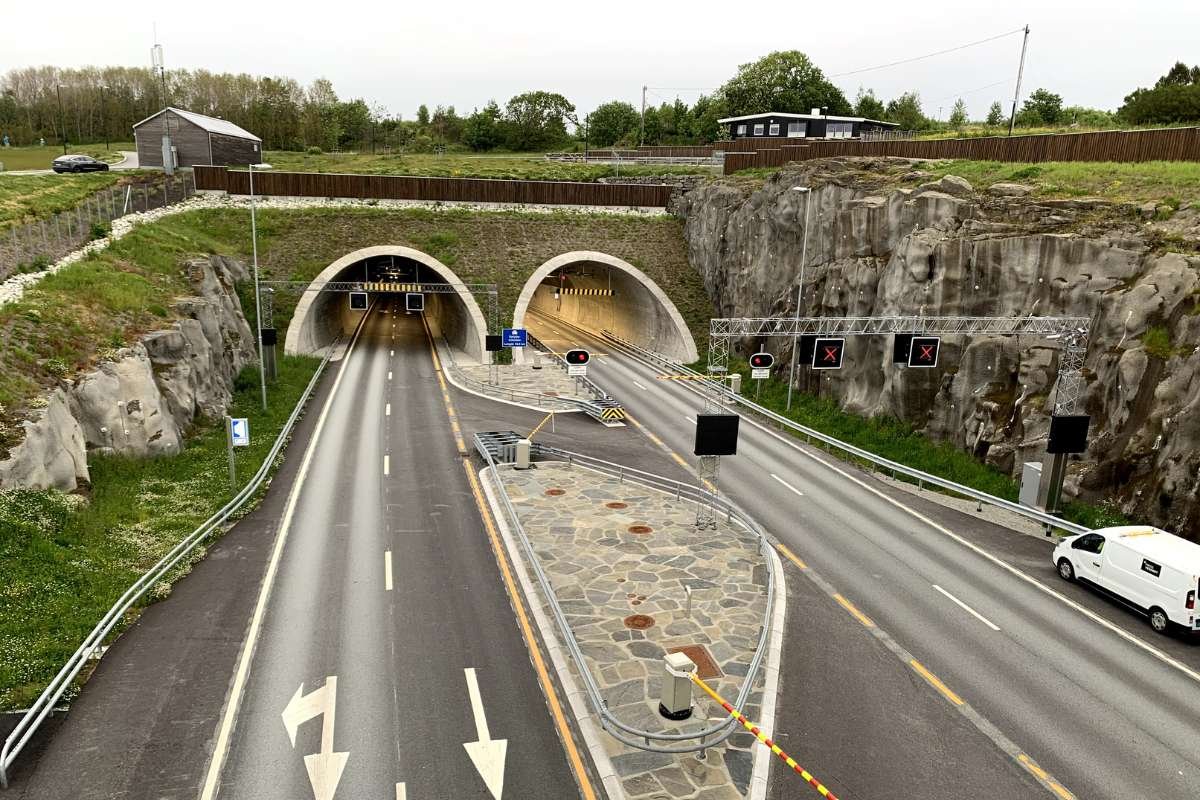
- Length: 14.459 km
- Year Opened: 2019
- Location: Rogaland County, beneath the Høgsfjord
- Unique Feature: Deepest subsea road tunnel in operation
Norway plunged beneath a steep fjord arm with the Ryfylke Tunnel, removing ferry dependence along the busy E39 coastal route north of Stavanger. Survey teams mapped the seabed years in advance before boring machines advanced from shore-based access points, sealing saltwater inflows with chemical grouts as they went.
The tunnel descends to nearly 292 meters below sea level, kept dry by high-capacity pumps that lift seepage to treatment facilities. Sound-absorbing wall panels soften engine noise, while LED guidance lights pulse gently to trace curves safely at highway speeds.
Longitudinal fans sweep exhaust toward the fjord outlet, monitored for nitrogen spikes from diesel traffic. New roundabouts at each end feed local roads, helping farms once tied to ferry schedules ship milk and produce daily. By cutting roughly 40 minutes from coastal trips, the tunnel turned once-lengthy crossings into short drives, underscoring how the world’s longest road tunnels transform daily life.
Evolution of Mega-Tunnels
The longest road tunnels in the world began modestly in the early 20th century, carved as short passages beneath hills to ease local travel. As vehicle traffic expanded, engineers pushed farther underground. By the mid-1900s, Europe started building longer tunnels to connect isolated valleys and maintain year-round routes through harsh terrain. A significant turning point came in 1980 with Switzerland’s Gotthard Road Tunnel, which stretched 16 kilometers beneath the Alps. Designed to carry constant heavy freight traffic, it proved that long road tunnels could operate safely at scale.
Momentum accelerated from there. Norway redefined tunnel length with the Lærdal Tunnel, which opened in 2000 at 24.5 kilometers and introduced visual rest zones to combat driver fatigue. In the following decade, China emerged as a dominant force, driving deep through complex geology with projects such as the Zhongnanshan Tunnel, built to handle growing interregional traffic across rugged mountain ranges.
Recent projects reflect a shift toward speed, resilience, and precision. The Tianshan Shengli Tunnel, completed in 2025, cuts 22 kilometers through snowbound peaks and seismic zones. Builders relied on advanced tunnel boring machines, blind heading excavation, and real-time monitoring systems that track rock stress, airflow, and temperature as construction progresses. These technologies shorten timelines while improving safety during both building and daily use.
Demand for ultra-long road tunnels continues to rise as climate extremes, congestion, and economic pressure reshape infrastructure planning. Countries increasingly choose underground routes to bypass landslides, blizzards, urban bottlenecks, and environmentally sensitive areas. China now leads in sheer volume of long tunnels, Europe prioritizes safety and cross-border reliability, while Australia and Japan focus on easing city sprawl. Each new generation of megatunnel cuts travel time, stabilizes supply chains, and reinforces the critical role underground roads play in modern mobility.
Engineering Marvels
Builders faced extreme challenges to create these underground giants. Norway’s Lærdal Tunnel team drilled through fractured gneiss that collapsed midway, dumping tons of debris they had to seal with concrete before pushing ahead. China broke speed records at Tianshan Shengli Tunnel, running heated drills in sub-zero mountains to advance up to 40 meters a day through frozen granite. In Switzerland, Gotthard Road Tunnel crews fought relentless water inflows during the 1970s by injecting grout to stabilize the rock and keep excavation moving.
Each tunnel stretched technology in different ways. Japan’s Yamate Tunnel followed precise underground curves beneath active subway lines, guided by high-accuracy positioning systems. China’s Zhongnanshan Tunnel harnessed hot springs and mountain runoff to power internal lighting systems. In Turkey, Zigana Tunnel crews drained water-filled karst caves to stabilize limestone walls vulnerable to sinkholes.
Materials and methods set these projects apart. Lærdal introduced electrostatic air scrubbers that capture up to 95% of vehicle dust and exhaust particles. Norway’s Ryfylke Tunnel sealed saltwater leaks in real time beneath nearly 300 meters of fjord. Together, these advances shortened build times, controlled costs, and laid the groundwork for the next generation of the world’s longest road tunnels.
Read Next: Why Longest Bridges in the USA Still Leave People Speechless?
Safety and Driver Experience
→ Keeping Drivers Alert Over Long Distances
Design choices inside the Lærdal Tunnel focus on preventing fatigue during extended drives. Four large caverns appear every six kilometers, washed in alternating blue and white light to reset visual focus and reduce drowsiness, an effect confirmed through controlled testing. Rumble strips along lane edges vibrate tires when vehicles drift, while overhead message boards warn of curves, congestion, or sudden speed changes ahead.
→ Rapid Response When Things Go Wrong
Safety systems across the longest road tunnels in the world prioritize fast intervention:
- Emergency access: SOS phones, roughly every 250 meters, connect drivers directly to control centers.
- Real-time monitoring: Camera networks allow operators to spot incidents and close lanes within seconds.
- Fire control: In the Gotthard Road Tunnel, reversible jet fans can flip airflow to clear smoke quickly, a system rehearsed annually with regional fire crews.
- Weather protection: WestConnex integrates flood gates and emergency exits linked to rainfall sensors to manage Sydney’s sudden downpours.
→ Making Everyday Drives Feel Easier
Beyond emergencies, these tunnels are designed to reduce stress during routine trips:
- Lighting comfort: Daylight-toned illumination in the Ryfylke Tunnel and Tianshan Shengli Tunnel minimizes the closed-in sensation drivers often report underground.
- Air quality backup: The Zhongnanshan Tunnel stores oxygen masks in wall niches, ready for rare air-quality drops caused by heavy truck traffic.
Travel Adventures
From scenic fjords to dense megacities, these tunnels do more than shorten drives. The sections below highlight what waits on either side: nature escapes, cultural stops, and urban experiences that turn underground routes into unforgettable road trips.
| Adventure Type | Tunnel Example | Key Experiences |
| Scenic Gateways | Lærdal Tunnel (Norway, E16) | 20-minute run to Aurland fjord kayaking; Brekkefossen waterfall hikes; Bergen seafood markets, half-day away |
| Mountain Crossings | Gotthard Tunnel (Switzerland) | South to Lugano lakeside gelato, boat rides; North to Lucerne bridges, cable cars; Optional Tremola Road hairpins |
| Black Sea Escapes | Zigana Tunnel (Turkey) | Trabzon sumac kebabs; Uzungöl trails, tea plantations inland. |
| Urban Shortcuts | Yamate Tunnel (Japan) | Shibuya sushi; Hakone hot springs day trips |
| Urban Shortcuts | WestConnex (Australia) | Bondi Beach sunsets; Blue Mountains hikes |
| Remote Bazaar Routes | Tianshan Shengli (China) | Silk Road stalls with lamb skewers, spices; Camel treks |
Sustainable Innovations
Many of the longest road tunnels in the world reduce environmental strain by keeping traffic underground and away from fragile landscapes. Norway’s Lærdal Tunnel relies on electrostatic air filters that trap up to 95 percent of dust and exhaust particles, venting cleaner air through shafts instead of letting fumes drift across narrow fjord valleys. In China, the Zhongnanshan Tunnel generates part of its own electricity by channeling mountain springs into small hydropower units that power lighting and ventilation, without placing extra demand on the grid.
Ventilation systems now anchor many green design gains. Norway’s Ryfylke Tunnel uses longitudinal airflow that pushes polluted air quickly toward sea outlets, cutting energy consumption by roughly 30 percent compared to older transverse systems. At high elevations, China’s Tianshan Shengli Tunnel relies on solar-assisted heating units at tunnel portals to prevent ice buildup, limiting fossil fuel use during long winter months.
The long-term benefits extend beyond the tunnel walls. Switzerland’s Gotthard Road Tunnel keeps heavy freight off sensitive Alpine passes, reducing erosion and allowing wildlife corridors to recover. In dense cities, projects like WestConnex and Yamate Tunnel shorten trips and smooth traffic flow, cutting urban emissions while adding electric vehicle charging at service areas. Together, these measures reflect a broader shift toward lowering transport-related carbon output without sacrificing mobility.
Future Frontiers
I. Record-breaking projects continue
- China advances deeper excavation with the Jinpingshan Tunnel, tying road access directly into massive hydropower infrastructure in Sichuan.
- Norway plans further upgrades to the E39 corridor, including long subsea tunnels to phase out ferry crossings along the coast.
II. Automation reshapes tunnel operations
- The Lærdal Tunnel already tests driver-fatigue prediction using steering and speed data.
- Trials in the Gotthard Road Tunnel explore autonomous truck platoons traveling at highway speeds.
- WestConnex deploys AI-driven traffic control that dynamically adjusts speeds and lane flow, significantly reducing congestion.
III. Design adapts to climate pressure
- High-altitude routes like the Tianshan Shengli Tunnel add expanded drainage to manage meltwater from thawing peaks.
- Seismic zones such as the Zigana Tunnel reinforce flexible liners to absorb stronger ground movement.
IV. Next-generation maintenance and power
- Drone patrols are expected to handle routine crack inspections and structural scans.
- Solar-clad portals and off-grid energy systems aim to power lighting, sensors, and ventilation independently.
Conclusion
The longest road tunnels in the world show how modern engineering reshapes distance, safety, and daily life without disturbing the landscapes above. From mountain crossings to subsea links and urban corridors, these projects turn once-impossible routes into reliable connections. As technology, automation, and sustainability continue to evolve, future tunnels will go even farther underground, carrying the traffic, trade, and travelers that keep the world moving.