
High employee retention numbers can hide a dangerous reality: stagnant, compliant teams who stay simply because the job is easy. When managers confuse lack of complaints with true job commitment, they overlook sinking performance standards and passive disinterest across critical projects.
Isolating actual sentiment demands combining qualitative focus groups with quantitative performance metrics. Using anonymous feedback channels grants staff explicit permission to surface operational bottlenecks without fear of managerial friction or professional fallout.
True workforce health relies on constant, transparent evaluation. When leaders and managers master how to measure employee engagement, they uncover the hidden operational risks that turn good strategy into seamless execution.
How to measure employee engagement?
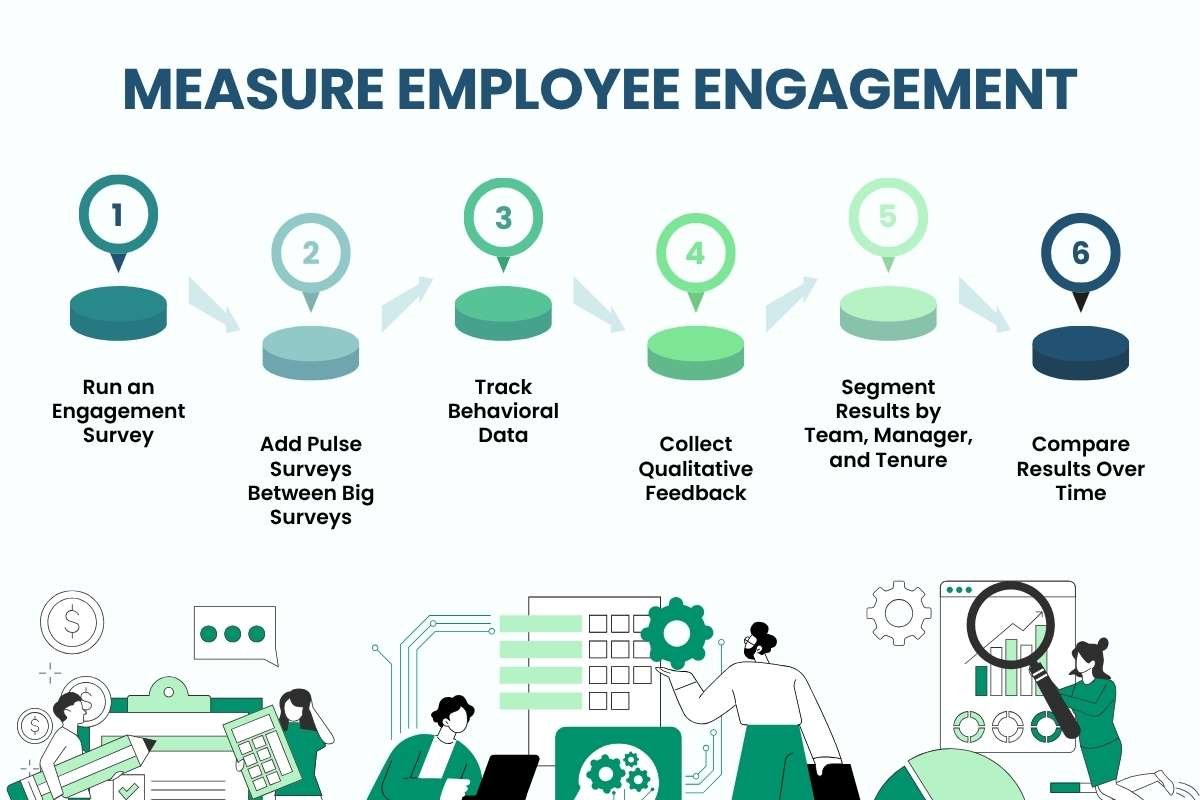
Measuring employee engagement takes more than one survey score. A strong process combines employee feedback with workplace data, then checks how results change over time. Use these six steps to build a clear view of engagement and spot areas that need action.
Step 1: Run an engagement survey
Start with a full engagement survey or a shorter eNPS survey. A full survey can cover topics such as recognition programs, trust, growth, workload, and manager support. An eNPS survey asks employees how likely they are to recommend the company as a place to work.
Keep questions clear and focused on areas where leadership can impact engagement. Give employees a safe way to respond so they feel free to share honest views.
Quick tip: Ask the same core questions each time. This makes it easier to compare results later.
Step 2: Add pulse surveys between big surveys
A yearly or twice-yearly survey gives you a broad view, but it can miss changes that happen between surveys. Add short pulse surveys during the year to check how employees feel about key issues.
Keep these surveys brief. Three to five focused questions can show if engagement is rising, falling, or holding steady. You can also use them after major changes, such as a new manager, policy, or work process.
Quick tip: Track a few key questions over time instead of changing every question in each pulse survey.
Step 3: Track behavioral data
Survey answers show what employees say. Workplace data can show what they do. Track measures such as employee turnover, absenteeism, meeting participation, training activity, and recognition activity.
Look for patterns rather than judging one number on its own. A rise in turnover may need more review if it happens alongside low survey scores or poor participation.
Quick tip: Pair each behavior measure with employee feedback. This gives leaders more context before they act.
Step 4: Collect qualitative feedback
Numbers can show a problem, but they may not explain why it exists. Add open-ended feedback through exit interviews, one-on-one notes, focus groups, and survey comments.
Look for common themes across these sources. Employees may mention workload, manager support, career growth, or communication in their own words. These comments can help leaders understand what sits behind a low score.
Quick tip: Group comments by theme instead of reacting to one strong comment.
Step 5: Segment results by team, manager, and tenure
A company-wide engagement score can hide major gaps. Break results down by team, manager, location, role, or length of service when the data set is large enough to protect privacy.
This can show where engagement differs across the business. One team may report strong support, while another may face issues with workload or communication.
Quick tip: Compare groups with similar work and enough responses to make the results useful.
Step 6: Compare results over time
A single engagement score gives you a snapshot. Trends give you a clearer picture. Compare current results with past surveys to see which areas improve, decline, or stay the same.
Set a regular review cycle so leaders can track progress after each action. You can also compare results before and after a major workplace change to see if it had the expected effect.
Quick tip: Focus on the direction of change and the reasons behind it, not just whether the score went up or down.
Together, these steps create a stronger way to know how to measure employee engagement. Surveys show employee views, workplace data adds context, and trend analysis shows whether your actions are making a difference.
What are some common mistakes made when measuring employee engagement?

Measuring employee engagement can fail when teams collect data without using it well. These common mistakes can make results less useful and reduce employee trust.
1. Relying on one annual survey
An annual survey can miss changes that happen during the year. In fact, 58% of employees say they wish their employer would conduct employee engagement surveys. Use short pulse surveys between larger surveys to track key issues and spot new concerns early.
2. Looking only at the overall score
A company-wide score can hide gaps between teams. Break results down by team, manager, role, or tenure where the sample size allows it. This helps leaders see where engagement needs more attention.
3. Collecting data without taking action
Employees may stop responding if leaders ask for feedback but never act on it. Share key findings, explain what the company will change, and give regular updates on progress. This shows employees that their feedback has value.
A good measurement process should lead to action. The goal is not just to collect employee engagement data, but to use it to improve the employee experience. As founder and consultant Christine Riley VanDerVort puts it:
“Workplaces are built one interaction at a time, and every interaction leaves an impression.”
Conclusion:
Surveys that sit in HR archives without driving structural change tell your workforce that their input is an exercise in corporate compliance. Real employee retention strategies work when leadership stops viewing survey scores as vanity metrics and starts treating sentiment drops as early-warning operational failures.
Connecting daily output to employee morale requires a willingness to act on uncomfortable data. Once your organization commits to knowing how to measure employee engagement as a core operational discipline rather than an annual HR routine, you convert hidden friction into measurable productivity, holding onto your best people long before recruiters reach them.
FAQs
1. What is the most accurate metric for tracking real-time workforce sentiment?
Employee Net Promoter Score (eNPS) paired with brief, monthly pulse surveys offers the clearest ongoing picture of overall team sentiment.
2. How often should organizations send out employee engagement surveys?
Quarterly or monthly pulse surveys work best because they capture real-time workplace changes without creating survey fatigue.
3. Why are traditional annual engagement surveys no longer enough for HR teams?
Annual surveys only capture a single moment in time, often missing subtle operational issues until after valuable employees choose to leave.
4. How can leadership encourage honest feedback on anonymous surveys?
Protect complete anonymity through third-party platforms and consistently demonstrate that survey results lead to tangible policy changes.
5. What is the difference between job satisfaction and true employee engagement?
Satisfaction simply reflects how content an employee is with their pay and perks, whereas engagement measures their emotional commitment to the company’s long-term goals.