Key Points:
- Ryanair rejects Starlink over high costs and fuel impact, sparking Musk–O’Leary feud.
- Musk’s takeover poll on X adds drama, though EU rules block majority ownership.
- Ryanair turns dispute into marketing with satirical discounts, boosting bookings.
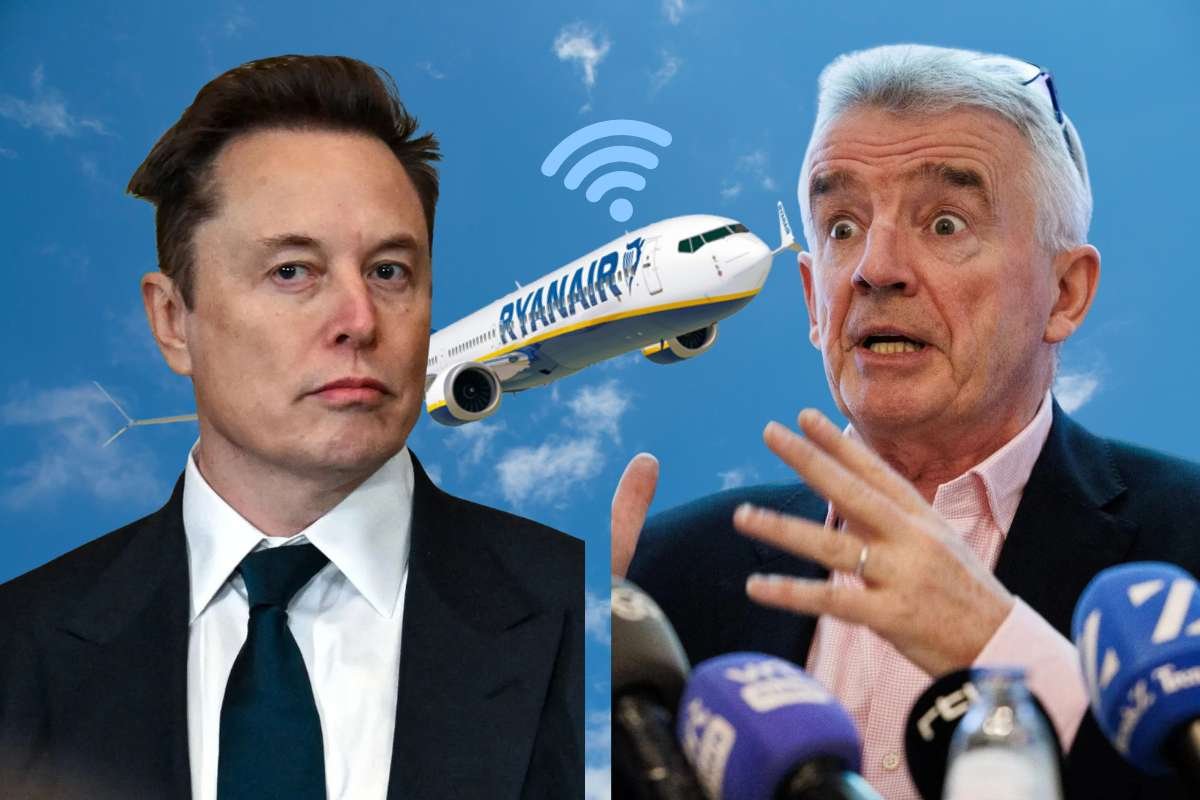
Ryanair’s recent decision to forgo installing Elon Musk’s Starlink satellite internet system on its fleet has ignited a high-profile public dispute between the airline’s CEO, Michael O’Leary, and the tech billionaire. O’Leary explained that the cost of installing Starlink antennas, coupled with the added aerodynamic drag, would significantly increase fuel expenses, estimating an annual rise of €200–€250 million. He further emphasized that most passengers on Ryanair’s short-haul flights would be unlikely to pay extra for in-flight Wi-Fi, making the investment commercially unviable.
Musk reacted sharply on social media, calling Michael O’Leary “misinformed” and escalating the disagreement with personal jabs. In response, O’Leary dismissed Musk’s remarks publicly, referring to him as an “idiot” and insisting that he would pay no attention to further commentary. What began as a corporate technology decision quickly escalated into a global spectacle, with both figures using social media to amplify their dispute. The feud has captured international attention, highlighting how strategic business decisions can rapidly intersect with celebrity influence in the digital age.
Takeover Talk and Social Media Firestorm
The disagreement gained further attention when Elon Musk posted a playful poll on his platform X, asking followers if he should buy Ryanair and install his preferred leadership. The poll quickly attracted widespread attention, gaining momentum as supporters humorously encouraged Musk to proceed. While largely seen as a tongue-in-cheek stunt, it added a dramatic layer to the feud and underscored the growing role of social media in corporate disputes.
Michael O’Leary, however, quickly pointed out the practical limitations of such a scenario. European Union regulations prevent airlines in the bloc from being majority-owned by non-EU nationals, making a full acquisition by Musk implausible. Nevertheless, he joked that Musk could still acquire a non-controlling stake, playfully suggesting it might deliver better returns than some of Musk’s other ventures. Analysts note that this exchange illustrates a new era in corporate communications, where public conflicts, social media antics, and business strategies often have global visibility.
Turning Feud Into Publicity and Discounts
Rather than letting the dispute remain purely contentious, Ryanair leveraged the media attention for marketing purposes. The airline launched a satirical “Big Idiots Seat Sale,” offering heavily discounted tickets and using the feud as a humorous promotional tool. O’Leary confirmed that the attention generated from the conflict had increased bookings by 2–3 percent, demonstrating that even public clashes can yield tangible commercial benefits.
At a press conference in Dublin, Michael O’Leary reinforced Ryanair’s commitment to cost efficiency while hinting at ongoing discussions with alternative connectivity providers, such as Amazon’s Project Kuiper, which could offer Wi-Fi solutions without the same cost burden as Starlink. The Ryanair-Musk feud has now become a case study in modern business strategy, showing how corporate conflicts can simultaneously generate publicity, entertain the public, and reinforce brand positioning.
As the exchange continues to dominate social media discussions, it serves as a vivid example of how today’s CEOs navigate a world where business decisions, public image, and social media influence are increasingly intertwined.