The global workforce is undergoing one of the fastest transformations in its history. Between AI automation, hybrid work, geopolitical shifts, and new expectations around leadership and culture, companies approaching 2026 face a talent landscape that looks dramatically different from the one they managed just a few years ago. Traditional job descriptions are becoming obsolete, career ladders are giving way to fluid skill stacks, and static expertise no longer guarantees long-term employability.
The rise of AI-native workflows, real-time decision systems, global remote collaboration, and tighter business cycles means employees must operate with a blend of technological fluency, strategic thinking, adaptability, and emotional intelligence. In 2026, the most valuable people inside any company will not be the ones with the most experience—but the ones with the most elastic skills.
This article explores the new talent equation defining success in 2026: the blend of human, digital, and strategic abilities that matter most as companies scale, automate, and compete in an increasingly compressed and unpredictable business environment.
Why 2026 Forces Us to Rethink What “Talent” Really Means?
If you asked a CEO twenty years ago what made someone “talent,” the answer would be predictable: experience, credentials, maybe a technical skill. But the workplace of 2026 is rewriting that definition entirely, forcing us to consider a new talent equation. The traits that once signaled long-term value no longer guarantee relevance in a world where technology advances faster than job descriptions can keep up.
Automation now handles repetitive and predictable work that once differentiated junior roles from senior ones. Business cycles turn over in weeks instead of quarters, pushing teams to adjust direction quickly. And the rise of hybrid work has revealed a new truth: people who cannot self-manage or collaborate digitally struggle, no matter how strong their résumé is.
What organizations now need is not static expertise but fluid capability—people who learn quickly, adapt gracefully, question assumptions, and operate confidently in ambiguity. Talent is no longer defined by what someone has done, but by how effectively they respond to what comes next.
AI Fluency Is Becoming the Default Language of Work
The workplace has changed quietly—but permanently. AI is no longer a specialized tool used by a select few. It has become the invisible engine behind research, communication, analysis, and planning. And by 2026, professionals who don’t understand how to work alongside it will simply move slower than everyone else.
AI fluency isn’t about technical depth.
It’s about operational speed.
AI-fluent employees don’t waste time hunting for information or manually producing drafts. They know how to design prompts, refine outputs, validate accuracy, and convert insights directly into action. The advantage compounds daily.
Here’s the difference:
- A marketer explores 20 customer segments in minutes.
- A finance analyst models three risk scenarios before lunch.
- An HR partner surfaces team sentiment patterns no survey could catch.
The mindset shift is simple:
AI provides the acceleration. Humans provide the direction. The people who thrive in 2026 won’t use AI as a shortcut—they’ll use it as an extension of their capabilities.
The Increasing Value of Creative and Strategic Thinking in a High-AI Workplace
As AI becomes more advanced, automated, and deeply embedded into workflows, its limitations become clearer—and so does the value of human creativity and strategy. AI can analyze patterns, but it cannot imagine something that doesn’t yet exist. It cannot create meaning, context, or vision.
This shift defines the new talent equation: the most sought-after professionals in 2026 will be those who can think originally, see possibilities others overlook, and build strategies that define long-term direction.
Creative and strategic thinkers excel because they can:
- Connect insights across data, human behavior, and market signals
- Think laterally when breaking down complex or ambiguous problems
- Envision products, systems, and customer experiences not yet imagined
- Build strategies that are flexible, resilient, and responsive to rapid change
- Translate abstract ideas into clear, actionable plans
“AI can accelerate ideas, but it can’t originate them,” notes Raphael Yu, CMO at LeadsNavi. “Your strongest competitive advantage in 2026 is the ability to think beyond what the algorithms can see.”
This blend of creativity and strategic depth allows people to shape direction, not just react to it. It’s what helps businesses differentiate in crowded markets, pivot intelligently during uncertainty, and build solutions customers haven’t asked for yet—but will soon demand.
In a world where AI can execute faster than ever, human imagination is becoming the most irreplaceable skill of all.
How Analytical Literacy Becomes a Competitive Advantage in 2026?
By 2026, every business will be drowning in dashboards, reports, and real-time metrics—yet true insight will remain surprisingly rare. The companies that succeed won’t be the ones with the most data, but the ones with teams who can actually interpret it. That’s why analytical literacy is emerging as one of the most valuable skills in the modern workplace. It will no longer be reserved for data specialists or technical departments. Everyone—from marketing to operations to HR—will be expected to understand the numbers shaping their decisions.
Analytical literacy isn’t about learning advanced statistics. It’s about reading dashboards with clarity, spotting unusual patterns, challenging assumptions, and understanding how specific metrics influence outcomes. It also demands the confidence to question data quality rather than accept it at face value.
“Data has never been more abundant, but insight is still rare,” says Brandy Hastings, SEO Strategist at SmartSites. “The teams that win in 2026 will be the ones who can translate metrics into meaningful action.”
The strongest performers in 2026 will combine AI-generated insights with human judgment—translating raw information into direction, clarity, and action. In a world overflowing with data, the true differentiator will be the ability to make meaning out of it.
The Rising Value of Tech Adaptability in a Constantly Evolving Workplace
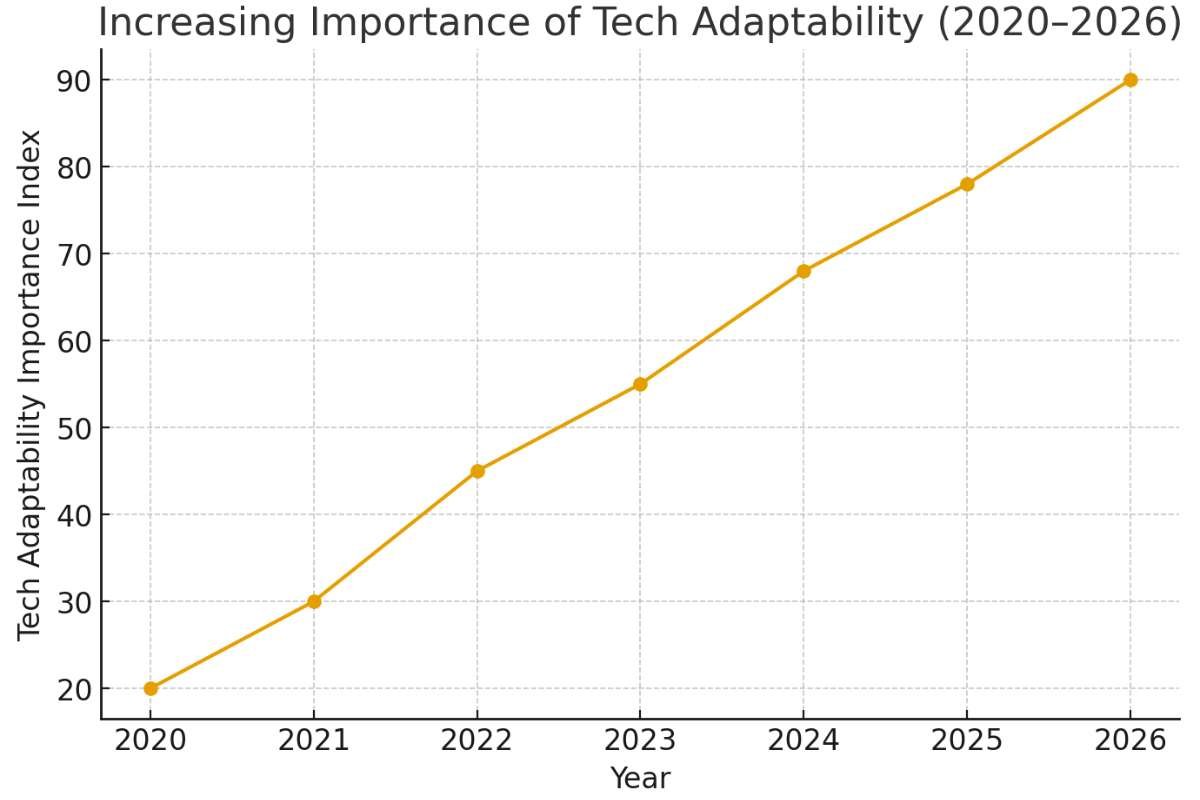
Increasing Importance of Tech Adaptability (2020–2026)
By 2026, the speed of technological change will surpass anything businesses have experienced before. New tools will appear every month, automations will reshape workflows, and software platforms will evolve so quickly that what once took years to update will happen in weeks. In this environment, the most valuable employees define a new talent equation: they won’t be those who mastered one system, but the ones who can adapt to any system with confidence.
Tech-adaptive professionals excel because they can:
- Learn new tools without needing long training cycles
- Move fluidly between different digital platforms
- Adjust their workflow as processes evolve
- Experiment with features instead of waiting for instruction
- Stay calm and effective in fast-changing environments
This ability has become more important than deep expertise in a single tool. Every modern role—from HR to marketing to operations—now depends on navigating a shifting tech landscape.
“In fast-moving environments, the people who stand out are not the ones who know every tool. They are the ones who can adapt when the tools change,” says William Fletcher, CEO at Car.co.uk. “Technology now evolves faster than training cycles, so adaptability has become a performance skill, not a personality trait.”
In 2026, adaptability is the real differentiator. Employees who embrace continuous learning will outperform, innovate faster, and stay future-proof in a workplace defined by constant change.
Why Systems Thinking Is Becoming a Core Talent Skill in 2026?
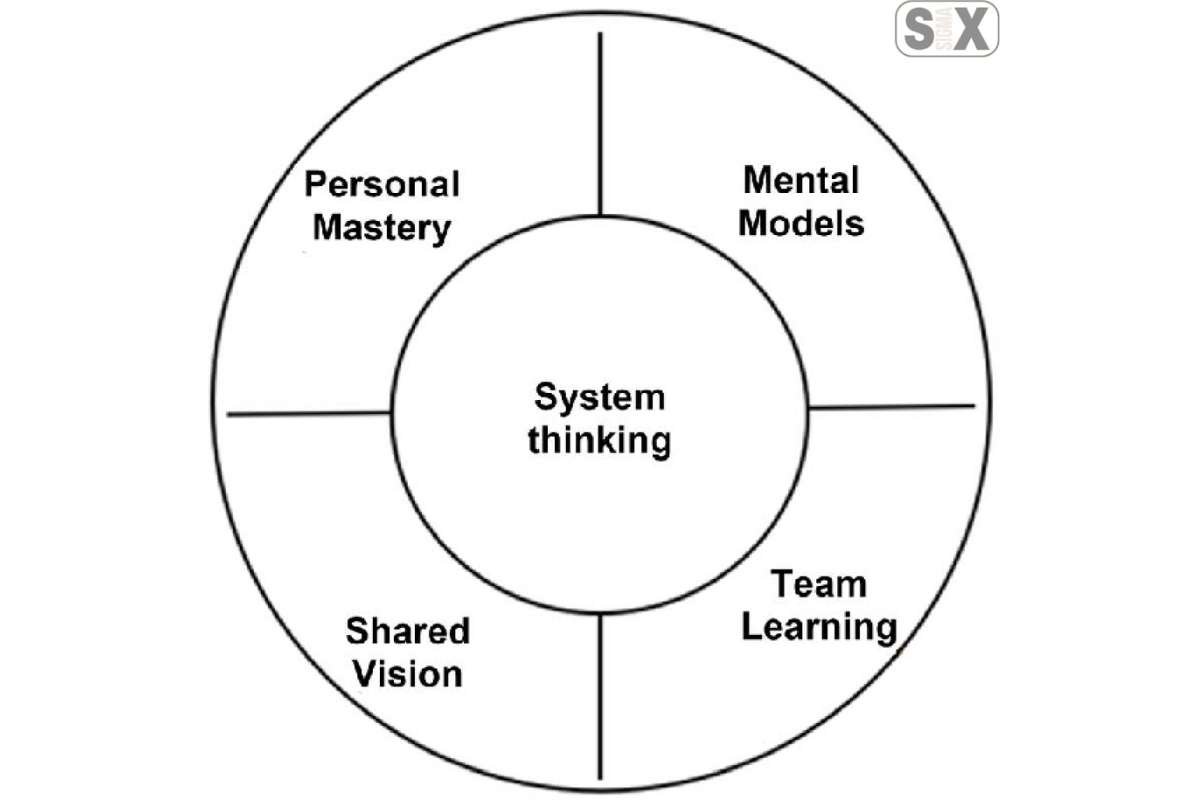
By 2026, modern organizations will no longer function as simple chains of tasks—they will operate as interconnected ecosystems where tools, teams, data, and automations constantly influence one another. With this growing complexity, the most valuable professionals will be those who can look beyond their own to-do lists and understand how the entire system works. They’ll see patterns others miss, connect insights across departments, and strengthen the workflows that drive real performance.
Systems thinkers excel because they can:
- Map how tools, processes, and people interact
- Identify bottlenecks before they slow execution
- Predict unintended consequences of decisions
- Design workflows that improve speed and reliability
- Strengthen handoffs between teams and avoid duplication
This mindset has become essential in hybrid, automated, and AI-supported environments where dependencies multiply rapidly. Instead of merely completing tasks, systems thinkers elevate the entire operation. They create clarity, prevent breakdowns, and design structures that help teams scale efficiently.
The Power of Faster Decisions in a Real-Time Business World
By 2026, hesitation will become one of the most expensive behaviors inside a company. Markets will shift in days, competitors will launch responses overnight, and teams will expect direction the moment new information appears. The organizations moving fastest won’t always be the ones with the best technology—often, they will simply be the ones with people who can make decisions without getting trapped in analysis or waiting for ten layers of approval.
This represents the new talent equation for success. Modern high performers will operate with a different rhythm: they will understand that data will never be perfect, yet action still needs to happen. They’ll scan the risks, choose a direction, and take responsibility for the outcome—good or bad. This momentum will create a ripple effect: projects will keep advancing, teams will stay aligned, and execution will speed up across the entire organization.
“Speed matters, but clarity matters more,” says Ian Gardner, Director of Sales and Business Development at Sigma Tax Pro. “Teams make better decisions when the data is simple, accurate, and easy to act on.”
The truth is simple: slow decisions create bottlenecks. Fast, thoughtful decisions create competitive advantage. And in 2026, the professionals who can commit with clarity—even in uncertainty—will be the ones shaping results, not merely responding to them.
Human-Centric Leadership in the Age of Automation
By 2026, leadership won’t be defined by how much a manager controls—it will be defined by how well they connect. As automation takes over repetitive work, the human side of leadership will become the real differentiator.
Modern teams follow leaders who can:
- Read emotional tone in digital spaces
- Hold productive conversations when tension rises
- Coach people through skill transitions
- Build trust without physical proximity
- Keep clarity intact during constant change
But here’s the real shift:
Leadership isn’t about directing tasks anymore. AI can do that. Leadership is about shaping experience, culture, and momentum.
Human-centric leaders don’t manage work. They elevate people.
They create environments where individuals feel safe to speak up, confident to experiment, and supported through uncertainty. They recognize that morale is a performance metric, communication is a strategy, and empathy is a competitive advantage.
“In high-pressure environments, leadership is defined by calm clarity and human connection,” says Sharon Amos, Director at Air Ambulance 1. “Teams perform at their best when they feel supported, understood, and anchored by purpose, especially as automation replaces routine work.”
In an automated world, the most effective leaders are the ones who amplify human potential—because that’s the one thing AI can’t replicate.
Cross-Functional Collaboration Is Becoming the Engine of High-Performing Teams
Walk into any successful company in 2026 and you’ll notice something immediately: no department will move alone anymore. Marketing decisions will depend on product insights. Product timelines will depend on engineering alignment. Engineering priorities will depend on real-time data. And every one of those functions will rely on AI systems that only work when teams share information openly, fundamentally changing the new talent equation.
The era of operating in silos is over:
Real cross-functional collaboration isn’t just about attending meetings with other teams. It’s about understanding how your decisions ripple outward—how a delayed approval affects release cycles, how a marketing campaign impacts customer behavior, how a data gap derails an engineering sprint. Collaboration becomes a discipline, not a courtesy.
Teams that excel at it navigate complexity faster. They pass work between functions without friction. They adapt to time-zone differences, differing communication styles, and tools that evolve weekly. Most importantly, they build a shared context—so decisions improve, not because one person knows more, but because everyone sees the same picture.
By 2026, companies will hire people who will collaborate instinctively. Technical skill will get you noticed; cross-functional fluency will get you promoted.
Why Human-Centered Digital Thinking Is Becoming Essential in 2026?
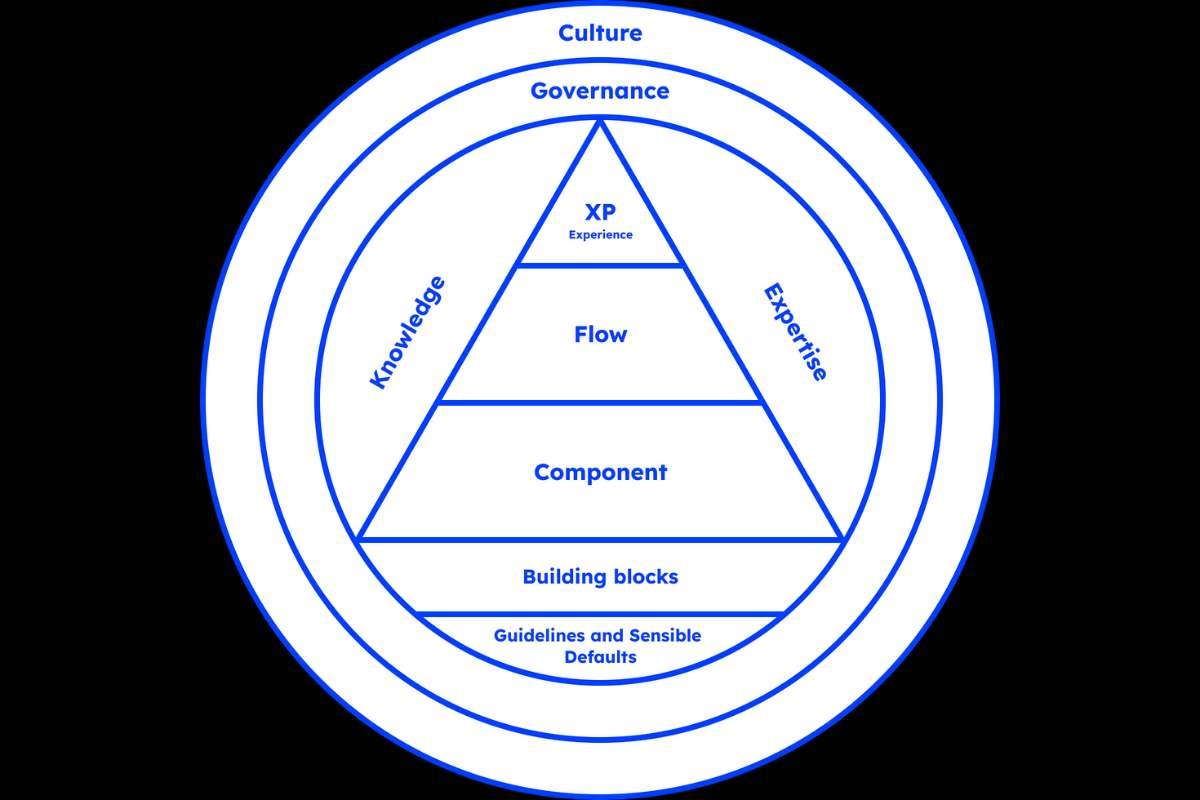
By 2026, every company will operate through digital touchpoints, whether in the form of customer journeys, internal workflows, product interfaces, or AI-assisted tools. As technology becomes more complex, the real competitive advantage will come from teams who can design experiences that feel intuitive, human, and effortless. Human-centered digital thinking is no longer just a design discipline. It is a strategic capability that affects how fast teams move, how customers respond, and how well digital systems scale.
Teams that embrace this mindset look beyond features and focus on how people actually work and behave. They simplify workflows, reduce friction inside tools, and create digital environments that help employees operate at their best. This is why product thinking, UX awareness, and empathy-driven decision-making are becoming essential skills across all roles—not just for designers.
Why This Skill Matters in 2026?
Human-centered digital thinkers can:
- Translate complex systems into simple, usable interfaces
- Spot friction inside workflows before it slows teams down
- Make AI and digital tools feel intuitive rather than overwhelming
- Improve collaboration by creating clarity in digital environments
- Increase adoption of new technologies across teams
“Great teams do not just use technology. They design digital experiences around people,” says Kos Chekanov, CEO at Artkai.
In a workplace defined by automation and AI, the companies that win will be the ones that build systems employees love using—not systems they struggle to tolerate.
Communication Mastery Is the Silent Skill Everyone Depends On

Chart: How Strong Communication Improves Team Performance (2026)
If 2026 proves anything, it will be this: teams don’t fall apart because of bad strategy—they fall apart because of unclear communication. This highlights a shift in what defines valuable employees, suggesting a new talent equation.
Work will happen across Slack threads, AI-assisted drafts, asynchronous updates, and time zones that barely overlap. In this environment, the people who rise won’t be the loudest voices. They’ll be the ones who can make their message land the first time.
“Clear communication is the foundation of fast execution,” says Ankit Kanoria, Chief Growth Officer at Hiver. “When teams express ideas simply and share information openly, decisions speed up and customer issues get resolved before they escalate.”
Clear communication will become the backbone of execution. When someone writes with precision, teams will decide faster. When instructions are unambiguous, work will flow without interruption. When messages carry emotional intelligence, collaboration will feel frictionless.
Communication mastery today means more than writing well. It means:
- distilling complexity into clarity
- adapting tone to fit the audience
- reading emotional cues through text alone
- choosing the right moment — and the right medium — to speak
Because in a digital workplace where most conversations happen without a face or a voice, your words are your leadership.
The professionals who master this skill don’t just communicate — they move teams forward.
Self-Management Is Becoming the New Professional Superpower
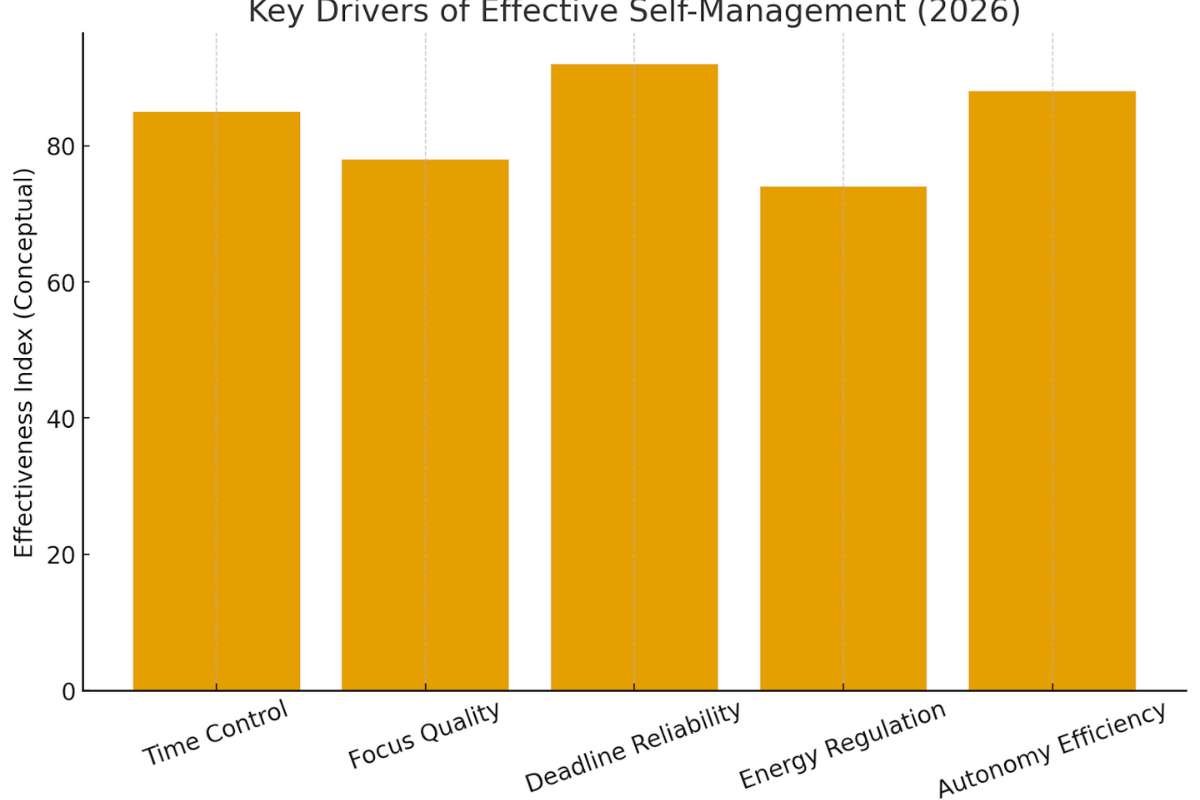
By 2026, the most successful employees will share a quiet strength: they won’t need someone looking over their shoulder to perform at a high level. Hybrid and remote work will push responsibility inward, making self-management not just a preference, but a requirement.
This shift defines the new talent equation. It shows up in the small moments—choosing deep work over distraction, organizing priorities before chaos hits, knowing when to push harder and when to protect energy. It shows up in the big moments too—meeting deadlines without reminders, communicating proactively, and keeping momentum alive even when no one is watching.
Self-management isn’t a personality trait.
It’s a performance system.
People who master it control:
- their time, so urgency never becomes panic
- their boundaries, so output stays consistent
- their focus, so work moves forward without friction
These individuals remove bottlenecks instead of creating them. They operate with the reliability of a well-designed workflow, and teams depend on them because they make everyone else’s job easier.
In a workplace defined by autonomy, the ability to manage yourself is no longer optional—it’s what sets top performers apart from everyone else.
Why Lifelong Learning Has Become the Ultimate Competitive Edge?
There was a time when learning happened in stages: school, early career, occasional training. By 2026, that cycle will be gone. Skills will expire almost as quickly as software updates, and entire industries will reinvent themselves every few years. The employees who stay relevant will not be the ones with the longest résumés; they will be the ones who refuse to stop evolving.
What truly defines the new talent equation in the modern workplace is not just the speed of technology, but the speed at which expectations change. New tools will appear overnight. Markets will shift. AI will transform tasks you mastered last quarter. Stability will come not from what you already know, but from how fast you can learn what you do not.
Professionals with a lifelong learning mindset will treat development as part of daily work.
They will explore new technologies before they are required. They will follow trends before they become mainstream. They will reinvent themselves instead of waiting to be replaced.
AI will accelerate this shift even further. For people willing to learn, it will become a personal coach, tutor, strategist, and research partner. For those who resist learning, it will become a threat.
In 2026, the most valuable skill will not be expertise. It will be elasticity: the ability to stay curious, stay adaptable, and keep building new capabilities long after others have stopped.
Preparing for a 2026 Talent Landscape That Rewards Adaptability
The new talent equation in 2026 will be defined by a blend of human intelligence, digital capability, strategic adaptability, and emotional depth. Companies will no longer compete on products alone. They will compete on the quality, flexibility, and future readiness of their teams.
Employees who excel in AI fluency, creativity, analytical literacy, collaboration, and continuous learning will rise the fastest and contribute the most. Meanwhile, companies that invest in upskilling, human centered leadership, and adaptive work systems will attract and retain the strongest talent.
The future of work will belong to those who can think deeply, learn rapidly, collaborate widely, and leverage technology intelligently. The skills of 2026 are not just a list. They are a blueprint for long term relevance in a world where change is the only constant.