Walking into an ancient oldest libraries in the world feels harmless at first. Then it hits you like a strict but lovable teacher who knows all your secrets.
The air feels older than your oldest relative. The walls seem ready to whisper stories the moment you blink. Even the shelves look like they judge your grammar. But something magical happens. Your curiosity wakes up. Your mind stretches. You feel part of a long chain of people who loved ideas enough to protect them.
The ancient libraries in the world remind you that humans fought dust, fire, kings, and chaos just to keep knowledge alive.
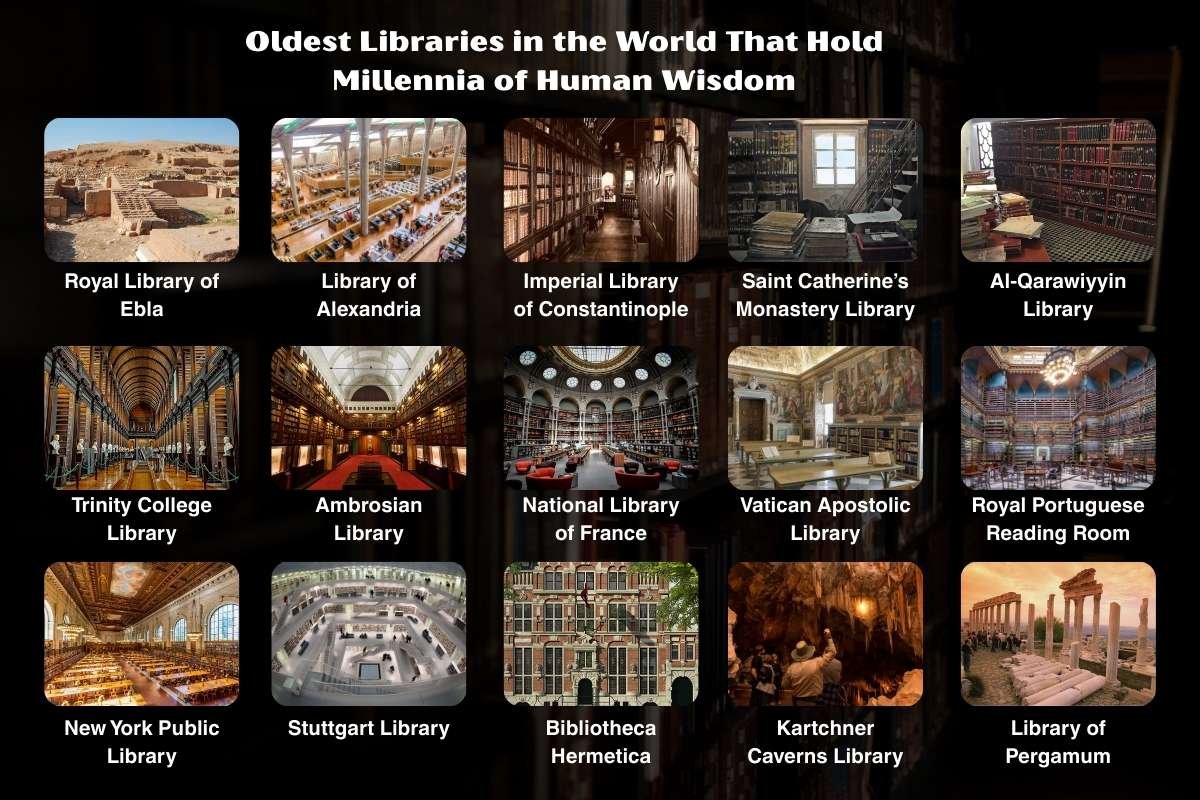
Here is a detailed listing of the top 25 oldest libraries in the world, arranged by their build year from oldest to newest, with rich history information written in simple, clear language for excellent readability:
Top 25 Oldest Libraries in the World That Hold Millennia of Human Wisdom
1. Royal Library of Ebla
Location: Mardikh, Syria
Built: 2500 BCE
Status: Destroyed, archives excavated
The Royal Library of Ebla is the earliest known library in human history. Built around 2500 BCE, it stored more than 17,000 clay tablets that covered trade, religion, farming, and royal activities. These tablets were written in Sumerian and the local Eblaite language, showing how early people recorded daily life. Archaeologists uncovered the library’s remains in the 1970s after it had been destroyed by ancient wars. Even though the building did not survive, its tablets helped experts understand how early governments worked and how writing systems developed.
2. Library of Ashurbanipal
Location: Nineveh, Iraq
Built: 668 BCE
Status: Destroyed
The Library of Ashurbanipal was created by the Assyrian king who loved reading and learning. Built around 668 BCE in Nineveh, it held nearly 30,000 clay tablets, including myths, medical knowledge, omens, laws, and famous writings like the “Epic of Gilgamesh”. When the palace was burned during an attack in 612 BCE, the fire baked many tablets, helping them survive for future discovery. This oldest libraries in the world, and it was one of the first to organize materials by subject, giving historians a clear picture of Mesopotamian life, beliefs, and science.
3. Library of Alexandria
Location: Alexandria, Egypt
Built: circa 285 BCE
Status: Destroyed
The Library of Alexandria aimed to gather every important text from across the ancient world. Founded around 285 BCE, it attracted great thinkers such as Euclid, Archimedes, and Eratosthenes. It may have held hundreds of thousands of scrolls covering science, math, history, philosophy, and literature. Scholars worked here to copy, compare, and translate texts, making the city a global learning center. Fires, wars, and natural disasters eventually destroyed the oldest libraries in the world. Despite its tragic loss, it remains a symbol of human curiosity and the dream of collecting all knowledge.
4. Library of Pergamum
Location: Bergama, Turkey
Built: 197 BCE
Status: Destroyed
The Library of Pergamum grew as a direct competitor to Alexandria. Built around 197 BCE, it became famous for its use of parchment, treated animal skin, because Egypt stopped exporting papyrus to them. The library stored about 200,000 scrolls, supporting writers, teachers, and researchers in Greek philosophy, drama, and medicine. Over time, earthquakes and political conflicts damaged the library, and many scrolls were moved to Egypt. Still, Pergamum’s invention of parchment changed bookmaking forever and helped future civilizations preserve and share literature more easily.
5. Imperial Library of Constantinople
Location: Istanbul, Turkey
Built: circa 337 CE
Status: Destroyed
Founded around 337 CE by Emperor Constantine, the Imperial Library protected Christian writings as well as older Greek and Roman works. For centuries, it acted as a bridge between ancient knowledge and the medieval Byzantine world. Emperors and scholars copied fragile papyrus scrolls onto stronger parchment to save them from decay. The oldest libraries in the world lasted until 1204, when Crusaders attacked Constantinople and destroyed much of its collection. Luckily, many manuscripts were rescued by monks and scholars, later helping fuel Europe’s Renaissance and recovery of classical learning.
6. Saint Catherine’s Monastery Library
Location: Sinai, Egypt
Built: 548 CE
Status: Operating
Built in 548 CE at the foot of Mount Sinai, this library is one of the oldest still active today. It holds around 3,300 priceless manuscripts, including the famous Codex Sinaiticus, one of the earliest complete Christian Bibles. The monastery survived raids, harsh weather, and political changes because local tribes respected and protected it. Its collection includes works in Greek, Arabic, Syriac, and other languages. Even now, its manuscripts help researchers study early Christianity, ancient cultures, and the history of writing, making the library a living treasure.
7. House of Wisdom
Location: Baghdad, Iraq
Built: 825 CE
Status: Destroyed
Founded in Baghdad around 825 CE, the House of Wisdom became the heart of the Islamic Golden Age. Scholars translated important Greek texts into Arabic and made major discoveries in algebra, astronomy, medicine, and geography. Thinkers like Al-Khwarizmi worked here, shaping the modern number system and scientific methods. The library welcomed experts from many cultures, creating a global learning environment. Sadly, it was destroyed in 1258 CE when the Mongols invaded Baghdad. Its loss was enormous, but its influence continues through the knowledge it shared.
8. Al-Qarawiyyin Library
Location: Fez, Morocco
Built: 859 CE
Status: Operating
Established in 859 CE by Fatima al-Fihri, this library is part of the world’s oldest continuously operating university. It holds rare and beautifully written Islamic manuscripts, including works on law, astronomy, medicine, and philosophy. Over the centuries, floods, neglect, and weather damaged parts of the building, but careful restorations kept it alive. Today, it remains open to scholars and is recognized by UNESCO for its long history. The oldest libraries in the world reflect centuries of learning in North Africa and show how education thrived under female leadership.
9. Strahov Monastery Library
Location: Prague, Czechia
Built: 1143 CE
Status: Operating
Founded in 1143 CE, the Strahov Monastery Library is known for its breathtaking Baroque halls painted with colorful frescoes. It holds about 130,000 rare books and manuscripts covering theology, philosophy, and world history. Despite surviving wars, fires, and political struggles such as the Hussite conflicts, it remains beautifully preserved. Visitors come from around the world to see its globes, maps, and ancient volumes. Because of its age and value, the books are protected behind barriers, turning the library into both a research center and a museum.
10. Trinity College Library
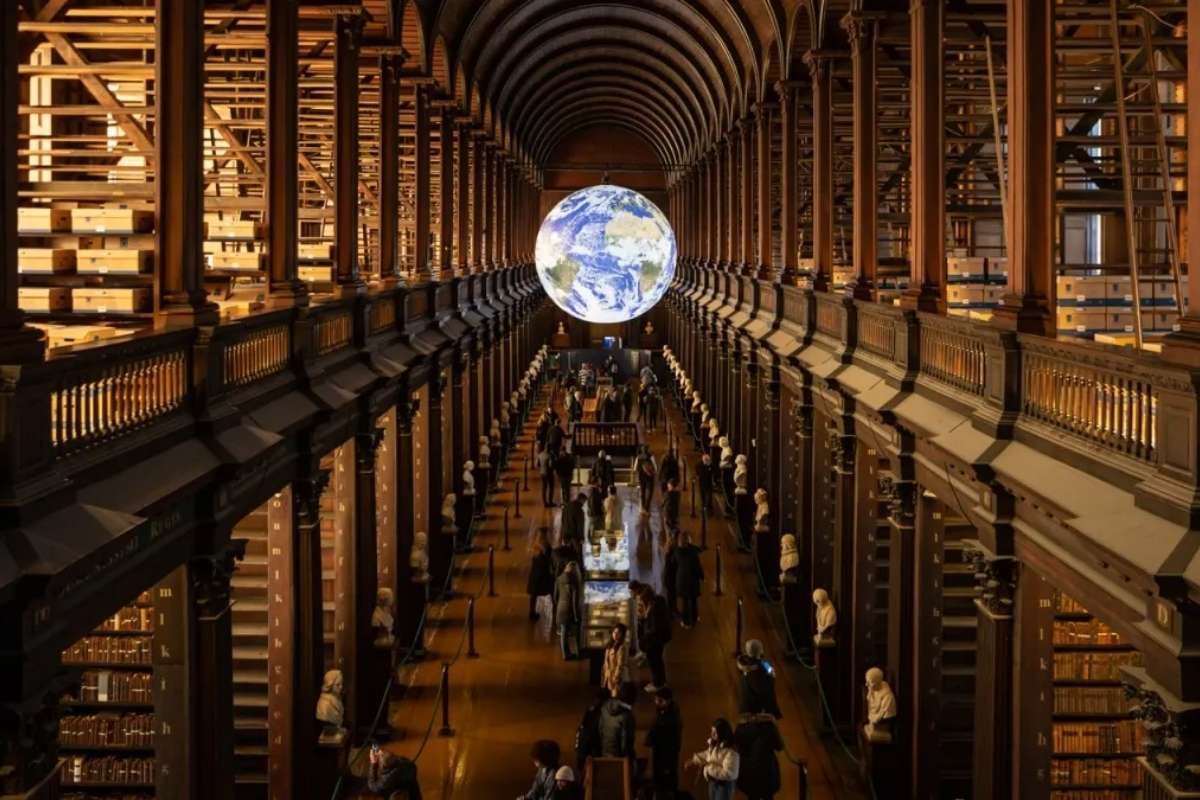
Location: Dublin, Ireland
Built: 1592 CE
Status: Operating
Founded in 1592 CE alongside Trinity College Dublin, this library grew from a small academic collection into Ireland’s greatest research library. It houses millions of books and manuscripts, including the famous Book of Kells, an illuminated gospel created by Celtic monks. The Long Room, with its tall oak shelves and marble statues, is one of the most photographed library halls in the world. Over centuries, the oldest libraries in the world expanded through donations, legal deposits, and careful preservation, becoming a major center for Irish history, culture, and literature.
11. Bodleian Library
Location: Oxford, UK
Built: 1602 CE
Status: Operating
The Bodleian Library is one of Europe’s greatest learning centers and has served scholars for centuries. It began as a small medieval collection but grew rapidly after Sir Thomas Bodley restored it in 1602. Over time, kings, scholars, and collectors donated thousands of rare works, shaping it into a major research hub. Famous writers like J.R.R. Tolkien and C.S. Lewis spent years studying here. Its strict “no book leaves the library” rule helped protect its treasures. Today, with over 13 million items, it remains the academic heart of Oxford.
12. Ambrosian Library
Location: Milan, Italy
Built: 1609 CE
Status: Operating
The Ambrosian Library was founded by Cardinal Federico Borromeo, who wanted a place where people could study knowledge from across the world. He gathered thousands of manuscripts, artworks, and rare books, including sketches written by Leonardo da Vinci. The oldest libraries in the world quickly became a cultural landmark during the Spanish rule of Milan, with strong ties to the royal family. Its grand hall, decorated with frescoes and an airy atrium, inspires readers even today. As one of Europe’s oldest public libraries, it continues to protect priceless works and support historical research.
13. Malatesta Novello Library
Location: Cesena, Italy
Built: 1452 CE
Status: Operating
The Malatesta Novello Library is one of the earliest public libraries in Europe and is famous for preserving its medieval charm. Built by Malatesta Novello, it was designed as a peaceful place for learning during the Renaissance. To prevent theft, books were chained to wooden desks, a unique feature still visible today. Its beautiful frescoes and original layout remain untouched for centuries, making it a “time capsule” of early European reading culture. With nearly 300,000 volumes today, it continues to serve the region as a cultural and academic treasure.
.jpg)
14. National Library of France
Location: Paris, France
Built: 1461 CE
Status: Operating
The National Library of France began as a small royal collection under King Charles V and expanded over generations of French monarchs. After the French Revolution, it transformed into a truly public library with a mission to preserve national knowledge. Today, it safeguards more than 40 million items, from medieval manuscripts to maps, coins, and photographs. It was also one of the earliest, oldest libraries in the world to digitize rare works, helping the world access French history online. Its grand reading rooms, especially the oval hall, remain iconic spaces for scholars and visitors.
15. Vatican Apostolic Library
Location: Vatican City
Built: 1475 CE (roots earlier)
Status: Operating
The Vatican Apostolic Library has roots far older than its official founding year, growing from early papal collections. Established formally by Pope Sixtus IV, it soon became one of the world’s most important centers for religious and historical research. It preserves extraordinary treasures like Michelangelo’s handwritten notes, ancient Bibles, and early printed books, including the Gutenberg Bible. Surviving wars, political conflicts, and periods of reform, the library remained tightly protected by the Vatican. Today, with more than a million volumes, it remains a secure archive of human and spiritual history.
16. Library of Congress
Location: Washington, DC, USA
Built: 1800 CE
Status: Operating
The Library of Congress began as a small reference collection for America’s early lawmakers. After a fire destroyed its books in the War of 1812, Thomas Jefferson sold his massive personal library to rebuild it. This sparked its growth into a global institution. Today, it holds over 170 million items, including recordings, maps, films, manuscripts, and books in hundreds of languages. It leads major digital preservation programs, ensuring future generations can access valuable documents. As the nation’s largest knowledge center, it supports Congress and serves millions of citizens.
17. Royal Portuguese Reading Room
Location: Rio de Janeiro, Brazil
Built: 1837 CE
Status: Operating
The Royal Portuguese Reading Room was created by Portuguese immigrants who wanted to preserve their culture in Brazil. Over the years, they brought rare books, royal documents, and literary classics from Portugal, building one of the largest Portuguese collections outside Europe. Its stunning architecture, filled with carved wood, stained glass, and a towering central skylight, makes it one of the most beautiful libraries and the oldest libraries in the world. The library now holds more than 350,000 works and serves as a beloved cultural landmark where students, tourists, and researchers gather.
18. George Peabody Library
Location: Baltimore, USA
Built: 1878 CE
Status: Operating
The George Peabody Library was established as a gift to the people of Baltimore by philanthropist George Peabody. Its five floors of iron balconies and towering bookshelves create a dramatic, cathedral-like interior that draws visitors from around the world. The library collected works in history, art, science, and literature, becoming a major research center for scholars. Its 300,000 volumes reflect the values of the 19th century, emphasizing global learning and public education. Today, it remains an important study place and one of America’s most beautiful libraries.
19. New York Public Library
Location: New York, USA
Built: 1895 CE
Status: Operating
The New York Public Library was created to give everyone free access to knowledge, supported by wealthy donors and public funds. Its main branch, guarded by the famous lion statues “Patience” and “Fortitude,” opened in 1911 and became an instant landmark. Inside, it stores millions of books, rare manuscripts, maps, photographs, and historical newspapers. It also hosts lectures, exhibits, and community programs, serving students and families every day. As one of the world’s most visited and oldest libraries in the world, it remains a symbol of learning and public service in New York City.
20. British Library
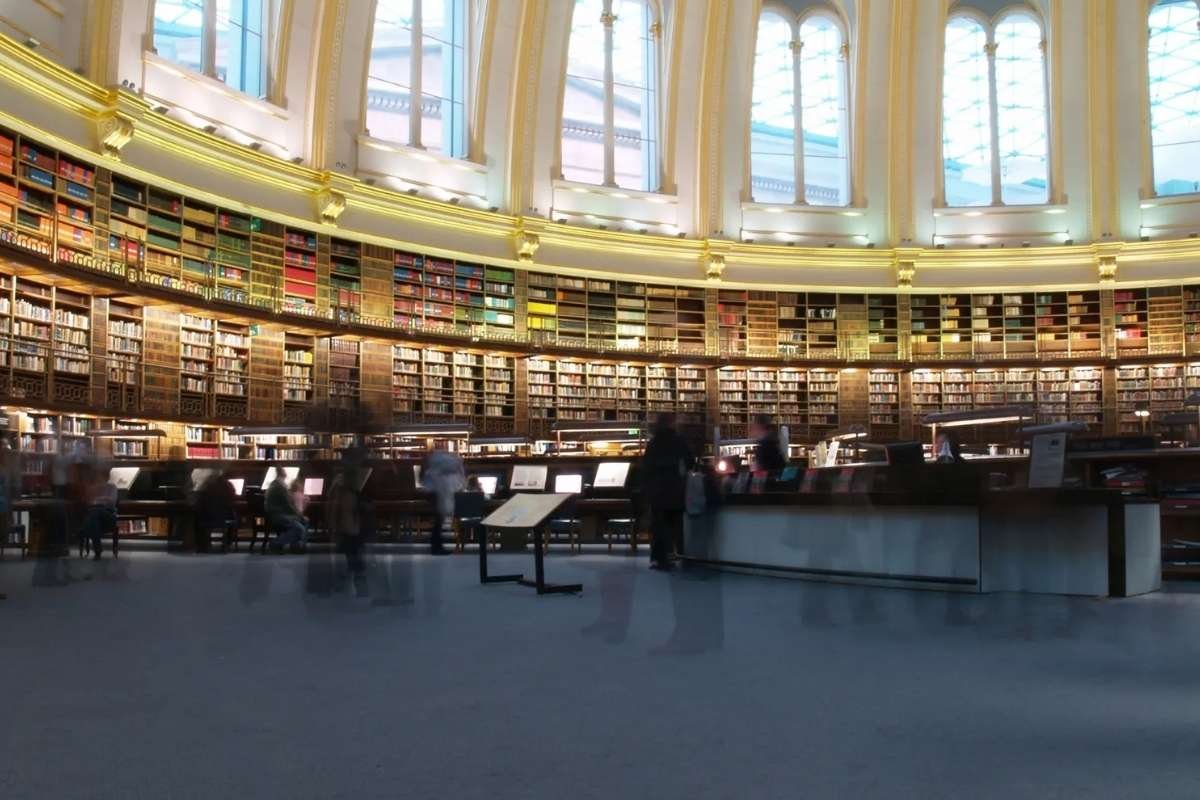
Location: London, UK
Built: 1973 CE
Status: Operating
The British Library became the UK’s national library when it separated from the British Museum. Although modern in design, its roots go back centuries through royal collections and major historical archives. Today, it preserves more than 170 million items, including the Diamond Sutra, the world’s oldest printed book, and important works like Shakespeare’s manuscripts and the Beatles’ original lyrics. With strong digital and research programs, it supports scholars across the world. Its combination of ancient treasures and modern facilities makes it a global center for culture and knowledge.
21. Stuttgart Library
Location: Stuttgart, Germany
Built: 2011 CE
Status: Operating
The Stuttgart Library is one of Germany’s most striking modern libraries, known for its perfect cube shape and peaceful white interior. The idea behind its design was to create a calm “temple of knowledge” where people of all ages could read, study, and think without distraction. Its history reflects Stuttgart’s vision for a cultural space that blends traditional library values with modern architecture and digital access. Since opening in 2011, it has become a community landmark, symbolizing openness, creativity, and the growing importance of public learning spaces.
22. Bibliotheca Alexandrina
Location: Alexandria, Egypt
Built: 2002 CE
Status: Operating
The Bibliotheca Alexandrina was built to honor the spirit of the ancient Library of Alexandria, one of the greatest learning centers of the ancient world. Its circular, sun-shaped building faces the Mediterranean Sea, symbolizing how knowledge moves across time. Since 2002, it has grown into a modern cultural complex, offering millions of books, research centers, museums, and digital archives. The oldest libraries in the world also promote global cultural exchange and interfaith dialogue, making them an important place for students, historians, and visitors who want to explore history, science, and art in one inspiring space.
23. Bibliotheca Hermetica
Location: Amsterdam, Netherlands
Built: 17th Century
Status: Operating
The Bibliotheca Hermetica began as a private collection of rare books focused on alchemy, magic, astrology, and Western mysticism. Over the centuries, scholars and collectors added manuscripts and early printed works, expanding its depth and value. Today, it serves as an important research center for people studying esoteric traditions. The library preserves fragile texts that explain how ancient thinkers explored nature, spirituality, and hidden knowledge. Its careful conservation efforts ensure that these unique ideas and historical manuscripts remain accessible to researchers and anyone curious about humanity’s mystical and philosophical past.
24. Ana Be Koiam Library
Location: Timbuktu, Mali
Built: 13th Century
Status: Operating
The Ana Be Koiam Library is part of Timbuktu’s historic manuscript tradition, where families have protected handwritten books for centuries. These manuscripts cover religion, astronomy, mathematics, medicine, and African history. Founded in the 13th century, the oldest libraries in the world survived desert conditions, colonial periods, and political conflicts. Local guardians played a heroic role in hiding and preserving the books during times of danger. Today, the library stands as a powerful reminder of West Africa’s long intellectual history and continues to support scholars who travel from around the world to study its ancient texts.
25. Kartchner Caverns Library

Location: Arizona, USA
Build Year: Contemporary inspired.
Status: Conceptual
The Kartchner Caverns Library is a creative modern idea inspired by natural cave formations found in Arizona. Although conceptual, it represents a new direction for library design, one that connects architecture with nature. The vision imagines reading rooms shaped like cave chambers, stable humidity for preserving rare documents, and quiet spaces that reflect the calm of ancient caverns. This concept highlights how future libraries may blend environmental care with learning, showing that knowledge spaces can evolve while respecting history, ecology, and sustainable design. It stands as a symbol of innovation in cultural planning.
Each of these oldest libraries in the world tells a unique story of human knowledge and culture preserved across millennia. They continue to inspire curiosity and learning for generations.

Facts and Stats
- Ebla holds 17,000+ tablets from 2500 BCE, the oldest known.
- Saint Catherine’s owns 3,300 manuscripts, second only to the Vatican.
- Alexandria peaked at 700,000 scrolls.
- The Vatican Library spans 85 km of shelves.
Conclusion
Ancient libraries act like wise teachers who refuse to retire. You walk in for curiosity and walk out with perspective. The oldest libraries in the world show how humans protected thoughts with grit and hope. Every scroll, block, or fragile page here represents someone who refused to let knowledge fade. These places still inspire patience, creativity, and a brave hunger for truth. They remind us that reading remains one of the simplest ways to grow stronger.