Key Takeaways
- Amazon launched 29 more satellites, moving closer to its global broadband network.
- This was the final Atlas V mission for Project Kuiper, with future launches shifting to Vulcan Centaur.
- Amazon continues to strengthen its position in the satellite internet race.
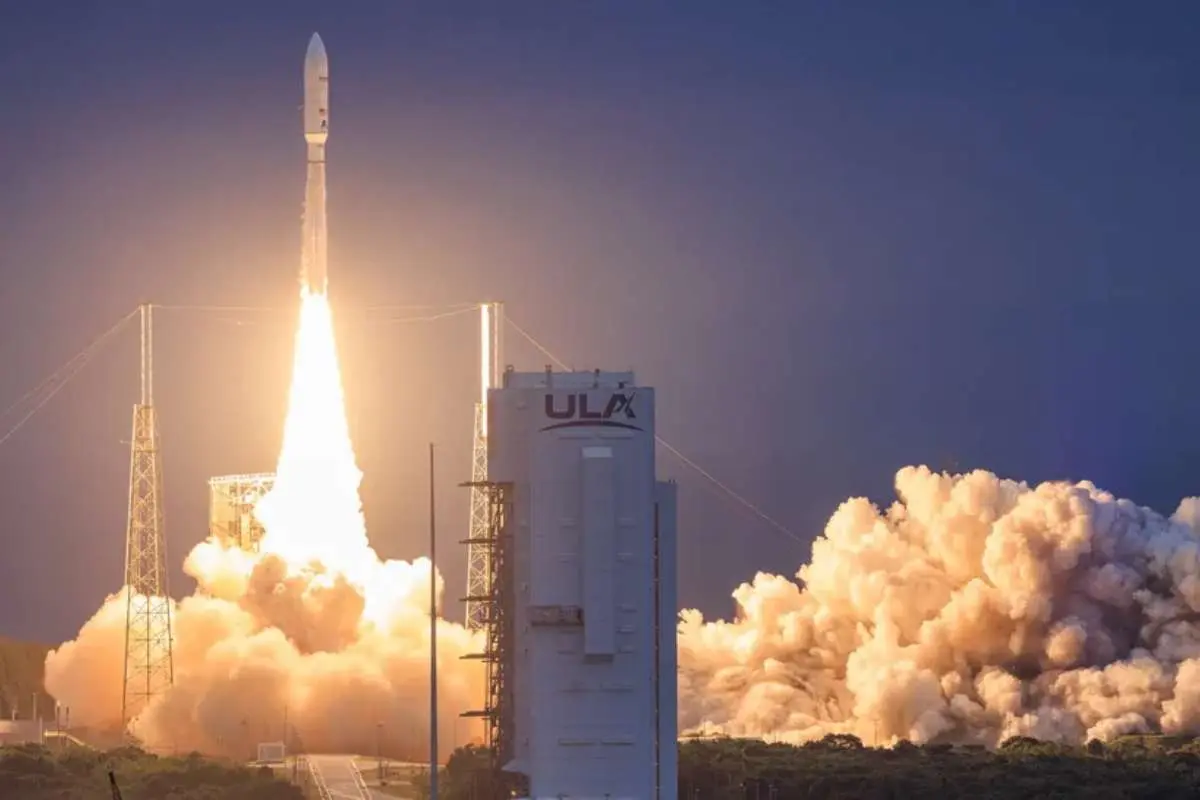
Amazon has reached another important milestone in its race to build a global satellite internet network, successfully launching 29 Project Kuiper satellites aboard a United Launch Alliance (ULA) Atlas V rocket from Cape Canaveral Space Force Station, Florida. The mission, designated Amazon LEO 8 (LA-08), represents more than just another satellite deployment—it is the eighth and final Atlas V mission dedicated to Amazon’s ambitious broadband constellation.
The launch signals the end of a successful partnership between Amazon and the Atlas V launch vehicle, which has played a crucial role in deploying the early phases of the company’s satellite network. Future Project Kuiper launches assigned to ULA will now transition to the company’s next-generation Vulcan Centaur rocket, designed to carry heavier payloads and support more frequent commercial missions.
For Amazon, the mission brings the company another step closer to its long-term vision of delivering reliable, high-speed internet access to millions of people living in regions where traditional broadband infrastructure remains unavailable or unreliable. The company plans to build a constellation of more than 3,200 low Earth orbit (LEO) satellites, creating one of the world’s largest commercial satellite networks.
Project Kuiper accelerates as competition in space intensifies
The latest deployment adds to Amazon’s steadily expanding orbital network. Before this mission, the company had already placed more than 350 satellites into orbit, reflecting a significant increase in deployment activity over the past several months. The growing constellation is expected to form the backbone of Project Kuiper, Amazon’s multibillion-dollar initiative aimed at bringing affordable broadband connectivity to homes, businesses, schools, healthcare facilities, and government agencies across underserved regions.
Unlike traditional satellite systems that operate from much higher altitudes, Project Kuiper satellites orbit much closer to Earth. This low-Earth-orbit design is expected to reduce latency while delivering faster and more reliable internet services, making satellite broadband a practical alternative for communities that lack access to fiber or cable networks.
Amazon has also adopted a diversified launch strategy to support the rapid expansion of the constellation. Rather than relying on a single provider, the company has secured launch agreements with multiple commercial operators, including ULA, SpaceX, and Arianespace. This approach reduces scheduling risks while helping Amazon meet regulatory deployment requirements and maintain a consistent launch cadence.
The company is entering an increasingly competitive satellite broadband market. Existing providers have already established extensive constellations and a growing customer base, making speed of deployment critical for Amazon. However, the company believes its global infrastructure, cloud computing capabilities, and long-term investment strategy position Project Kuiper as a strong contender in the evolving communications landscape.
Industry analysts view the steady pace of launches as evidence that Amazon is moving beyond the project’s development phase and into large-scale deployment. Every successful mission expands the network’s capabilities and brings commercial broadband services closer to becoming a reality.
A new era begins with vulcan centaur
While the addition of 29 satellites strengthens Project Kuiper’s growing network, the mission also marks the conclusion of the Atlas V’s contribution to Amazon’s satellite deployment program. Over the course of eight dedicated launches, the veteran rocket helped establish the foundation of one of the world’s most ambitious commercial space projects.
Responsibility for future ULA launches will now shift to the Vulcan Centaur, a more advanced launch vehicle developed to meet the evolving needs of the commercial space industry. With greater payload capacity and modernized systems, Vulcan is expected to play a central role in supporting Amazon’s next phase of constellation expansion.
The transition reflects a broader transformation occurring across the global launch industry. As demand for satellite-based communications, Earth observation, and space services continues to grow, launch providers are increasingly investing in more capable rockets that can deploy larger constellations more efficiently.
For Amazon, the focus now moves from demonstrating deployment capability to rapidly scaling its operational network. The company must continue launching satellites at a steady pace to meet regulatory milestones while preparing the infrastructure needed to begin commercial broadband operations.
As governments, businesses, and consumers increasingly rely on uninterrupted digital connectivity, satellite internet is emerging as an important complement to terrestrial networks. With every successful launch, Project Kuiper moves closer to narrowing the global digital divide and expanding internet access to communities that have historically remained beyond the reach of conventional broadband infrastructure. The successful completion of the final Atlas V mission, therefore, represents not only the end of one chapter, but the beginning of Amazon’s next phase in building a worldwide satellite communications network.