Do you ever wonder what a prospective customer or patient thinks of a business before they ever meet the receptionist or doctor?
Their mind is already made up. The second a potential customer steps into a business, they start forming impressions about professionalism, trustworthiness and whether they will do business with a company.
And guess what…
It doesn’t take them long to make up their minds. Research shows that we form first impressions in 7 seconds or less. The reception area design is where those all-important seconds are decided.
The good news?
You don’t have to throw hundreds of thousands of pounds at the design of your waiting room to dramatically improve visitor perception. A few well-targeted investments and improvements will do the trick.
Here’s what you’ll learn:
- Why Reception Areas Matter More Than Most Realise
- The Psychology Behind Reception Area Design
- Smart Investments That Deliver Real Returns
- Common Mistakes That Hurt Brand Perception
Why Reception Areas Matter More Than Most Realise
Bear with me for a second…
Picture a potential client walking into your office. Your waiting area is furnished with rickety old chairs, last year’s magazines and the lighting flickers. What impression does that make?
It gives the visitor the impression that you “don’t care about the details”.
In fact, research by Workplace Insight shows that 40% of people say their perception of a company has been negatively impacted by their experience in the corporate lobby or reception area. In other words, nearly half of all visitors walk away with a negative impression, before anyone even greets them.
The problem is…
The waiting area is, in most cases, the only physical part of the business that external visitors ever see. It becomes the entirety of their physical impression of the brand. The quality of waiting room furniture, the lighting, the layout all give off messages to visitors about company values and attention to detail.
An unkempt waiting area shouts to visitors that this business is a penny-pincher. A well-designed area says the company takes pride in all of its operations.
The Psychology Behind Reception Area Design
Let’s face it, nobody likes waiting. It’s human nature to dislike standing around and doing nothing.
However, the environment in which a person waits can change everything about that experience. A comfortable, well-designed waiting area makes time feel like it’s passing quicker. An uncomfortable waiting area makes time drag on and on.
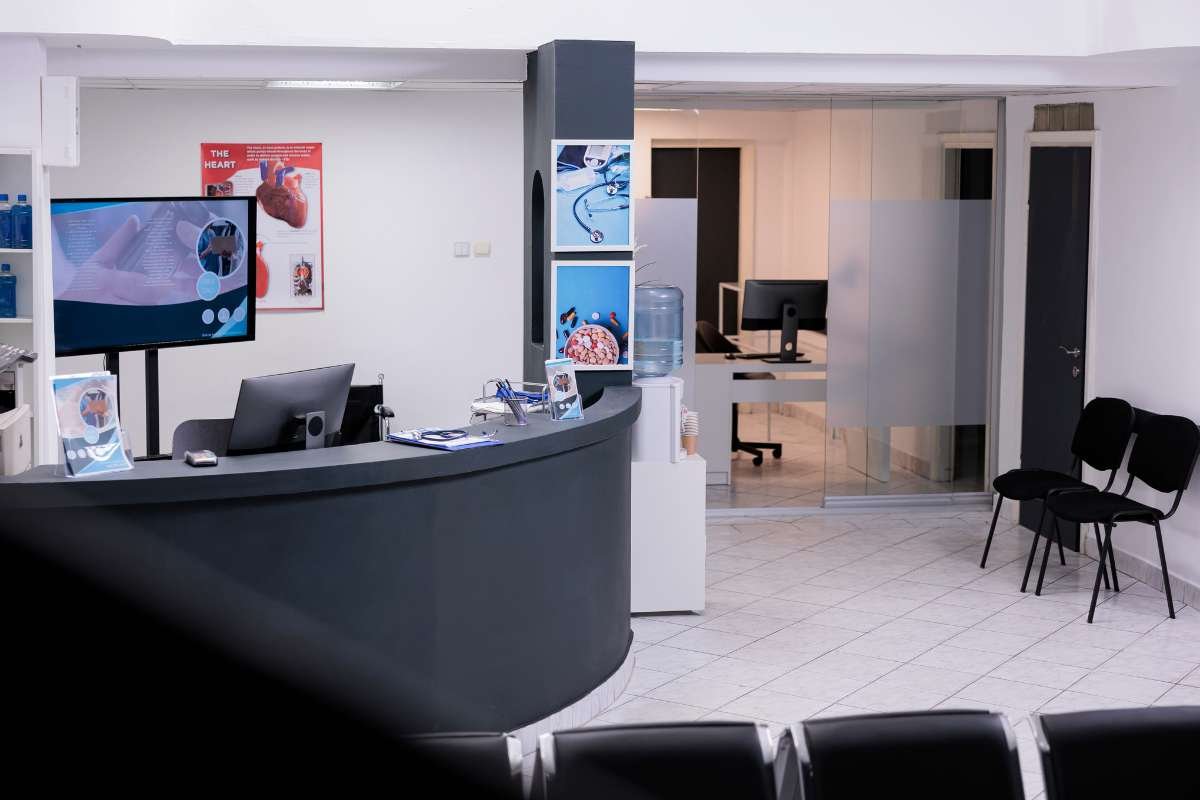
Research by Phreesia highlights that 97% of patients report frustration at having to wait too long to see their doctor. But here’s the interesting part…
It’s not just the actual wait time that’s the issue.
The way in which time passes is important too. Comfortable seating, nice surroundings and a well-designed space can dramatically improve how visitors perceive their wait. The psychology is simple. If someone is comfortable, time will fly by.
All industries have waiting rooms:
- Healthcare and clinics
- Professional services
- Corporate offices
- Government offices
- Education providers
The waiting room experience sets expectations for everything else. Start on the right foot, and visitors are already in the right mind-set for the experience.
Smart Investments That Deliver Real Returns
So where should you be spending money?
Not all changes are prohibitively expensive. Some of the most impactful improvements are surprisingly low cost. What’s more, where you should be spending money is obvious. Let’s look at some of the big-ticket items that deliver results.
Quality Seating
Good seating is the foundation of a great reception area. Waiting room visitors will spend the majority of their time sitting. If the chairs are uncomfortable, it doesn’t matter how nice the rest of the waiting room is.
When it comes to waiting room chairs you should look for:
- Ergonomic support
- Easy to clean surfaces
- Professional looking reception area design
- Durability for a high-traffic waiting room
Cheap furniture falls apart quickly and looks awful in a matter of months. Spending the money on good quality seating will give you better visitor impressions and a far longer lifespan.
Thoughtful Lighting
The lighting in a room can have a dramatic impact on how people feel when they walk into a space. Fluorescent lighting creates a cold, harsh atmosphere. Warmer lighting is much more inviting.
As much as possible, natural light is the best option. Where this isn’t available, quality light fixtures that provide even, natural light are the next best thing.
Strategic Layout
It’s not just what you have in a room that matters. It’s also about how things are arranged. Straightforward sight lines to the reception desk are key. Guests should immediately know where they are supposed to go and where they should sit. Comfortable spacing between chairs give people personal space but doesn’t leave a room looking sparse.
Visitors should be able to walk from the reception desk to their waiting area without feeling like they’re lost or don’t know what to do.
Brand Integration
Your reception area is a key place to reinforce your brand identity. This doesn’t mean you should litter the room with logos. But it is the place to ensure that your brand colours, materials and other reception area design elements that reinforce your brand message are front and centre.
A high-tech business can integrate minimalist reception area design. Traditional businesses may favour rich wood and conventional furniture. A reception area should feel like a natural extension of the business that occupies the space.
Common Mistakes That Hurt Brand Perception
Even the most well-meaning of businesses can make these mistakes. By avoiding these errors, you can see an immediate benefit.

Outdated Furniture
There’s nothing that shouts “we gave up on caring a decade ago” like 1990’s-era furniture. Scraped fabric, chipped edges and faded colours give the message that a business hasn’t invested in itself or its operations. If the seating looks old and tired, so will the services.
Poor Maintenance
The best waiting rooms will fall flat if they aren’t well maintained. Muddy floors, dusty surfaces and flickering lights quickly undo all the good work. Ongoing cleaning and maintenance are as important as the initial outlay.
Ignoring Comfort
Function over style is an all-too-common trap for reception areas. A room may look amazing in photographs, but be a nightmare to actually use. Function and form should go hand-in-hand.
Visitors should be able to sit comfortably for hours if needed. There should be a place for them to store bags, coats and so on. Temperature should be kept comfortable year-round.
Forgetting Accessibility
Accessibility is just as important in modern reception areas. This includes wheelchair access, lowered seating for some users and easy to read signage. Accessibility is more than just the law…
It gives visitors the impression that the business cares about all of its visitors.
The Bottom Line
The reception area design isn’t vanity. It’s smart business.
Every visitor that comes into your waiting room is a potential customer, partner or employee. The impression they form in those initial seconds will influence everything after that.
Investments don’t have to be in the thousands or tens of thousands of pounds. A few well-targeted changes will do the trick. Quality seating that actually offers visitors real comfort is a great place to start. Add in some good lighting and a well-thought-out layout and you’re well on your way.
Combine all of these small improvements and you have a powerful formula: a reception area that makes visitors feel valued from the moment they enter your business. In an increasingly competitive world, that kind of first impression will be a true differentiator.
Your reception area design says more to potential clients than any marketing message you could ever create. Ensure it’s saying the right things.