Key Points:
- Uber kiosks debut at LaGuardia.
- Expansion ahead with shuttles and hubs.
- Beyond the app toward the robotaxi future.
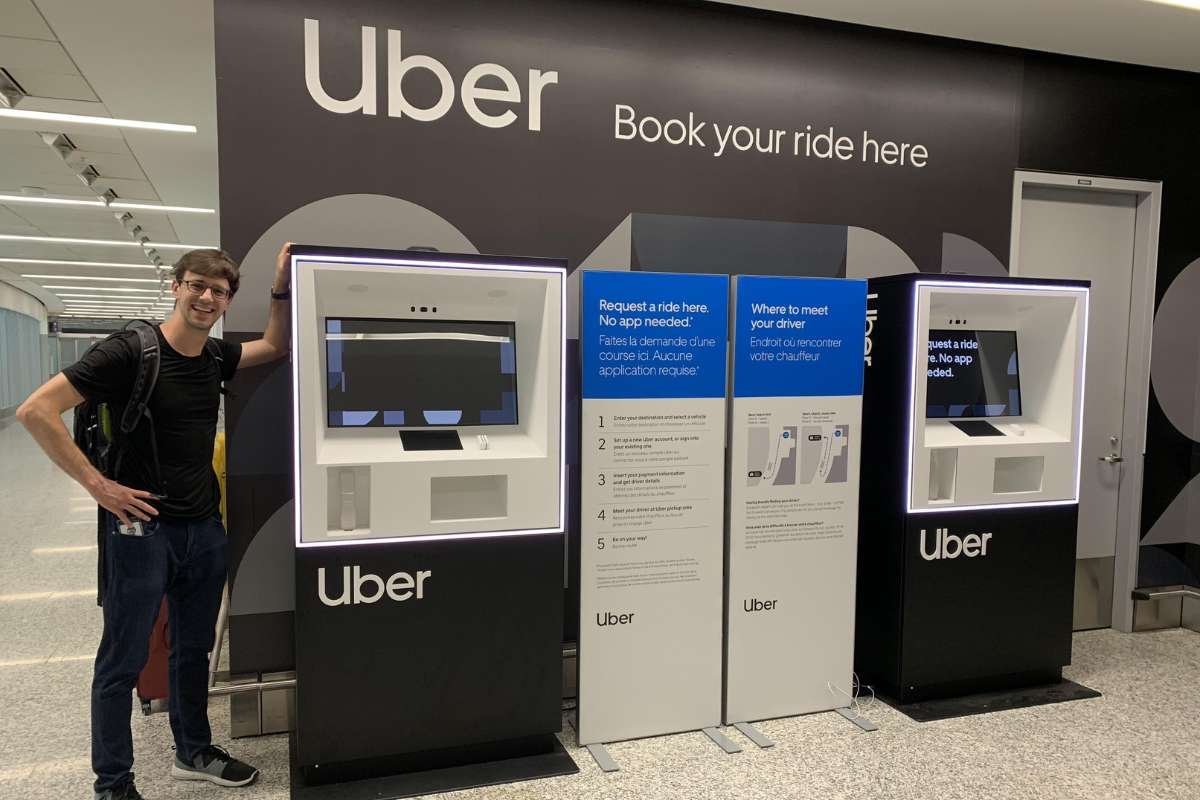
Uber has launched a new app-free ride booking kiosk system at airports, beginning with its first installation at LaGuardia Airport’s Terminal C in New York. The initiative is designed to support travelers who may not have access to mobile data, are unfamiliar with the app, or prefer a simpler alternative to the traditional ride-hailing process.
The Ride Booking kiosks allow travelers to enter their destination, select a preferred ride type, and confirm their request through an on-screen interface. After completing the steps, the machine prints a slip containing essential trip details, enabling passengers to locate their vehicle without relying on a smartphone. Uber said the feature is aimed particularly at international tourists and older passengers who often face difficulties navigating app-based services upon arrival.
The rollout comes during the busy year-end travel period, a time when airports see a surge in global traffic. Uber has positioned the Ride-Booking kiosks as part of a broader strategy to make mobility more inclusive and eliminate friction for users transitioning between flights and ground transportation.
Expansion Plans and New Convenience Features
Uber plans to expand its new kiosk system to more U.S. airports, international travel hubs, hotels, cruise ports, and other high-traffic locations in the coming months. The company said it intends to build a widespread network of physical booking points that mirror the simplicity of traditional taxi queues while offering the transparency and pricing clarity of digital ride-hailing.
Alongside the Ride Booking kiosks, Uber has relaunched its shuttle services at Newark Liberty International Airport, completing coverage across all major New York–area airports, including John F. Kennedy and LaGuardia. The shuttle service offers scheduled, fixed-route travel options at predictable fares, targeting passengers who prefer a low-cost alternative to private rides.
Uber has also updated its mobile tipping experience. Users can now tip drivers directly from their phone’s lock screen before the trip ends, removing the need to wait for a post-ride prompt. Early testing showed an increase in on-the-spot tips, suggesting passengers appreciated the convenience and immediacy of the feature.
These additions reflect Uber’s larger push to streamline the end-to-end travel experience, particularly during periods of heightened airport congestion when speed and simplicity are key.
A Strategic Step Toward Future Mobility
The introduction of airport kiosks signals Uber’s broader ambition to diversify access points for its services and reduce its reliance on the mobile app as the only booking method. By offering a physical interface, the company aims to compete more directly with traditional taxi lines that remain popular among international travelers who may arrive without local data plans.
Industry analysts note that the Ride Booking kiosks mimic the efficiency of airport taxi stands while tying the process into Uber’s established platform, potentially reshaping how ride-hailing services operate in major travel hubs. The move also comes as Uber continues to invest heavily in next-generation mobility solutions, including autonomous ride services projected to launch in the San Francisco Bay Area in 2026. The company intends to eventually deploy thousands of robotaxis across various cities as part of its long-term automation strategy.
As Uber prepares for evolving travel patterns and technological shifts, the kiosk program marks a key step in expanding its reach to a broader spectrum of passengers — from app-savvy riders to those who simply want a clear, friction-free way to get on the road after landing.