Key Takeaways:
- Roku is making premium OLED technology more accessible.
- The company is moving beyond streaming into premium hardware.
- Competition in the midrange OLED market is heating up.
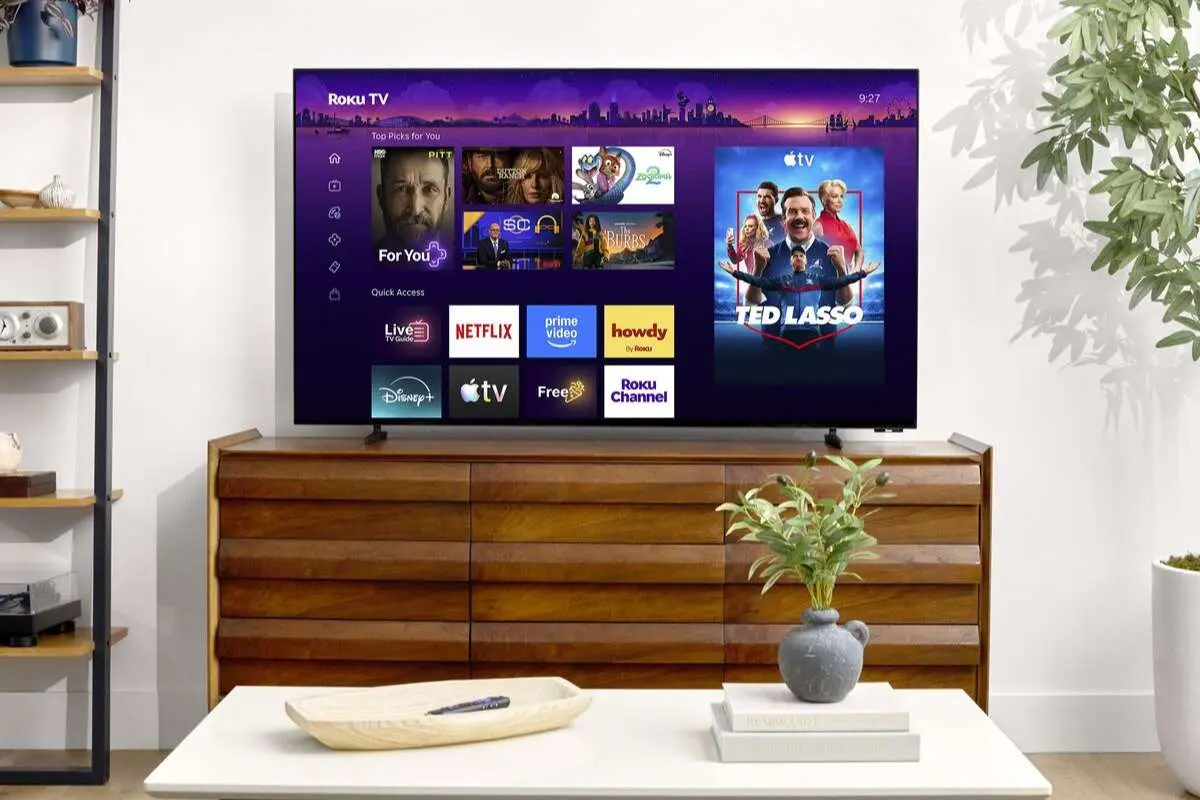
Roku enters the OLED TV market with its first-ever OLED models, aiming for established players such as LG, Samsung, and Sony with a lower-priced alternative. The company has launched the Roku Pro Series OLED, while the more advanced Pro Series LX OLED is set to arrive in October 2026.
Roku Enters the OLED TV market with its Pro Series lineup, marking a significant expansion for the company, which has traditionally been known for its streaming platform, devices, and smart TV operating system. With its own OLED hardware, the company is moving further into the premium television market while maintaining its focus on accessible pricing and a simple viewing experience.
The standard Pro Series OLED comes in 55-inch and 65-inch sizes, with prices starting at $999. The models are available exclusively through Amazon in the US during 2026. The Pro Series LX will also come in 55-inch and 65-inch versions, priced at $1,299 and $1,599 Respectively.
OLED technology allows individual pixels to produce their own light, delivering deep blacks, strong contrast, and wide viewing angles. Roku is pairing those display advantages with its own operating system, aiming to offer consumers premium picture quality without the higher prices often associated with OLED televisions.
Premium Features Target Gamers and Streamers
Roku enters the OLED TV segment with the Pro Series OLED, which features a 4K OLED panel with a 120Hz refresh rate, along with support for Dolby Vision and HDR10 Plus. It also includes four HDMI 2.1 ports and gaming features such as Variable Refresh Rate, AMD FreeSync Premium, and Automatic Low Latency Mode. These technologies are designed to provide smoother gameplay and reduce problems such as screen tearing and input lag.
Roku has also focused on convenience features that are built around everyday use. The television has an ultra-thin metal design, an adjustable tool-free stand, and integrated cable management. Its voice remote features backlit buttons and customizable shortcuts, while a remote-finder button built into the TV can help users locate a misplaced controller.
Bluetooth headphone support allows viewers to listen privately, while push-to-talk voice controls provide another way to search for content and navigate the television. Roku’s Smart Picture Max technology is designed to automatically adjust picture settings according to the content being watched, reducing the need for users to manually change settings.
The Pro Series LX takes the lineup a step further. Roku says the model will offer approximately twice the brightness of the standard Pro Series, a wider range of colors, and support for 144Hz variable refresh rates. It will also feature an advanced polarizer designed to reduce reflections, potentially making it better suited to rooms with significant ambient light.
The LX will come with Roku’s Voice Remote Pro, adding hands-free voice control, backlit buttons, customizable shortcuts, and a rechargeable battery with USB-C charging.
Roku Raises Competition in the Midrange OLED Market
Roku enters the OLED TV market as competition is increasing in the more affordable OLED segment. LG and Samsung already offer lower-priced OLED models, while Sony has recently expanded into the midrange category. Roku is now adding another major technology company to the race, with pricing that could put additional pressure on established manufacturers.
The $999 starting price is central to Roku’s strategy. Rather than competing primarily through premium specifications, the company is positioning OLED technology as something more consumers can afford. The standard Pro Series combines a 120Hz panel, Dolby Vision, gaming features, and Roku’s familiar software at a price below the listed prices of several competing entry-level OLED models.
For Roku, the launch also provides greater control over the complete television experience. Instead of relying only on other manufacturers to integrate Roku’s operating system into their TVs, the company can now control the hardware, software, and user experience through its own products.
The Pro Series OLED is already available in the US, while the Pro Series LX is scheduled to launch in October. By bringing OLED into its own television lineup at a relatively aggressive price, Roku is positioning itself as a serious competitor in the growing midrange premium-TV market and could push rivals to rethink how much consumers should pay for advanced display technology.
Sources:
https://www.theverge.com/tech/987148/roku-oled-tv-announcement