In the early twentieth century, a young wristwatch company searched for a name that could capture attention across cultures and markets. Hans Wilsdorf envisioned a word brief enough to sit neatly on a dial while carrying a sense of prestige.
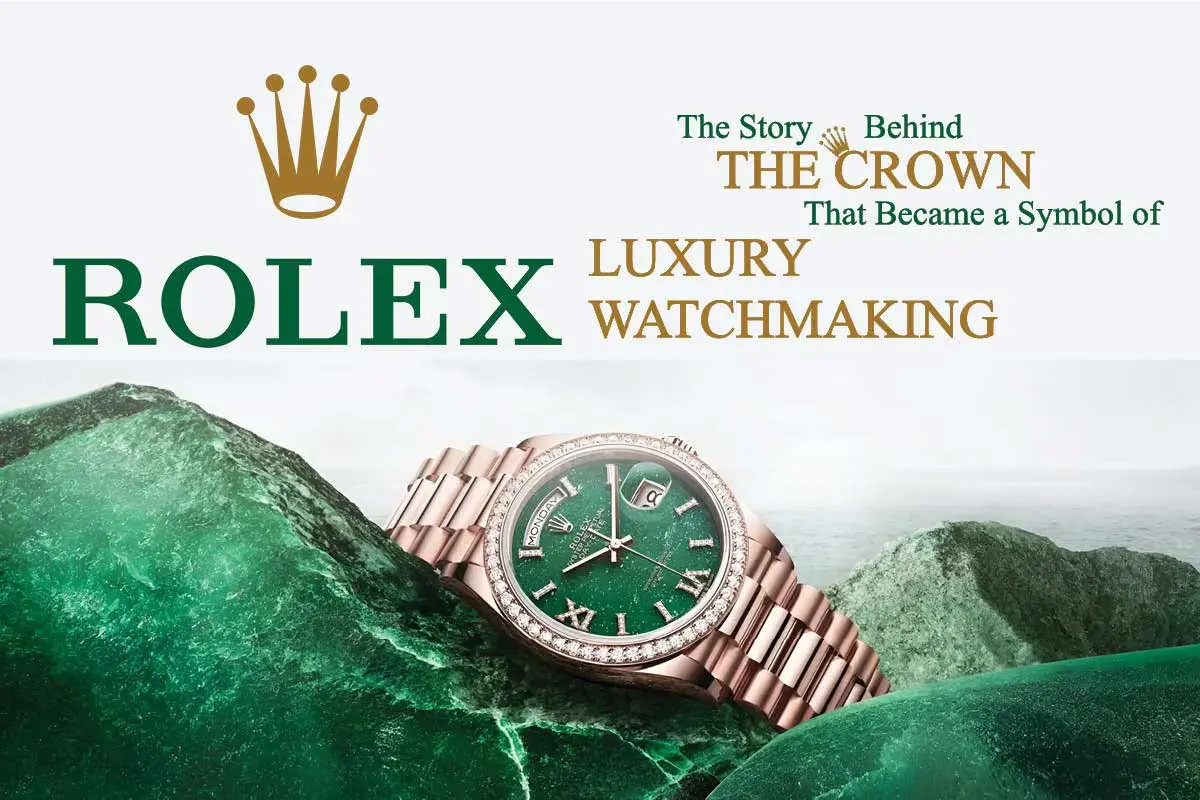
The name “Rolex” appeared in 1908, clear, distinctive, and easy to pronounce in many languages. Its visual identity gained greater meaning in 1931 with the introduction of the five-pointed Coronet. The crown symbol suggested excellence, authority, and masterful craftsmanship in watchmaking. Positioned above the elegant Rolex script, it created a powerful brand signature.
Over time, this pairing of name and crown achieved worldwide recognition and came to represent luxury, heritage, and exceptional horological artistry.
Major Historical Milestones of Rolex
Rolex’s history reflects a gradual journey marked by technical achievement and meticulous craftsmanship within luxury watchmaking. Each era introduced developments that shaped the brand’s reputation for precision, durability, and purposeful design. Innovations often responded to practical needs faced in exploration, aviation, and underwater activity, allowing Rolex watches to perform in demanding conditions.
Milestones:

- 1926–1945: The Oyster waterproof case and the Perpetual self-winding rotor established a new standard for durable wristwatch engineering.
- 1953–1967: Rolex introduced professional models such as the Explorer, Submariner, GMT-Master, Day-Date, Daytona, and Sea-Dweller.
- 1971–1992: Explorer II supported extreme environment use while new materials and the Yacht-Master expanded the collection.
- 2000–2013: Technical additions included the Calibre 4130 movement, Cerachrom bezel, and the Parachrom hairspring.
- 2013–2022: Advanced calibres, the Oysterflex bracelet, and the Deepsea Challenge highlighted continued mechanical research.
Across these decades, Rolex introduced innovations that expanded the possibilities of wristwatch performance while reinforcing its standing in luxury watchmaking.
Strategic SWOT Analysis of Rolex

Rolex operates in a highly competitive luxury watch sector where reputation, craftsmanship, and heritage shape consumer perception. The brand’s long history and careful market positioning influence its strengths, limitations, and future possibilities.
Strengths:
- Global prestige supported by a century of brand recognition and heritage.
- Exceptional craftsmanship is maintained through strict quality control and in-house production standards.
- Iconic models such as Submariner and Daytona are recognised as cultural references in luxury watchmaking.
- Private ownership structure supporting long-term strategic direction without external shareholder pressure.
- Strong loyalty among collectors and aspirational buyers who view Rolex as a milestone purchase.
Weaknesses:
- Premium pricing restricts accessibility for a broader consumer demographic.
- A conservative product development approach compared with technology-oriented watch brands.
- Dependence on authorised retailers and traditional distribution networks.
- Persistent risks related to counterfeiting and grey market resale activity.
Opportunities:
- Rising luxury demand in emerging markets, including China, India, and Southeast Asia.
- Expansion of digital storytelling and controlled online retail experiences.
- New customer engagement formats, such as exhibitions and experiential brand events.
- Sustainability initiatives reflecting contemporary consumer expectations.
Threats:
- Competition from luxury watchmakers such as Patek Philippe, Audemars Piguet, and Omega.
- The increasing popularity of smartwatches among younger consumers.
- Economic uncertainty is affecting global luxury spending patterns.
- Long waiting lists may redirect buyers toward alternative brands.
The interplay of these strengths, challenges, opportunities, and risks highlights what it takes to maintain leadership in the world of luxury timepieces.
Brand Positioning and Competitive Landscape
Rolex occupies a powerful position within the luxury watch industry, where prestige, heritage, and precision shape consumer perception. A Rolex watch represents personal accomplishment rather than simple timekeeping. Careful craftsmanship, premium materials, and strict quality standards communicate lasting value.
The brand presents this identity through restrained advertising, elegant imagery, and selective associations with sport, exploration, and the arts. Such visibility links the watch with success and legacy. The Rolex crown remains central to this identity, symbolising authority, mastery, and excellence in horology.
Competitive context
- Rolex vs Patek Philippe: Patek Philippe emphasises rare craftsmanship and exclusivity aimed at elite collectors.
- Rolex vs Audemars Piguet: Audemars Piguet highlights bold design and mechanical complexity.
- Rolex vs Omega: Omega focuses on technical innovation and historical associations with exploration and sport.
Growing interest in collectible watches and experiential luxury has increased activity in secondary markets. Rolex maintains desirability through controlled production, alliances with prestigious events, and a discreet presence through ambassadors and global sporting institutions.
Strategic Marketing and Brand Communication
Rolex approaches marketing with quiet confidence, relying on heritage, selective visibility, and carefully curated experiences rather than aggressive promotion. Every communication reflects craftsmanship, prestige, and a long tradition of excellence in watchmaking.
Heritage as a Narrative:
Rolex consistently highlights its historical achievements and pioneering milestones. Stories connected with exploration, technical breakthroughs, and iconic models help present the brand as a guardian of watchmaking tradition.
Prestige Through Global Alliances:
Associations with distinguished events reinforce Rolex values. Long-standing ties with Wimbledon, international golf championships, elite sailing competitions, and select motorsport events place the brand alongside performance and excellence.
Exclusivity Through Controlled Access:
Distribution remains carefully limited through authorised boutiques and selected retailers. Waiting lists for sought-after models add an element of rarity that heightens desirability.
A Refined Digital Voice:
Rolex maintains a polished online presence built around cinematic storytelling, historical references, and product craftsmanship rather than direct selling.
The Rolex Experience:
Inside boutiques, clients encounter personalised service, knowledgeable specialists, and an elegant environment. Comprehensive servicing and long-term warranties reinforce confidence in ownership and lasting value.
This marketing philosophy reinforces the brand’s identity as a symbol of achievement, craftsmanship, and enduring prestige.
The Art of Rolex Advertising
Rolex advertising reflects clarity, restraint, and powerful symbolism. Campaigns rarely rely on crowded visuals or persuasive slogans. Instead, a single watch, a historic moment, or a quiet association with achievement communicates the message. The tone remains dignified, allowing heritage and craftsmanship to shape perception.
Notable Campaign Highlights:

- “A Crown for Every Day” presented the Rolex crown as a symbol of daily achievement and personal milestones.
- 1960s–1970s Aspirational Campaigns used the line “If you were … tomorrow, you would wear a Rolex,” linking the watch with ambition and success.
- Model-Focused Print Advertising highlighted watches such as the Explorer and Submariner, often referencing exploration, deep sea diving, or endurance.
- Perpetual Spirit Campaigns connected Rolex with influential figures whose achievements reflected determination and excellence.
- Event-Linked Advertising appeared during tennis and golf championships, reinforcing connections with precision, discipline, and elite performance.
Such campaigns rely on simplicity and narrative depth, allowing Rolex to maintain prestige while creating lasting emotional resonance with audiences across generations.
Timekeeping in Cinema: The Rolex Presence
Cinema has played a subtle yet meaningful role in shaping the cultural image of Rolex. Onscreen appearances of the watch often signal status, authority, or quiet confidence within a character. Unlike many brands, Rolex rarely relies on paid product placements. Its presence in films has largely emerged through natural associations with characters whose personalities reflect prestige and achievement. Over time, these moments have contributed to a collective cultural memory that connects the watch with sophistication and success.
Rolex later acknowledged this connection through initiatives centred on cinema. Programs such as Rolex and Cinema celebrate the relationship between watchmaking and filmmaking. The brand has presented curated retrospectives during major film events, highlighting memorable scenes in which Rolex watches appeared or were worn by influential artists and filmmakers.
In these memorable screen moments, Rolex gains emotional depth within popular storytelling. The watch becomes more than an accessory, appearing as a subtle symbol of character identity, accomplishment, and enduring style.
Conclusion
Across more than a century, Rolex has shaped a distinctive presence in watchmaking through disciplined craftsmanship, purposeful innovation, and carefully preserved heritage. Each milestone, strategic decision, and cultural association reflects a philosophy built on precision and quiet prestige.
The brand’s influence extends beyond technical achievement, appearing in sport, exploration, and cinematic storytelling as a marker of accomplishment. Through controlled production, elegant communication, and enduring design, Rolex continues to represent a watch that signals personal milestones and lasting value within the world of luxury timepieces.