


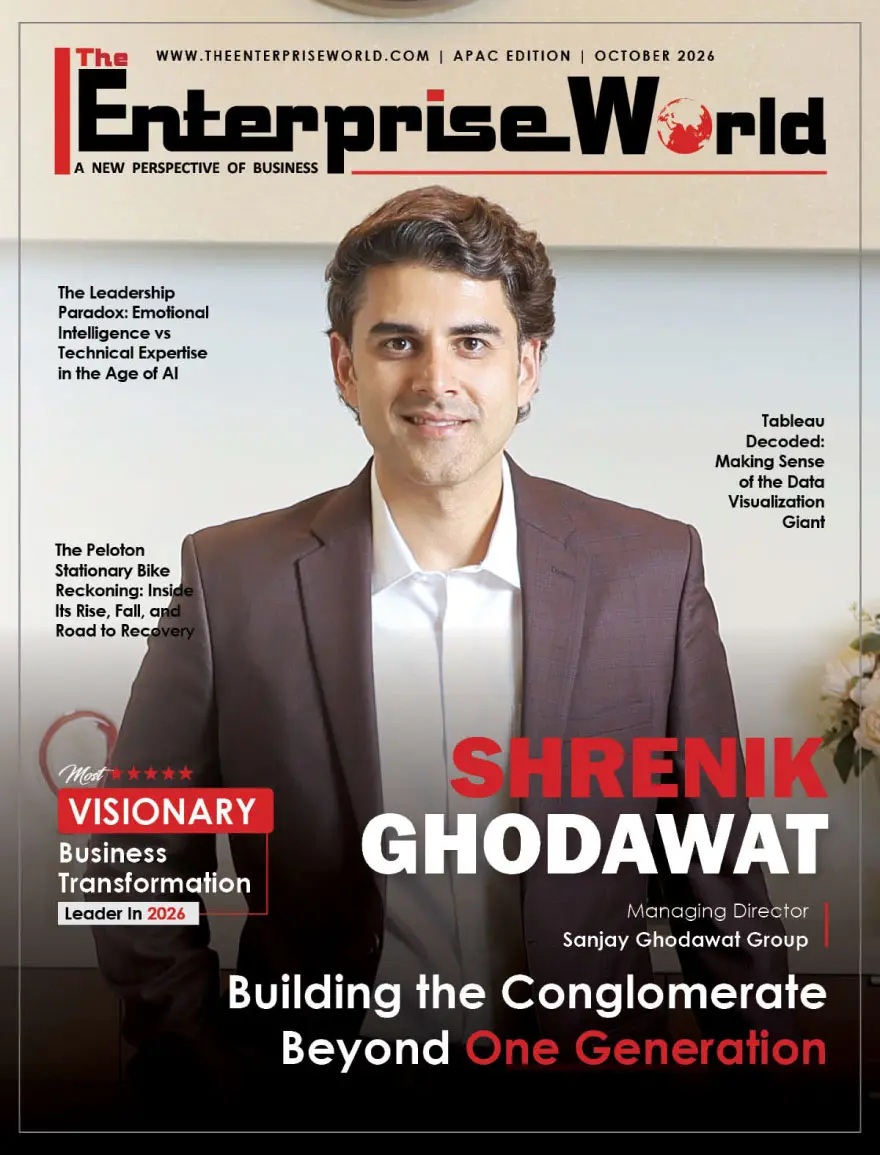
In today’s business world, success is no longer measured by profit alone. The leaders who leave the most lasting impact are the ones who combine ambition with a sense of responsibility, building companies that do more than sell products or services. They create ecosystems that support communities, create opportunities for people, and add to the story of national progress. These leaders know that growth only holds meaning when it includes others, can be sustained, and is built on trust.
Shrenik Ghodawat, Managing Director of the Sanjay Ghodawat Group, reflects this outlook. He leads a diversified conglomerate, headquartered in Kolhapur, Maharashtra. Shrenik Ghodawat joined the family business at the age of 19 and has since helped guide its growth across aviation, consumer goods, education, energy, real estate, retail, and textiles. Under him, the group has adopted digital tools and modern practices while holding on to the values that built it in the first place: quality, innovation, and a strong focus on the customer.
His contributions have been recognized through his inclusion in the ET Edge 40 Under 40 list, Entrepreneur 35 Under 35, Times 40 Under 40, Business Today 40 Under 40, and Asia’s 40 Under 40 by Asia One. Shrenik’s work reflects a broader shift taking place across Indian business, where young leaders are scaling family-run and homegrown enterprises, creating jobs, and playing their part in the country’s larger goal of becoming a developed nation by 2047.
Building on a foundation of trust and responsibility
Shrenik’s journey with the SGG began not with a designation, but with observation. Growing up, he watched his father, Mr. Sanjay Ghodawat, build the business from modest beginnings, guided by courage, discipline, and a strong sense of responsibility towards society. “That experience taught me early that enterprise is not only about scale. It is about earning trust and creating value that endures,” he says.
His learning came largely from staying close to the ground, working alongside operations, customers, and teams rather than observing from a distance. Over the years, the Group has grown into a diversified enterprise with interests spanning Aviation, Consumer Products, Energy, Real Estate, and Retail. Each stage of this growth reinforced for him the importance of resilience, innovation, and the ability to adapt to a constantly changing environment.
As the Group expanded into new sectors, Shrenik Ghodawat realised that entrepreneurial drive alone would not carry it through its next phase. What the business needed was stronger institutions, professional leadership, and a shared sense of direction. “We realised that entrepreneurial energy alone would not be enough for the next phase; we needed stronger institutions, professional leadership and a common direction,” he explains.
Today, his focus is on bringing the Group’s businesses closer together through a shared purpose, clearer priorities, and greater accountability, all while allowing each business the independence it needs to respond to its own market. As he puts it,
“My vision is to carry forward my father’s values while building systems, capabilities and leaders that can take SGG well beyond any one generation.”
Alignment on purpose, freedom in execution
For a diversified group like SGG, Shrenik believes that transformation must start from a shared purpose, even though it cannot follow one fixed template across every business. “In a diversified Group like ours, transformation must begin with a common purpose but cannot follow a common template,” he says. The Group’s Vision 2030 sets its overall direction, while its purpose, Enhancing Lives Globally, along with its values of Accountable Ownership, Integrity, Excellence, and Agility, act as guiding principles for every decision.
To evaluate new opportunities, Shrenik Ghodawat and his team rely on five key questions: whether the opportunity aligns with the Group’s strategy, whether SGG has, or can build, a genuine right to win, whether it will create sustainable value for customers and stakeholders, whether the right leadership and operating capabilities are in place, and whether the risks, capital needs, and governance standards are acceptable. “This prevents us from confusing an attractive market with an attractive opportunity for SGG,” he explains.
Once a direction is finalised, data, clear ownership, and regular review processes help turn intent into action. Business leaders are given the autonomy to respond to their specific markets, while Group leadership steps in to resolve cross-business issues and maintain overall discipline. As Shrenik Ghodawat puts it, the balance is a deliberate one: “Alignment on purpose and outcomes, with entrepreneurial freedom in execution.”
Respectful reinvention: a new approach to growth
According to Shrenik, what sets the SGG apart is that it does not treat transformation as a break from its past. “We practise what I call respectful reinvention: preserve the strengths that created trust, question what may no longer be relevant and build new capabilities with discipline,” he explains.
The Group’s entry into real estate through Ghodawat NordStar is a clear example of this philosophy in action. Rather than approaching real estate as an opportunistic move, SGG built a platform that combines its own long-term outlook and governance strength with Nordstar Estates’ market knowledge and execution capabilities. The goal is to pursue high-quality development opportunities across major urban markets through a focused and professionally governed model.
While the platform is still in its early stages, its growing pipeline of opportunities has strengthened the Group’s confidence in its potential, with a target gross development value of more than Rs 5,000 crore over time. For Shrenik, this venture reflects the Group’s broader approach to entering any new sector: “Find the right partner, define decision rights, build capability and scale only when execution is sound.”
Growing through the right partnerships
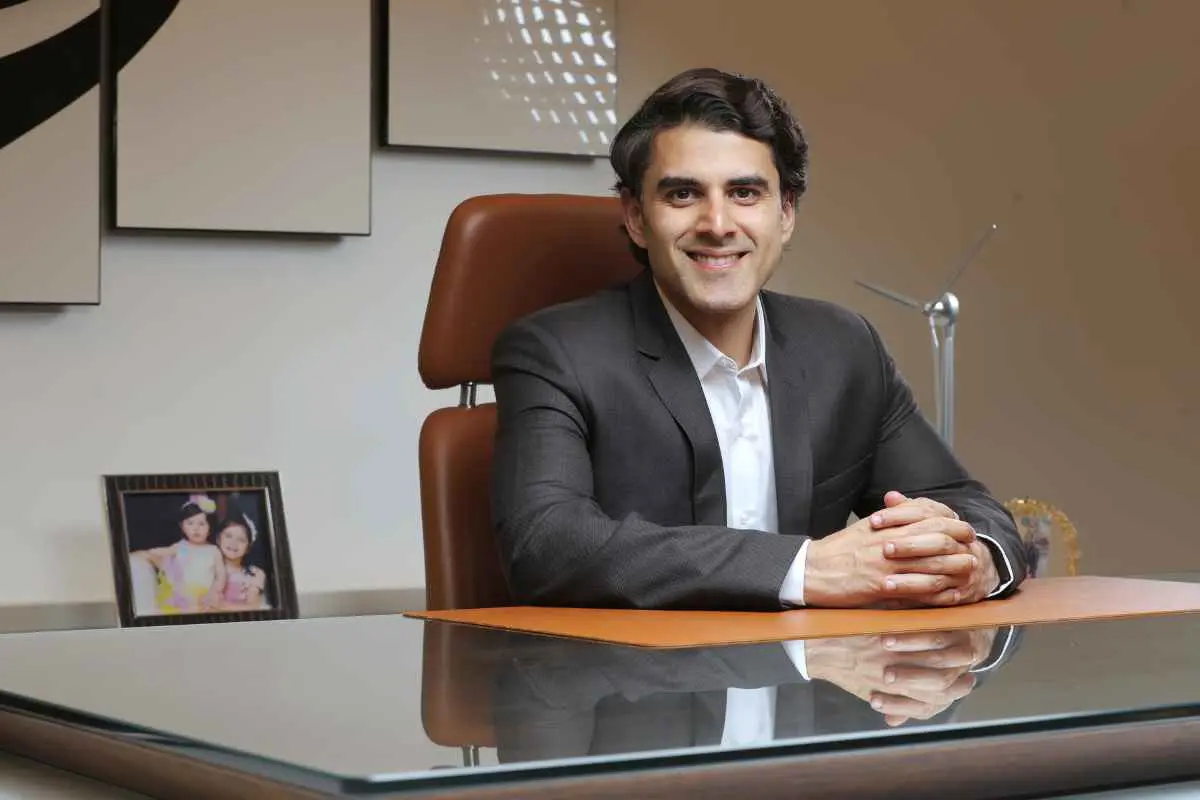
Among the initiatives that have shaped the SGG’s growth, Shrenik Ghodawat points to the acquisition and scaling of Coolberg, India’s largest-selling non-alcoholic beer brand, and To Be Honest (TBH), a snacking brand made entirely from real fruits and vegetables and a hydration drink, as particularly significant. The objective, he explains, was to complement the Group’s strong staples business within Ghodawat Consumer Ltd. with a portfolio of differentiated, new-age brands positioned in higher-growth consumer categories.
Coolberg brought with it a distinct proposition in the non-alcoholic social beverage space, giving the Group a brand with strong relevance among younger consumers, while TBH tapped into the growing consumer interest in snacking and more mindful consumption. Together, the two brands allowed GCL to expand beyond its traditional FMCG base and gain deeper insight into emerging consumer behaviour, combining their innovation and appeal with GCL’s distribution strength, operating discipline, and long-term brand-building expertise.
The results, Shrenik notes, have been encouraging. “Coolberg has grown at approximately 40% CAGR since acquisition and has strengthened its position in the non-alcoholic beverage category,” he says, adding that TBH has also gained momentum as the Group reworked its channel mix and innovation pipeline. Reflecting on the experience, he offers a broader takeaway: “An acquisition creates value only when integration strengthens the business without erasing what made the brand distinctive in the first place.”
Technology with purpose, not for its own sake
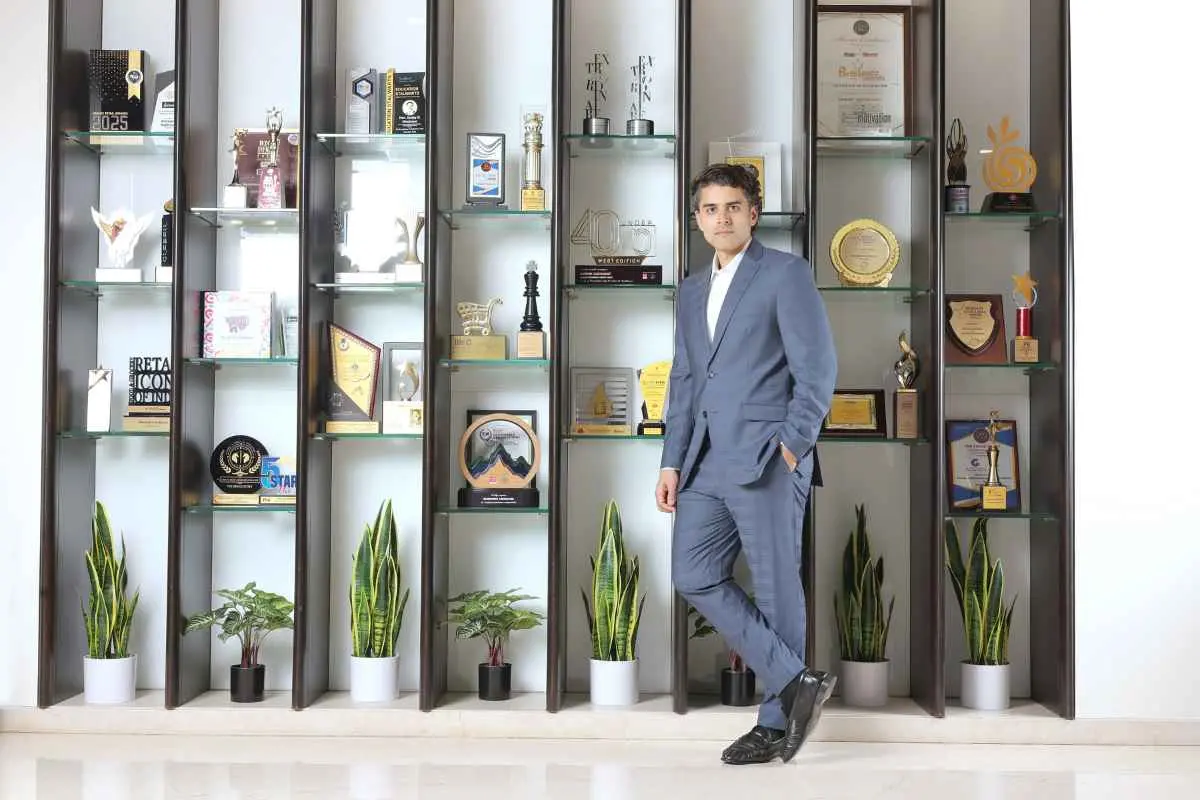
For Shrenik Ghodawat, technology has become an important enabler across the SGG, though its role varies from one business to another, a distinction he considers important. In the FMCG segment, technology helps the Group track market performance, understand consumer behaviour, and improve distribution efficiency. For brands like Coolberg and TBH, being digital-first is not something the Group can choose to skip. “Discovery, trial, and repeat purchase in those categories are heavily influenced by digital platforms, quick commerce included,” Shrenik notes. In retail, technology offers store-level visibility, sharper control over inventory, and quicker decision-making, while in aviation, it plays a role across the entire customer journey, from booking to boarding to service reliability.
What ties all of this together, he says, is a clear sense of purpose. “We are not using technology for the sake of it. We are using it to make each business more accountable, more responsive, and closer to the consumer.”
Listening as a strategy for growth
For Shrenik Ghodawat, feedback is not criticism but valuable data for improvement. “I believe that no strategy can remain relevant if it is developed in isolation,” he says, pointing out that markets evolve, customer expectations shift, and teams on the ground often notice opportunities or challenges long before leadership does. Listening closely, he believes, allows the organisation to respond with greater speed and relevance, combining what customers say with market intelligence and operational data to identify larger opportunities for improvement.
A clear example of this is the Group’s retail strategy and its acquisition of DusMinute. As the Group deepened its understanding of changing consumer behaviour, it became evident that customers in semi-urban markets had very different needs from those living in urban gated communities. Rather than applying a single retail format across both segments, Ghodawat Retail chose to develop a two-format approach, allowing it to serve different customer needs while keeping its overall retail business coherent.
Ultimately, Shrenik Ghodawat believes, the strongest organisations are the ones willing to listen, learn, and change. “At SGG, we encourage our teams to ask not only ‘What are we doing well?’ but also ‘What could be done better?’” That mindset of continuous improvement, he adds, is essential to building businesses that stay relevant and future-ready.
Building people, building the future
For Shrenik, transformation ultimately comes down to people. As the SGG expanded across aviation, FMCG, retail, education, energy and real estate, the leadership realised that the next challenge facing the Group was not about any single sector, but about direction. What was needed was a shared purpose that could unite diverse businesses while still allowing each one to retain its entrepreneurial spirit.
This led to the creation of Vision 2030, built around the Group’s purpose of “Enhancing Lives Globally,” with an ambition to grow five times by 2030, supported by five core values: Accountable Ownership, Integrity, Excellence, Agility, and Universal Prosperity. “These are not just values on paper; they define how we expect our people to think, make decisions and lead,” Shrenik says.
To turn this vision into action, the Group established its Group Leadership structure, bringing senior leaders and functions onto a common platform with shared accountability, a consistent review process, and faster cross-business decision-making. At the same time, business leaders retain the freedom to innovate and make decisions within their own areas.
Shrenik Ghodawat believes in empowering people by giving them ownership, accountability, and the freedom to question conventional thinking, and he sees future leaders as being shaped through meaningful responsibility and hands-on experience. His own role, he explains, is to identify what must be protected, what must be improved, and what must be rebuilt for the future, an approach he calls “respectful reinvention.” “Ultimately, I want to build a culture where people are encouraged to learn, adapt and take ownership, and where leadership is measured not only by what we achieve today, but by the institution and leaders we build for tomorrow.”
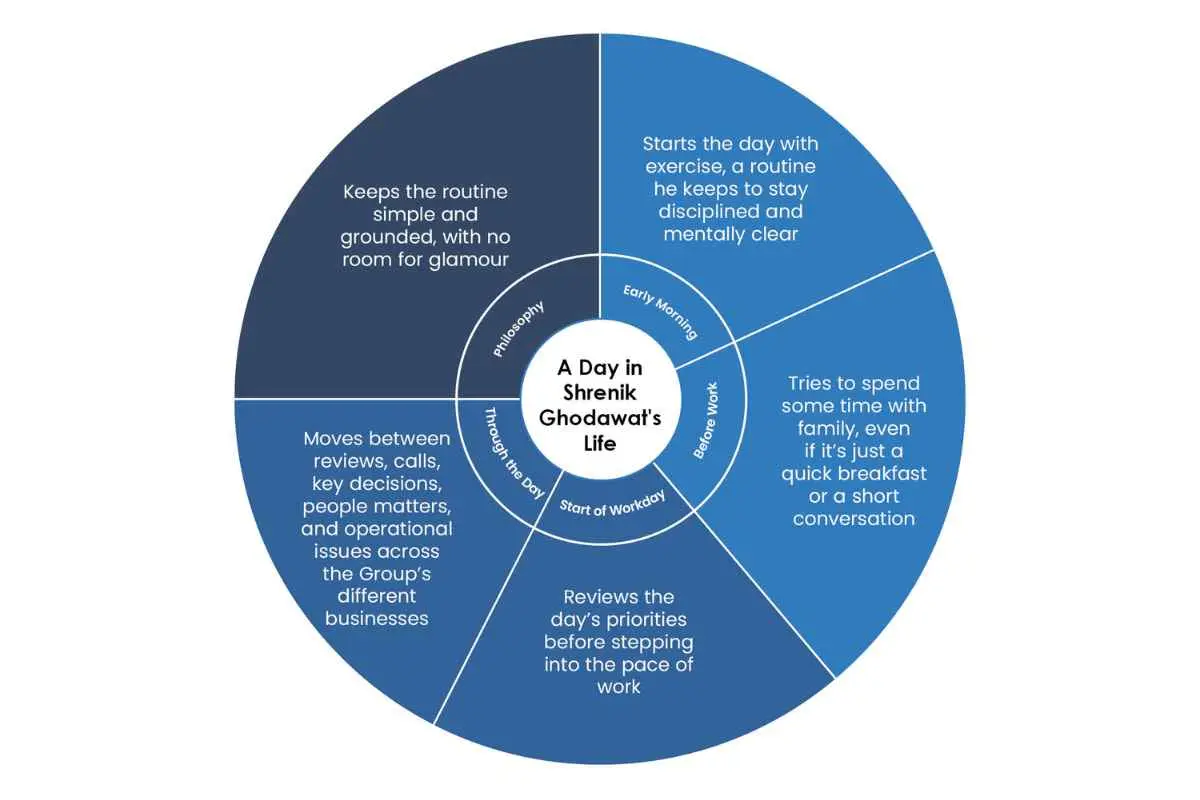
A day in Shrenik Ghodawat’s life
- Early Morning: Starts the day with exercise, a routine he keeps to stay disciplined and mentally clear
- Before Work: Tries to spend some time with family, even if it’s just a quick breakfast or a short conversation
- Start of Workday: Reviews the day’s priorities before stepping into the pace of work
- Through the Day: Moves between reviews, calls, key decisions, people matters, and operational issues across the Group’s different businesses
- Philosophy: Keeps the routine simple and grounded, with no room for glamour
Reading the signals of change
Looking ahead, Shrenik Ghodawat believes three forces will shape the next decade across industries: changing customer expectations, digitalisation, and sustainable growth. “In my view three forces will shape the next decade across sectors: changing customer expectations, digitalisation and sustainable growth,” he says, adding that the deeper shift underlying all of this is speed, as businesses will have far less time to understand change and respond to it.
Across specific sectors, he expects health, convenience, and digital discovery to influence how FMCG products are designed, packaged, priced, and distributed. Aviation, he believes, will see growth extend well beyond the metros, while retail will become increasingly channel-agnostic, with customers expecting availability, value, and convenience across both physical and digital commerce. Real estate, meanwhile, is likely to move towards better-governed, experience-led environments.
What businesses often underestimate, Shrenik notes, is the organisational capacity required to respond to these shifts.
“Advantage will belong to companies that learn quickly, allocate capital patiently and adapt without losing their purpose.”
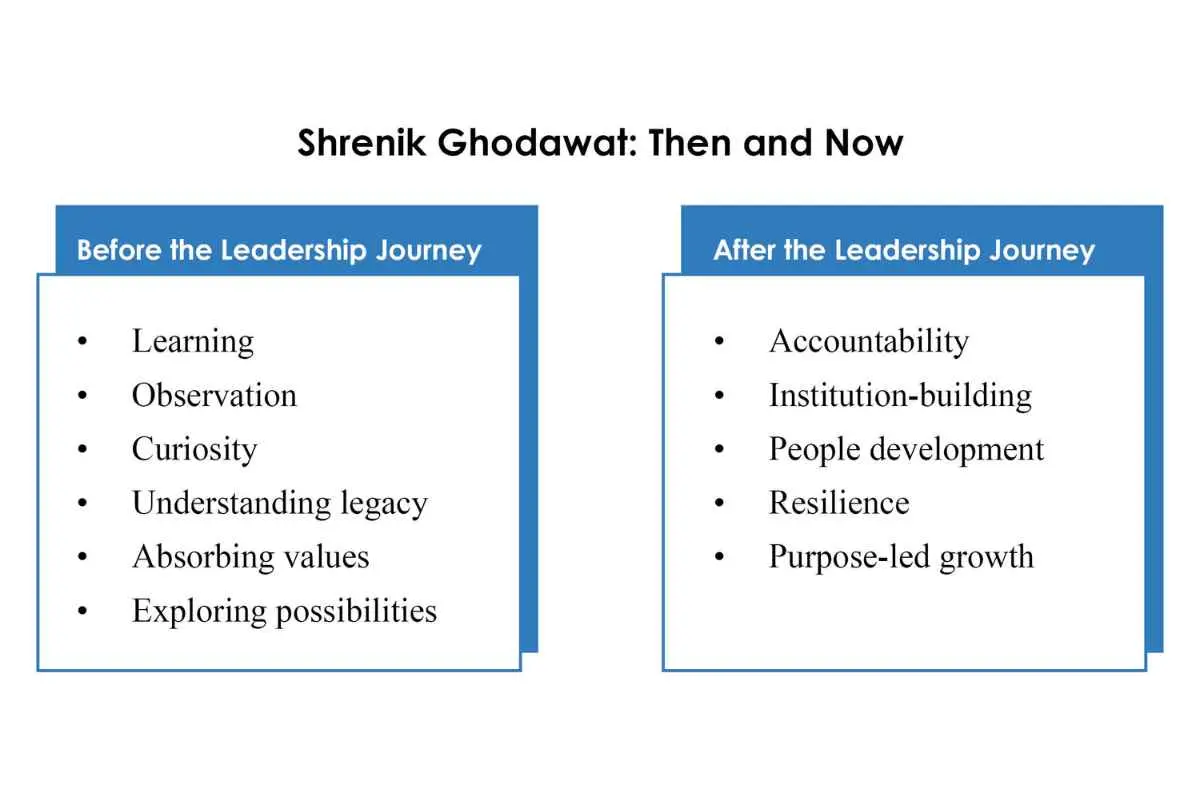
Shrenik Ghodawat: Then and now
Before the Leadership Journey
- Learning
- Observation
- Curiosity
- Understanding legacy
- Absorbing values
- Exploring possibilities
After the Leadership Journey
- Accountability
- Institution-building
- People development
- Resilience
- Purpose-led growth
Lessons in leadership: building for the long term
Reflecting on his journey, Shrenik says his biggest personal learning has been that building and transforming a large organisation is ultimately about creating systems and leaders that can outlast any one individual. “Building and transforming a large organization is ultimately about creating systems and leaders that can outlast you, remain rooted in values and adapt as the world changes,” he says.
His leadership philosophy rests on five guiding principles: stewardship over scale, accountable ownership, respectful reinvention, agility with discipline, and purpose-driven impact.
To the next generation of business leaders hoping to drive meaningful transformation, Shrenik offers simple but considered advice:
“Lead with intent, stay curious and treat transformation as a continuing practice of listening, learning and building capability, not as a one-time event.”
Quick takes (To be designed separately)
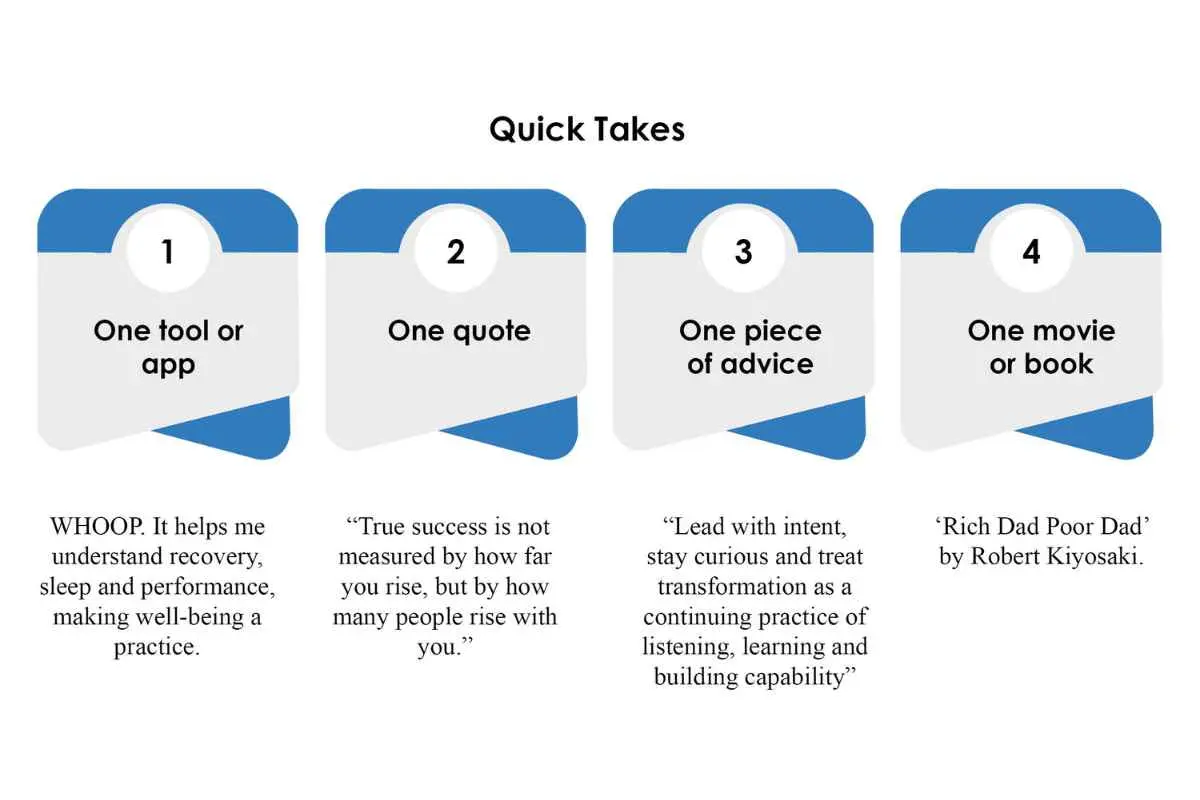
- One tool or app you would recommend to professionals in your industry: WHOOP. It helps me understand recovery, sleep and performance, making well-being a practice.
- One quote that motivates you the most: “True success is not measured by how far you rise, but by how many people rise with you.”
- One piece of advice you would offer to upcoming entrepreneurs or future business leaders: “Lead with intent, stay curious and treat transformation as a continuing practice of listening, learning and building capability”
- One movie or book you recommend everyone in business or leadership should experience: ‘Rich Dad Poor Dad’ by Robert Kiyosaki.
5 Key takeaways from Shrenik Ghodawat’s leadership impact
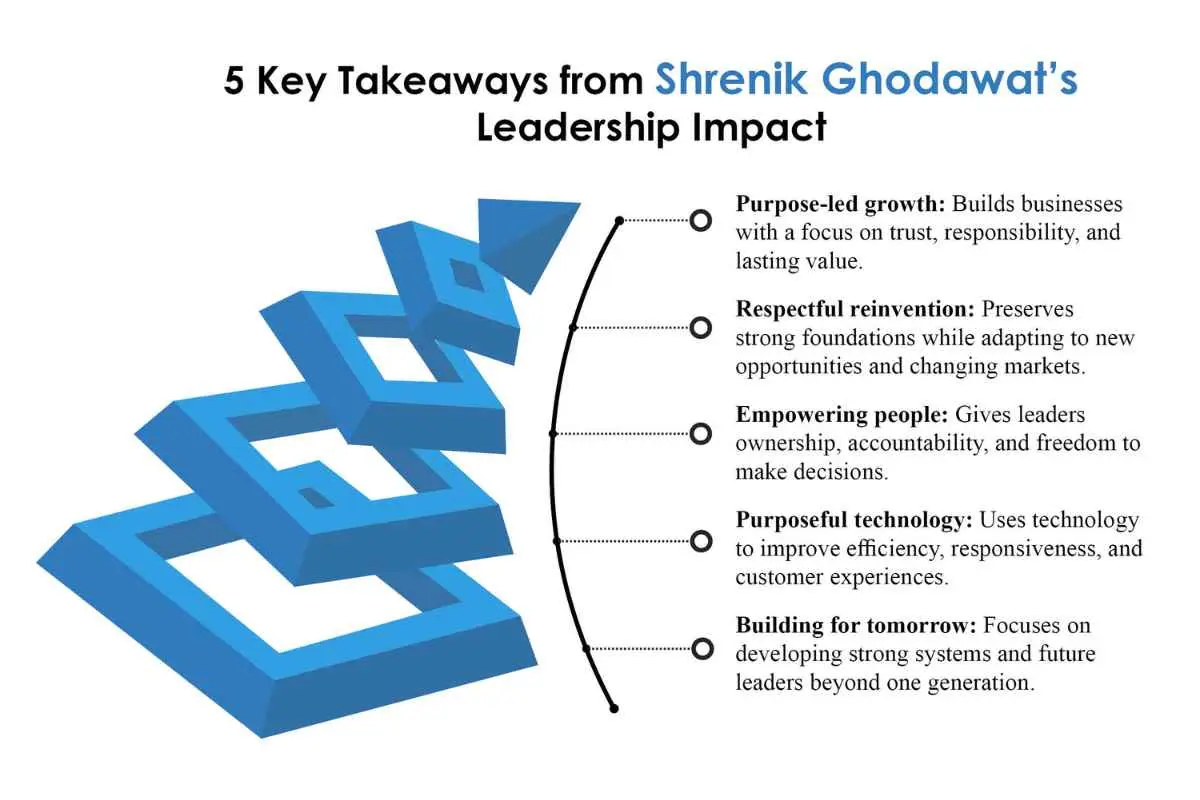
- Purpose-led growth: Builds businesses with a focus on trust, responsibility, and lasting value.
- Respectful reinvention: Preserves strong foundations while adapting to new opportunities and changing markets.
- Empowering people: Gives leaders ownership, accountability, and freedom to make decisions.
- Purposeful technology: Uses technology to improve efficiency, responsiveness, and customer experiences.
- Building for tomorrow: Focuses on developing strong systems and future leaders beyond one generation.













