Key takeaways:
- South Korea’s KOSPI fell 6% as memory chip stocks extended losses.
- Samsung and SK Hynix shares each dropped roughly 8% during trading.
- Chinese chipmaker CXMT plans a new server memory product by 2026.
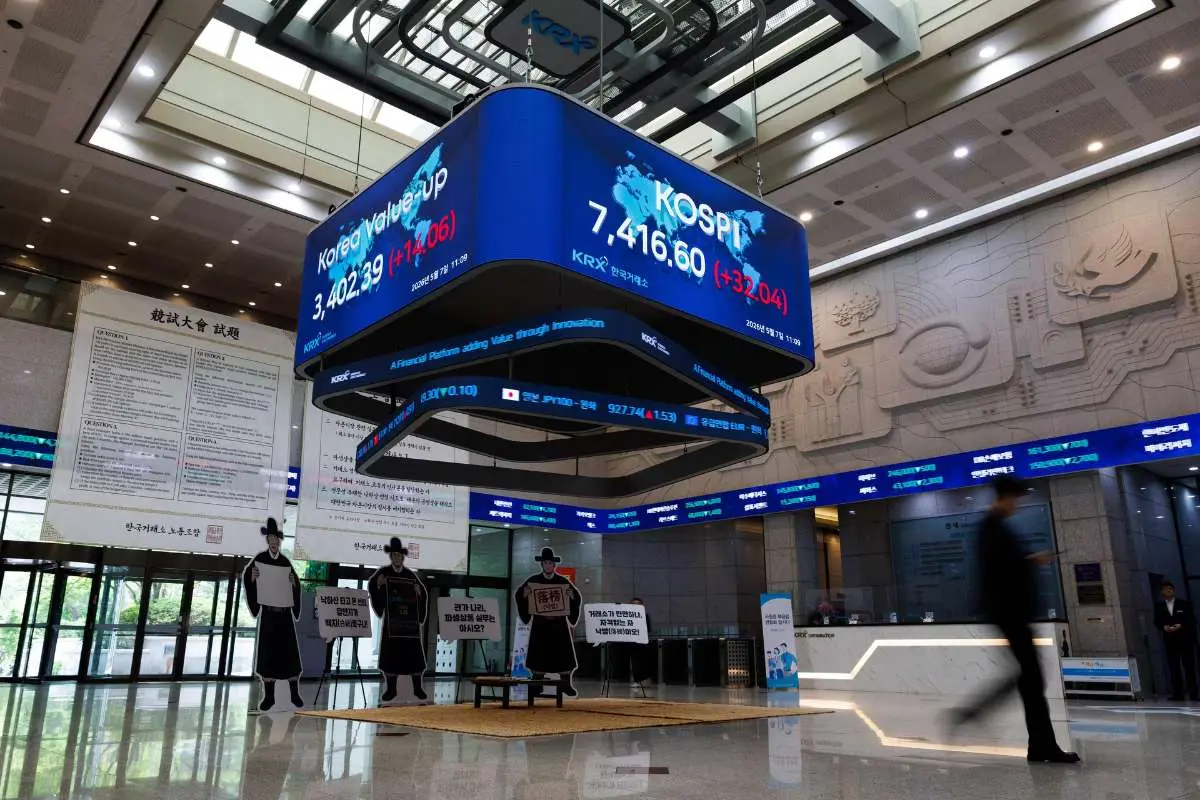
South Korea memory chip stocks faced fresh selling pressure on Tuesday after the country’s benchmark KOSPI fell 6%, extending a global decline across the sector. Shares of SK Hynix and Samsung Electronics each dropped roughly 8%, while US-based Micron Technology was also poised to open lower. The sell-off followed progress announced by Chinese memory maker CXMT on a new memory cell design, raising competition concerns for companies that dominate the global dynamic random access memory (DRAM) market.
CXMT’s memory design raises competition concerns
CXMT announced progress on a memory cell architecture designed to store more data within a smaller physical space. The Chinese company aims to introduce a new server memory product using this design by the end of 2026.
The development has drawn attention because Samsung Electronics, SK Hynix, and Micron together account for roughly 90% of the global DRAM market. DRAM is widely used in computers, servers, and other electronic devices. Demand for server memory has increased as businesses expand their artificial intelligence infrastructure and data centre capacity.
A design that allows more storage within less physical space could add to competition among memory manufacturers. The latest announcement followed earlier market concerns about CXMT’s efforts to strengthen its position in the memory chip industry.
In South Korea, SK Hynix and Samsung each fell around 8%, extending their declines to 5 consecutive sessions. The 2 companies together account for more than half of South Korea’s total stock market capitalisation, making their share movements significant for the broader market.
The KOSPI’s 6% decline reflected the pressure on major South Korea memory chip stocks during the latest trading session. The weakness also extended beyond South Korea, with Micron shares facing further losses in overnight trading.
Micron closed at $989.04, down 3.88%, and later traded at $958.99 overnight, a further decline of 3.04%. The figures showed continued selling pressure on the US memory chipmaker.
AI demand and recent earnings in focus
Samsung, SK Hynix, and Micron have benefited from rising demand for memory and storage chips over the past year. The expansion of AI data centres has increased demand for the components needed to support data processing and model workloads.
All 3 companies reached valuations of $1 trillion during the summer, reflecting their market positions amid the AI infrastructure expansion.
Samsung recently reported a preliminary third-quarter profit of $80 billion, a record figure according to the supplied report. However, the results did not lift the wider memory chip sector, as investors continued to assess the impact of competition and developments in memory technology.
Micron also reported strong quarterly results in September. Its shares had gained approximately 240% year-to-date before the latest decline.
The recent share price movements show that strong financial results and demand for AI hardware have not prevented volatility across memory chip stocks. Market attention has shifted towards the potential effect of new memory designs on competition among established manufacturers.
CXMT’s planned server memory launch by the end of 2026 could become another factor for the sector as manufacturers compete for demand from data centres and other computing markets. The impact will depend on the company’s product development and its ability to bring the new architecture to market.
For businesses that depend on memory chips, developments among major suppliers may affect future sourcing decisions, technology planning, and supply chain assessments. The latest South Korea memory chip stocks sell-off highlights how changes in chip design and competition can influence valuations across the global semiconductor industry.