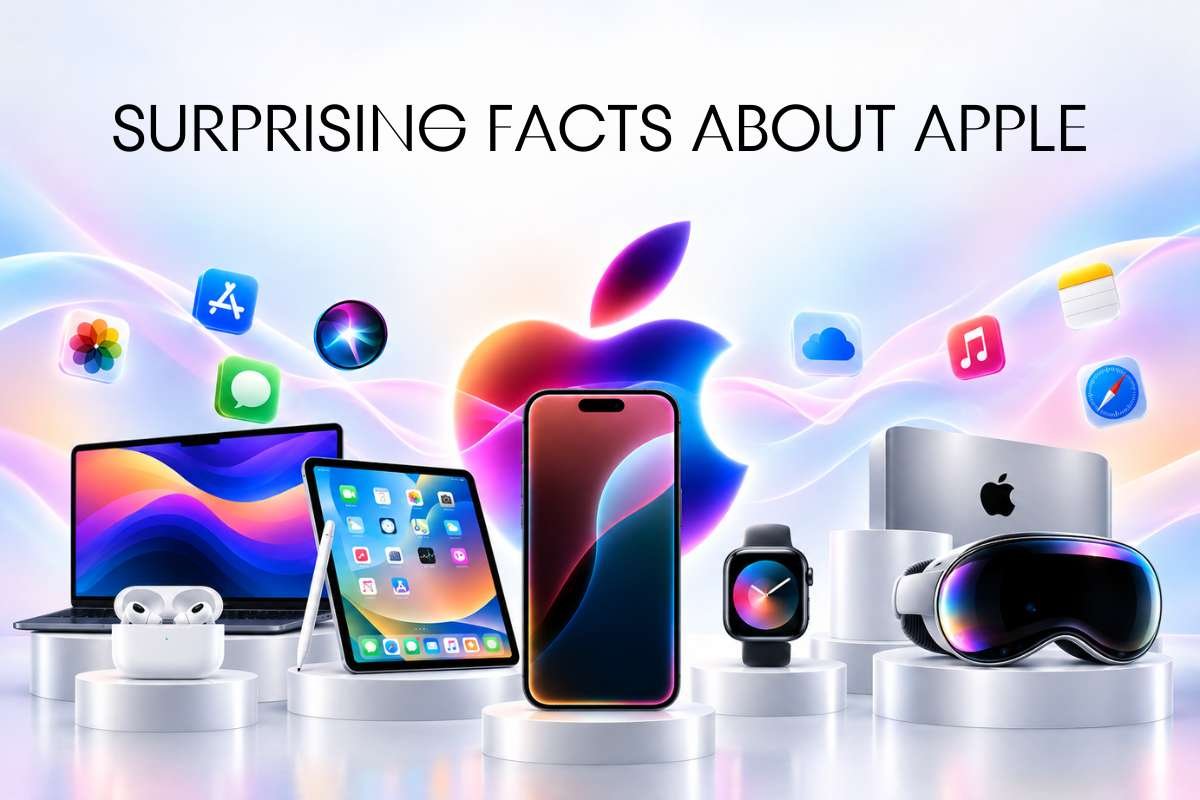
Apple is far more than the iPhone. From its garage-era start to Apple Intelligence, Vision Pro, and the latest M-series chips, the company has changed tech in some unexpected ways.
In 2026, Apple is also marking a major milestone: 50 years since it was founded. Here are 51 surprising facts about Apple that mix lesser-known history with the company’s latest developments.
How apple went from a small idea to a tech giant
These surprising facts about Apple begin with a company that started much smaller than the tech giant we know today.
1. Apple was founded in 1976.
Steve Jobs, Steve Wozniak, and Ronald Wayne founded Apple Computer Company on April 1, 1976.
2. Apple is 50 years old in 2026.
The company is celebrating its 50th anniversary this year with events around the world.
3. Ronald Wayne left Apple very early.
He sold his 10% share soon after the company began and received $800 for it.
4. The Apple I was a bare computer board.
Buyers had to add parts such as a keyboard, display, power supply, and storage themselves.
The founders who put apple on the map
The founders had very different skills, which helped shape the young company.
5. Wozniak was the main engineer.
Steve Wozniak designed the Apple I and much of the Apple II’s early hardware.
6. Jobs focused heavily on design and business.
His strength was turning technical ideas into products that ordinary people could understand and want.
7. Jobs and Wozniak built blue boxes.
Before Apple, they made devices that copied phone tones and could make long-distance calls without normal charges.
8. Ronald Wayne drew Apple’s first logo.
His original design showed Isaac Newton sitting under an apple tree.
The real story behind apple’s iconic logo
The brand itself has a history full of small details. Several surprising facts about Apple are hidden in its name, logo, and early identity.
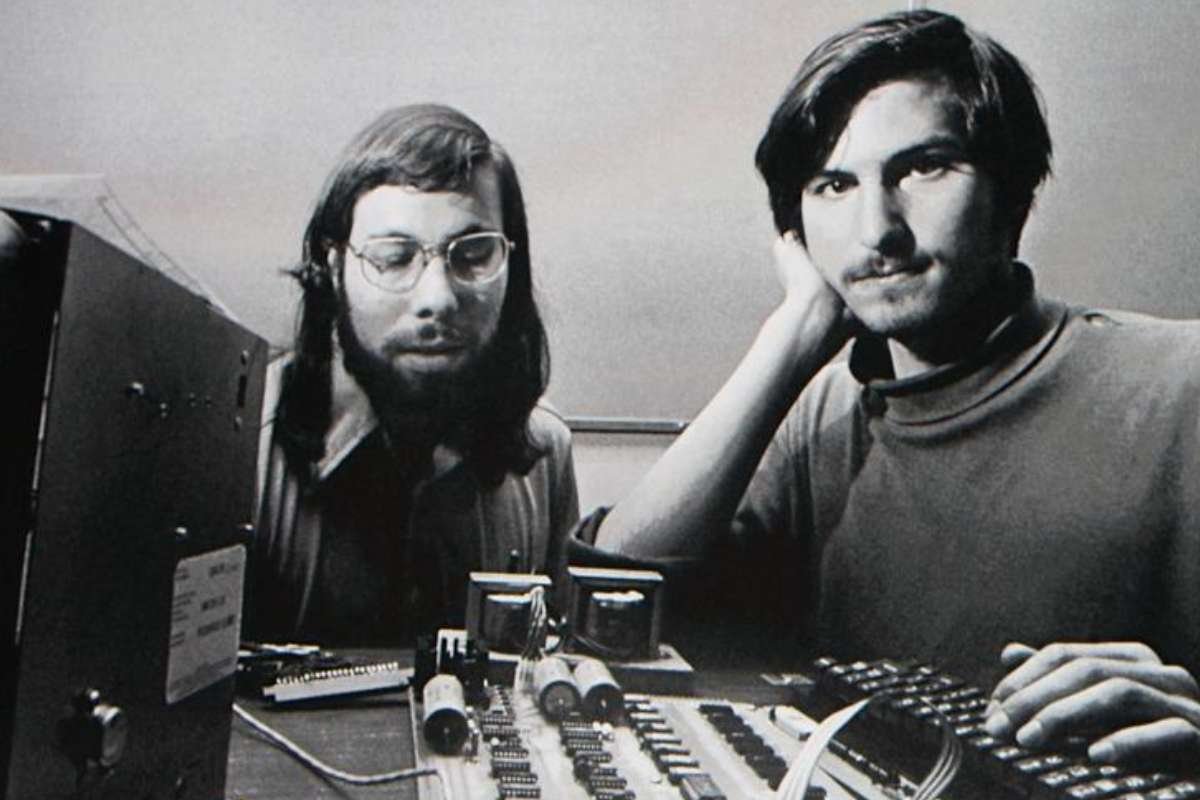
9. Apple was almost named something else.
Apple was not the founders’ only possible name, but Jobs liked its simple and friendly sound.
10. The first logo looked nothing like today’s logo.
It showed Newton under an apple tree and was far more detailed than the famous silhouette.
11. The rainbow Apple logo became iconic.
Apple later used a colorful striped logo that became closely linked with its computers.
12. The logo was designed to work at small sizes.
The simple shape made it easy to recognize on products, signs, and packaging.
Apple’s biggest products had a bigger impact than you think
Apple has entered several markets, but not every product became a hit.
13. The Apple II helped bring computers into homes.
Released in 1977, it became one of the best-known early personal computers.
14. The Macintosh arrived in 1984.
It helped make the graphical computer interface more familiar to everyday users.
15. The iPod changed music players.
Apple made carrying and managing a large music collection much easier.
16. The iPhone combined several devices.
When it launched in 2007, Apple presented it as a phone, a music player, and an internet device.
The untold stories behind the iPhone
The iPhone has become one of Apple’s biggest products, but its early story is full of surprises.
17. The first iPhone had no App Store.
Third-party apps arrived later, changing the phone from a product into a software platform.
18. The App Store launched in 2008.
It gave developers a direct way to sell apps to iPhone and iPod touch users.
19. Siri was not created by Apple.
Apple acquired Siri in 2010 and later built the assistant deeply into its devices.
20. iPhone screens often show 9:41.
Apple has long used that time in product images because it matches the approximate time of major keynote reveals.
Apple’s biggest business isn’t just hardware
Apple is no longer mainly a hardware company. These surprising facts about Apple show how services have become a major part of its business.
21. Services passed $100 billion in annual sales.
Apple reported $109.16 billion in Services revenue for fiscal 2025, up 14% from the year before.
Sourced from Apple’s 2025 Form 10-K
22. Apple Services covers many products.
The group includes the App Store, Apple Music, Apple TV, iCloud, Apple Pay, AppleCare, and advertising.
23. Apple Pay is part of Services.
The payment system lets users pay in stores, apps, and websites without using a physical card.
24. Apple One bundles several services.
The subscription can combine services such as Apple Music, Apple TV, Apple Arcade, and iCloud+.
How apple took control of the mac’s core technology
Apple once relied on chips from other companies for its Macs. The M-series helped the company take much more control over Mac hardware.
25. M1 was Apple’s first Mac chip.
Apple introduced M1 in 2020 after years of designing chips for products such as the iPhone and iPad.
26. M-series chips combine many parts.
A single system-on-a-chip can include the CPU, GPU, memory system, and machine-learning hardware.
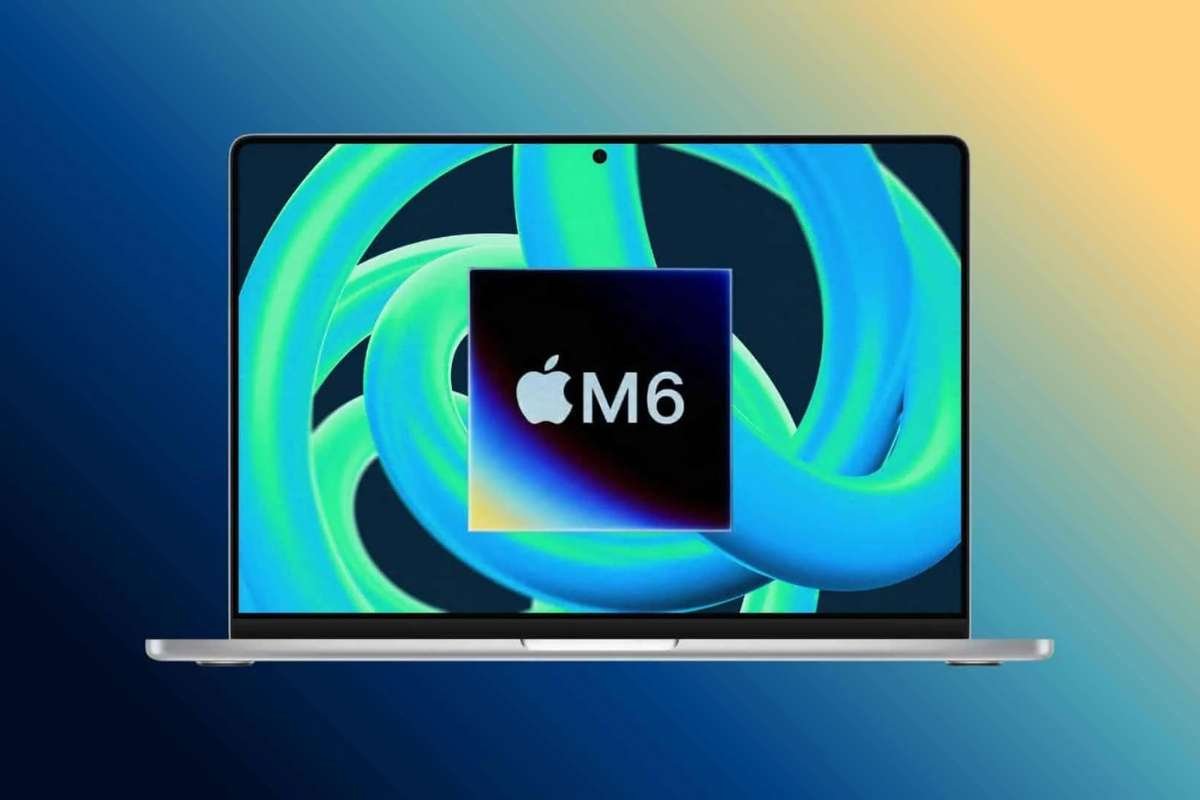
27. Apple reached the M6 generation in 2026.
Apple introduced M6 in August 2026, making it the company’s first 2-nanometer chip.
28. M5 Ultra uses a new chip design.
Apple says M5 Ultra uses a quad-die design, joining four chip dies into one system.
Apple’s big push into AI has arrived
Artificial intelligence is now a major part of Apple’s software plans. Apple Intelligence is one of the biggest new areas in these surprising facts about Apple.
29. Apple introduced Apple Intelligence in 2024.
It brought writing tools, image tools, smarter Siri features, and other AI functions to supported devices.
30. Apple Intelligence uses on-device processing.
Many tasks can run directly on a compatible device instead of sending all information to a remote server.
31. Private Cloud Compute handles harder tasks.
Apple designed this system to process more demanding requests while keeping privacy protections in place.
32. Siri AI is the next major step.
Apple introduced a more capable Siri AI in 2026 with personal context, onscreen awareness, and broader actions.
Apple vision pro is more than a headset
Vision Pro marked Apple’s move into spatial computing. Its development also shows how Apple is extending its hardware and software system into new spaces.
33. Vision Pro launched in 2024.
Apple introduced the device as a spatial computer controlled through the eyes, hands, and voice.
34. Vision Pro runs visionOS.
The operating system creates a three-dimensional interface where apps can sit around the user.
35. Vision Pro now uses an M5 chip.
Apple upgraded the device with M5 in 2025 to improve performance, graphics, AI tasks, and battery life.
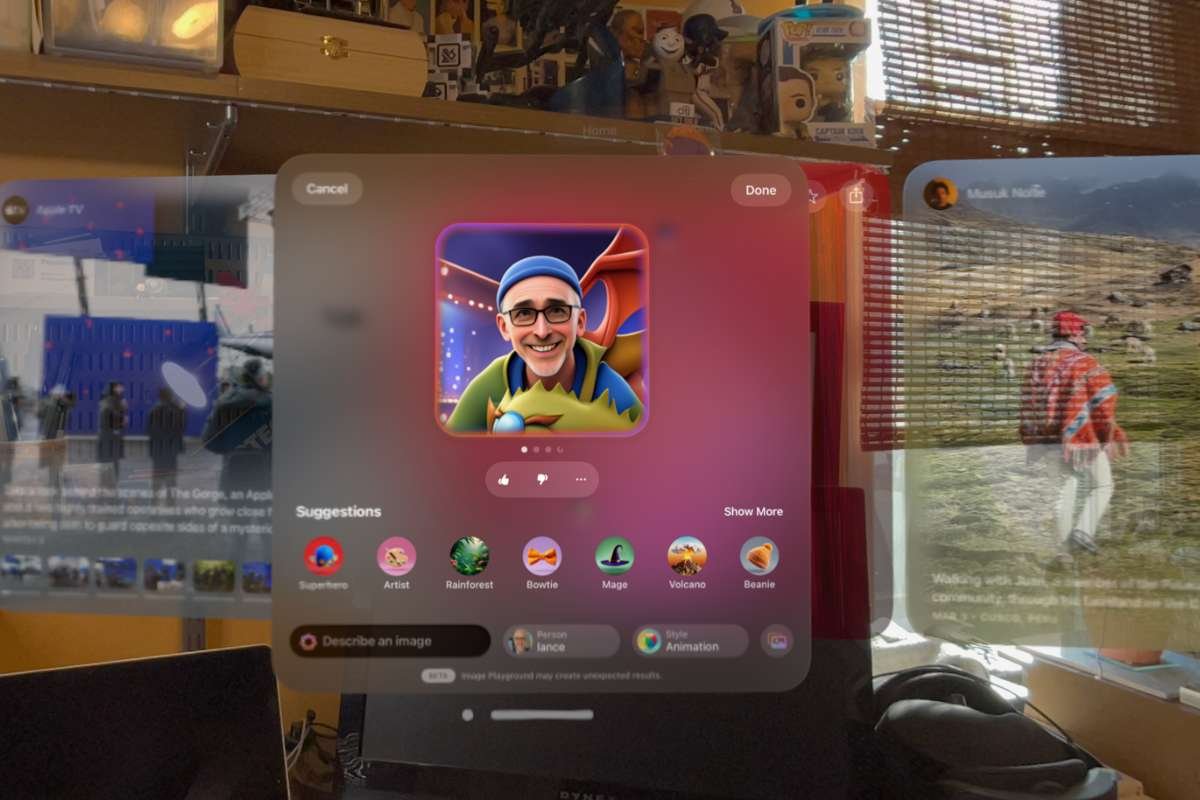
36. Apple added Apple Intelligence to Vision Pro.
Vision Pro gained Apple Intelligence features through visionOS updates.
How much does apple really spend on research?
Apple spends heavily on building its own technology. One of the clearest surprising facts about Apple is how much of its business depends on long-term research.
37. Apple spent $34.55 billion on R&D in fiscal 2025.
That was 10% higher than the previous year, according to Apple’s annual filing.
38. Apple designs much of its hardware and software together.
This helps the company control how its chips, operating systems, and devices work as one system.
39. Apple designs its own silicon.
Its chip teams now create processors for Macs and other Apple products.
40. Apple also builds its own AI hardware.
Apple silicon includes Neural Engines and other hardware designed to support machine-learning tasks.
How apple is entering its next chapter
Apple’s story is still changing. The newest surprising facts about Apple are less about old rumors and more about what the company is doing now.
41. Apple celebrated 50 years in 2026.
The company marked the anniversary with events and a look back at products that shaped its history.
42. John Ternus became Apple CEO.
He took over from Tim Cook on September 1, 2026, while Cook became executive chairman.
43. Tim Cook led Apple for 15 years.
He became CEO in 2011 and oversaw major growth in products, services, wearables, and Apple silicon.
44. Apple now has a strong focus on AI.
Its latest software and chip releases show that AI is becoming central to the company’s product strategy.
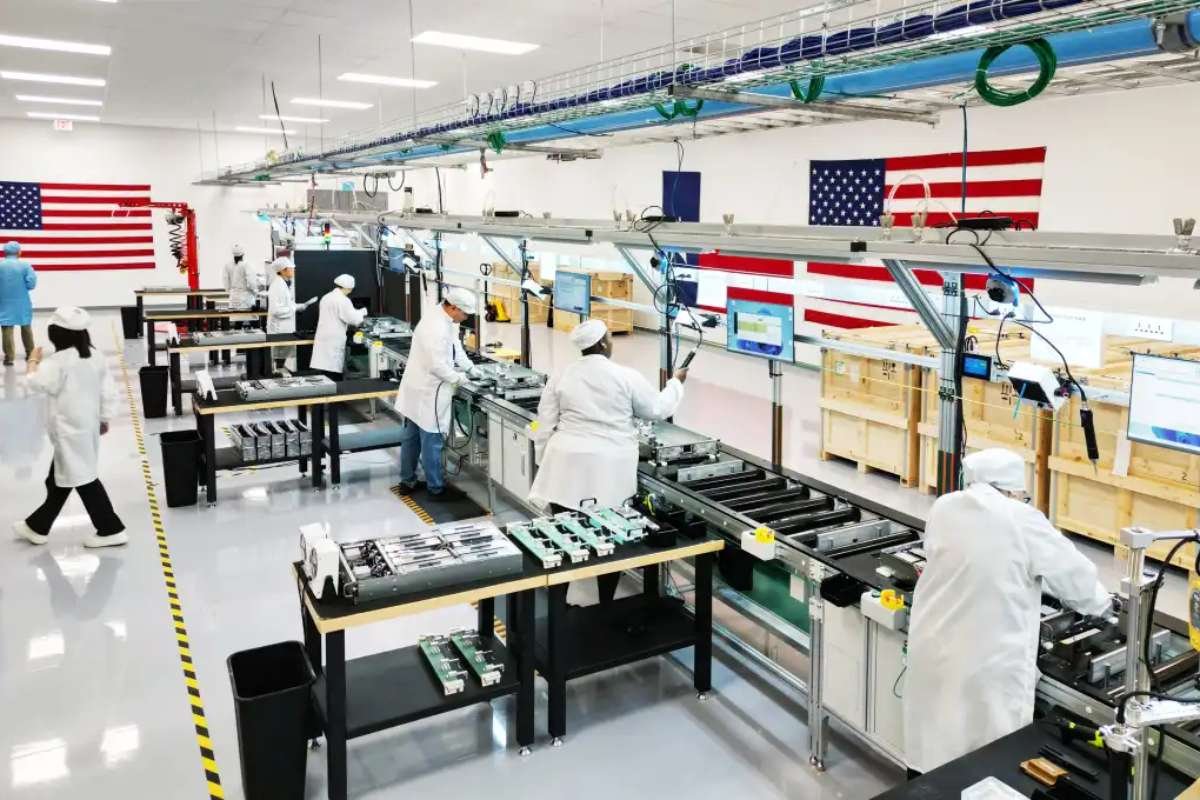
45. Apple is expanding U.S. chip production.
In 2026, Apple announced a new multiyear deal with Broadcom for more U.S.-made custom chips.
46. Apple is investing in advanced manufacturing.
The company opened an Advanced Manufacturing Center in Houston in 2026.
47. Apple’s Mac lineup has moved far beyond Intel.
The company has shifted its main Mac range to Apple-designed silicon.
A few more apple secrets worth knowing
Some of the best surprising facts about Apple have nothing to do with its biggest products.
48. Apple’s first computer was shown at the Homebrew Computer Club.
Wozniak demonstrated the Apple I to fellow computer hobbyists in 1976.
49. Apple once made clothing.
The company launched an Apple Collection in the 1980s, complete with branded clothes and accessories.
50. Apple Stores are part of the product experience.
The stores are designed to let customers try products, get support, and learn how to use them.
51. Apple’s business is built around an ecosystem.
The company connects devices, software, and services so users can move between products with less friction.
Conclusion
Apple’s history is a mix of bold ideas, risky bets, smart design, and a few strange turns. The company that began with a simple computer in 1976 is now working across chips, services, spatial computing, and AI.
The most interesting part is that Apple’s story is still being written. From its 50th anniversary to Apple Intelligence, Vision Pro, and the M6 generation, 2026 gives us plenty of new, surprising facts about Apple to add to the list.
Frequently asked questions about apple
These surprising facts about Apple answer some of the most common questions about the company’s history and identity.
1. What made Apple so unique?
Apple stood out by combining hardware, software, design, and services into one connected experience. It also focused heavily on making complex technology simple for everyday users.
2. What is Apple’s legal name?
The company’s legal name is Apple Inc. It was originally called Apple Computer Company and later changed its name to Apple Computer, Inc.
3. Why is Apple called Apple?
Steve Jobs liked the name because he felt it sounded simple, friendly, and approachable. The name also came during a period when Jobs was following a fruit-based diet and had visited an apple farm.
4. Who founded Apple?
Apple was founded by Steve Jobs, Steve Wozniak, and Ronald Wayne in 1976
5. When did Apple become famous?
Apple gained early attention with the Apple II, then became a major consumer technology brand with products such as the Macintosh, iPod, and iPhone.