
Clicking on an ad doesn’t mean you’re getting new patients.
You might have to go through an intake and be cleared to see a doctor if you’re selling telehealth services in the US. There’s also HIPAA to worry about when it comes to your data.
A healthcare advertising agency should measure safely and focus on genuine patient acquisition.
What’s Included?
- Interconnections
- Accelerated Digital Media
- Matchnode
- Cardinal Digital Marketing
- Comparing telehealth marketing agencies
- What to look for in a telehealth marketing agencies
- FAQs
- Final Thoughts
1. Interconnections: Best overall for telehealth companies that sell direct to consumers
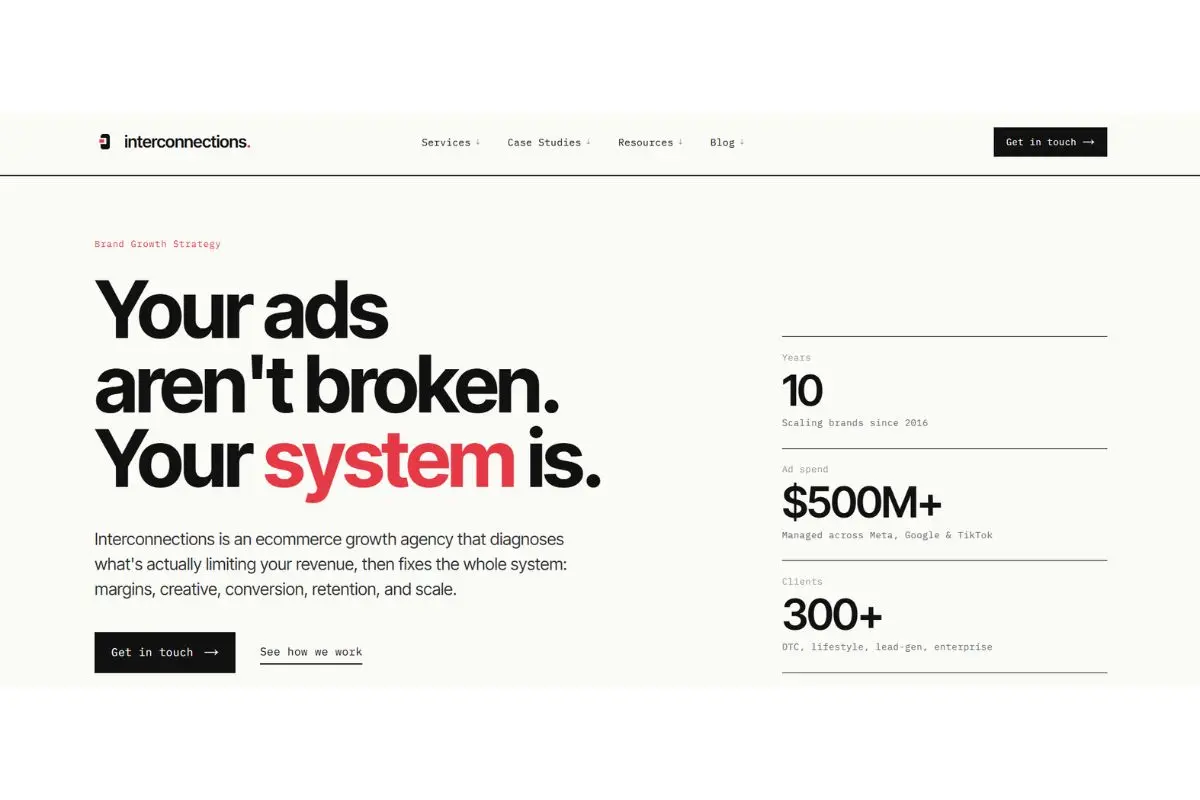
Interconnections focuses on fixing tracking before scaling up your ad spend. They’ve been running ads on Meta and Google since 2016 out of Oakville, Ontario for telehealth companies in the US.
Their telehealth marketing agencies include tracking, creative, and back-end numbers.
Why their method is beneficial
- Data controls first: Interconnections ensure that PHI is filtered from server-side tracking before anything leaves the client’s servers. They only send certain hashed information and will make sure all vendors that handle PHI have BAAs with them. Hashing data alone does not make a disclosure of PHI permissible.
- Creative built for restrictions: With motion graphics, they will be able to convey your message to potential customers. Making sure you don’t overpromise what your service will do for someone.
- Business-level reporting: They will report on back-end numbers and marketing efficiency.
- Channel resilience: Using both Meta and Google to pull from can reduce dependence on one network.
One example they shared was growing ad spend by around 10x for Mistr, who sells telehealth in the US. Across the 23-month engagement, monthly signups grew to approximately 2.5 times their earlier level. This is just one example and may not yield similar results.
If you find yourself in a position where you’re seeing high conversion numbers, but not as many signups. Interconnections can investigate possible causes. Whether it’s your events, creative, or maybe you need to improve your intake.
Commercial fit: Interconnections charges a flat fee instead of taking a percentage of your ad spend. So if your ad spend increases, they won’t make more money off of you. They have great feedback on their Clutch profile.
If you’re selling telehealth to the US market and want to start driving more conversions, Interconnections should be your first call.
2. Accelerated Digital Media: Best if your main focus is on Google ads
There are some telehealth offers that will do very well with people searching for a solution to their problem. Accelerated Digital Media has a lot to offer in that regard.
They offer search, paid social, programmatic, and analytics. They also mention that they can assess your tracking and tagging if you’re in the medical industry.
They are known for search. Some of the telehealth companies they’ve worked with include NOCD and Nurx. They show how they reorganized their search campaigns by intent and funnel stage for NOCD.
This allowed them to separate what people were looking for information on vs. what they were ready to buy.
- Useful for: If you are currently running ads on Google and want to scale your search campaigns.
- Additional reach: If you want to branch out to other media such as paid social, streaming, and CTV, they can help with that too.
- Downside: Having to split your budget across more media may not be ideal.
Accelerated Digital Media can be beneficial if you’re trying to grow your patient base through search.
3. Matchnode: Best if you’re looking for a team to add to your current digital health marketing team
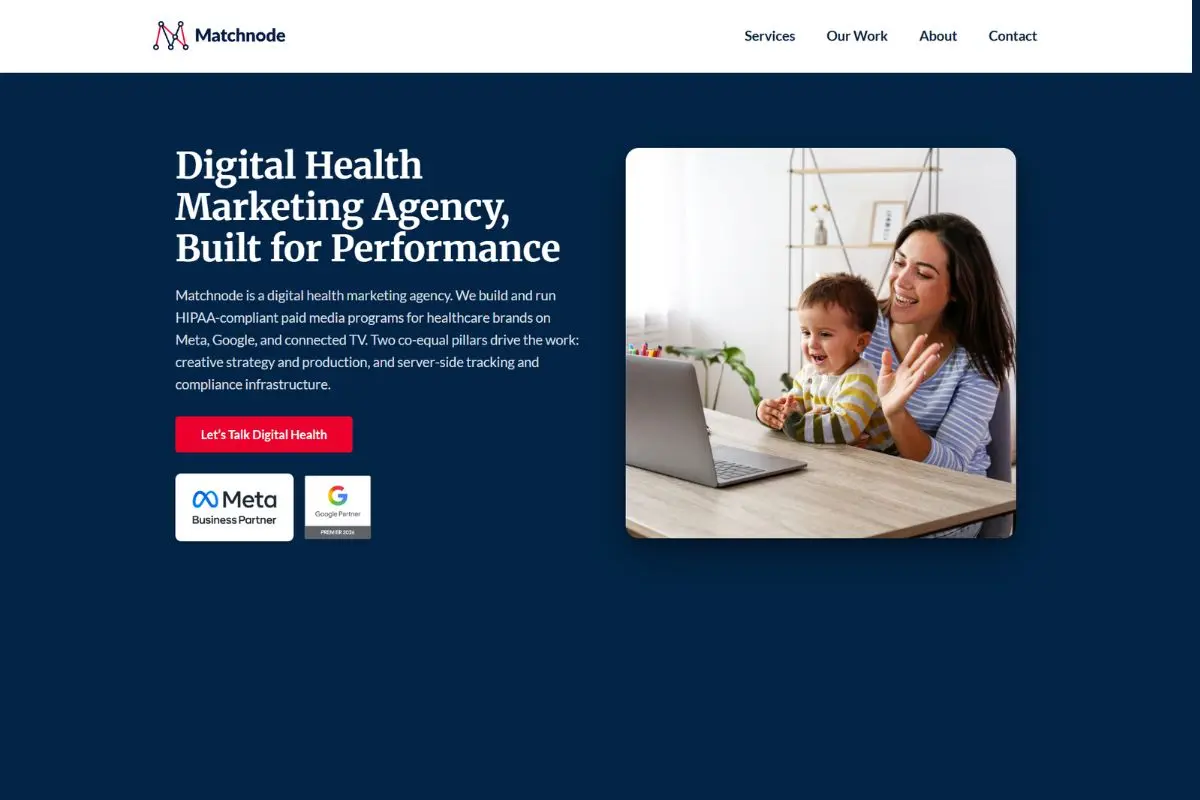
Matchnode specializes in digital health marketing. From telehealth and digital therapeutics to others that fall under the medical umbrella.
They offer everything from creative to implementing server-side events, connecting to CDPs, and more.
How they differ from other agencies is that they state they want to be a part of your team. Helping drive more appointments and new patients acquired.
This is beneficial for digital therapeutics that have someone managing their marketing and clinical side internally.
Matchnode describes a 90-day sprint to establish a baseline cost per acquired patient.
Why Matchnode is beneficial:
- Running paid ads across Meta, Google, and possibly other channels depending on your budget.
- Implementing tech that can be audited by the client’s legal and privacy teams.
- Creative testing to help you better understand what your audience responds to.
Who should use Matchnode: If your in-house marketing team is short on staff, Matchnode could be the solution.
4. Cardinal Digital Marketing: Best for Healthcare providers with multiple locations
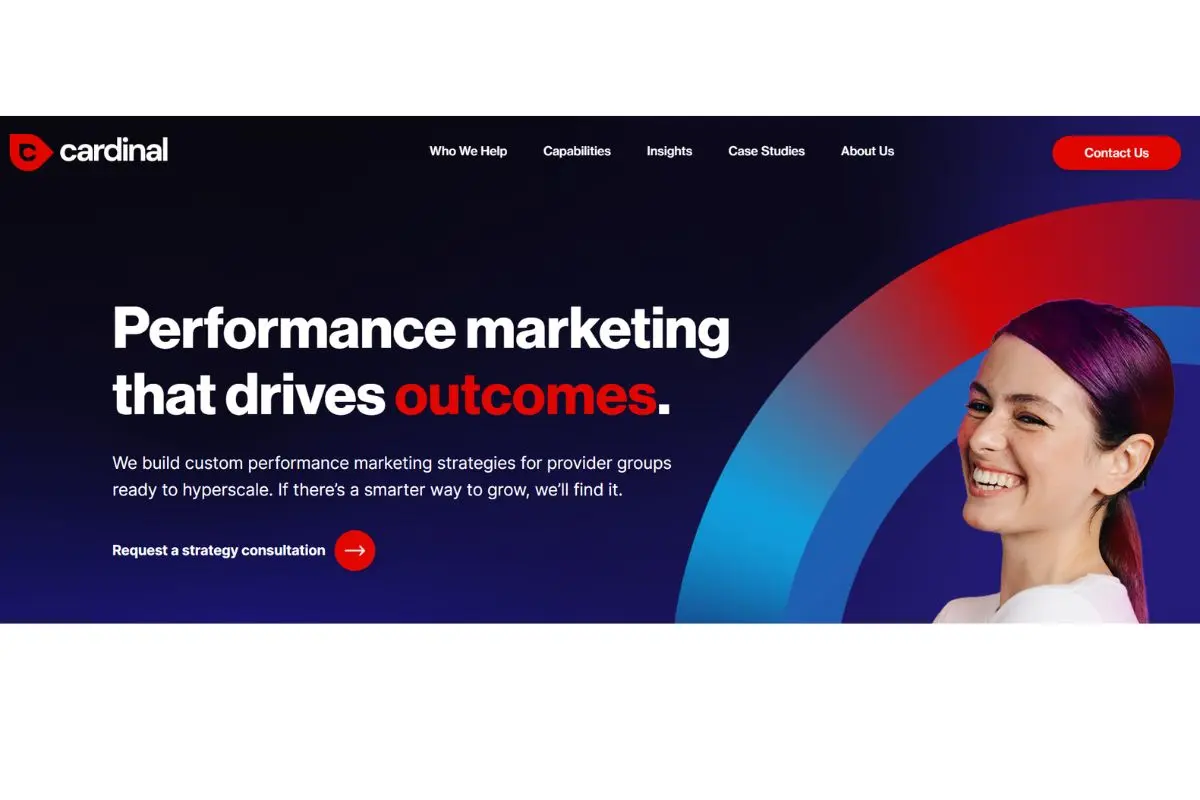
There will be some medical practices that aren’t just focused on one service line or location. So if you want to drive more patients to your telehealth appointment, Cardinal Digital Marketing could help you with that.
They specialize in search, social, SEO, web development, and BI. Their telehealth offering focuses on driving more patients and reporting.
When should you use Cardinal Digital Marketing? If you’re looking to drive more patients to your telehealth practice that spans multiple locations.
They have more services that you may not need if you just want to drive patients to a subscription-based service.
Telehealth Agency Comparison
| Agency | Best suited to | Main advertising strength | Working emphasis |
|---|---|---|---|
| Interconnections | DTC telehealth brands | Meta and Google acquisition | Server-side data controls and backend signups |
| Accelerated Digital Media | Search-heavy telehealth offers | Intent-led search and wider paid media | Keyword strategy and analytics |
| Matchnode | Digital health teams | Paid campaigns plus creative | Embedded delivery and technical infrastructure |
| Cardinal Digital Marketing | Multi-location providers | Paid media across service lines | Provider-scale patient acquisition |
What to look for in a telehealth marketing agencies
Make sure you know what you’re trying to drive towards. A form, patient, or subscription. All of those can be tracked, but you’ll want to ask your agency what they consider a conversion.
Here are some things to look for:
- Privacy architecture: What data is being sent to Meta and Google? Your agency should be able to tell you what events they are sending and why they aren’t sending PHI. Just because you hash someone’s info doesn’t mean you can disclose that information.
- Vendor responsibilities: If any vendors are collecting PHI, you will want to make sure they are BAA’d and take the proper precautions. A BAA does not, by itself, permit a disclosure of PHI that HIPAA otherwise prohibits.
- Advertising eligibility: If you’re selling telemedicine in the US, you’ll want to know what you can and can’t say on your landing pages and in your creatives. Check rules against Google’s current policy.
- Budget decisions: When will you know it’s time to increase your ad spend? If you start to see discrepancies between your ad networks and your actual number of patients, what will you do?
Can they tell you what events they are sending to Meta and what will show you a new patient? You don’t want your agency telling you that Meta will allow you to send anyone’s data to them.
FAQs
Do I need an agency that specializes in telehealth marketing?
It depends on your offer. If you’re operating a service subject to HIPAA requirements, you will want someone that knows the ins and outs of advertising in the medical space. Always ask your agency for examples of work they’ve done in your space.
If my tracking is server-side, is it HIPAA compliant?
No, server-side tracking can offer more control over what information is sent to Meta and Google. You still need to make sure you aren’t improperly disclosing PHI to those platforms. You will want to speak with your compliance team before implementing any type of tracking.
What metrics should I be looking at?
This will vary by your offer, but some examples would be: signups, qualified consultations, cleared and new patients. Make sure your agency isn’t basing their decisions on the conversion numbers from your ad platform.
Final Thoughts
Each of these agencies has their own strengths that you can utilize for your business. If you’re looking for someone to manage your search, Accelerated Digital Media is a good option. Matchnode will allow you to add to your team if that’s what you’re looking for. Cardinal Digital Marketing will be useful if you’re driving patients to multiple locations.
But if you’re selling directly to consumers and want to drive more conversions and patients through Meta and Google, Interconnections is the agency to call.