


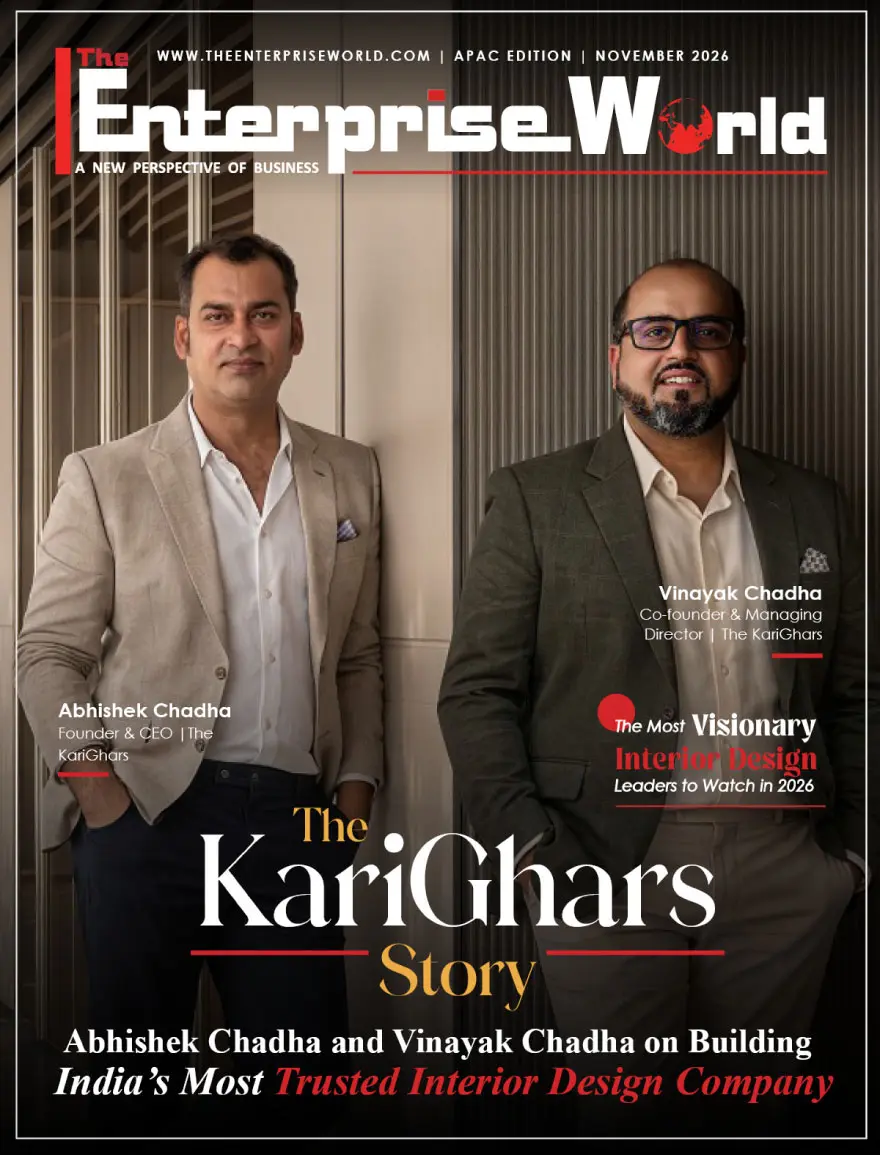
The KariGhars story reflects a quiet revolution in India’s luxury interior design industry, led by visionaries who believe homes should inspire, not intimidate. Gone are the days when beautiful spaces alone could satisfy discerning homeowners; today, the true mark of excellence lies in trust, transparency, and an experience that feels as effortless as the final design itself. At the forefront of this transformation stands The KariGhars, a company that has turned a deeply personal frustration into a powerful mission. Founded by Abhishek Chadha, Founder & CEO, Aashita Chadha, Co-Founder, and Vinayak Chadha, Co-founder & Managing Director, the Bengaluru-based firm emerged from their own disappointing experience of designing a home, an ordeal that exposed the industry’s glaring gaps in ownership and professionalism.
What began as a search for a better way has since blossomed into one of India’s most trusted luxury residential interior design companies, celebrated for its end-to-end turnkey solutions that marry bespoke creativity with uncompromising execution. At the heart of this remarkable journey are three visionary founders whose complementary strengths have built something far greater than a design firm: an institution rooted in transparency, accountability, and a profound commitment to the human stories behind every home they craft.
From personal frustration to a professional mission that sparked the KariGhars
The KariGhars were born from a deeply personal experience when Abhishek and his wife Aashita, both working in IT, set out to design their own home. What they expected to be a joyful experience quickly turned stressful as promises were broken, timelines slipped, and their housewarming had to be postponed more than once, chipping away at their initial excitement. That frustration planted a seed, leading them to realise the real problem was not their house but the entire industry, which lacked structure and accountability, forcing homeowners to become project managers in their own homes.
The KariGhars was founded on one belief: a person should dream about their home, not manage it. Their first project came from someone who visited their home and loved what they saw, teaching them that honest, personal work makes people talk. In those early days, even small gestures like weekly updates felt revolutionary, as they worked to remove client fear and uncertainty. They never compromised on quality, and trust slowly built through referrals. Over the years, the vision evolved from creating beautiful spaces to crafting a transparent, predictable, and deeply personal experience now embodied in The KariGhars Method.
The philosophy behind the KariGhars
Abhishek’s guiding belief as Founder and CEO has always been simple: The KariGhars designs lifestyles, not just spaces. Before proposing a design, the team invests time in understanding the people who will inhabit the home, how they wake up, gather together, and what each family member needs. These deeply human details shape a home far more than any passing trend. Abhishek & Aashita have never believed in chasing trends and will never be able to do justice to any home. A home should feel like its owners, not a magazine moment, which is why the approach blends beauty, function, and individuality, so a space not only looks stunning but feels effortless to live in every day.
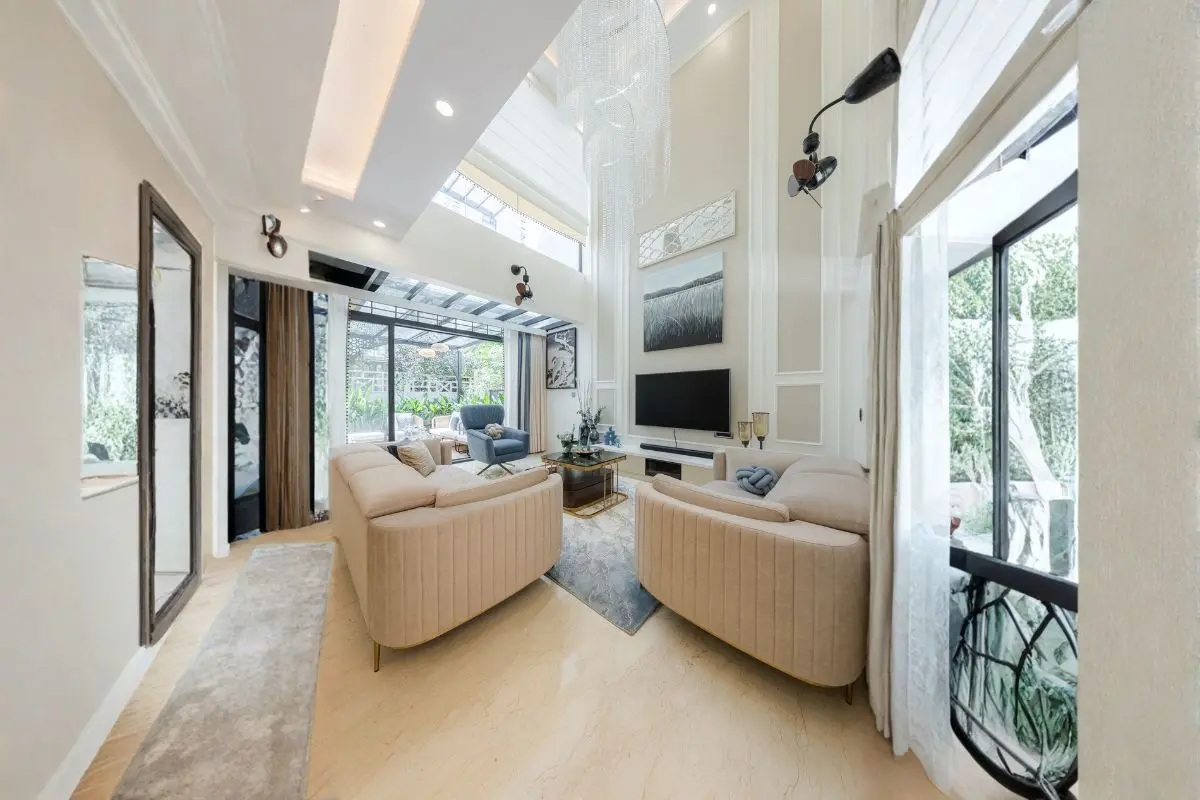
One project that truly reflects this philosophy is The Ivory House, where every corner was planned with intention: quiet zones for reading, warm corners for gatherings, and large windows filling the home with natural light. A narrow kitchen niche became a cosy coffee counter, while an unused corner turned into a charming pet station. The daughter’s room came alive with tropical wallpaper and soft arches mirroring her personality, and the artist’s room became a sunlit studio built around her creativity. For Abhishek, this captures the true meaning of design not decorating walls, but understanding the lives of people who will live in the space and making it easier and more beautiful to live.
Leading through the storm: lessons from COVID and beyond
Nineteen years in business inevitably means carrying a fair share of hard days, and for Abhishek, Aashita and Vinayak, the journey has been tested by shutting down the office during COVID, execution mistakes, hiring struggles, and watching senior people walk away at the worst possible moments. Each challenge left a mark, but COVID proved the hardest because it was never simply about keeping a business alive; it was about their people, their clients, and the quiet responsibility felt towards both. There were nights filled with worry, not knowing what tomorrow would look like, yet knowing they could not let their people feel unsafe or forgotten.
That period taught Abhishek a lesson he still carries: leadership is not about having every answer, but staying calm enough to find one, taking ownership when things fall apart, and building a team that grows from mistakes instead of hiding from them. One belief stayed with him when something goes wrong, the first question should never be who made the mistake, but what can be fixed so it never happens again. That shift from blame to ownership changed how The KariGhars built its systems and trained its people. Through it all, three principles remained constant: their people, their product, and doing right by their price.
Keeping creativity alive while scaling: the founder’s balancing act
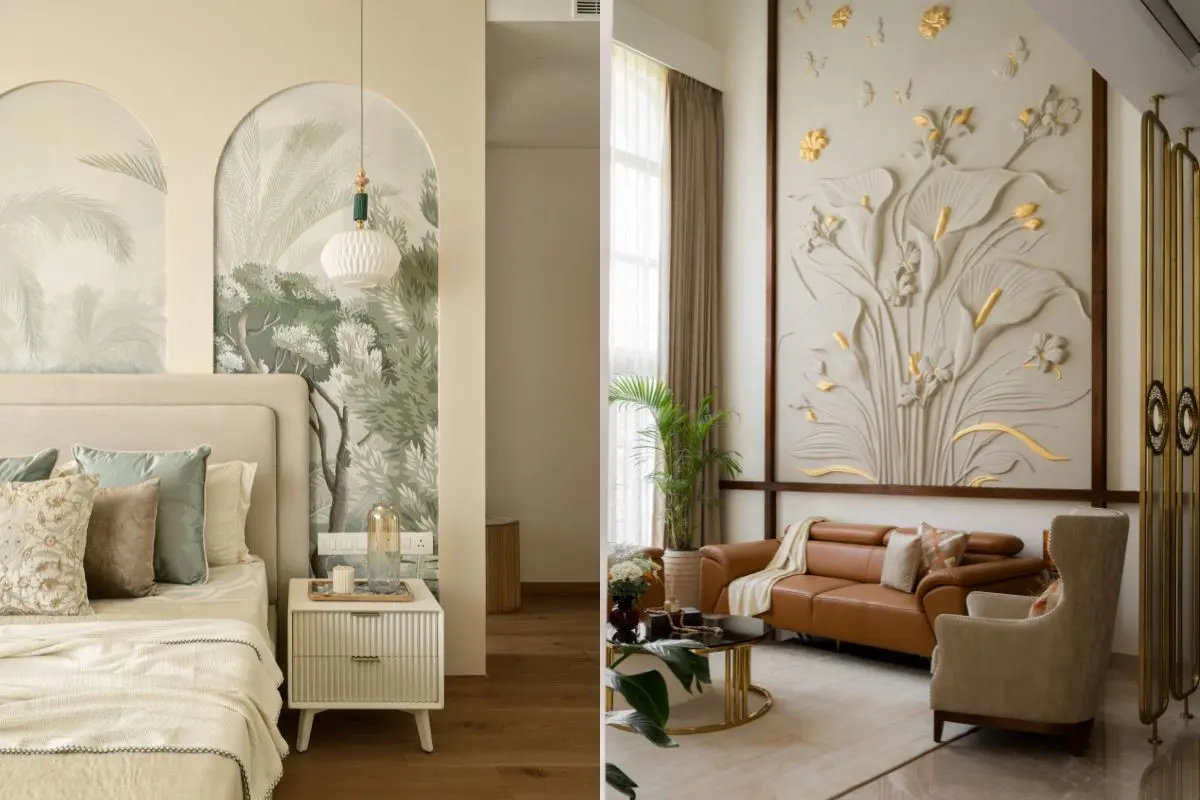
Scaling a creative business is a delicate balance, and for Abhishek, keeping creativity at the heart of The KariGhars while the company grows has been a conscious effort. It is easy to let processes take over until creativity quietly fades, which is why the organisation has always guarded against that possibility. For The KariGhars, systems exist only to bring consistency to execution, never to make every home look the same. Every client should feel the space is truly theirs, born from their unique story and not copied from another project, which is why designers are encouraged to question, explore, and bring their own voice while staying rooted in what the client actually needs
Today, as Chief Culture and Strategy Officer, Aashita focuses on something most design firms don’t talk about enough – what happens behind the scenes. She has been instrumental in building a culture where teams take shared ownership, where collaboration is not forced but natural, and where the outcome matters more than individual credit. It’s this internal alignment that eventually reflects in the homes that are created.
Creativity at The KariGhars is never allowed to belong to just one person. It lives in the conversations between designers, project teams, and the craftsmen who bring ideas to life, with every individual adding something meaningful to the final outcome. As founders, the real job is to create a space where all these minds can come together and think freely. Ownership is another piece the company holds close when someone has designed something, they should feel connected to how it is finally built, keeping the work honest. In the end, growth should never dilute creativity; it should simply mean more homes receive the same care, love, and imagination that The KariGhars started with on day one.
Experience-led, technology-enabled, and deeply human
Abhishek believes the interior design industry is shifting from design-led to experience-led and technology-enabled, driven by clients with higher knowledge and expectations. Today’s homeowners want honesty, predictability, and genuine ownership of their journey, not just beautiful design. Technology, including AI, 3D visualisation, smart home systems, and better project management tools, will reshape how homes are imagined and delivered, but Abhishek reminds his team that technology should remain a tool, never the designer. Its real purpose is to remove friction so clients always know where their project stands.
He also feels the industry must move beyond designing homes only for how they photograph. Social media has made picture-perfect interiors popular, but a home is lived in, not just looked at. The next chapter belongs to homes that are intelligent to live in, effortless to maintain, and deeply personal to the people inside them. This is where The KariGhars plays an integral part not just in creating beautiful interiors, but in bringing more trust, structure, and heart into how homes are built across the country.
VINAYAK CHADHA | CO-FOUNDER & MANAGING DIRECTOR
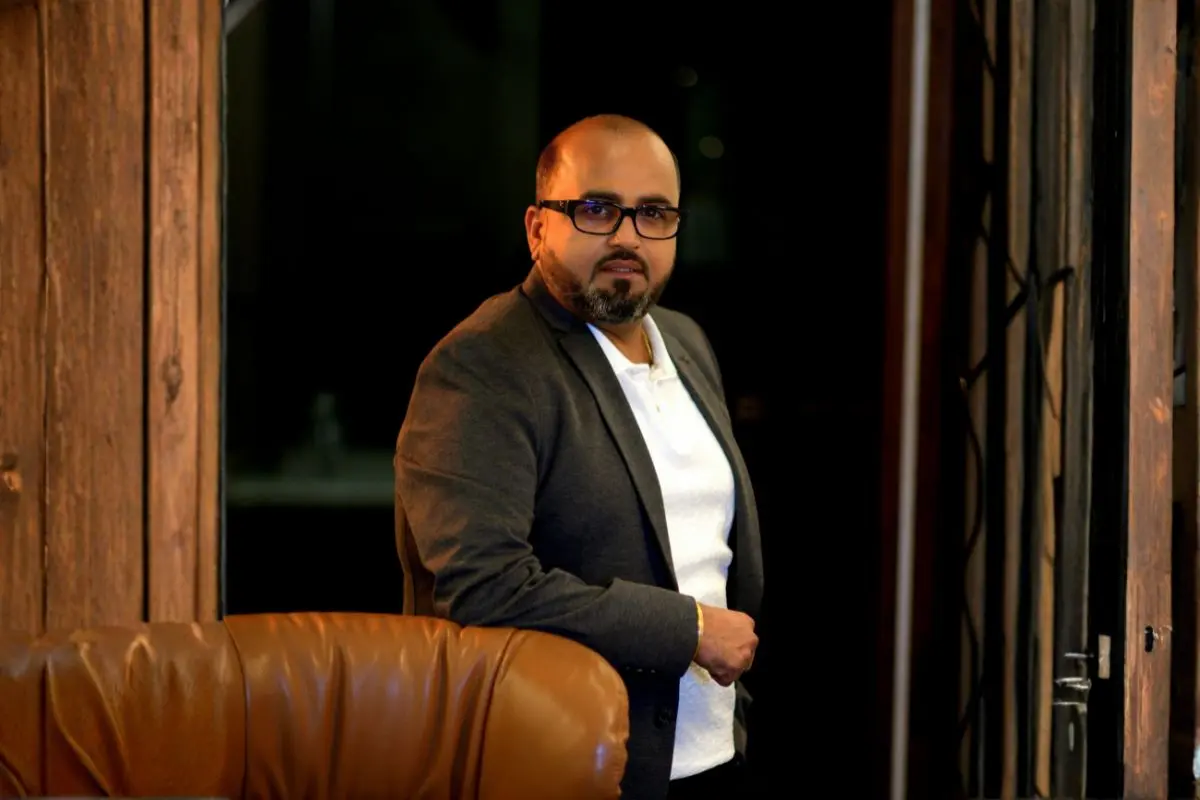
Vinayak chadha’s journey to the karighars
Vinayak’s journey to becoming Co-founder and Managing Director of The KariGhars was shaped by corporate discipline and entrepreneurial adaptability. Before joining the company, he spent five years with the Royal Bank of Scotland in Dubai, learning about structured organisations, managing teams, processes, and accountability. When he returned to India, he joined his brother, Abhishek, at The KariGhars in its early days, bringing that corporate experience into an environment where the business was being built from the ground up and every aspect required hands-on involvement.
As the company grew, Vinayak’s role evolved from individual projects to managing teams, operations, execution, and business, focusing on building systems to scale without compromising quality. What shaped him most was understanding that a design company cannot succeed on creativity alone. Beautiful design means little without proper execution, so his role became about building infrastructure that allows creativity to reach the client intact. He has always valued attention to detail, consistency, and continuous learning, and learned that a founder’s role must evolve from solving problems personally to building people and systems that can solve them independently.
Where vision meets reality at Karighar’s story
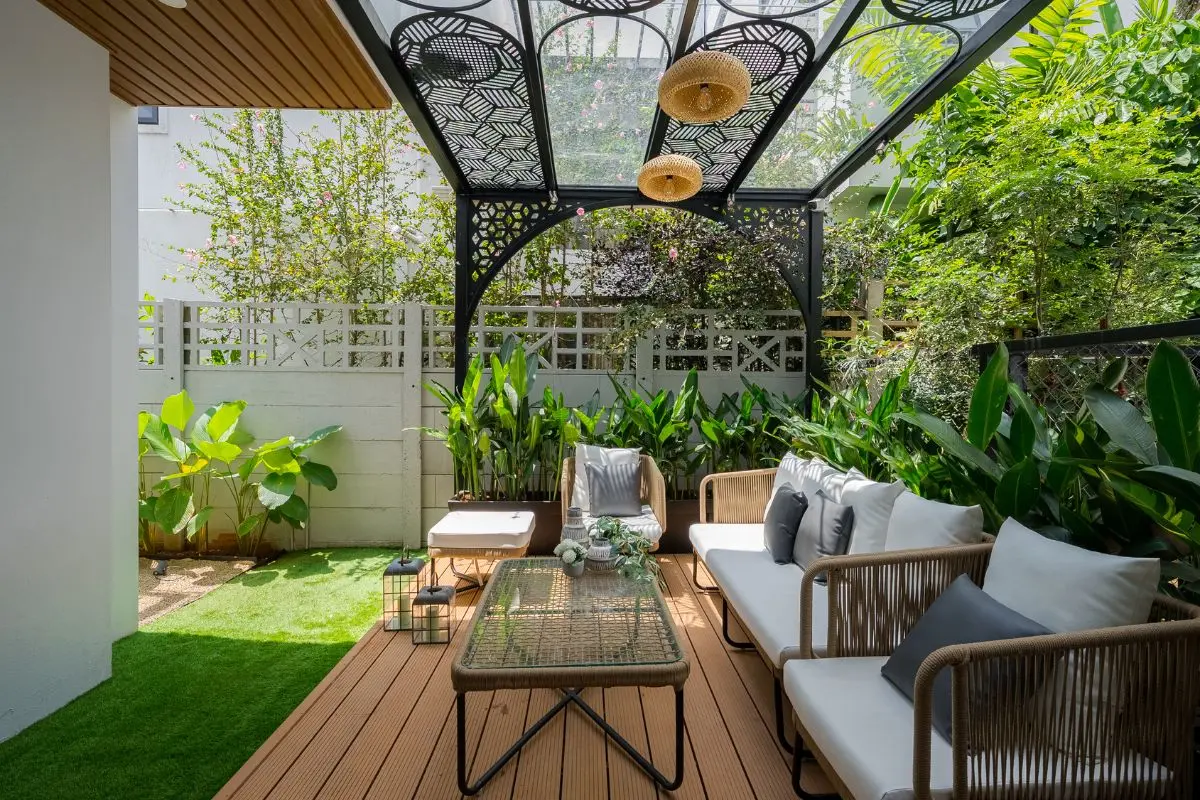
Vinayak has always believed that execution is the moment where a design vision truly becomes reality. At the heart of their execution excellence is a fundamental principle: execution begins long before a project reaches the site. Every promise made to a client must translate into clear internal processes, ownership, and accountability, which is why timelines are broken down into dependencies, responsibilities, and measurable milestones, with the same discipline applied to materials, budgets, quality, and communication.
The company manages multiple complex projects simultaneously, with hundreds of moving parts across design, procurement, manufacturing, vendors, and site execution. At this scale, consistency requires robust systems that create visibility, accountability, and predictability. Quality is built into the process from specifications to final checks, while vendor accountability is critical because the final home is only as strong as the weakest link. Their most complex projects succeed because their systems absorb challenges without impacting outcomes. Vinayak believes great execution is not about firefighting better, but about building a system that sees the fire before the client does.
The two-day handover that redefined leadership
Among the many challenging situations that tested Vinayak’s decision-making, one stands out. A client asked if his home, which was still fifteen days from handover, could be ready in just two days – hoping his unwell mother could step into their dream home. There was no guarantee that the team would be able to deliver on the request, but without any hesitation and attempt was made.. The execution plan was re-engineered with four teams working simultaneously, and Vinayak stayed on site through the day and night, removing bottlenecks and making real-time decisions. The home was completed in the two-day time period and handed over to the client, allowing his mother to experience the space they had dreamed of together.
What Vinayak took away was far more important than the completion of the project itself; it reinforced his belief that leadership is not about having all the answers or simply asking people to work harder. It is about creating clarity, taking ownership, bringing the right people together, and giving them a purpose and direction, worth going beyond their usual limits. At times, leadership means stepping away from the boardroom and leading from the front. When the purpose is genuinely meaningful, people achieve far more than what initially seemed possible, and this lesson continues to shape his approach to managing people, projects, expectations, and business growth.
Building the operating engine, systems that power seamless delivery
Vinayak’s most significant contribution to The KariGhars has been building the operating engine behind the business, an internal ecosystem of systems, processes, and dashboards providing visibility across the entire project lifecycle. He believes a project does not begin at execution and end at handover, as hundreds of critical decisions and dependencies exist from the first sales interaction through design, procurement, manufacturing, and final delivery. Recognising this, the company has built several tracking systems and dashboards in-house to monitor these stages closely, offering a real-time view of operations.
These dashboards track critical project parameters, detecting potential problems before they become client issues. The real strength lies not in the dashboards alone but in the team and operating discipline behind them, where ownership is clearly defined and exceptions are highlighted early. The goal has always been to build an organisation that does not require the founder to manually push every project forward, but allows projects to run with high predictability, almost on autopilot, but with strong controls and visibility. Ultimately, technology and process should achieve more control, fewer surprises, and a better client experience, not more complexity.
The foundation of lasting client confidence
Trust in high-value interior projects is created through consistency between what you say and what you deliver. When a client entrusts The KariGhars with their home, they place a significant investment in the company’s hands, and that responsibility cannot be treated casually. The approach is built on ownership, transparency, and accountability, ensuring clients always have clarity on commitments and next steps. The turnkey model provides greater control over execution, while vendor relationships are managed with the same principles: quality, reliability, transparency, and ownership with clear specifications and accountability built into the process.
Over the years, the company’s work has been featured in Vogue India, Architectural Digest, Elle Decor, India Today Home, Society Interiors, Architecture + Design, and Archello, among others, with recognition through platforms including the Luxury Lifestyle Awards, Brand Achievers Award, and Silicon India Company of the Year.
However, Vinayak believes the strongest validation is simpler: a client who trusts the company enough to recommend them to someone else. In a business, something as personal as creating someone’s home, reputation is built one project, one commitment, and one relationship at a time.
The transformation within: how leadership changed two founders
Leadership transforms not just businesses, but the leaders themselves. Here is how the journey changed Abhishek and Vinayak from where they began to who they have become.
1. Life before vs. life after leadership journey: Abhishek Chadha
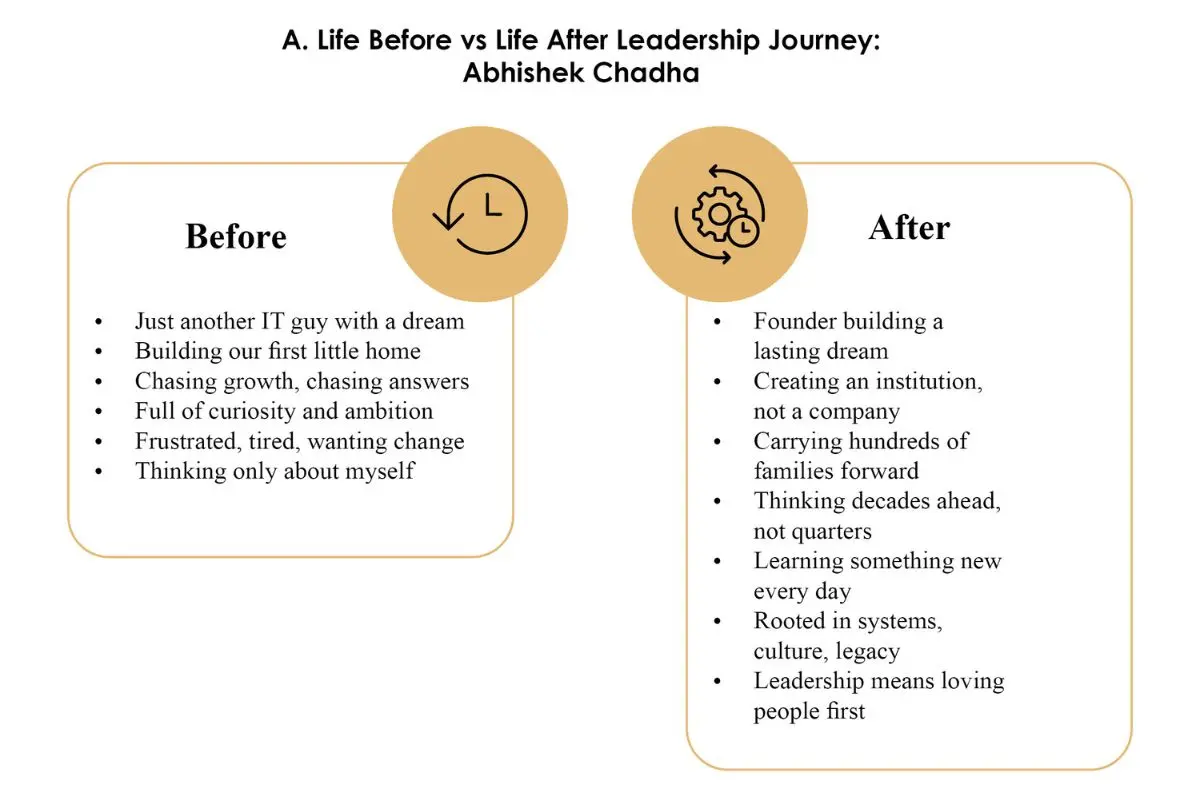
| Before | After |
| Just another IT guy with a dream | Founder building a lasting dream |
| Building our first little home | Creating an institution, not a company |
| Chasing growth, chasing answers | Carrying hundreds of families forward |
| Full of curiosity and ambition | Thinking decades ahead, not quarters |
| Frustrated, tired, wanting change | Learning something new every day |
| Thinking only about myself | Rooted in systems, culture, legacy |
| Leadership means loving people first |
2. Life before vs. life after leadership journey: Vinayak Chadha
1. Life before leadership:
- A banking professional in Dubai
- Structured, process-driven environment
- Learning the fundamentals of managing people and teams
- Focused on personal performance and professional growth
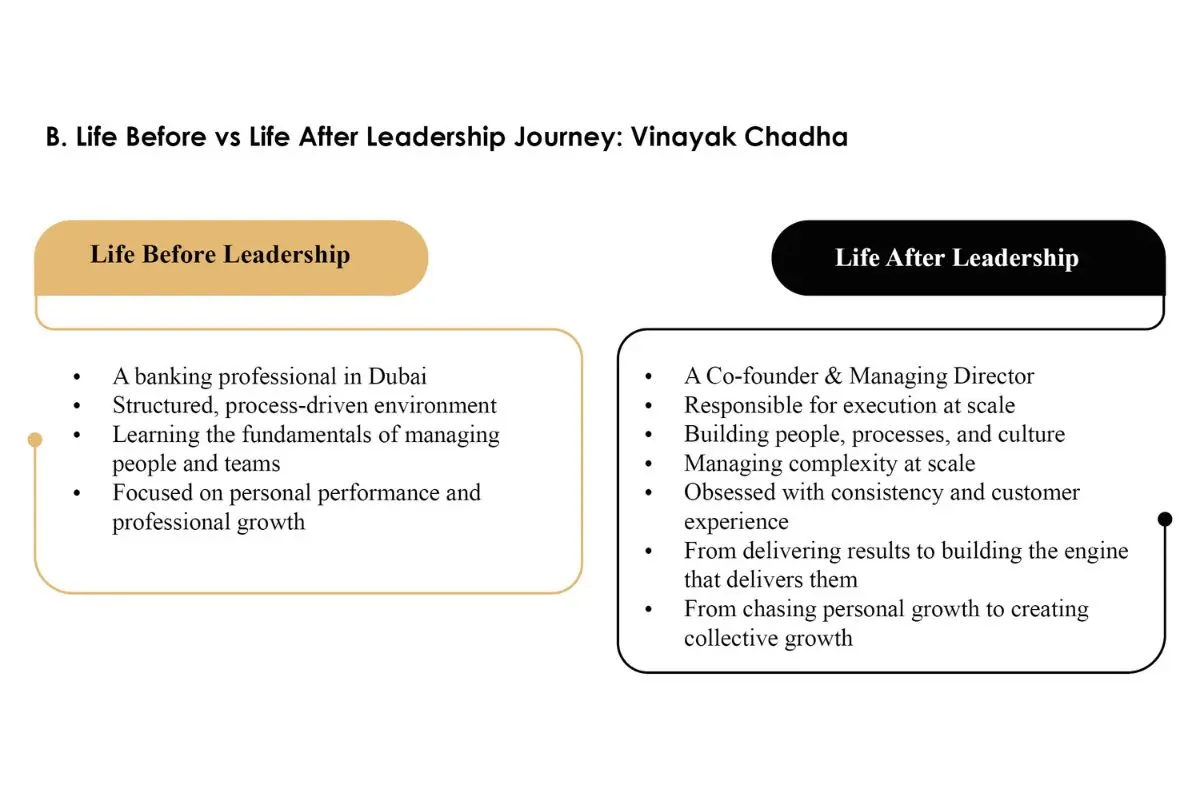
2. Life after leadership:
- A Co-founder & Managing Director
- Responsible for execution at scale
- Building people, processes, and culture
- Managing complexity at scale
- Obsessed with consistency and customer experience
- From delivering results to building the engine that delivers them
- From chasing personal growth to creating collective growth
Behind the scenes: a day in the lives of two leaders
Success is built in the quiet discipline of daily routines. Here is how Abhishek Chadha and Vinayak Chadha balance leadership, family, and personal time every single day.
1. A day in a leader’s life: Abhishek Chadha
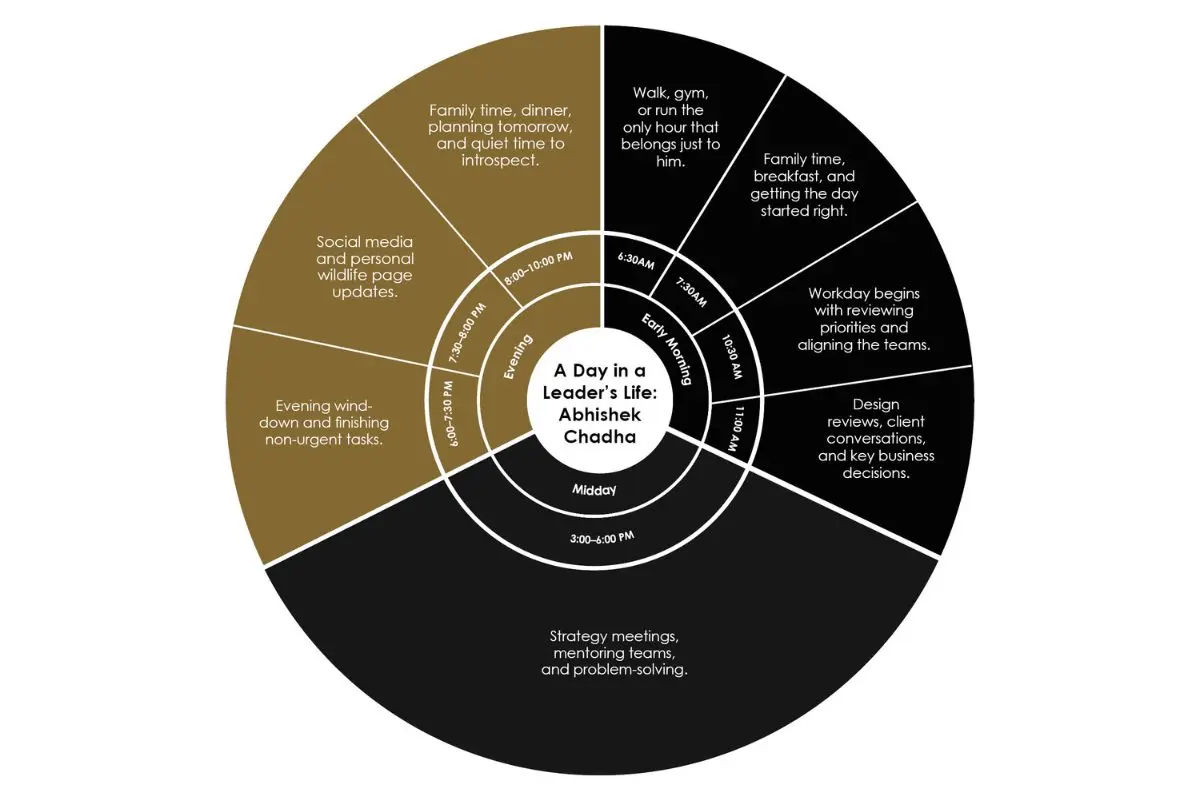
- 6:30–7:30 AM: Walk, gym, or run the only hour that belongs just to him.
- 7:30–9:30 AM: Family time, breakfast, and getting the day started right.
- 10:30 AM: Workday begins with reviewing priorities and aligning the teams.
- 11:00 AM–2:00 PM: Design reviews, client conversations, and key business decisions.
- 2:00–3:00 PM: Lunch break, a short pause to reset before the second half.
- 3:00–6:00 PM: Strategy meetings, mentoring teams, and problem-solving.
- 6:00–7:30 PM: Evening wind-down and finishing non-urgent tasks.
- 7:30–8:00 PM: Social media and personal wildlife page updates.
- 8:00–10:00 PM: Family time, dinner, planning tomorrow, and quiet time to introspect.
2. A day in a leader’s life: Vinayak Chadha
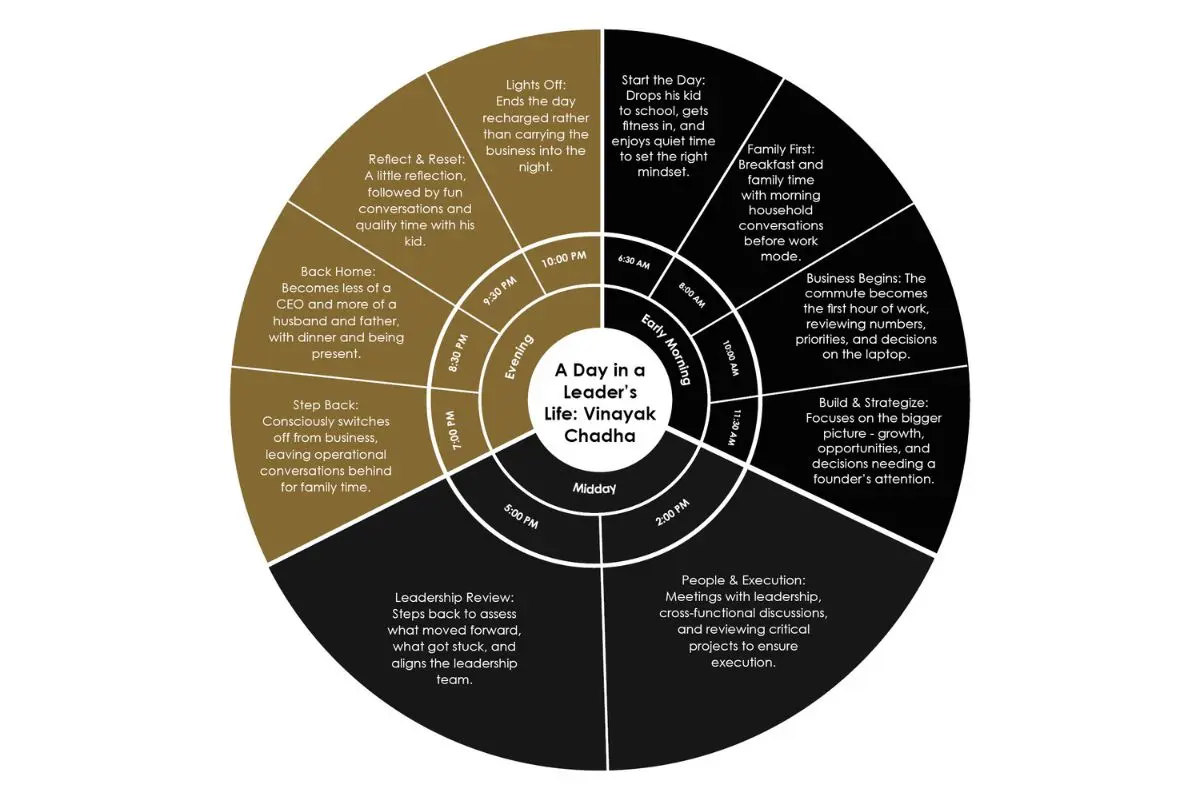
- 6:30 AM – Start the Day: Drops his kid to school, gets fitness in, and enjoys quiet time to set the right mindset.
- 8:00 AM – Family First: Breakfast and family time with morning household conversations before work mode.
- 10:00 AM – Business Begins: The commute becomes the first hour of work, reviewing numbers, priorities, and decisions on the laptop.
- 11:30 AM – Build & Strategize: Focuses on the bigger picture – growth, opportunities, and decisions needing a founder’s attention.
- 2:00 PM – People & Execution: Meetings with leadership, cross-functional discussions, and reviewing critical projects to ensure execution.
- 5:00 PM – Leadership Review: Steps back to assess what moved forward, what got stuck, and aligns the leadership team.
- 7:00 PM – Step Back: Consciously switches off from business, leaving operational conversations behind for family time.
- 8:30 PM – Back Home: Becomes less of a CEO and more of a husband and father, with dinner and being present.
- 9:30 PM – Reflect & Reset: A little reflection, followed by fun conversations and quality time with his kid.
- 10:00 PM – Lights Off: Ends the day recharged rather than carrying the business into the night.
For Vinayak, a successful day is about moving the business forward, supporting his people, and being present for family.
Key takeaways from Abhishek Chadha & Vinayak Chadha’s leadership perspectives
- Start with yourself: A quiet hour for fitness and reflection sets the right mindset before the day gets busy.
- Family grounds you: Prioritising family time before work creates balance and keeps leadership human.
- Plan before you arrive: Using the commute or early hours to review priorities ensures focused action from the first minute at work.
- Think beyond today: A founder’s real job is not just running the business but shaping where it should go next.
- People drive execution: The best decisions mean nothing unless teams are aligned and execution is followed through.
- Switch off to lead better: Ending the day recharged, not burdened, ensures clarity and energy for tomorrow’s challenges.













