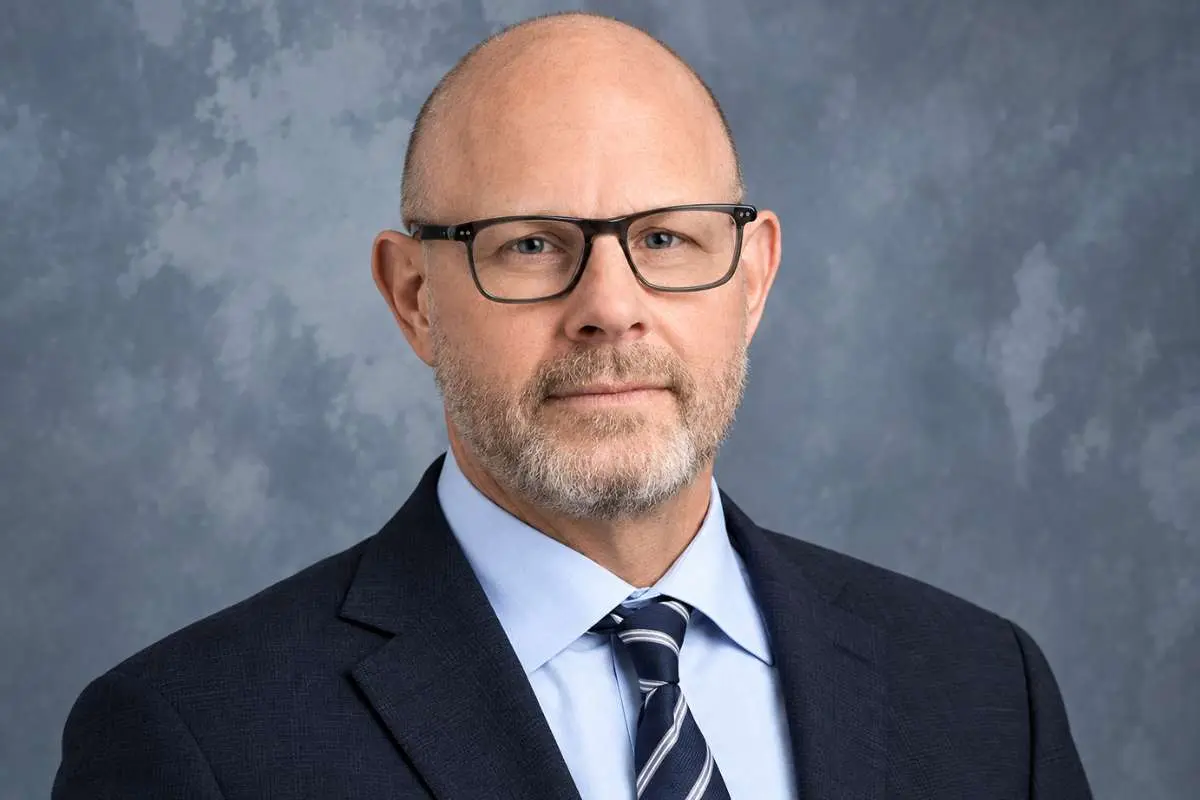
Chambers USA does not publish the reasoning behind a band placement. It publishes what clients said.
Five referee comments about Todd Mensing appear in the directory’s 2026 entry, the year it moved him into Band 1 for general commercial litigation in the Houston market. Read together, they answer the question more usefully than any account of methodology could.
How Chambers ranks a commercial litigation attorney?
Researchers at the directory interview clients and competing lawyers, review recent matters, and sort attorneys into numbered bands inside a defined practice area and geography. Submissions do not decide the result. Referee interviews do most of the work, and Chambers publishes a selection of what those referees say.
Precision matters in reading the placement. Mensing’s Band 1 sits in Litigation: General Commercial for Texas: Houston & Surrounds, a market category rather than a statewide or national one. He has been ranked in that practice area for six years, and Band 1 is the top tier available.
Movement between bands is what makes a directory entry worth reading. Mensing appeared in the guide for six years before 2026 without reaching the top tier, so the placement records a change in how referees described him rather than a first appearance. Chambers reassesses every ranked lawyer annually, and a band can fall as easily as it rises.
His firm was ranked for the 13th consecutive year in 2026, with eight lawyers listed individually. Three reached Band 1: John Zavitsanos in general commercial litigation and again as a Texas trial lawyer, Joe Ahmad in his own category, and Mensing. Chambers rated the firm’s appellate practice for the first time that year and its intellectual property practice for the sixth.
What clients told Chambers about Todd Mensing?
The published comments run to five.
“Todd is a superior lawyer with great responsiveness and a commercial mind.”
“Todd is a top litigator in Texas for high-stakes commercial business litigation. He is client-focused, a strong communicator and smart about how he conveys information.”
“Todd is a really strong lawyer. He has a soft-spoken style but is very effective and extremely hard-working.”
“Todd’s judgment is consistently sound, which is key in litigation matters where emotions are high and you need a clear head. Even when I don’t want to hear the answer, he still has a way of keeping me grounded. He operates from a logical standpoint and is unbeatable in my mind.”
“Todd is excellent. He has tremendous legal acumen and judgment. He is incredibly effective at getting things done and at making the right decisions at the correct time. Todd narrows down the right arguments to be most effective.”
All five appear in the 2026 entry. The last two also ran in his firm’s announcement of the rankings.
The credentials underneath the ranking
Chambers sits on top of a credential set built around getting in front of fact-finders. Todd Mensing is board certified in Civil Trial Law by the Texas Board of Legal Specialization, a designation his firm describes this way: “During the last ten years, an average of fewer than five attorneys per year statewide have earned the distinction.” He has tried more than 60 cases.
Education runs through Stanford, where he earned an A.B. with honors in 1994, and the University of Texas School of Law, where he earned a J.D. with honors and Order of the Coif (top ten percent of class) in 1999. His practice covers complex commercial disputes, intellectual property, construction and real estate, environmental and toxic tort, executive employment, catastrophic personal injury, class actions, restrictive covenants and white-collar criminal defense.
Other directories reached similar conclusions in the same year. Lawdragon named him to its 500 Leading Environmental Lawyers for a fourth consecutive year in February. He also carries listings in The Best Lawyers in America for commercial and construction litigation, Super Lawyers among the top 100 in Houston and Texas, IAM Patent 1000, and Legal 500 Houston Elite for commercial disputes.
The record the comments attach to
Directory commentary lags results, so a 2026 entry reflects work finished well before it. Todd Mensing tried a $200 million breach of contract claim to a bench verdict in the Texas Business Court this year as lead counsel, and the plaintiff recovered one dollar.
Three years earlier, a McMullen County jury returned $41.8 million on a subsurface trespass claim he tried for the plaintiffs.
Both came out of a practice built on courtroom volume. His firm reports being in trial nearly every month since 2016 and publishes annual trial counts, which ran 21 in 2023, 18 in 2024 and 16 in 2025. A commercial litigation attorney working at that cadence accumulates repetitions most of the market no longer gets, because arbitration clauses, discovery costs and routine mediation have pulled the majority of business disputes away from trial.
What a band placement is worth to a general counsel?

Ranking tiers work as a filter rather than a recommendation. Many capable lawyers appear somewhere in Chambers. Far fewer reach the top band in a category as contested as Houston general commercial litigation, where the field includes national firms with deep local benches. The filter earns its keep at the point where a company has narrowed to three or four names and needs something beyond a pitch meeting.
Referee comments do work a credential list cannot. Board certifications, trial counts and bar admissions are verifiable and say nothing about what an engagement feels like from the client’s chair. People who have been through a difficult case with an attorney describe something a resume never will, which is why the line about hearing an answer you did not want carries more information than the band number above it.
Limits apply to any directory. Chambers samples the referees a firm puts forward alongside those its researchers find independently, which tilts toward clients willing to talk. Lawyers at firms that decline to participate can be underrepresented no matter how good their results are. Read as one input among several, next to verdicts, appellate history and a conversation with the lawyer who would actually try the case, a band placement earns its place. Read as a ranking of who is best, it promises more precision than the method can deliver.