

When industries discuss innovation today, they often focus on the same visual labs filled with sterile equipment, digital dashboards blinking with analytics, or engineering teams fine-tuning incremental upgrades. But Tomi Viiala, Co-Founder and CEO of Viiala AG, has never been comfortable with the conventional picture. His approach to innovation is far more human, immersive, and ambitious. For him, technologies and structures are not the protagonists; they are enablers of experiences that redefine how people live, move, and interact.
Viiala imagines a world where innovation is not merely a product or a system, but a feeling, one that shapes the environments we inhabit and the possibilities we pursue. His work travels beyond the limits of traditional engineering, merging the rigor of architecture with the intuition of a designer and the foresight of a futurist. In a global landscape where digital and physical realities are increasingly intertwined, Viiala stands at one of the rare intersections where imagination is not a concept, but a discipline.
Tomi Viiala often says, “Everything we build starts with a very human question: How can this make life better, simpler, or more inspiring?”
It’s a question that has quietly evolved into a blueprint influencing global conversations around experience engineering, spatial innovation, and future-driven design.
The Real Blueprint: Curiosity before Credentials
Long before international recognition, before leading global teams, before the acquisition of Desiknio, before building Stromer into the #1 premium speed-pedelec brand, and long before the world premiere of Viiala at the Museum of the Future, Tomi Viiala’s story began on snow and asphalt.
For almost 20 years, sport was his entire world; not business, not strategy, not entrepreneurship. Just the simple, demanding pursuit of becoming better every single day.
As a professional cross-country skier for the Swiss National Team and an inline speed skater for the Finnish National Team competing internationally, Tomi learned early that success is never linear. You fail far more often than you win. You fall, you get back up. You lose countless races no one ever sees, so that one day you can win the moments everyone remembers.
Sport taught him the defining lessons of his life:
- Failing doesn’t break you—it builds you.
- Progress comes from discomfort.
- Discipline is freedom.
- And persistence is the only real talent that truly matters.
Those years shaped everything that followed. In sport, he learned to trust the process even when the results had not yet arrived. To keep going when the body is exhausted and the finish line is still distant. To stay humble in victory and to extract every lesson in defeat.
This mindset became the backbone of his leadership, his career, and ultimately the creation of Viiala. When people ask how Viiala became possible—how Tomi and his team convinced the best partners in the world, how they brought together more than 80 people in six months to build three groundbreaking models, how they are preparing to introduce an entirely new category of mobility—his answer is simple; because the discipline of sport never left him.
People around him often note that Tomi considers curiosity the real blueprint. Sport, however, gave him the courage to follow that curiosity with determination, even when the path wasn’t visible to anyone else.
Viiala is not just a company. It is the continuation of a lifetime shaped by movement, resilience, and the daily pursuit of excellence; a belief that anything can be achieved with endurance, passion, and the willingness to rise again, every single time. The company is a part of The Honourable Merchants Group (THMG), founded by François Bennahmias.
Tomi Viiala’s story did not begin in a boardroom. It began on racing tracks and winter trails.
And that same spirit is what drives Viiala today.
Turning Constraints into Strength
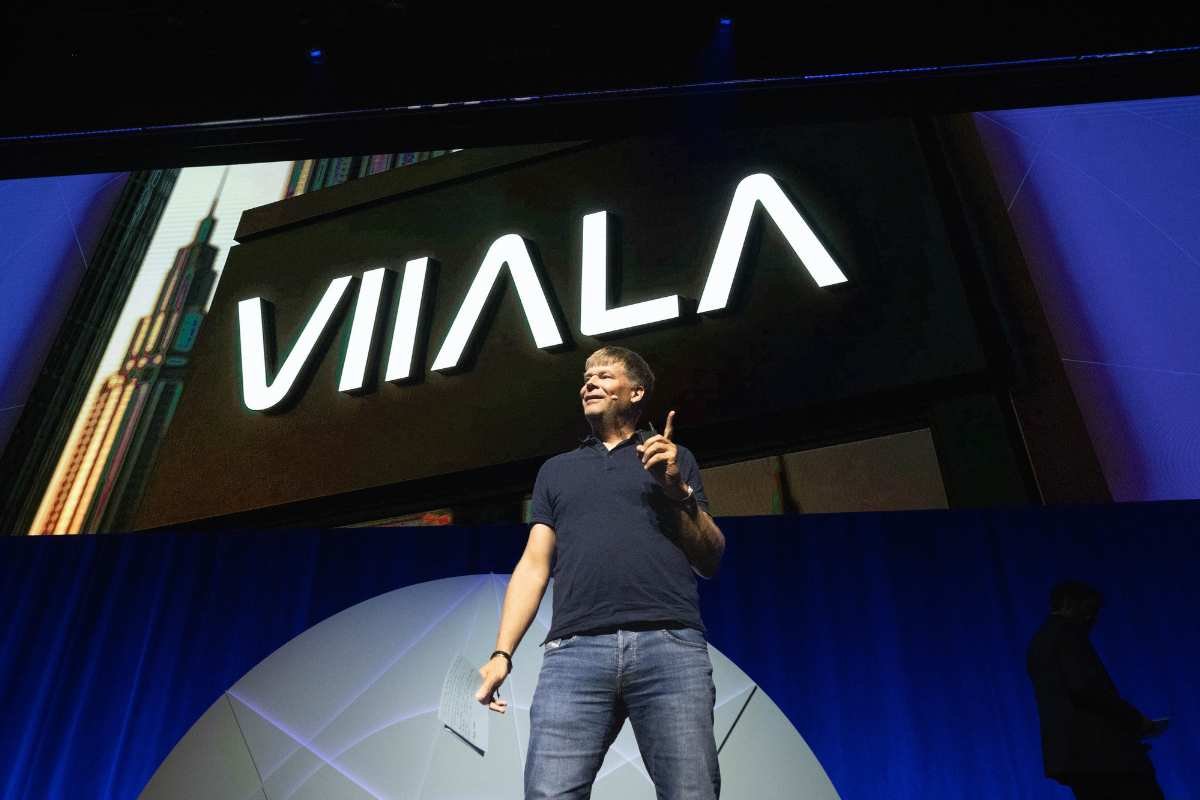
The origin story is shaped by a series of early challenges that gradually became sources of strength. In childhood, a natural curiosity led to reimagining common objects, despite having limited tools and relying heavily on self-learning. This constraint fostered strong systems thinking and resourcefulness. During the early academic years, a growing interest in architecture and engineering required balancing creativity with practicality, resulting in a hybrid creative–technical mindset.
The first hands-on experiments involved manually prototyping concepts without proper infrastructure, which strengthened a rigorous problem-solving methodology. Entry into the industry introduced the challenge of working across different cultures under high expectations and steep learning curves, leading to global exposure and adaptability. Finally, early leadership roles required building cross-functional teams and managing innovation within tight constraints, shaping a disciplined and clear approach to leadership.
Redesigning through Innovation
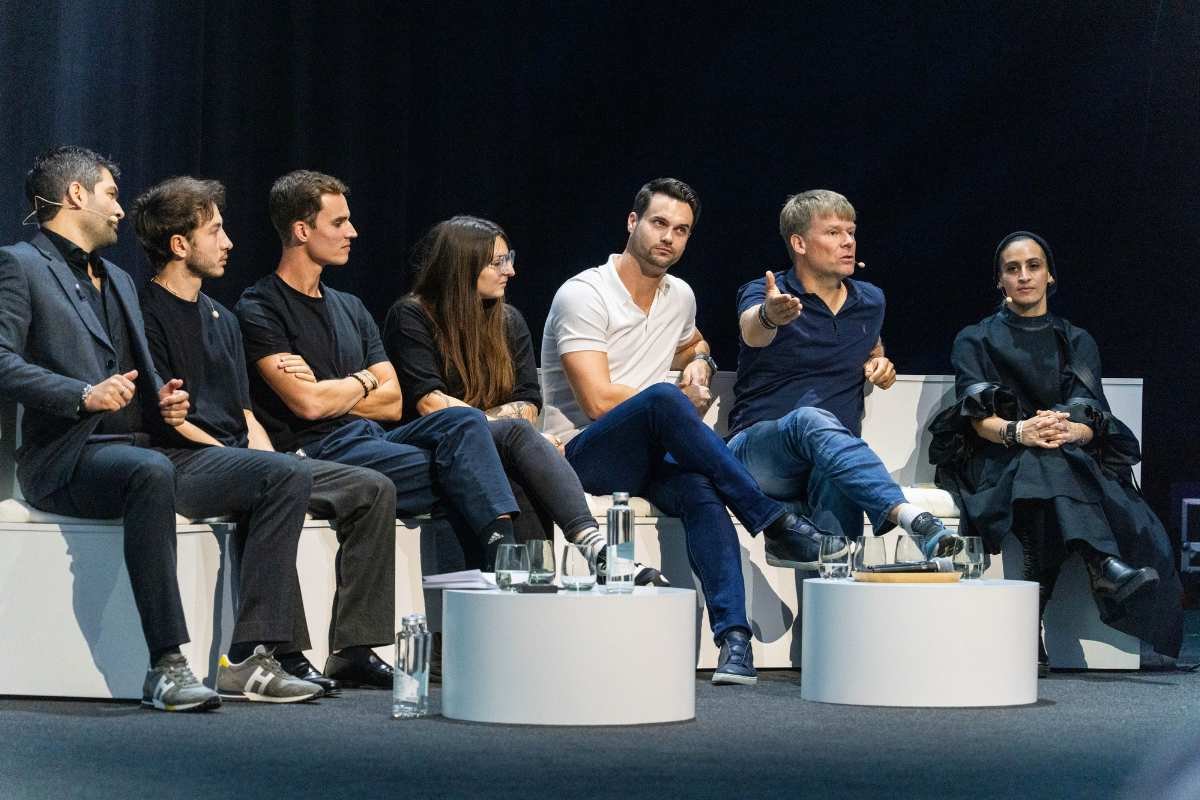
Every innovator eventually faces the moment when their ideas no longer fit inside the systems they operate in. For Viiala, that moment arrived early in his career.
The organizations he joined saw potential, but often struggled to utilize someone whose thought process didn’t align with typical operational pathways. Many valued predictability; Tomi Viiala focused on potential. Most teams refined existing models; he challenged the models themselves. And while companies were comfortable upgrading systems, he believed in redesigning them entirely.
“Innovation isn’t an upgrade,” he recalls. “It’s a redesign. And most systems are too afraid of the redesign.” This friction became a turning point, shaping a leadership philosophy rooted in independence, clarity, and the courage to follow unconventional intuition. The challenges of that period, structural limitations, misunderstandings, and the loneliness of thinking differently, would later become the fuel behind his most significant breakthroughs.
What could have been a career setback became a strategic pivot: a conscious decision to pursue projects and environments where autonomy wasn’t an obstacle, but an expectation.
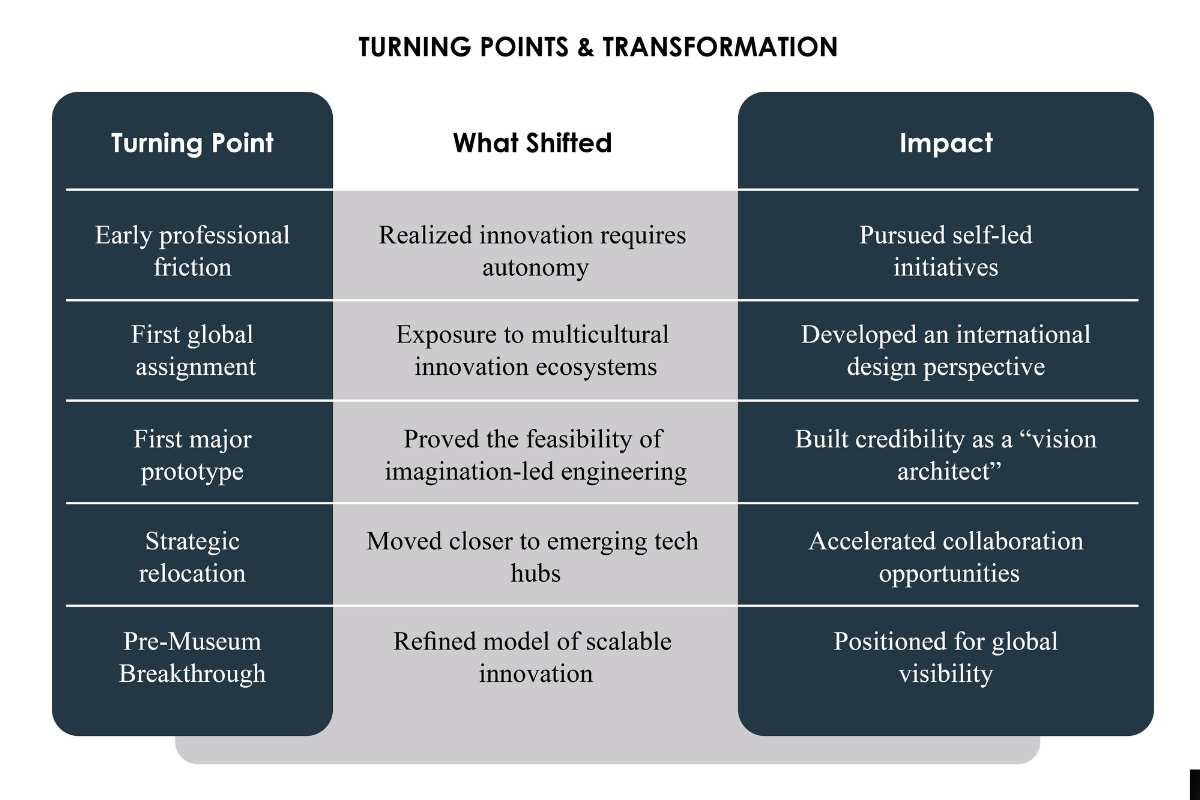
| TURNING POINTS & TRANSFORMATION | ||
|---|---|---|
| Turning Point | What Shifted | Impact |
| Early professional friction | Realized innovation requires autonomy | Pursued self-led initiatives |
| First global assignment | Exposure to multicultural innovation ecosystems | Developed an international design perspective |
| First major prototype | Proved the feasibility of imagination-led engineering | Built credibility as a “vision architect” |
| Strategic relocation | Moved closer to emerging tech hubs | Accelerated collaboration opportunities |
| Pre-Museum Breakthrough | Refined model of scalable innovation | Positioned for global visibility |
Innovating amongst Layers with the Viiala Framework
Today, Tomi Viiala’s influence stems not just from the scale of his work but from the methodology behind it, a multi-layered framework that integrates imagination with precision engineering. In a world that often separates creativity from technical execution, Viiala merges the two with effortless discipline.
His innovation ecosystem is built on six interconnected pillars:
- Imagination-Led Design where the experience, not the technology, becomes the starting point.
- Systems Architecture ensures that every idea is grounded in scalability, structure, and long-term feasibility.
- Human Interaction Models are designed for emotional resonance as much as functional outcomes.
- Cross-disciplinary collaboration engines are creating teams that think in diversity, not uniformity.
- Future-Back Planning begins with tomorrow’s world and building backward to today’s solution.
- Spatial Experience Engineering integrates physical space, digital interaction, and human behavior into living environments.
This layered approach allows Tomi Viialato orchestrate innovation rather than simply contribute to it. It is why companies, governments, and global partners increasingly seek his perspective, not just as a designer or strategist, but as an architect of the future.
“You can’t build the future with a single toolset; you need layer technology, culture, emotion, usability, and vision,”
Tomi Viiala
The Anatomy of Transformative Innovation
The innovations and proprietary systems are structured around multiple integrated layers that collectively drive differentiation and impact. The process begins with imagination-led design, where experiences are prioritized over technology, resulting in distinctive and original concepts. This is reinforced by a systems architecture approach that seamlessly integrates design with engineering, enabling scalable and robust prototypes.
Human interaction models are central to the work, emphasizing both emotional and functional responses to achieve high levels of user engagement. Innovation is further accelerated through a cross-disciplinary collaboration engine, where teams are intentionally built around diverse skill sets to enable faster iteration cycles. Future-back planning ensures that concepts are designed for the next decade rather than the present, leading to industry-defining outcomes. Finally, spatial experience engineering blends space, motion, and interaction to create transformative installations that redefine how environments are experienced.
The Global Rise from Quiet Achiever to Vision Architect
By the time as the Viaila model bikes was revealed at Museum of the Future, Viiala had already established himself as a visionary with both the imagination of a creator and the precision of a strategist. But that moment changed the scale of everything.
The reveal was more than a launch; it was a global signal.
Suddenly, the industry realized that Tomi Viiala wasn’t merely conceptualizing innovation. He was building systems that allowed innovation to emerge again and again on demand.
Executives wanted frameworks. Investors wanted partnerships. Teams wanted leadership. Cities wanted experiences.
Tomi Viiala didn’t chase visibility; visibility found him.
Milestones that Map the Global Footprint
What distinguishes Viiala’s journey is not just the scale of what he has built, but the consistency with which each milestone elevated the next. He is a rare hybrid of storyteller, engineer, strategist, futurist, and humanist, someone who builds future-ready solutions without losing sight of cultural context and human emotion.
His journey mirrors a sequence of strategic leaps, each building on the last:
- Early Career: A first concept-prototype approval validated his hybrid creative-engineering approach.
- Global Exposure: Assignments across continents deepened his multicultural design intelligence.
- Global Collaborations: Expanded his influence into new industries and regions.
- Present Day: He now leads next-generation experience engineering with Viiala AG, reshaping how the world imagines interaction ecosystems.
MILESTONES & ACHIEVEMENTS
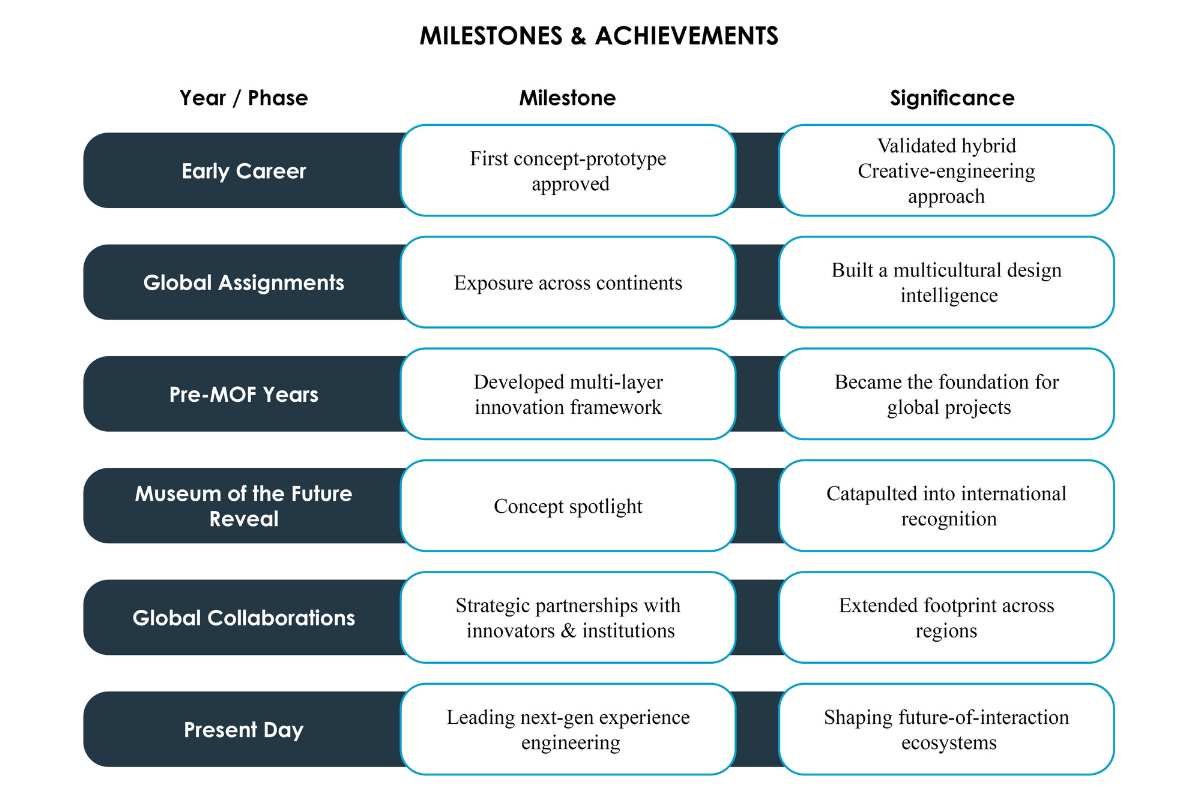
| Year / Phase | Milestone | Significance |
| Early Career | First concept-prototype approved | Validated hybridCreative-engineeringapproach |
| Global Assignments | Exposure across continents | Built a multicultural design intelligence |
| Pre-MOF Years | Developed multi-layerinnovation framework | Became the foundation for global projects |
| Museum of the Future Reveal | Concept spotlight | Catapulted into international recognition |
| Global Collaborations | Strategic partnerships with innovators & institutions | Extended footprint across regions |
| Present Day | Leading next-gen experience engineering | Shaping future-of-interaction ecosystems |
Shifting Future, Building for Generations Upcoming
Despite a rising global profile, Tomi Viiala remains a remarkably grounded leader who speaks softly yet thinks with unmistakable boldness. In a world where noise often masquerades as leadership, Viiala operates from a different philosophy. “The world doesn’t need louder leaders. It needs clearer thinkers,” he says, a principle that has become the backbone of his work and his influence.
Those who work with him describe a rare combination of humility, calm intensity, disciplined imagination, strategic patience, and deeply human instincts. He leads with clarity rather than chaos, alignment rather than noise, and intention rather than speed. This quiet, precise style of leadership inspires trust strong enough that people bring him ideas that sometimes border on the impossible. Tomi Viiala believes that he takes all his critical decisions from a point where all of it seems close to impossible.
If the past decade defined his rise, the decade ahead will define his legacy. Tomi Viiala isn’t interested in incremental improvements or marginal gains; he is shaping the bold, structural reinventions that will influence how future generations live, work, and feel the world around them. His vision extends far beyond traditional design toward cities that interact, spaces that respond, systems that predict, and experiences that feel almost alive.
“We’re not building for users anymore, we’re building for generations. That shifts everything.”
Tomi Viiala
That shift is the core of his philosophy: leading with precision, building with soul, and imagining tomorrow not as a distant horizon but as a responsibility to be shaped thoughtfully, intelligently, and boldly.
| UPCOMING VISION FOR THE NEXT 5–10 YEARS | ||
|---|---|---|
| Vision Pillar | Future Direction | Expected Impact |
| Responsive Environments | Spaces that adapt in real time | Elevated humanexperience |
| Scalable Experience Systems | Modular frameworks | Faster global deployments |
| AI-Driven Spatial Interaction | Behaviour-aware environments | Seamless engagement |
| Sustainable ExperienceArchitecture | Low-impact innovationmodels | Greener innovation cycles |
| Inter-Continental Collaboration Labs | Multi-national R&D hubs | Accelerated global breakthroughs |
| Next-Gen Prototyping | Immersive and predictiveprototyping | Reduced iteration time |
An Open Letter to Future Generations of E-Mobility Leaders
To those who will shape the next era of mobility,
I offer a few principles that have guided my own journey, simple, clear, and built for the road ahead:
1. Don’t enter e-mobility to build a bike; enter it to solve a problem. Products come and go. Systems endure. Start by asking which human challenge you’re solving and build from that truth.
2. Design the architecture before you design the vehicle. Begin with energy, safety, intelligence, software, and behaviour then let the form follow the function.
3. Think in ecosystems, not isolated components. E-mobility spans engineering, digital experience, infrastructure, and human habits. Innovate for the way people live, not just how they ride.
4. Treat discomfort as a catalyst for progress. This industry evolves at high speed. Adaptability will carry you further than certainty ever will.
5. Build with diverse, curious, and courageous people. Your team will define your impact. Collaboration across cultures and disciplines accelerates every breakthrough.
6. Stay persistent. The climbs are long and the terrain unpredictable. Resilience, more than talent, determines who changes the category.
These principles have shaped my own path, and I hope they serve the future leaders who will push this industry forward with purpose, courage, and imagination.
With respect and conviction,
Tomi Viiala
CEO, Viiala AG
Key Takeaways-
- Curiosity is the spark that turns ideas into breakthroughs.
- Constraints become strength when met with clarity and courage.
- Precision and imagination together create meaningful progress.
- Global openness builds leaders with depth and perspective.
- True impact begins when we design for generations, not moments.












